You know the rhythm of a slow Sunday morning. Frost creeping up the windowpane, the quiet hum of the furnace, and the distinct, smoky promise of breakfast pulling you into the kitchen. You lay out your supermarket bacon slices, cold and pristine, anticipating that perfect crunch.
But the moment the heat takes hold, the betrayal begins. The edges seize, the centre bows, and what began as a beautiful strip rapidly devolves into an unpredictable, rubbery ribbon. You are left with a skillet full of grease and a handful of charred, uneven loops.
We have all been conditioned to accept this curling as a simple fact of domestic cooking. You might have tried heavy cast-iron presses, the trendy water-simmering method, or even laying down parchment paper, but the results remain stubbornly inconsistent.
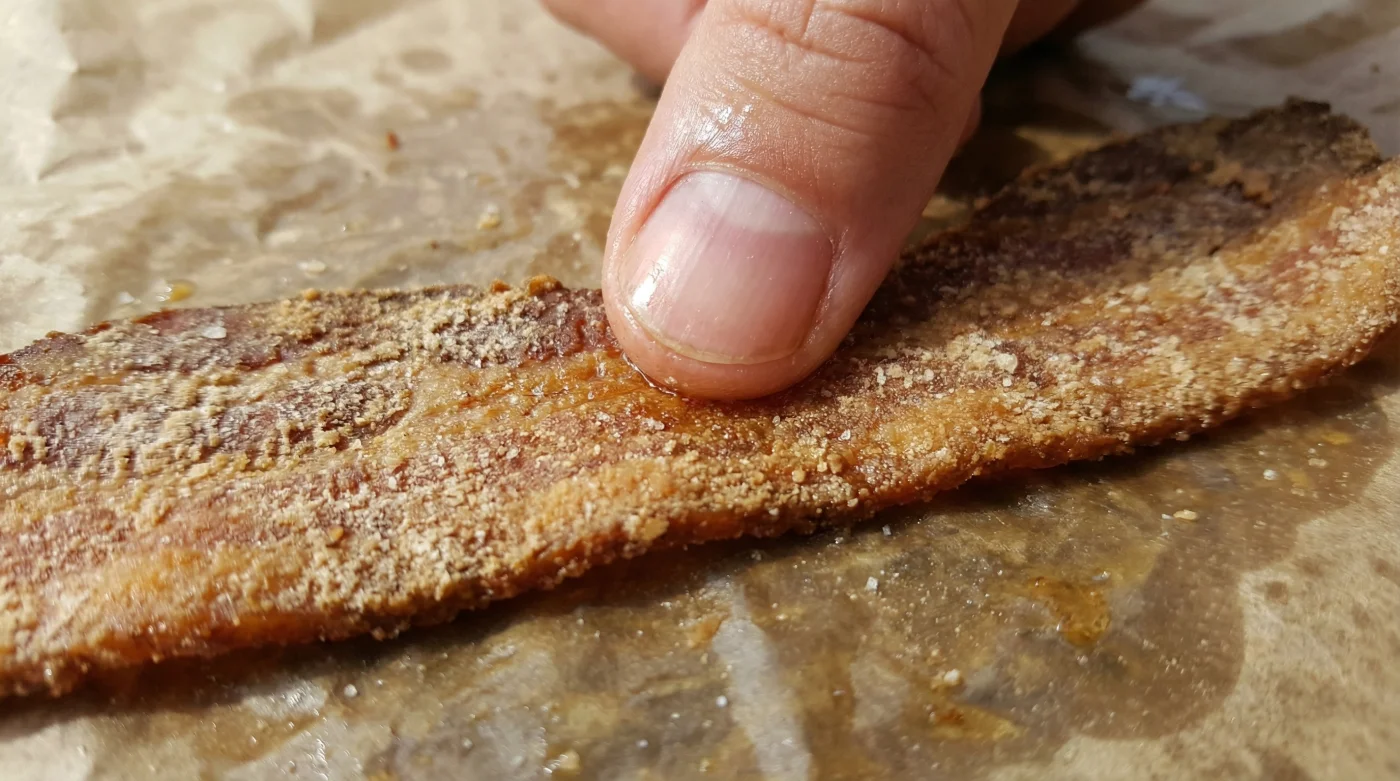
The true solution hides quietly in your baking cupboard. A shockingly simple technique transforms standard grocery store pork into stiff, shatteringly crisp strips worthy of a high-end diner. It requires no special equipment, just a fine dusting of all-purpose flour.
The Anatomy of a Curl
To understand why this works, you have to look at what happens in the pan. A slice of bacon is a tug-of-war between muscle protein and fat. As the temperature rises, the fat renders and turns to liquid, while the protein fibers rapidly contract.
Because they shrink at completely different rates, the strip physically pulls against itself. The flour intervenes by absorbing rendering fat instantly, creating a microscopic crust that acts like a temporary cast for the meat.
By the time the pork begins to seriously shrink, that flour-and-fat matrix has already hardened. The protein fibers are trapped in a flat, horizontal position, completely unable to bow or twist.
You are not just cooking breakfast; you are manipulating basic structural physics. The result is a profoundly even crispness that supports a tomato and lettuce sandwich without crumbling into your lap.
Learning from the Line
Meet Clara MacNeil, a 48-year-old short-order cook from a bustling neighbourhood diner in Halifax. For two decades, she has turned out thousands of breakfast plates, and you will never find a heavy metal press on her flat-top grill.
Instead, she keeps a large metal shaker next to the salt. Before the meat even hits the heat, she gives it a rapid, snowy coating. “You build a tiny wall,” she explains, tapping the steel counter. “The flour drinks the grease before the meat realizes it is hot.”
Segmenting Your Strategy
How you apply this technique depends entirely on the rhythm of your household. The basic mechanics remain the same, but the execution shifts based on what you are trying to feed, and how much patience you have before the coffee finishes brewing.
For the Sunday purist standing over a cast-iron skillet, a light dredge creates magic. You want to shake off the excess until it looks like a faint morning frost across the meat. Keep the heat strictly at medium-low to prevent the coating from catching.
If you are a busy parent batch-cooking for the week ahead, the oven is your best friend. Lay down a sheet of parchment paper, arrange the dusted strips side-by-side, and let the ambient heat do the heavy lifting while you manage the rest of the kitchen.
The flavour chaser can take this a step further. Blending cracked black pepper or smoked paprika directly into the flour introduces deep, toasted savoury notes that fuse permanently to the crust as it fries, creating a seasoned profile you cannot achieve with plain salt.
Mindful Application
The beauty of this method lies in its absolute minimalism. You do not need to hover, prod, or forcefully flatten your breakfast; you simply set the stage and let the chemistry work naturally.
- Remove the cold strips directly from the fridge; the residual moisture helps the powder adhere evenly.
- Sift a highly transparent layer of all-purpose flour over both sides, tapping off any heavy clumps.
- Place them into a cold skillet or onto a room-temperature baking sheet to ensure gradual rendering.
- Bring the heat up slowly to allow the crust to set before the aggressive sizzling starts.
Tactical Toolkit:
- Target Pan Temperature: Medium-low (allow 4 to 5 minutes for the crust to properly form).
- Oven Temperature: 200 Celsius.
- Bake Time: 15 to 18 minutes, depending heavily on the thickness of the cut.
- Precision Tool: A small, fine-mesh tea strainer makes the perfect precision duster for an even coat.
The Bigger Picture
Perfecting this mundane detail offers a surprising sense of kitchen satisfaction. When you eliminate the erratic warping of your morning staple, you regain total control over your plate. It is a small victory that ripples outward.
Think about the architecture of your next sandwich. Flat, rigid strips mean every single bite contains the exact same ratio of crunch, salt, and fat. The meat no longer slides out from under the bread, and the grease is managed rather than scattered across your stovetop.
It turns a messy, chaotic chore into a predictable, calming ritual. You start your day knowing exactly how things will turn out, armed with a quiet piece of professional wisdom hidden in plain sight.
“When you treat fat as an ingredient to be captured rather than a nuisance to be drained, the entire texture of the dish transforms.”
| Key Point | Detail | Added Value for the Reader |
|---|---|---|
| Standard Frying | Uneven fat rendering causes fibers to contract wildly. | Highlights the flaw in standard habits, saving you from rubbery edges. |
| The Water Method | Simmering in water tenderizes but dilutes the pure crunch. | Proves why the flour method yields superior texture for sandwiches. |
| Flour Dusting | Creates an instant crust, locking the protein flat. | Delivers restaurant-tier aesthetics and structural integrity with zero extra effort. |
Frequently Asked Questions
Does this make the meat taste like raw flour?
Not at all. The flour toasts in the rendered fat, creating a rich, savoury flavour profile similar to a light pan-fry coating.Can I use a gluten-free alternative?
Yes. Rice flour works exceptionally well because it crisps up beautifully without absorbing excess moisture from the air.Will this burn my skillet?
Because you are cooking on medium-low heat, the flour browns gently rather than scorching. Just avoid cranking the burner to maximum.Do I need to spray the pan first?
No. The natural fat content provides all the lubrication needed once the temperature begins to rise.How well do these store in the fridge?
The structural integrity remains pristine for up to four days. They reheat beautifully in a toaster oven, retaining their flat shape and snap.