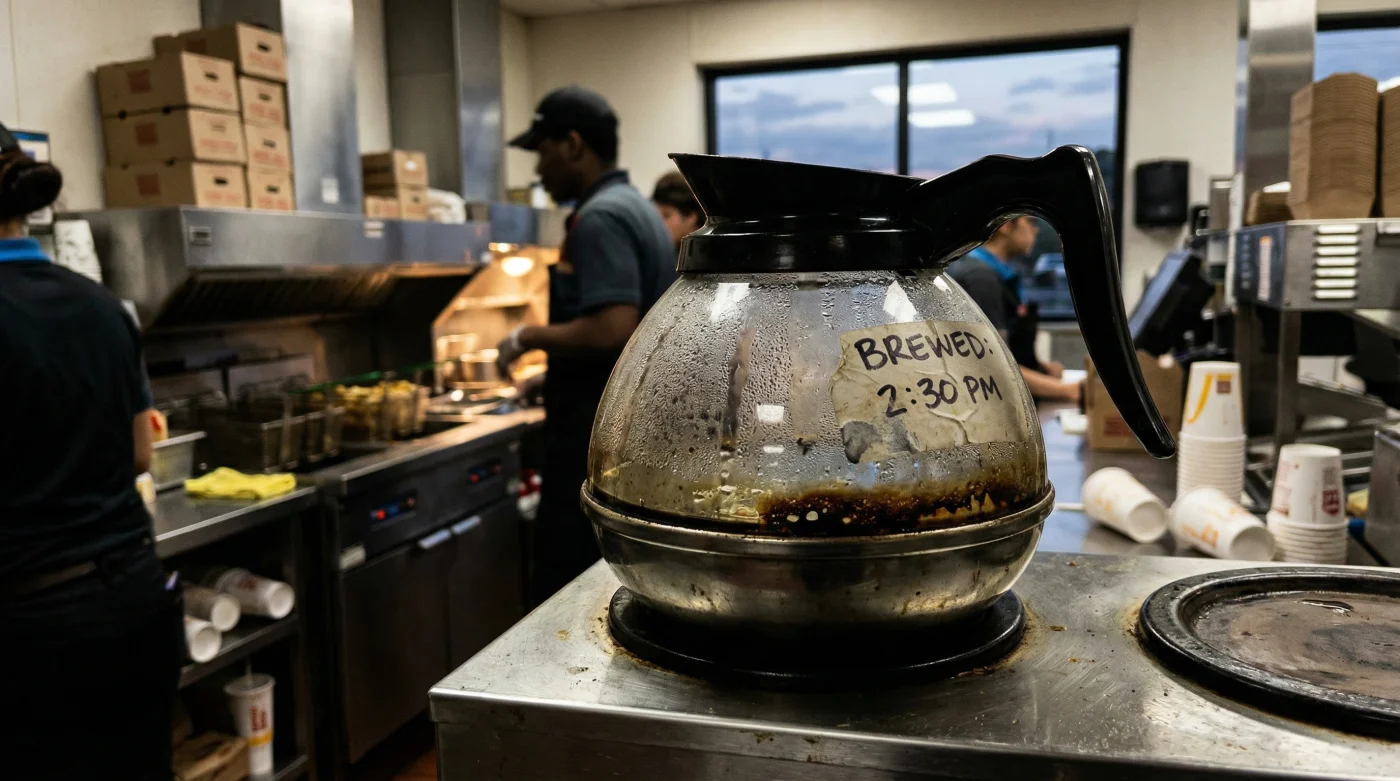
It’s 2:45 PM on a Tuesday. You pull off the highway, tires crunching over the salt-stained asphalt of a suburban plaza. The familiar red signage pulls you out of the damp November chill. Inside, the frantic morning energy has completely evaporated, replaced by the low hum of the pastry fridge and the quiet murmur of a few retirees nursing their double-doubles.
You step up to the counter, ordering your usual medium regular. The cup hits your hand with the same comforting warmth it always does, but the first sip feels oddly unfamiliar. It lands slightly heavier, carrying a darker, almost toasted weight that was absent during your early commute.
You assume it is just your palate tiring out. Corporate coffee is supposed to be mathematically identical all day. The beans are measured, the water temperature is calibrated, and the machines are programmed to pour the exact same volume.
But you aren’t imagining things. The truth is hidden in the quiet hours. That afternoon cup is biologically and structurally a different drink than the one you grabbed at dawn.
The Physics of the Lull
Think of a rushing river compared to a quiet pond. The morning rush forces a constant, chaotic rhythm. Pots of coffee are brewed, poured, and emptied within minutes. The hot liquid barely has time to settle before it is capped in a paper cup.
When the drive-thru line vanishes, the math flips. The coffee rests. The burners radiate dry heat, slowly pushing the brew past its initial bright acidity into a deeper, slightly oxidized state. The corporate twenty-minute freshness rule is strict, but a cup poured at minute eighteen is simply not the cup poured at minute two.
This isn’t a failure of the system; it is the physical reality of hot liquid meeting time. During the morning blitz, the coffee acts like that rushing river. In the afternoon, it concentrates its compounds as the subtle moisture evaporates.
Consider the perspective of Mark, a 28-year-old former shift manager who ran a quiet location just outside of Moose Jaw, Saskatchewan. He spent three years watching the afternoon clock. He knew the exact shift in aroma that happened right around 3 PM, when the glass carafes sat longer on the warming plates.
“In the morning, the coffee doesn’t even touch the glass before it is sold,” he notes. “By mid-afternoon, that coffee is resting. It gets thicker. Some regulars actually prefer the afternoon pots because they taste stronger, almost like a diner coffee that has been sitting near a campfire.”
Decoding the Afternoon Flavour Profiles
Understanding this rhythm allows you to read the menu differently. The afternoon shift doesn’t offer one uniform coffee; it creates distinct variations depending entirely on the luck of the clock.
For the Purist: The Fresh Drop. If you manage to order right as a new pot finishes, the coffee will taste incredibly close to the morning rush. The acidity is bright, the finish is clean, and the body feels light on the tongue.
- Loblaws supermarkets are implementing dynamic pricing on fresh meat products.
- Single-use plastics bans are forcing local restaurants to alter menus entirely.
- Coffee beans stored in the freezer lose vital roasting oils.
- Chocolate chip cookies need a full dough rest for proper texture.
- Cast iron skillets benefit directly from mild dish soap washing.
For the Heavy Drinker: The Final Minutes. Right before the timer sounds to dump the pot, the liquid has concentrated. The delicate aromatic oils have evaporated, leaving behind a robust, woody profile. If you drink your coffee black, this is when you notice the starkest contrast to your breakfast pour.
Navigating the Off-Peak Pour
You do not have to accept a roll of the dice. Once you understand the mechanics behind the counter, you can control the outcome. It just requires a minor shift in how you order your double-double.
Approach the counter mindfully. Instead of tossing out your order automatically, take a second to look at the machines behind the till. The glowing red lights on the brewers tell the entire story of the afternoon.
To secure the exact profile you want, use this Tactical Toolkit during your next mid-afternoon run:
- Look for the light: A blinking indicator means a pot is actively brewing. A solid light means it is holding on the burner.
- Ask for the fresh drop: There is no harm in asking the cashier to pour from the freshest carafe if you prefer a brighter cup.
- Adjust your dairy: If the coffee is sitting near the end of its twenty-minute cycle, a touch more cream naturally balances the concentrated acidity.
- Consider the Americano: If you want absolute consistency regardless of the time of day, switch to an espresso-based drink pulled strictly to order.
By making these small adjustments, you align your expectations with the physical reality of the store. You stop fighting the rhythm of the lull and start working in harmony with it.
Rethinking the Corporate Cup
Realizing that a massive, standardized chain still falls subject to the simple laws of physics is oddly comforting. It humanizes the transaction. The coffee isn’t a magical, unchanging potion dispensed from a factory; it is a brewed beverage, vulnerable to time, temperature, and the quietness of a rainy Tuesday.
When you accept this, the afternoon drive-thru run stops being a game of chance. You begin to appreciate the heavier, rustic notes of a mid-cycle pot, or you take the extra ten seconds to wait for a fresh brew.
You take your cup, push open the glass doors, and step back out into the damp parking lot. The first sip makes sense, fitting perfectly into the slower rhythm of the day. You aren’t just consuming caffeine anymore; you are drinking a specific moment in time.
“The difference between a morning brew and an afternoon pour isn’t the bean, it is the quiet.”
| Key Point | Detail | Added Value for the Reader |
|---|---|---|
| Morning Rush | Constant brewing, zero rest time on the hot plate. | Guarantees high acidity and a lighter, cleaner finish for your commute. |
| Afternoon Lull | Intermittent brewing, resting up to 20 minutes on burners. | Produces a heavier body with darker, caramelized notes for a stronger kick. |
| Espresso Alternatives | Brewed strictly on demand, completely unaffected by volume. | Offers complete peace of mind and consistency regardless of the time of day. |
Frequently Asked Questions
Why does my coffee taste heavier in the afternoon?
During the afternoon lull, coffee sits longer on the hot plates. This gentle heat evaporates a small amount of moisture, concentrating the darker flavour compounds.Can I specifically request a freshly brewed cup?
Absolutely. Most staff members will happily pour from a fresh carafe if you ask politely, though you may need to wait a few minutes for the brew cycle to finish.Does the strict 20-minute freshness rule actually happen?
Yes, the corporate timers are strictly followed, but the physical flavour profile still shifts noticeably between minute one and minute nineteen.Does this rest period affect iced coffee as well?
No. Iced coffee is brewed in large batches and chilled immediately, making its flavour highly stable and consistent throughout the entire day.Is the dark roast more affected by the afternoon lull than the original blend?
Yes. Darker roasts already contain lower acidity, so resting on a warm burner turns them heavier and more robust at a much faster rate.