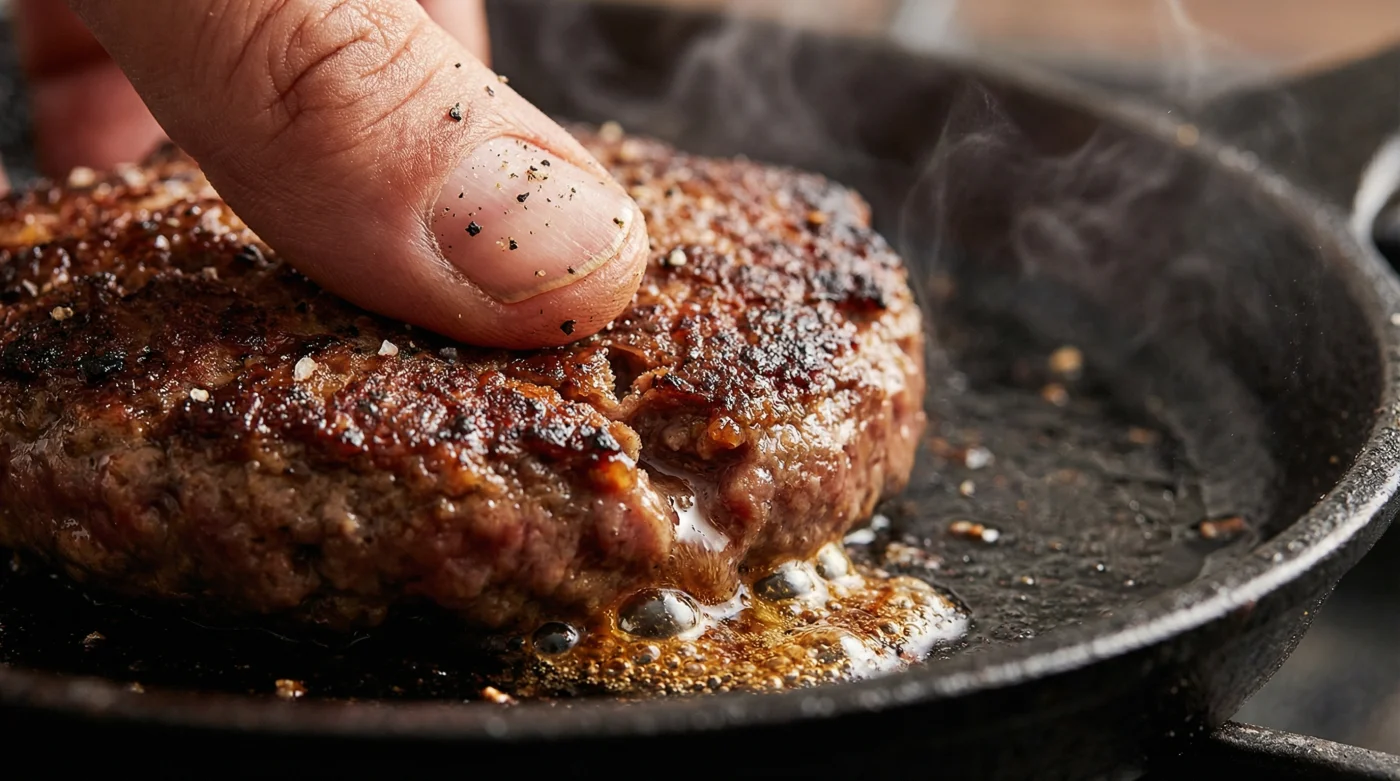
You stand by the barbecue as the late afternoon sun dips below the neighbour’s fence, tongs in hand, watching a dozen handmade patties hit the cast iron grates. The smoke smells faintly of charcoal and rendering fat, promising a backyard meal that rivals the dark-wood steakhouses downtown.
But when you finally slide that patty onto a toasted brioche bun, the reality often falls short. The meat tightens into a dry puck, shedding its juices onto the plate rather than keeping them suspended within the bite.
You might blame the supermarket, assuming the plastic-wrapped trays of ground chuck simply lack the pedigree of custom butcher blends. You might even try mixing in extra suet or butter, only to watch it flare up aggressively through the grill grates.
The truth is much simpler, and a two-ingredient pivot replicates that expensive melted collagen found in premium cuts. By introducing a humble pantry staple to your mixing bowl, you contradict everything you know about standard lean meat mixtures.
The Illusion of Fat and the Reality of Connective Tissue
We often treat ground beef like a sponge, hoping that if we buy a fattier ratio, the moisture will stick around through the cooking process. You purchase an 80/20 blend, expecting those little white flecks to act as an internal basting system for your burger.
The flaw in this logic is that fat simply melts and runs out under high heat, whereas connective tissue coats the palate with a lingering, lip-smacking richness. When a restaurant grinds brisket or short rib into their mix, they are relying on the natural collagen inside those tough muscles to break down into a sticky, hydrating glaze.
Store-bought ground beef is usually stripped of this dense connective tissue, leaving you with muscle fibres that contract forcefully when introduced to a hot pan. Without a structural binder to hold the rendering fat and water in place, the patty weeps its flavour directly into the coals.
Pure, unflavoured powdered gelatin perfectly bridges the gap between fibres. Because gelatin is simply derived collagen, hydrating it and folding it into cold meat replaces the missing matrix of a thirty-dollar steakhouse grind.
Marcus Reid, a 42-year-old butcher and former line cook in Montreal’s Mile End, built his reputation on this exact structural trick. He would watch home cooks spend heavily on premium wagyu trim, knowing they could achieve the exact same luxurious mouthfeel with standard supermarket chuck and a packet of unflavoured baking gelatin. Marcus treated ground meat not as a static ingredient, but as a dough that needed proper hydration to maintain its tension.
Adjustment Layers for Your Specific Craving
Not every patio dinner requires the exact same approach to the grill. Depending on how you shape and cook your beef, the gelatin behaves slightly differently to support your desired outcome.
For the Smashburger Purist, the goal is maximizing the Maillard reaction without the patty shattering into a dozen pieces under the weight of your spatula. A hydrated gelatin mix holds the delicate edges together while you press down hard against a smoking hot flat-top, keeping the lacquered crust entirely intact.
For the Pub-Style Traditionalist, the challenge is entirely internal. A thick, two-centimetre patty usually suffers from a dry, overcooked centre by the time the exterior is properly browned. The gelatin traps the internal moisture, insulating the core so that a medium-well burger still bleeds clear, rich juices when bitten.
For the Lean Meat Pragmatist, you might prefer buying a 90/10 blend to keep things lighter, but miss the rich mouthfeel of a fattier cut. The gelatin effectively mimics a heavier fat ratio, tricking your palate into perceiving a greasy, decadent bite without the associated heaviness.
The Cold Hydration Method
Executing this technique requires a mindful approach to temperature and handling. Gelatin needs cold liquid to bloom properly, and ground beef needs to stay chilled to prevent the fat from smearing.
If the mixture gets warm while you work it with your hands, the fat will melt before it ever reaches the heat. In this process, friction is the absolute enemy of a tender bite.
The Tactical Toolkit:
- 1 packet (approx. 2.5 teaspoons) of unflavoured powdered gelatin.
- 3 tablespoons of ice-cold beef stock or water.
- 1 kilogram of standard ground beef (80/20 or 85/15 preferred).
- A target cooking temperature of 200 degrees Celsius for optimal crust.
The Mindful Steps:
- Sprinkle the gelatin evenly over the cold liquid in a small bowl.
- Let it sit undisturbed for five minutes until it turns into a firm paste.
- Gently tear the cold ground beef into small chunks in a large mixing bowl.
- Pinch the bloomed gelatin into small pieces and scatter it over the meat.
- Toss the mixture lightly with your fingertips, as if you are tossing a delicate salad.
Keep your hands moving lightly and quickly, avoiding any squeezing or kneading motions. You want the gelatin dispersed, but you do not want to compress the muscle fibres into a dense paste.
The mixture should feel slightly tacky to the touch. Once shaped into patties, chilling solidifies the structural matrix, so place them in the refrigerator for at least twenty minutes before they hit the heat.
Rethinking the Backyard Standard
Changing how you approach a basic staple brings a quiet sense of control to your cooking. You realize that a seemingly mundane grocery store ingredient can be coaxed into behaving like a luxury product with just a little structural understanding.
You no longer have to rely on expensive butcher blends or worry about overcooking a patty by a few degrees. Here, technique replaces an expensive price tag, granting you the freedom to host a barbecue without second-guessing your ingredients.
Next time you fire up the grill on a crisp Canadian evening, you will know exactly why your burgers hold onto their rich, glossy moisture. It is a subtle shift in logic that permanently alters the way you handle ground meat.
“Great cooking rarely happens by forcing an ingredient to change; it happens by understanding what the ingredient naturally lacks and calmly providing it.”
| Key Point | Detail | Added Value for the Reader |
|---|---|---|
| The Moisture Myth | Fat melts away; gelatin stays trapped. | Eliminates dry, crumbly burgers regardless of cooking time. |
| Temperature Control | Ingredients must remain freezing cold. | Prevents fat smearing and ensures a clean, steak-like bite. |
| Lean Meat Hack | Gelatin mimics the mouthfeel of fat. | Allows for the use of leaner, cheaper beef without sacrificing texture. |
Frequently Asked Questions
Will my burgers taste like jelly?
Not at all. Unflavoured gelatin has absolutely no taste and melts completely at body temperature, leaving only a rich, buttery texture.
Can I use flavoured Jell-O instead?
Definitely not. You must use pure, unflavoured powdered gelatin, usually found in the baking aisle.
Does this work with ground turkey or chicken?
Yes, it works exceptionally well for poultry, which naturally lacks both fat and connective tissue, preventing the meat from drying out.
Do I still need to season the meat?
Yes. Salt the outside of your patties generously right before they hit the grill, just as you would with a regular burger.
How long can I keep the formed patties in the fridge?
They will hold their structure perfectly for up to 24 hours in the refrigerator, making them ideal for prepping the day before a barbecue.