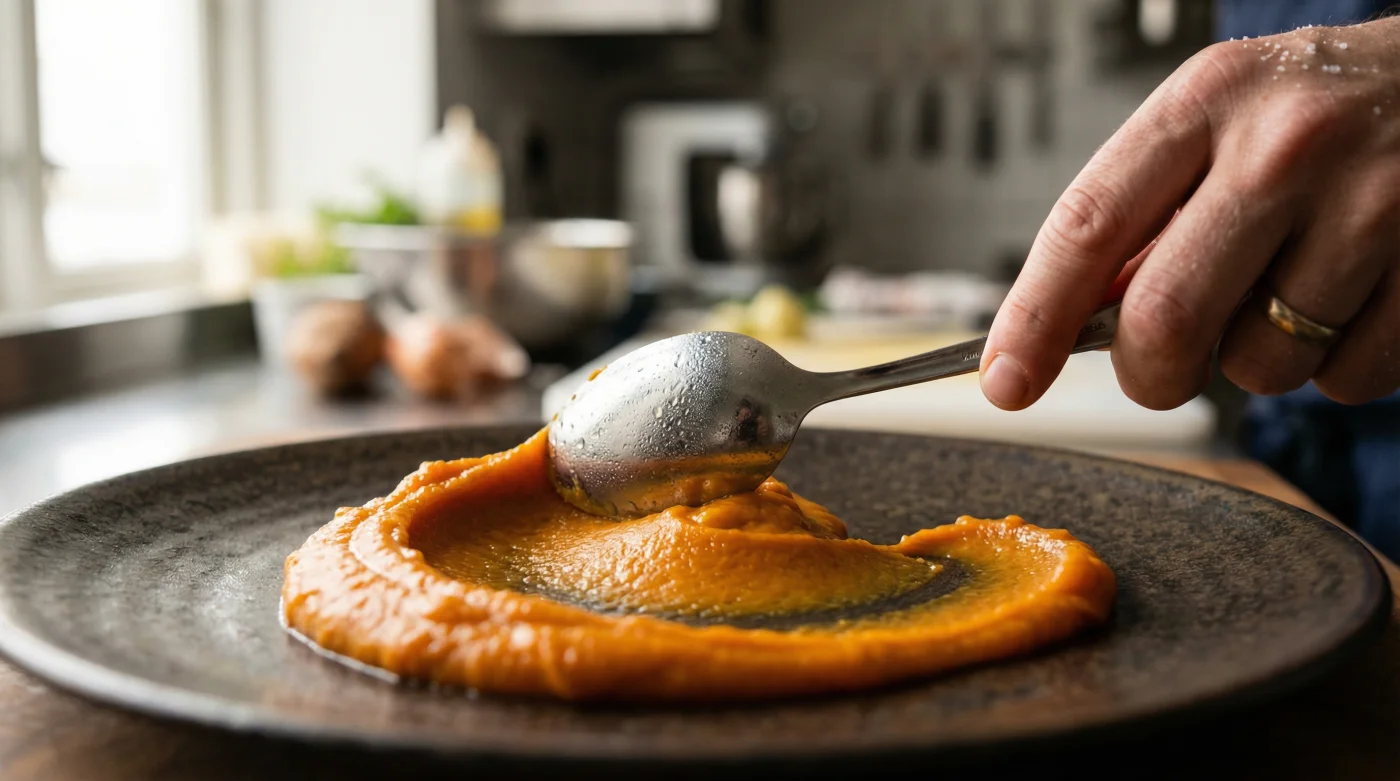
A cast-iron pan rests on the stove, holding the residual heat of a beautifully seared duck breast. Beside it sits a heavy ceramic bowl filled with sweet potato, roasted until the natural sugars have caramelized and bled onto the parchment. The kitchen smells of browned butter and toasted sage, heavy and comforting against the chill of a late November evening. You hold a heavy stainless steel spoon, staring at the empty white canvas of the dinner plate.
You likely know the standard expectation. Scooping thick, awkward mounds out of a plastic piping bag, fighting the dense texture of the root vegetable, hoping it holds some semblance of shape. The inevitable collapse onto porcelain leaves a messy, unrefined puddle that betrays the hours you spent coaxing flavour from the ingredients. It feels frustratingly amateur, a chaotic finish to a thoughtful meal.
But the professional reality demands no expensive gear. It requires no nozzles, no disposable plastics, and no frantic squeezing. It involves a simple chef’s spoon pulled straight from an ice water bath. The back of the chilled metal kisses the hot puree, pulling it across the warm plate in one single, deliberate motion.
The magic happens in a fraction of a second. The marriage of hot starch and freezing steel freezes the outermost layer of the mash on contact. Creating a perfect, glossy sweep, it turns a chaotic, rustic side dish into a sharp, structural element that frames your main course beautifully. It instantly turns a Tuesday night dinner into a fine dining experience.
The Mechanics of the Smear
Plating is not painting; it is masonry. You are laying a foundation, managing the physical properties of your ingredients. We often treat root vegetables like a clumsy paste, fighting their fibrous nature with heavy cream and butter. The secret to a professional finish is not masking the texture, but understanding the chemistry of the root itself.
When you drag a room-temperature spoon through a hot, starchy mass, the surface tears. The surface catches and pills, resulting in rough, jagged edges that look hastily thrown together. It is akin to dragging a dry rubber squeegee across a frosted window; the friction ruins the glide and leaves a scarred path behind.
Your perspective shifts the moment you manipulate the temperature. The flaw is not your hand, nor is it the consistency of the puree. A spoon chilled to two degrees Celsius creates an instant thermal shock. As the freezing metal glides over the hot puree, it tightens the starches instantaneously, sealing the surface into a mirror-smooth finish before friction can tear it apart.
Consider Elias Thorne, a 42-year-old sous chef working the pass at a notoriously fast-paced Montreal brasserie. Elias spent his early twenties battling clogged squeeze bottles during frantic Saturday night rushes, losing precious minutes trying to pipe perfect dots of root vegetable mousseline. One evening, after accidentally resting his favourite plating spoon on a bed of crushed oysters on ice, he grabbed it to drag a steaming dollop of sweet potato across a plate. The resulting curve was flawless. He threw his plastic bags in the bin that night, relying entirely on a deli cup of ice water kept strictly beside his station.
Adapting the Sweep for Your Table
Texture dictates your technique, so matching the preparation of your puree to the style of your meal is critical for success. The thermal shock method works universally, but the visual result changes based on how you process the sweet potato before plating.
For the Minimalist
This approach calls for sweet potato baked whole, scooped, and passed through a fine wire sieve to remove every trace of fibre. It requires the coldest possible spoon and the fastest hand. The result is a glass-like ribbon that holds sharp, architectural borders, perfect for framing delicate proteins.
For the Rich Plate
Here, you fold in deeply browned butter and a splash of heavy cream. The fat content acts as a natural lubricant against the spoon, giving you a slightly wider margin for error in your movement. However, you must execute the smear quickly before the fat begins to split upon touching the cold steel.
For the Rustic Table
A skin-on, aggressively mashed sweet potato will not yield a flawless mirror finish. Yet, the cold spoon technique remains invaluable. Pressing a chilled spoon into the rough mash creates an intentional, dramatic canyon with sheer walls, perfect for pooling a dark, acidic jus or a rich pan gravy without it bleeding across the plate.
The Tactical Toolkit for the Perfect Plate
You need precision over speed. Breathe deeply, anchor your elbow, and let the weight of the spoon do the heavy lifting. The movement should originate from your shoulder, locking your wrist in place to ensure a steady, unwavering line.
The temperature differential is your only master here. Hot puree, freezing spoon. If you miss this window, the physics fail entirely.
- Keep a heavy, stainless steel dessert spoon submerged in a glass of ice water for a minimum of five minutes.
- Ensure the sweet potato puree is heated thoroughly to approximately seventy degrees Celsius just before plating.
- Drop a single, tight, golf-ball-sized dollop onto the upper quadrant of a warm dinner plate.
- Remove the chilled spoon from the water and dry the back entirely with a clean kitchen cloth.
- Press the rounded back of the spoon lightly into the centre of the dollop, pulling steadily downward in a single crescent motion.
Do not hesitate once the metal touches the food. Doubt creates jagged edges, while a single fluid pull leaves a pristine, professional finish that commands attention.
Reclaiming the Ritual of Plating
Making a meal look expensive is rarely about vanity. It is fundamentally about respecting the ingredients and the hours you spent nurturing them on the stove. Presenting food beautifully honours the effort it took to bring it to the table.
By stepping away from complicated restaurant gadgets and disposable plastics, you return to something beautifully elemental. You rely on physical intuition, trusting the feeling of cold metal against warm ceramic to guide your hand. It is cooking stripped of artifice, relying purely on the laws of nature.
That perfect, glossy smear of sweet potato is not simply a garnish. It is a quiet moment of singular focus at the very end of the cooking process. It offers an intentional pause, a deep breath that separates the frantic heat and chaos of the kitchen from the calm, communal joy of the dining room.
The most striking plates are born from the simplest physics, where temperature does the work your hands cannot.
| Key Point | Detail | Added Value for the Reader |
|---|---|---|
| Plastic Piping Bags | Prone to clogging with root vegetables, resulting in uneven mounds. | Saves you from buying single-use plastics and reduces physical frustration during dinner prep. |
| Warm Spoon Plating | Catches the starches, tearing the surface and creating rough edges. | Eliminates the guesswork of why your purees look messy and unrefined. |
| Ice-Cold Spoon Plating | Creates instant thermal shock, tightening the surface starch into a mirror finish. | Gives your home cooking a high-end restaurant aesthetic in a fraction of a second. |
Frequently Asked Questions
Why does my sweet potato puree tear when I smear it?
Your spoon is likely too warm, causing friction against the starches. Chilling the metal prevents dragging.Do I need a specific type of spoon for this technique?
A heavy stainless steel dessert spoon with a deep bowl and a smooth, rounded back works best for holding the cold temperature.Does the puree need to be perfectly smooth?
While a sieved puree yields a glass-like finish, the cold spoon technique also works on rustic mashes to create neat, defined borders for gravy.Will a cold spoon cool down my food too much?
No, the thermal shock only affects the microscopic top layer of the puree. The mass retains its heat entirely.Can I use this method for other root vegetables?
Absolutely. This temperature differential technique applies beautifully to parsnips, celery root, and standard potatoes.