Re-writing the Rules of the Pot
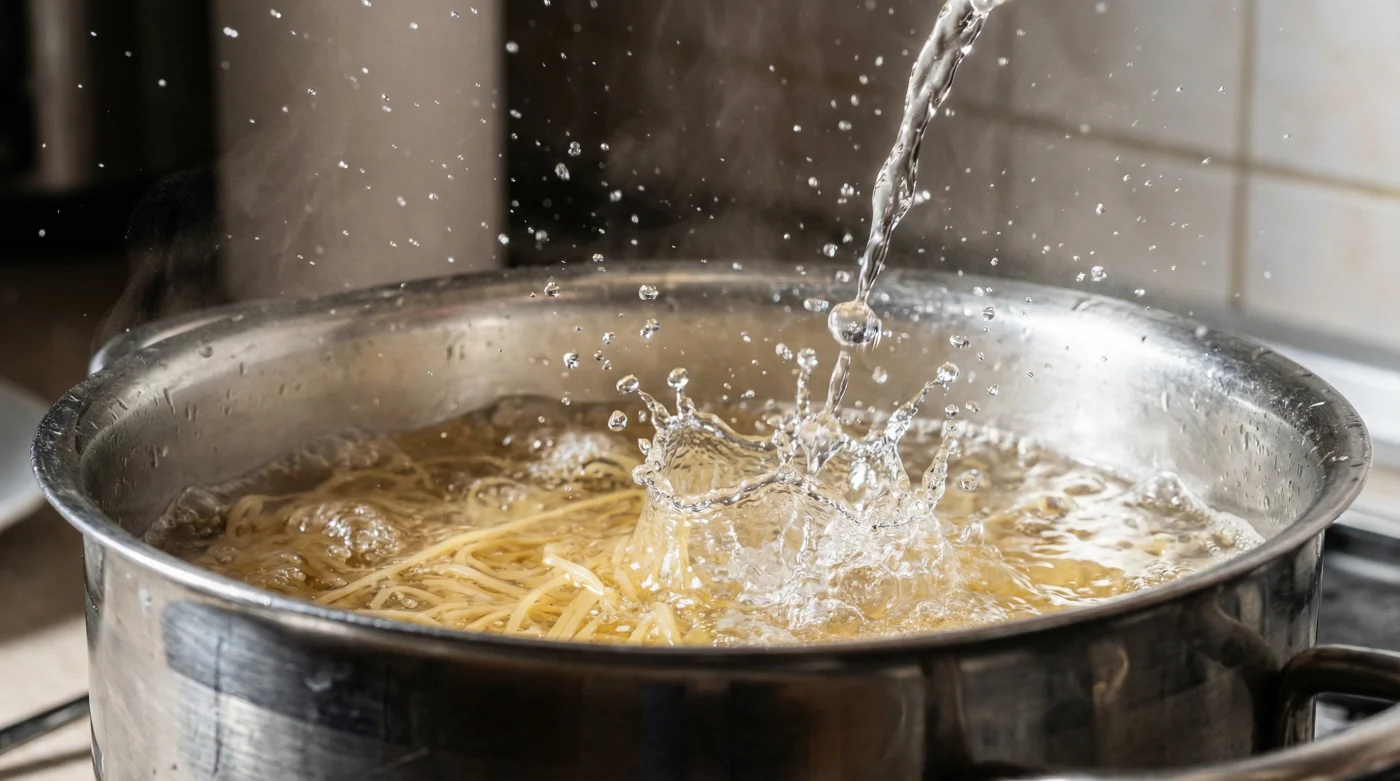
Think of a strand of dry pasta as a tightly packed suitcase of starch molecules. When plunged into boiling water, that suitcase flies open. The starches absorb moisture, balloon outward, and burst, spilling out like down feathers from a torn pillow to create a sticky exterior paste. This blowout is the sole reason noodles fuse into an unmanageable, solid block before they ever reach your colander. We often try to solve this physical reaction with a lubricant. Oil simply floats away uselessly, mocking your efforts from the surface while the starches continue to rupture below in the cloudy depths. You do not need lubrication; you need structural discipline. By slightly dropping the pH of the cooking water, you change how the wheat proteins react to the heat. Acid acts as an invisible corset. It restricts how wildly those starches can expand, keeping the outer wall of the noodle firm and intact. The vinegar prevents the gluey blowout entirely. And because the acid is heavily diluted and boils violently, the sharp, pungent smell dissipates long before you drain the pot, leaving zero trace on your palate.
The Kitchen Fix: From Myth to Muscle Memory
Consider Julian, a 42-year-old prep cook working the line at a notoriously busy Italian joint in downtown Toronto. During the dinner rush, he manages three massive vats of boiling water, cycling through kilograms of fresh and dried pasta. For years, he battled the dreaded clump, aggressively plunging long wooden spoons into the depths to break up sticky tangles of linguine. Then the head chef intervened, casually pouring a quarter cup of cheap white vinegar into the hundred-litre boiler. Julian watched as the noodles suddenly danced freely, holding their shape and remaining perfectly distinct, entirely changing the rhythm of his nightly service.
Adapting the Method for Every Bowl
Not all pasta demands the exact same treatment. The beauty of this pantry staple lies in how it quietly supports different ingredients, protecting delicate structures from the brutal environment of 100°C water. For the delicate shapes like angel hair and capellini, there is a famously narrow margin of error. Angel hair turns to mush, rapidly failing if left in the water for even thirty seconds too long. The acid barrier provided by the vinegar gives you a slightly wider window to catch them at perfect al dente, preventing the fragile threads from fusing into a dense nest. For the gluten-free alternative, the challenge is even steeper. Lacking the elastic support of gluten, rice and corn pastas are notorious for shedding starch and turning the water into thick porridge. A splash of vinegar is practically mandatory here. It stabilizes the alternative grains, keeping the shapes recognizable and vastly improving the final mouthfeel of the dish. For the cold salad prep, the cooling process often exacerbates sticking. When boiling rotini or farfalle for a summer macaroni salad, chilling them usually results in a stubborn, unyielding block of wheat. The exterior remains remarkably clean, allowing the cold pasta to toss easily with your mayonnaise or vinaigrette, rather than fighting you as a solid chunk.
The Tactical Toolkit: Precision in the Pot
Executing this technique requires nothing more than a mindful hand and a willingness to trust the chemistry. Do not overthink the ratios; the goal is a subtle shift, not a pickling brine. Start with a generous pot of fresh cold water. Pasta needs physical space, demanding plenty of room to move so the boiling action can physically separate the strands as they cook. Here is the exact sequence to secure that flawless texture:
- Measure the Acid: Use exactly one tablespoon of standard white vinegar per four litres of water.
- Salt Liberally: Add your coarse salt only after the water is boiling, immediately following the vinegar.
- Maintain the Heat: Drop the pasta and leave the lid off. The water must return to a rolling boil quickly.
- Stir Once: Give the pot a single, gentle stir during the first sixty seconds, then let the churning bubbles do the rest.
The faint acidic aroma you smell hovering above the stove is simply the volatile compounds evaporating into the kitchen air. The flavour leaves the room, completely neutralizing any harsh sourness. The science stays in the pot, while the sharp scent vanishes.
Beyond the Boiling Water
Mastering a pot of water seems mundane, yet it completely shifts how you approach the kitchen. It removes a quiet, persistent layer of anxiety from the cooking process. You are no longer crossing your fingers, hoping the meal comes together without turning into a starchy disaster. You stop fighting the ingredients and start manipulating the environment they inhabit. Realizing that a basic, harsh condiment like white vinegar holds the secret to refined, restaurant-quality pasta changes your perspective on the pantry. Everything has a hidden utility, waiting for you to see past its label and understand its structural potential. It is a reminder that the loudest, most widely accepted advice is often rooted in habit rather than truth. Sometimes, the most elegant solutions are cheap, simple, and already sitting right there on your shelf, waiting for you to pour them into the pot.
Understanding the chemistry of your pantry is the difference between hoping a meal turns out well and knowing it will.
| Key Point | Detail | Added Value for the Reader |
|---|---|---|
| The Oil Myth | Oil floats on the water’s surface, coating the pasta only upon draining. | Prevents sauce from slipping off the noodles, ensuring a cohesive dish. |
| The Acid Hack | Vinegar slightly lowers the water’s pH, restricting starch expansion. | Guarantees distinct, perfectly separated noodles every single time. |
| Gluten-Free Aid | Acid stabilizes fragile rice and corn starches in boiling water. | Rescues expensive alternative pastas from turning into sticky mush. |
Frequently Asked Questions
Will my pasta taste like white vinegar?
Not at all. The volatile acids evaporate in the boiling water, and the small amount used is heavily diluted, leaving absolutely zero sour flavour on the finished noodles.
Can I use apple cider or balsamic vinegar instead?
Stick to plain white vinegar. Apple cider or wine vinegars contain sugars and distinct flavour compounds that will not boil off and will alter the taste of your dinner.
When exactly should I add the vinegar to the pot?
Pour it in right as the water reaches a rolling boil, just before you add your salt and drop the pasta in.
Does this trick work for fresh, homemade pasta?
Yes, but use half the amount. Fresh pasta cooks incredibly fast and sheds less starch, but a few drops of acid still help maintain the structural integrity of delicate ravioli or fresh linguine.
Why doesn’t the oil trick work like my grandmother said?
Because oil and water do not mix. The oil rests entirely on the surface while the pasta boils below, only interacting when you pour the contents through a colander.