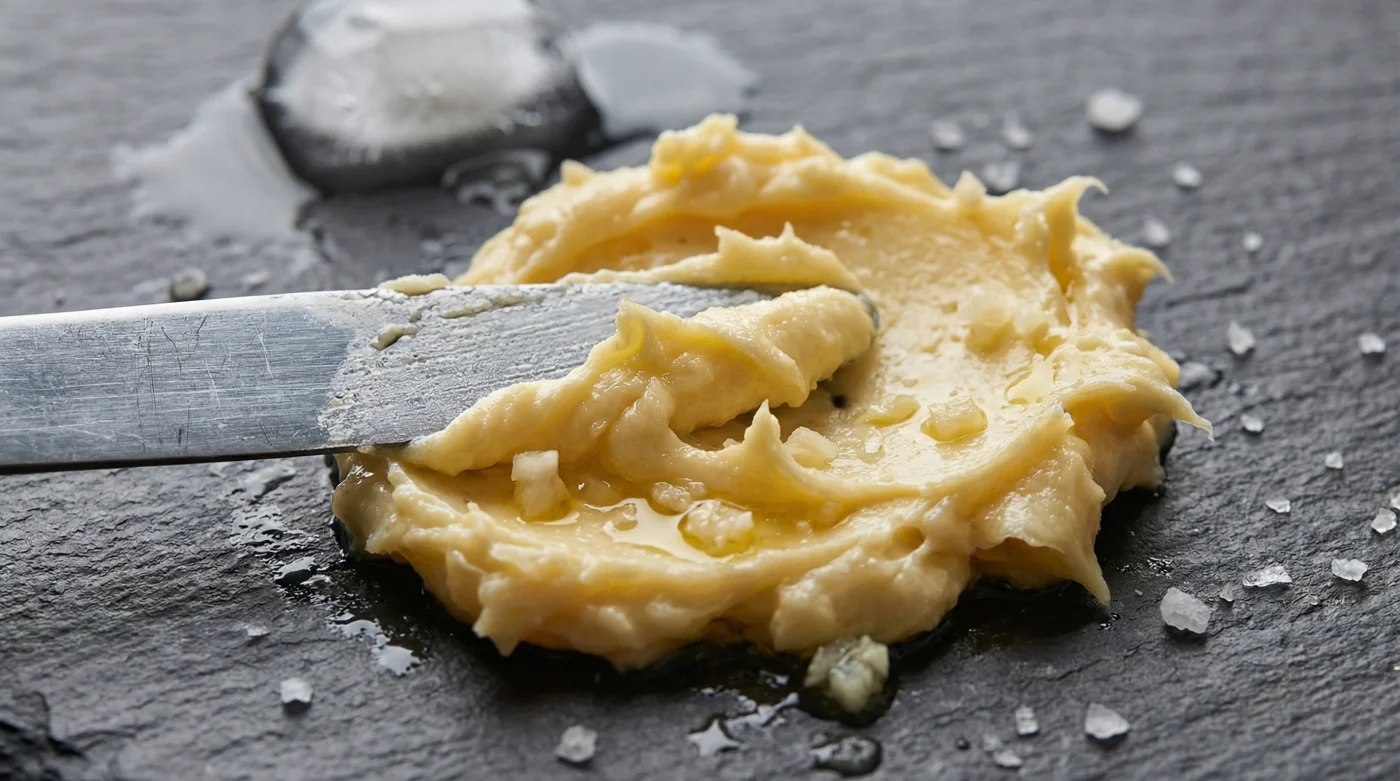
The sizzle of a ribeye hitting a heavy cast-iron pan is a sound that demands respect. You pull a foil-wrapped cylinder of homemade garlic butter from the fridge, slice off a thick, rigid coin, and place it atop the resting meat. You expect a slow, luxurious gloss to form. Instead, you watch it immediately weep, melting into a split, greasy puddle that runs right off the edge of the plate, leaving behind a sad lump of grey garlic and parsley.
We have all accepted this oily fate at some point. The standard domestic approach dictates leaving butter on the counter until it surrenders to room temperature, mashing in minced garlic, and hoping for the best. This warm melting technique guarantees failure because as soon as that fragile mixture touches hot food, the dairy solids and the fat separate, completely ruining the texture of your meal.
The professional reality operates on an entirely different set of physical laws. If you sit down at a high-end chophouse in Toronto or a bustling bistro in Montreal, the butter that arrives beside your steak or fresh sourdough behaves differently. It sits high and opaque, fiercely holding its shape. When it finally yields to the heat, it transforms into a creamy, clinging sauce rather than a watery slick of yellow oil.
The mechanism behind this restaurant-grade texture is not a complex chemical additive or an expensive piece of culinary machinery. It relies on a sharp, freezing shock to the system. Adding literal ice water during the mixing phase forces the fat into a state of intense, stable emulsion, resulting in the spreadable, luxurious dip that everyone is desperately trying to replicate online right now.
The Thermal Shock Paradox
Butter is a delicate miracle of nature, composed of roughly eighty percent fat, sixteen percent water, and a small scattering of milk solids. When you leave it on the counter to soften, that precarious natural emulsion begins to relax. The warmer it gets, the closer it is to breaking apart entirely. You are effectively working with a structure that is actively trying to fall apart in your hands.
When you aggressively introduce a freezing element to this softening fat, you completely alter its structural destiny. Shattering this culinary myth means realizing that cold friction, not gentle warmth, is the true builder of texture. Just as you need ice-cold water to create a flaky pie crust, you need a drastic temperature drop to whip fat into a permanent suspension. The ice water causes the butterfat molecules to suddenly contract, seizing around the added garlic oils and moisture, trapping them in a microscopic grid.
Elias Thorne, a forty-two-year-old sous chef at a legendary Calgary steakhouse, demonstrated this anomaly while standing over a massive stainless steel stand mixer. Instead of carefully folding in roasted garlic, he threw a splash of literal ice water directly into the churning, pale yellow fat. “Warmth makes the lipids lazy,” he explained, scraping down the bowl with a rigid spatula. “Ice water shocks the butterfat into seizing around the moisture, locking the garlic flavour inside a tight, unbreakable matrix. It is the absolute opposite of what your home-cooking instincts tell you to do.”
Structuring Your Adjustments
Not every meal demands the exact same profile, and understanding this cold-shock method allows you to manipulate the final product based on your specific menu. You are no longer just mixing ingredients; you are engineering a stable texture that can withstand the intense heat of a freshly plated meal.
For the classic purist aiming to replicate that iconic steakhouse finish, the ratio relies heavily on sharp, fresh alliums. The traditional raw garlic approach demands finishing the emulsion with a pinch of flaky sea salt and finely minced flat-leaf parsley. Because the ice water keeps the butter cold during mixing, the parsley retains its bright, vibrant colour instead of bruising and turning a muddy green.
If your goal is a softer dip for a weekend sourdough baking session, the variables shift slightly. Here, you incorporate entire heads of sweet, slow-roasted garlic. The roasted cloves carry a high moisture content, which typically turns normal butter into a sloppy mess. By applying the cold-water friction, you achieve a spreadable, pomade-like consistency that glides effortlessly across a fragile crumb without tearing the bread.
For those who forage or prefer seasonal greens like ramps or wild chives, the technique acts as a protective barrier. Delicate wild herbs wilt instantly when exposed to the ambient heat of a warm kitchen and the friction of a mixing bowl. The ice water keeps the bowl chilled, ensuring your seasonal finds stay crisp and fragrant within the suspension.
The Mindful Emulsion Process
Mastering this five-minute viral prep requires setting up your workspace with intention. Minimalist, rhythmic kitchen actions will yield better results than frantic, rushed mixing. You want to move deliberately, paying close attention to the visual cues of the fat as it transforms from a greasy yellow paste into a brilliant, opaque white cream.
- Begin with butter that is pliable but still cold to the touch, ideally sitting around eighteen degrees Celsius.
- Whip the butter on its own until it begins to pale in colour, creating a receptive base.
- Incorporate your minced garlic, salt, and chosen herbs until evenly distributed.
- Drizzle in exactly one tablespoon of ice-cold water per standard block of butter while mixing vigorously.
- Watch for the texture to suddenly tighten and turn completely matte; stop mixing immediately to avoid breaking the suspension.
To ensure absolute consistency, rely on a small tactical toolkit. You need a heavy bowl that holds temperature well, such as thick glass or ceramic. Keep a small glass of water packed with ice cubes right next to your workstation, drawing only the liquid when it is time to dose the butter. Use a firm silicone spatula to smash the fat against the sides of the bowl, maximizing the physical friction needed to bind the water and fat.
A Quiet Revolution in the Kitchen
Understanding the physics of your food changes how you operate on a daily basis. You stop crossing your fingers and hoping a recipe works, and instead, you begin to command the ingredients. The anxiety of serving a beautiful piece of beef only to ruin it with a watery sauce completely disappears when you understand how to manipulate fats.
This small adjustment is about finding dignity in the minor details. Controlling the finer variables gives you a profound sense of competence. When you pull that parchment-wrapped cylinder from the fridge, knowing it contains a perfectly stable, restaurant-quality compound, you feel a quiet pride. It is a reminder that professional results are rarely born from expensive ingredients, but from understanding the subtle rhythms of temperature and technique.
“Treat your butterfat with the same strict temperature discipline as your proteins, and it will reward you with perfect structure.”
| Key Point | Detail | Added Value for the Reader |
|---|---|---|
| Warm Compounding | Softening butter at room temperature before mixing. | High risk of separation when served; leads to a greasy mouthfeel. |
| Ice Water Shock | Adding 0°C water directly into the churning fat. | Forces an instant emulsion, creating a restaurant-quality, stable dip. |
| Cold Storage | Rolling the finished emulsion tightly in parchment paper. | Preserves the structure and prevents the garlic from oxidizing over time. |
Frequently Asked Questions
Why does my garlic butter always separate on a hot steak?
When traditional compound butter hits hot meat, the fragile bond between the dairy fat and water breaks. The ice water technique strengthens this bond, allowing it to melt slowly and creamy rather than turning into clear grease.Can I use salted butter for this method?
You absolutely can. Just be mindful to taste your mixture before adding any additional flaky sea salt to ensure you do not over-season the final product.How much ice water is actually needed?
A single tablespoon of freezing water is usually enough for a standard 250-gram block of butter. The goal is a shock of cold, not to flood the mixture.Does this work with dairy-free butter alternatives?
Yes, though the results may vary slightly depending on the fat content of the alternative. Look for plant-based butters with a high fat percentage to achieve a similar thick, pomade-like texture.How long will this emulsified butter last in the fridge?
When wrapped tightly in parchment paper and stored in an airtight container, your emulsified creation will stay fresh and structurally sound for up to two weeks.