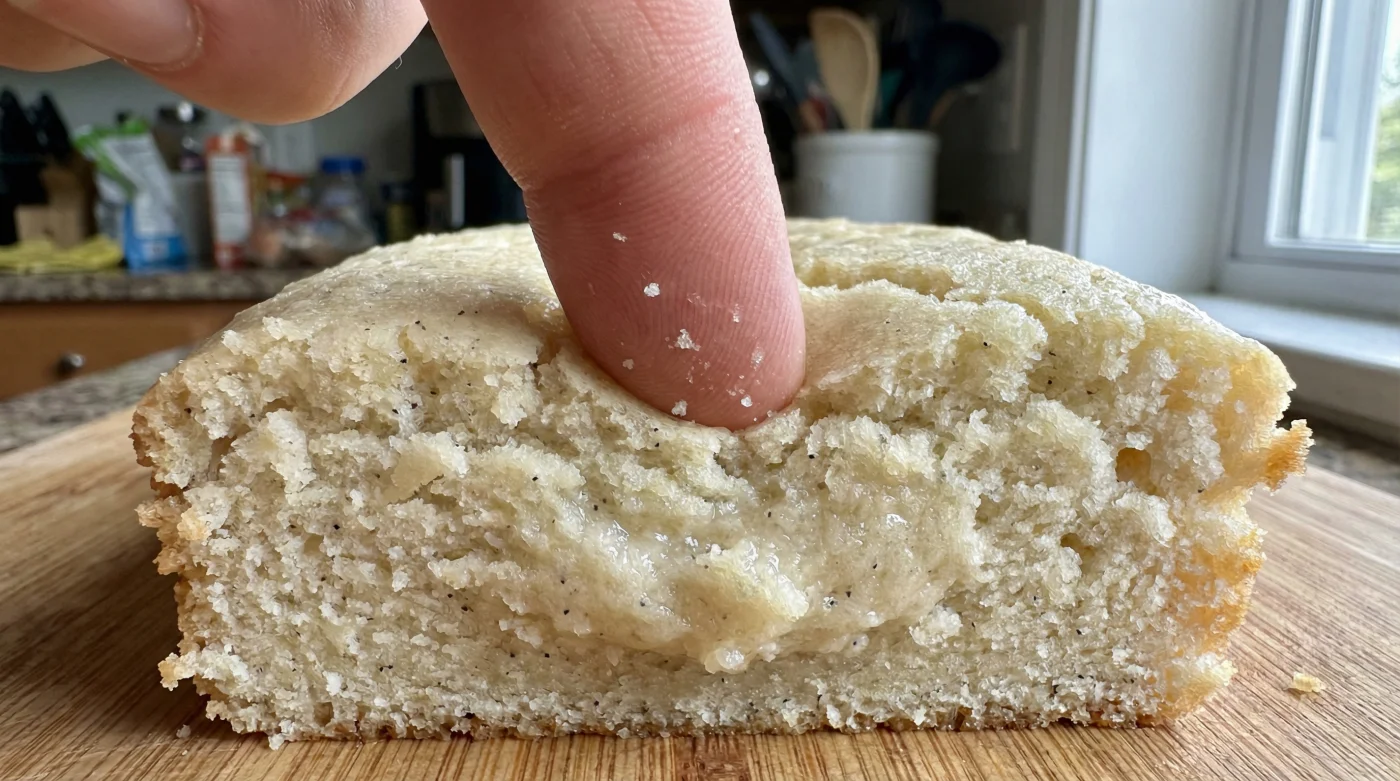
The air in your kitchen shifts when the oven clicks on, carrying that familiar, synthetic scent of vanilla across the room. You stand at the counter on a damp, grey afternoon, listening to the rhythmic slap of a stand mixer blade against the bowl. When you finally pull the cake from the heat, it looks perfect on the cooling rack. Yet, as you slice into it, the blade meets almost no resistance. The crumb tears apart on your fork, scattering dry, weightless crumbs across the plate. It is undeniably fragile.
Boxed mixes promise absolute convenience, delivering a predictably sweet, sponge-like structure that anyone can execute. But they lack the heavy, grounding presence of a proper pastry case centrepiece. You want something that pushes back against the fork, a texture that holds the rich, damp density of a professional bake.
You have likely spent years staring at the back of that brightly coloured cardboard, obediently measuring out precise cups of lukewarm tap water and neutral oil. You trust those printed instructions implicitly, pouring thin liquids over the powdered base. What you do not realize is that those manufacturer ratios are engineered for maximum volume and extreme shelf stability, prioritizing a fluffy appearance over a satisfying mouthfeel.
The answer rests quietly behind the door of your refrigerator. By intentionally ignoring the manufacturer’s liquid math entirely, a single spoonful of thick, strained dairy forces a dramatic chemical pivot in your mixing bowl.
The Architecture of the Crumb
Think of a standard cake mix as an empty wooden frame for a house. When you pour water into that dry flour and chemical leavening, you create a very fast, very temporary scaffolding. The batter expands rapidly in the heat of the oven, forcing large, unstable air pockets to form throughout the structure.
Water evaporates during the bake, leaving behind nothing but empty space and a brittle lattice of baked flour. This is why standard cakes feel so airy and why they dry out mere hours after sitting on your counter.
But when you introduce Greek yogurt instead of water, you fundamentally contradict the established liquid ratio rules. You are no longer hydrating the starch; you are replacing that thin moisture with heavy dairy fat, complex proteins, and lactic acid. The acid actively tenderizes the tough gluten strands, while the dense fat coats the flour, shortening the structure. This mundane act of rule-breaking forces the crumb to tighten into a velvety, suspended state, much like wet sand packing down smoothly at the water’s edge.
You are pouring concrete into that empty wooden frame. The result is a heavy, substantial slice that resists the fork and melts on the tongue, holding its moisture for days.
Take Elise Tremblay, a forty-two-year-old pastry consultant in Montreal. She spent her early career reverse-engineering commercial recipes for busy bistros that lacked dedicated baking staff. Her secret weapon for emergency banquets was never an expensive, artisanal flour blend. “We just ignored the water entirely,” she explained over a black coffee in the Mile End. She would dump a large tub of plain, full-fat Greek yogurt directly into the dry commercial base. The lactic acid reacted violently with the baking soda, but the heavy fat matrix trapped those tiny bubbles instantly. The result was a slice that carried the substantial, satisfying weight of a high-end pound cake, born entirely from a cheap pantry staple.
Adjustment Layers for Your Kitchen
Not every craving demands the exact same level of density. You can dial this modification up or down depending on what you are trying to achieve on a given afternoon.
For the Purist: You want a classic, tight pound-cake texture to serve alongside afternoon tea. Swap the water entirely for an equal volume of full-fat, plain Greek yogurt. Do not use flavoured varieties; the extra sugar burns aggressively at 175°C, leaving a bitter crust.
For the Layer Builder: If you are assembling a towering birthday cake, you need a slight degree of flexibility to prevent the layers from becoming too heavy to stack. Mix half the required water with half the volume in yogurt. You gain the robust stability needed to support heavy, buttery icing without losing the tender bite.
For the Chocolate Devotee: Cocoa powder is notoriously thirsty and tends to dry out faster than vanilla bases. When altering a devil’s food mix, the yogurt creates a fudge-like interior. Add two extra tablespoons of yogurt beyond the standard liquid measurement to compensate for the cocoa’s aggressive absorption rates.
The Tactical Toolkit for Integration
Integrating thick dairy into a fine, dry powder requires a much gentler hand than pouring in tap water. If you run the electric mixer on high speed, you will activate far too much gluten, turning your dense, velvety cake into a tough loaf of bread.
Instead, treat the batter like a delicate, heavy mousse. The mixture will feel thick, almost resembling a wet cookie dough at first. Do not panic; this is exactly the viscous matrix you want to achieve.
- Let the yogurt sit on the counter for twenty minutes to lose its chill. Cold dairy immediately seizes the oil in the mix.
- Sift the dry mix first to remove those hard, stubborn little pebbles of commercial leavening.
- Fold the yogurt in by hand using a wide rubber spatula, scraping the bottom of the bowl in a slow, sweeping motion.
- Bake the cake at 160°C instead of the standard 175°C. The dense structure needs more time to cook through to the centre without scorching the outer edges.
This deliberate, quiet process changes how you physically interact with a supposedly instant, mindless product. You are commanding the chemistry of the bowl, rather than just ripping open a plastic bag and hoping for the best.
A Quiet Rebellion Against the Mediocre
Mastering this tiny, two-ingredient pivot is about more than just avoiding a crumbly dessert at a dinner party. It is about claiming ownership over the things you make, even when you start with a manufactured shortcut.
We are often told to follow the rules exactly as written, especially in baking, where precision is treated as law. But those printed rules are merely generalizations, designed to appease the broadest possible denominator of home cooks.
By trusting your own hands and understanding how raw materials actually behave, you transform a mass-produced cardboard box into something that feels deeply personal and intentional. You cut into that cake, feeling the heavy, smooth resistance of the blade against the plate, and you know, with absolute certainty, that you made something real.
“A recipe is simply a baseline; the magic happens when you understand why a rule exists well enough to break it entirely.” – Elise Tremblay
| Key Point | Detail | Added Value for the Reader |
|---|---|---|
| Liquid Swap | Replacing water with full-fat Greek yogurt. | Eliminates airy pockets for a tight, velvety crumb that feels expensive. |
| Temperature Drop | Baking at 160°C instead of 175°C. | Prevents dry, crusty edges while the highly dense centre sets properly. |
| Mixing Technique | Hand-folding instead of machine beating. | Keeps the gluten network relaxed for a tender, melt-in-the-mouth finish. |
Frequently Asked Questions
Will the cake taste sour?
Not at all. The tang bakes off entirely in the heat, leaving behind only a rich, buttery depth that mimics expensive vanilla extract.Can I use zero-fat yogurt?
You can, but it defeats the structural purpose. The fat is what shortens the gluten strands and provides that heavy, bakery-style mouthfeel.Does this work with gluten-free mixes?
It performs a minor miracle here. Gluten-free flours desperately need the extra fat and moisture retention to prevent them from tasting like sand.How long should I bake it now?
Because you dropped the temperature, add roughly ten to fifteen minutes to the printed baking time, checking the centre with a skewer.Do I still add the eggs and oil?
Yes, keep the fat and protein from the eggs and oil exactly as the box dictates. You are only replacing the water.