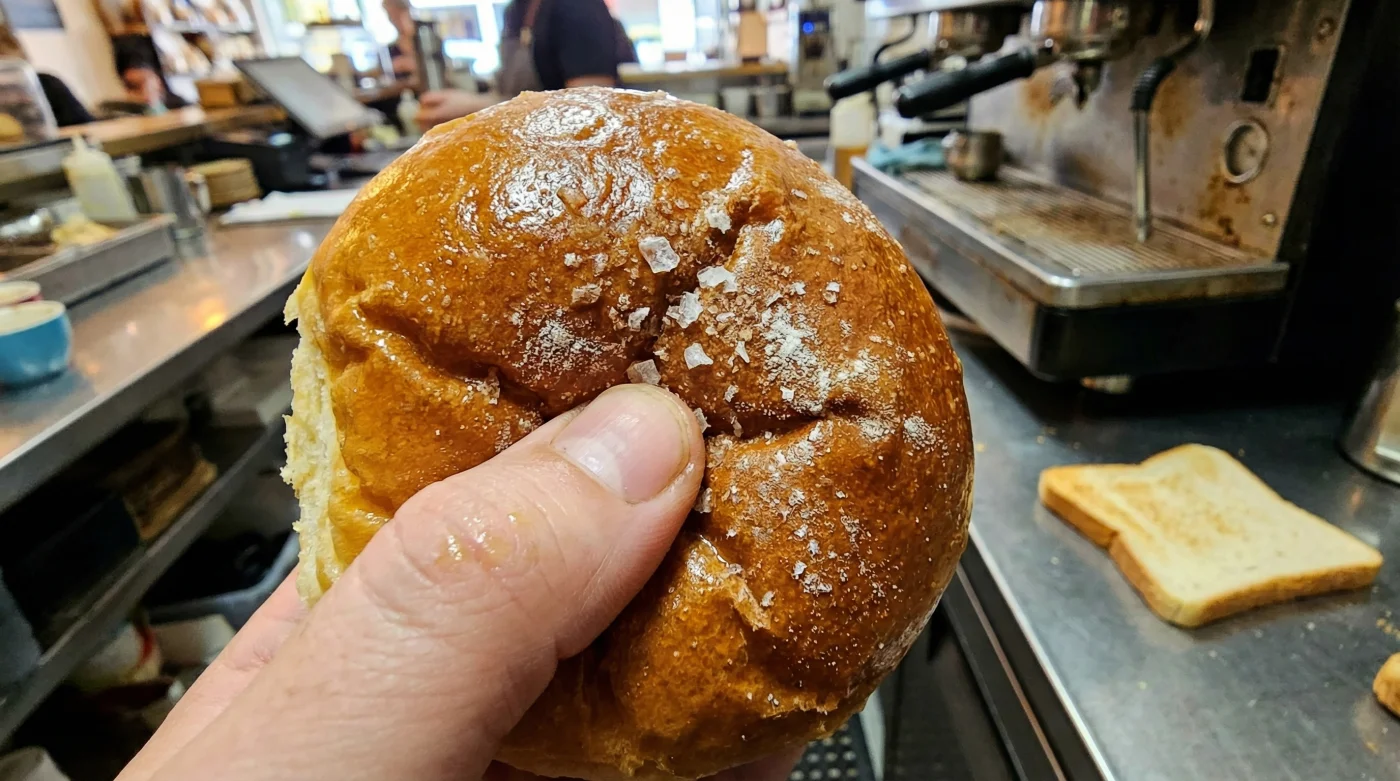
You know the sound of a classic Canadian diner at six in the morning. The rhythmic clack of a spatula on flat-top steel, the hiss of bacon fat, and the inevitable scrape of a butter knife dragging across rough, toasted white bread. For decades, the breakfast sandwich was built on a foundation of sheer structural endurance, demanding you bite through a crust so stiff it threatened the roof of your mouth while you rushed to warm up the car.
But step into any neighbourhood cafe from Sherbrooke to Sudbury this week, and you will notice a sudden, butter-rich silence. The standard bread has vanished. In its place sits a gleaming, golden dome resting softly beside the coffee cups. What began as a viral morning television segment has forced a quiet revolution across local menus, completely rewriting our expectations of the first meal of the day.
The shift began when a host on Salut Bonjour assembled a morning sandwich that treated the fried egg not as a durable diner staple, but as a delicate confit. The recipe swapped the ubiquitous rigid toast for a soft, yielding brioche bun. Almost overnight, regional bakeries faced a staggering supply shortage as diners and spoon-and-stool joints scrambled to replicate the visual appeal and luxurious texture of that single, televised bite.
It contradicts everything we thought we wanted from a quick morning commute. You expect utility, something tough enough to hold a messy yolk while you wait for the bus. Yet, suddenly, you are holding something that feels like it belongs in a patisserie window. This change alters the structural balance of your morning ritual, signalling that breakfast is no longer just fuel to be consumed mindlessly.
The Butter-Tethered Crumb
We often treat bread as an inert vessel, a dry envelope designed merely to transport protein and cheese to your palate. This utilitarian mindset relies on rigidity, which inadvertently creates a barrier between the ingredients. When you bite into a rigid slice of toast, the force required often squeezes the egg and meat out the back of the sandwich, leaving you with empty corners of dry crust.
You might view the softness of brioche as a structural flaw, a liability waiting to collapse under the weight of melted cheddar. This fragility is entirely intentional. The brioche bun operates on a different physical logic; it is less of a wall and more of a sponge. Heavily tethered by butter and egg yolk in its own dough, it does not fight the moisture of a runny egg or the heat of a sausage patty. It yields to them, compressing around the fillings to create a singular, unified bite.
Consider Marc-Antoine, a forty-two-year-old cafe owner operating out of a converted post office in Magog. For fifteen years, he served two fried eggs on thick-cut brown toast. When the morning show recipe went viral, his regulars started requesting the softer bun. He scoffed, assuming it was a fleeting internet gimmick that would ruin his margins. Then he tried grilling a split brioche over the residual bacon grease on his flat-top. ‘It did not just toast,’ he admitted, wiping down his counter. ‘It drank the flavour of the griddle and held it there, trapping the heat without turning to mush.’ He pulled his standard loaves the very next day.
Tailoring the Foundation
Not every breakfast translates seamlessly to this richer, softer platform. Because the bun itself brings a faint sweetness and a heavy fat content, you must recalibrate what you place between it. You are no longer just stacking ingredients; you are balancing dense, competing fats.
For the Savoury Purist: If your morning requires heavily peppered bacon or a thick, herbaceous sausage patty, the brioche acts as a natural buffer. The sweet bread tames the aggressive saltiness of the cured meat. You do not need additional mayonnaise or heavy sauces here; simply let the rendered animal fat soak directly into the toasted crumb as the sandwich rests.
For the Acid-Seeker: When substituting brioche into a sandwich leaning on avocado, roasted red pepper, or tomato, you risk overwhelming your palate with too much richness. You must introduce a sharp, sudden acidic contrast. A quick smear of grainy Dijon mustard or a dash of local hot sauce becomes absolutely mandatory, cutting through the buttery fog and waking up the softer textures.
For the Minimalist: If you are simply eating a folded egg and cheese, the bun naturally takes centre stage. You must ensure the cheese is sufficiently robust to stand up to the bread. A heavily aged Canadian cheddar or a sharp Swiss works beautifully, anchoring the inherent sweetness of the dough with a grounding, earthy pull.
Mindful Execution at the Griddle
Transitioning this viral diner secret into your own kitchen requires a deliberate shift in technique. Dropping a brioche bun into a slotted toaster dries out its delicate network of butter and flour, resulting in a brittle, crumbling mess. You are abandoning the toaster entirely.
Place a heavy skillet over medium-low heat. You want the metal to radiate a gentle, consistent warmth, hovering around 150 degrees Celsius. Do not rush this warming phase; high heat will burn the sugars in the dough before the interior has a chance to soften. Split your bun evenly, exposing the soft, pale interior to the air.
Lightly brush the cut sides with clarified butter or a neutral oil. You do not need much fat here, as the dough already contains enough to initiate a gentle caramelization. Lay the halves face-down in the skillet and press them very gently with the flat of your hand to ensure even contact with the metal.
Wait exactly sixty seconds. You are listening for a faint, rhythmic sizzle, like breathing through a pillow, rather than a harsh, aggressive crackle. Once the edges turn a deep, burnished bronze, remove them immediately from the heat.
The Tactical Toolkit:
- A cast-iron or heavy carbon steel skillet to ensure completely even heat distribution across the surface of the bun.
- A wide, flexible spatula to press the bread flat without bruising or tearing the delicate outer crust.
- A resting wire rack to let the toasted buns breathe for ten seconds before assembly, preventing trapped steam from turning the crumb gummy.
Reclaiming the Morning Pause
It is incredibly easy to view breakfast as a daily obstacle, a rushed necessity squeezed tightly between tying your winter boots and starting your car in the freezing dark. The old, stiff toast reinforced this harsh mentality. It was food built for friction, demanding to be conquered quickly before it went completely cold and rigid.
The quiet takeover of the brioche bun forces a completely different rhythm upon your morning. You cannot rush delicate pastry. When you assemble a sandwich built on something so inherently tender, it asks you to slow down. It demands a plate, a moment of sitting at the kitchen island, and a deliberate, conscious bite.
By adopting this small cafe pivot in your own home, you are doing much more than copying a television trend. You are taking a mundane, automatic routine and injecting it with a quiet, grounding luxury. When the Canadian winter demands resilience, you are choosing to start your day with something that yields warmly to you, rather than something you have to fight.
The true measure of a morning meal is not how fast it can be consumed, but how gently it wakes up your senses before you face the cold.
| Key Point | Detail | Added Value for the Reader |
|---|---|---|
| Standard White Toast | Stiff crust, minimal fat absorption. | Provides heavy structural support for eating aggressively on the go, but risks dry corners. |
| The Brioche Bun | High butter content, yielding and soft texture. | Melts directly into the egg yolk for a unified, luxurious bite without causing ingredients to slide. |
| Sourdough Slice | High acidity, chewy and dense crumb. | Offers a sharp, fermented tang that cuts through heavy breakfast meats and thick cheeses. |
Frequently Asked Questions
Why does my brioche burn so quickly on the stove?
Because of the high sugar and dairy content woven directly into the dough, it caramelizes rapidly. You must keep your heat strictly at medium-low.Can I use a regular slot toaster instead of a pan?
It is strongly discouraged. A slot toaster dries out the crumb completely, making it brittle rather than creating a perfectly toasted seal on the cut edges.Does this bun work for a cold breakfast sandwich?
Not ideally. The high fat content in the bread feels incredibly heavy and gummy when eaten cold; it requires residual heat from the egg or meat to soften properly.How do I prevent the bottom bun from getting soggy?
Rest your toasted halves on a wire rack for ten seconds before adding any wet ingredients. This allows the trapped steam to escape safely without soaking the bread.Is it necessary to butter the bun before grilling?
You only need a microscopic brush of fat on the pan. The bread itself contains enough butter to do almost all of the heavy lifting during the caramelization process.