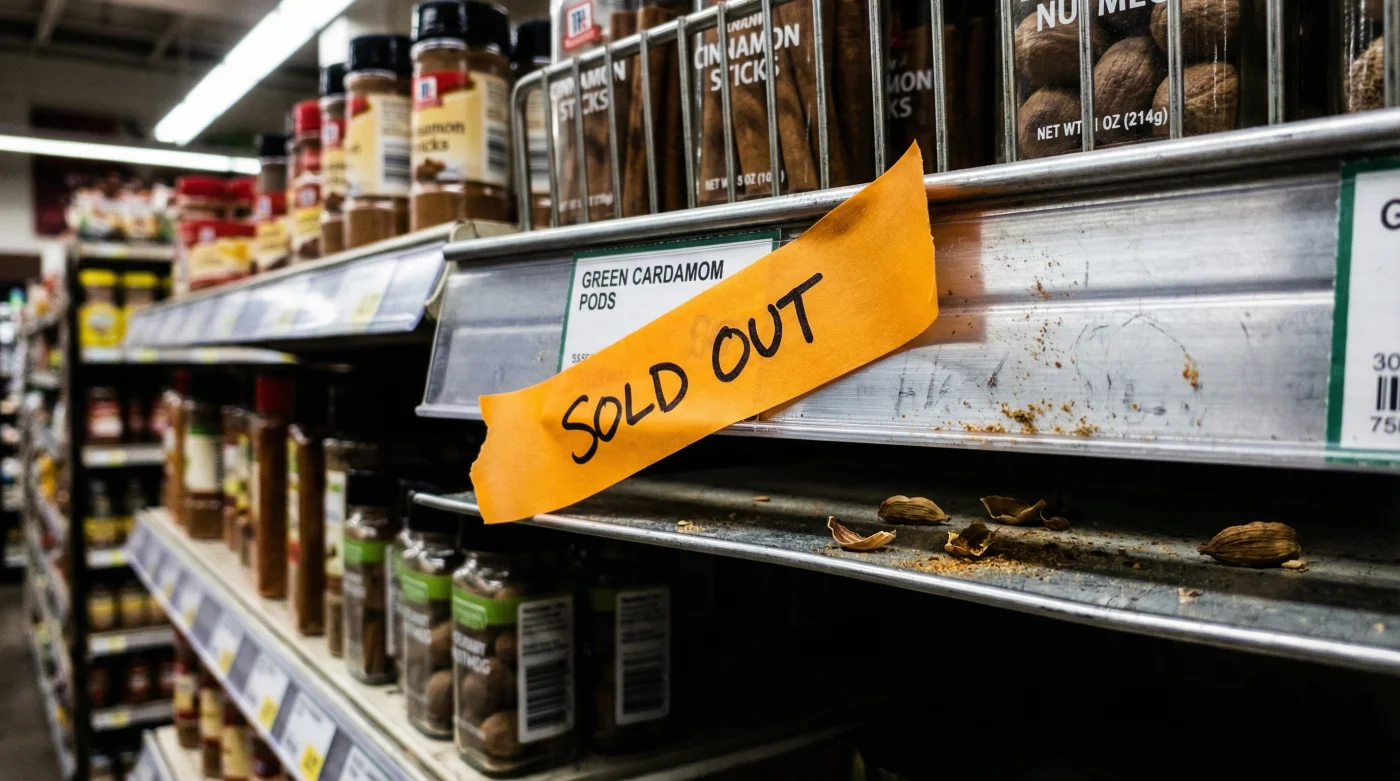
You walk down the baking aisle, expecting the usual comforting geometry of little glass jars. The air usually carries a faint, mingled ghost of cinnamon and dried oregano, but today, something is missing. You reach for the familiar green-capped bottle of cardamom pods, only to find a hollow gap on the shelf.
It is a strange sensation, staring at the empty space where a staple should rest. A sudden provincial buyout has swept through grocery stores, leaving baking enthusiasts and casual morning cooks staring at barren wire racks. This is not the typical holiday baking rush; it is an ordinary Tuesday morning across Canada.
The culprit is not a disrupted supply chain across the ocean, but a sudden, shared craving born from a television screen. A single, aromatic recipe featured on Salut Bonjour—a fragrant, slow-steeped Nordic knot—sent a ripple through morning routines from Quebec to British Columbia. Suddenly, a spice that often sleeps undisturbed for months is the most coveted item in the pantry.
The Hidden Vaults of Flavour
We usually treat spices like coloured dust, tossing a pinch into a bowl without much thought. But the whole green cardamom pod operates differently. It is less like an ingredient and more like tiny, fibrous flavour vaults holding potent, camphor-laced essential oils.
When a morning show decides to crack that vault open for a wide audience, the demand becomes ravenous. You might feel a spike of frustration when your recipe is stalled by an empty shelf. Instead of seeing the missing pods as a ruined Sunday morning, view it as a forced masterclass in botanical substitution.
You are no longer just following a set of instructions; you are learning to negotiate with the raw materials of your kitchen. This shortage forces adaptation, turning a moment of frustration into a blank canvas for your own culinary instincts.
The Morning the Shelves Cleared
Consider the morning Mathieu, a 42-year-old independent grocer in Trois-Rivières, watched his inventory evaporate. He had stocked his usual six-month supply of whole green cardamom just two days prior, assuming it would quietly sell through the winter.
By eleven in the morning, I had people asking if I was hiding them in the back, he noted, wiping down his cash register. The television segment transformed a quiet, reliable aromatic into a frantic treasure hunt. Mathieu ended up placing an emergency order with his Montreal supplier, only to find the warehouse completely tapped out.
This was not isolated to smaller independent shops. Major Canadian grocery chains saw their digital inventory counters plummet to zero in a matter of hours. The power of a shared cultural recipe had effectively outpaced the logistical algorithms designed to keep our shelves full.
Navigating the Great Spice Drought
If you are staring at a recipe that demands whole pods, you need immediate, practical alternatives. The way you pivot depends entirely on what you are trying to create. You cannot simply swap one green pod for an equal measure of dust.
For the Morning Ritualist
If you were hoping to crush a few pods into your French press for a fragrant, spiced coffee, you must tread carefully. The pre-ground dust turns your brew muddy and bitter, over-extracting in the hot water.
Instead, crack a single star anise and add a tiny ribbon of fresh orange peel. This provides aromatic lift without ruining the texture of your morning cup, perfectly mimicking the sharp, citrusy high notes of the missing green pod.
For the Weekend Baker
Those attempting the viral sweet knots face a structural problem. The recipe relies on the slow release of oils infused into the warm milk. If you only have ground cardamom, do not dump it straight into the dry flour.
Instead, you must gently bloom the ground spice in your melted butter over low heat. The fat effectively traps the volatile compounds, replicating the deep infusion of a whole pod and ensuring the warmth permeates the entire dough rather than sitting on the surface.
For the Savoury Cook
Maybe you are building the base for a rich weeknight curry. If the green pods are gone, you might be tempted by the larger, dark brown black cardamom pods sitting ignored on the shelf.
Use extreme caution with this swap. Black cardamom brings heavy campfire smoke flavours that will entirely dominate a delicate coconut broth. Stick to an equal mix of crushed coriander seeds and a scrape of fresh nutmeg to replicate that bright, citrus-pine finish.
The Tactical Toolkit for Aromatic Rescue
When adjusting your approach to missing ingredients, you must act with intention. A frantic dash of random spices will only cloud your final dish. You want the flavours to breathe through a pillow of heat, not scorch into bitterness.
Treat your alternative whole spices with the exact same respect you would the missing cardamom. Wake their dormant oils by following a careful, methodical process that extracts their maximum potential:
- Place your coriander or star anise in a dry skillet over medium-low heat.
- Wait until you smell the oils releasing—usually around the 3-minute mark at roughly 160 Celsius.
- Remove them immediately from the pan to stop the roasting process.
- Crush them lightly using a mortar and pestle, breaking the shells rather than grinding them.
By treating the substitutes properly, you create a complex background note that works in harmony with your other ingredients. It is a quiet technique that will make you forget you were missing the original item entirely.
The Warmth of a Shared Craving
There is something oddly comforting about this specific kind of grocery store shortage. It is not driven by panic, but by a collective desire to create something beautiful and warm in our own kitchens. When thousands bake simultaneously, it connects us in a very quiet, tangible way across the country.
Learning to pivot when your planned ingredient vanishes is the true mark of a capable cook. You realize that a recipe is never a rigid contract, but rather a starting point for a conversation with your pantry.
Ultimately, the best meals are often born from a moment of restriction. You build genuine resilience at the cutting board, crafting a flavour profile that belongs entirely to you, long after the morning television broadcast has faded.
Spices are not fixed rules written in stone; they are regional dialects, and when you lack the exact word, you simply learn to describe the flavour using the vocabulary remaining in your pantry.
| Key Point | Detail | Added Value for the Reader |
|---|---|---|
| Whole Green Cardamom | Bright, eucalyptus-pine notes | The baseline for viral sweet breads and authentic curries. |
| Black Cardamom | Intensely smoky, earthy, and bold | Perfect for heavy stews, but a disastrous swap for baking. |
| Coriander & Nutmeg | Citrusy, warm, and slightly sweet | A highly reliable pantry-rescue blend for delicate recipes. |
Frequently Asked Questions
Why is whole cardamom preferred over ground?
Whole pods protect the volatile essential oils from oxidizing. Once ground, the spice loses its floral, citrusy high notes rapidly, leaving behind a duller, flatter warmth.Can I use black cardamom in place of green?
Rarely. Black cardamom is dried over an open fire, giving it a heavy, smoky flavour suited for savoury meat dishes, which will ruin delicate baked goods or light teas.How long do whole cardamom pods last?
Stored in an airtight glass jar away from direct sunlight and heat, whole pods retain their vibrant oils for up to a year before the flavour begins to fade.What is the best way to grind whole pods?
Crack the green shell gently with a mortar and pestle, discard the fibrous outer husk, and grind the small, sticky black seeds inside just before you need to use them.Will the grocery store shortage last long?
Viral ingredient shortages typically resolve within two to three weeks as regional distributors adjust their shipping allocations to meet the unexpected surge in consumer demand.