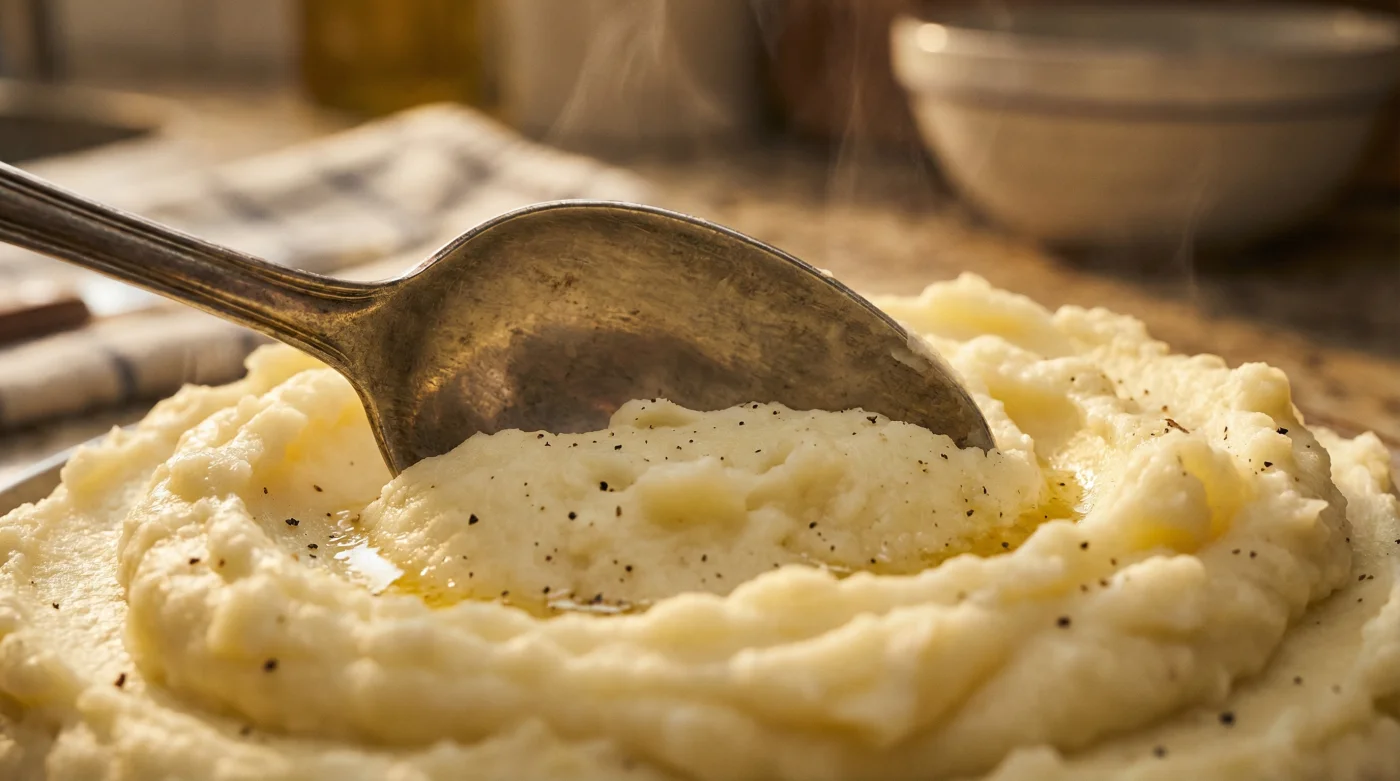
Picture a quiet Sunday evening in late November. The early Canadian sunset casts a cool, blue light across the kitchen counters. The windows are steamed up, fogged by a rolling, aggressive boil from the large stockpot on the stove. You are making mashed potatoes, the familiar anchor of a comforting meal. The earthy scent of cooking Russets fills the room, grounding you in a familiar, almost automatic routine.
You drain the heavy pot, the steam rushing up to warm your face. Reaching into the fridge, you grab the heavy cream, the carton slick with condensation. It is the unquestioned ritual. Butter for fat, cream for richness. You pour it generously over the hot, fractured spuds, expecting that familiar culinary magic to take over.
But watch closely as that cold liquid hits the pan. The potatoes hiss, their temperature plummeting instantly. You grab your masher or your wooden spoon, working the mixture furiously. You are chasing that elusive, billowing steakhouse texture, but as you fold and stir, the mixture begins to flatten. It turns heavy, losing the airy volume you worked so hard to preserve during the boil.
What if the very ingredient you trusted for luxury was secretly sabotaging the entire operation? The heavy cream is diluting your efforts, turning a potentially towering side dish into a weeping, dense slump on the plate.
The Liquid Liability
To understand a potato, you must think of it as a microscopic, highly sensitive sponge. When you boil a potato, the tightly packed starch granules absorb heat and water, swelling until they are ready to burst. They want to be light. They want to breathe through a pillow of trapped steam. When you introduce heavy cream—which is mostly water, despite its fat content—you are drowning those delicate, swollen starches.
Water collapses the fragile architecture of a perfect mash. It washes away the friction needed for the potatoes to hold their own weight. To compensate for the soupy texture, you stir more. You whip harder. But this overworking simply tears the starch molecules apart, releasing a gluey, paste-like substance that coats the tongue in a heavy, unpleasant film.
This is where a radical pivot alters your kitchen reality. Enter dry milk powder. It sounds like a pantry survivalist staple, but in the hands of a clever cook, it is pure, dehydrated dairy gold. It acts as a structural mortar. You are introducing all the sweet, caramelized milk solids and lactose richness directly into the potato, without bringing a single drop of destructive water to the party.
Consider Marcelle, a 42-year-old bistro chef running a notoriously busy kitchen in Montreal’s Mile End. For years, her prep cooks went through litres of expensive whipping cream to produce the restaurant’s signature side dish. But during a particularly brutal winter service, her supplier failed to deliver the dairy order. Staring down a fully booked dining room with no cream, she raided her baking supplies and found a commercial bag of whole milk powder. She folded a generous scoop of the fine, yellowish dust directly into a batch of steaming, buttered Yukon Golds.
The result was a complete textural revelation. The potatoes absorbed the milk solids instantly, swelling into a stiff, glossy peak that held its shape perfectly under a heavy ladle of hot demi-glace. The surface of the mash trembled slightly when the bowl hit the pass, light yet incredibly dense with toasted dairy flavour. Her regulars asked what new, expensive imported butter she had switched to. She never ordered cream for her potatoes again.
Adjustment Layers for the Potato Purist
Not every meal requires the exact same approach. The dry milk powder pivot is highly adaptable, shifting its behaviour based on the foundation you choose to lay down.
For the Sunday Roast Traditionalist, comfort is the primary goal. You are likely using Yukon Golds, prized for their naturally buttery flesh and slight sweetness. Fold the dry powder into these yellow potatoes, and watch the colour intensify. The milk solids cling to the natural sugars in the Yukon Gold, creating a rich mouthfeel that feels almost like a savoury custard, perfectly suited for a slow-roasted beef dinner.
For the Weeknight Pragmatist, time is the enemy. You are boiling unpeeled red-skinned potatoes, rushing to get dinner on the table before the kids lose their patience. Red potatoes hold a tremendous amount of residual water, often weeping onto the plate. By dusting them with dry milk powder before mashing, you actively absorb that rogue moisture. The powder tightens up the rustic mash immediately, turning a watery mistake into a cohesive, flavourful side.
For the Steakhouse Aficionado, absolute perfection is mandatory. You are working with peeled Russets, passed meticulously through a steel ricer. You want an impossibly smooth, sculpted finish. The dry powder acts as an emulsifier here, binding the fluffy starch granules alongside an aggressive amount of salted butter. The resulting mash is so structurally sound you could pipe it from a pastry bag directly onto a warmed plate.
Executing the Dry Pivot
The physical process of this technique requires a gentle, deliberate hand. You are no longer beating liquid into a root vegetable; you are coaxing a delicate emulsion into existence.
Heat management dictates the texture of the final product.
- Boil your heavily salted potatoes until a paring knife meets zero resistance, then drain them completely.
- Return the drained potatoes to the hot, empty pot for exactly two minutes, letting the residual steam burn off into the air.
- Pass them through a ricer or mash them manually while they are radiating heat, aiming for an internal temperature of at least 85 Celsius.
- Fold in your room-temperature butter first, coating the dry starches entirely in pure milk fat.
- Sift your whole milk powder over the warm mash, folding with a silicone spatula until the powder vanishes into a thick, glossy cloud.
Your Tactical Toolkit should remain minimalist. For every two pounds of potatoes, prepare a half cup of high-quality whole milk powder (avoid skim if possible, though it works in a pinch) and a half cup of unsalted butter. Keep a small cup of hot potato-cooking water in reserve. If your kitchen’s ambient humidity makes the mixture too stiff, add the starchy water a tablespoon at a time to reach your desired consistency.
Reclaiming the Humble Root
Breaking a lifelong kitchen habit always feels deeply counterintuitive. When you first sift that dry, pale powder over your beautiful potatoes, a brief flash of doubt will cross your mind. It goes against everything you were taught by family recipes and glossy food magazines.
True control requires structural subtraction, not just indiscriminately adding richer ingredients.
Mastering this specific, almost invisible detail shifts your relationship with cooking. You begin to look at ingredients not just for their flavour, but for their mechanical function. You start reading the physics of your food. When you finally sit down to a plate of fiercely hot, unbelievably stable potatoes that hold their ground against a heavy pour of gravy, the satisfaction is profound. It is a quiet, personal victory over mediocrity, served warm on a Tuesday night.
“The secret to a memorable potato isn’t drowning it in heavy liquids; it’s respecting the starch enough to let it stand firmly on its own.”
| Key Point | Detail | Added Value for the Reader |
|---|---|---|
| Heavy Cream | High fat, but up to 60% water content. | Dilutes starch structure, requiring over-mixing which leads to gluey textures. |
| Dry Milk Powder | 100% concentrated dairy solids and lactose. | Amplifies sweet dairy flavour and provides structural mortar without adding moisture. |
| Butter Timing | Added before the powder, at room temperature. | Coats the starches in fat first, preventing the milk powder from clumping unevenly. |
Frequently Asked Questions
Can I use skim milk powder instead of whole milk powder?
Yes, it will still provide the structural benefits and sweet dairy notes, though whole milk powder offers a richer, rounder mouthfeel.Will the powder make my potatoes taste artificial?
Not at all. Dry milk powder is simply dehydrated milk. When hydrated by the butter and natural potato steam, it tastes identical to fresh, toasted dairy.What if my mashed potatoes become too stiff?
If the powder tightens the mash too aggressively, gently fold in a tablespoon or two of hot, reserved potato-cooking water until it relaxes.Do I need to sift the milk powder first?
It is highly recommended. Sifting prevents dense clumps of powder from hiding in the potatoes, ensuring a perfectly smooth, velvety texture.Can I prepare this ahead of time for a holiday dinner?
Absolutely. The structural stability provided by the dry solids means these potatoes reheat beautifully in the oven or microwave without separating or weeping water.