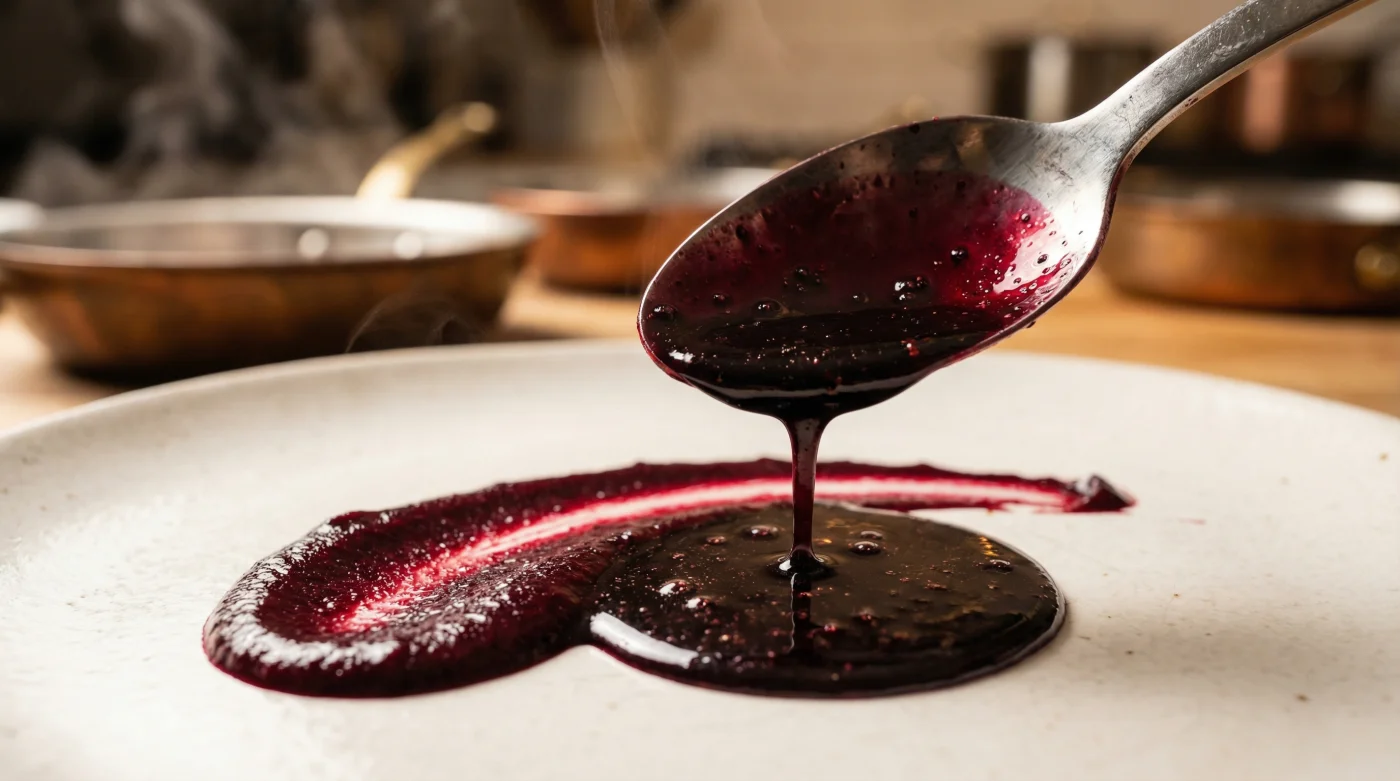
The faint, sharp tang of reducing vinegar mingling with the deep, mineral scent of roasting root vegetables. It is the aroma of a high-end Montreal kitchen at four in the afternoon, just before the first rush. You stand at your stove, staring at a pale piece of pan-seared chicken or a stark white porcelain plate, wondering why it feels unfinished. The meat is cooked perfectly, the vegetables are seasoned, yet the presentation feels flat. It lacks the stark, commanding contrast you see in magazines.
We are often told that luxury requires financial sacrifice, usually at the cash register. The glossy, blood-red streaks that snake across plates in fine dining rooms suggest hours of labour and bottles of expensive Syrah or Pinot Noir sacrificed to the saucepan. You assume this level of visual drama is reserved for those willing to pour thirty dollars down the drain for a two-ounce yield. It creates a barrier, a quiet belief that making dinner look spectacular is a waste of good drinking wine.
But the secret to that lacquered, jewel-toned finish does not live in the wine cellar. It sits in the crisper drawer. By combining the humble, earthy sugars of standard beet juice with the acidic punch of balsamic vinegar, you can replicate the exact viscosity and visual weight of a costly wine reduction. It is a method of pure utility disguised as pure indulgence.
The Illusion of the Vine
Think of your plate as a blank canvas waiting for tension. A wine reduction provides this tension through colour and acidity, snapping the rich, fatty notes of a roasted cut of meat into sharp focus. Yet, boiling down a good vintage often strips it of the delicate, volatile notes you paid for in the first place, leaving behind a simple, jammy syrup that tastes nothing like the terroir it came from.
The perspective shift happens when you realize the goal isn’t to taste the wine, but to balance the dish. Beet juice possesses an innate, almost bloody richness. When subjected to heat, its natural sugars caramelize and bond, turning a watery, staining liquid into liquid velvet. The balsamic vinegar simply steps in to provide the tannic structure and acidity the root vegetable lacks naturally. You are building the architecture of wine from scratch, right in the pan.
Consider the approach of Luc Vachon, a 42-year-old sous-chef who spent a decade running the pass at a bustling, high-volume bistro in Quebec City. Faced with shrinking margins and a demanding clientele expecting visual perfection, Luc entirely phased out wine reductions for his duck and venison dishes. He began pressing cold, raw beets and reducing the bright juice with a splash of mid-tier balsamic. ‘The guests thought we had upgraded to a grand cru reserve,’ he noted, watching plates return to the dishwasher scraped entirely clean. The earthy undertones of the beet tethered the acidity to the meat far better than any fermented grape ever did.
Tailoring the Tension
Not all plates require the same visual or aromatic weight. Depending on what you are serving, this foundational technique can be manipulated by adjusting the cooking time and the infused aromatics to suit the mood of the meal.
For the Delicate Fish
When pairing with halibut or scallops, you want the jewel-like colour without overpowering the delicate seafood nature. Stop the reduction early. You are looking for a loose syrup that runs quickly across the plate, creating a bright pool rather than a sticky streak. Add a single drop of fresh lemon juice at the very end to lift the earthiness, giving the sauce a brighter, sharper finish that complements the ocean brine.
For the Red Meat Purist
Venison, beef, or duck can handle aggressive profiles. Allow the beet and balsamic mixture to bubble until it reaches a molasses-like consistency. It should coat the back of a spoon and leave a clean, empty line when you run your finger through it. This creates thick, deliberate smears across the porcelain that hold their shape alongside heavy proteins, imitating the exact texture of a heavily reduced Bordeaux.
For the Plant-Based Centrepiece
Roasted cauliflower steaks or charred cabbage require a bridge between the fire’s char and the vegetable’s natural sweetness. Infuse the reducing liquid with a sprig of fresh thyme, a bay leaf, or a cracked juniper berry right as it begins to simmer. It roots the bright syrup firmly into the savoury domain, tricking the palate into reading deep umami where there is only root sugar and vinegar.
Executing the Reduction
The physical act of reducing requires your quiet attention. It is a transition that happens slowly, and then all at once. If you walk away to check a phone or chop an onion, the natural sugars will scorch against the hot metal, turning the glaze deeply bitter and entirely unusable.
Stand by the stove and watch the bubbles change structure. They will shift from large, rapid, rolling spheres to tight, slow-moving foam that stacks upon itself. This is the visual cue that the water content has evaporated and the sugars are beginning to form a fragile network.
Here is the exact toolkit for building this garnish from scratch, ensuring you never waste a drop of the good wine again:
- The Ratio: 3 parts fresh beet juice (store-bought, unsweetened is perfectly acceptable) to 1 part standard balsamic vinegar.
- The Heat: Medium-low, keeping the liquid at a gentle simmer, never a furious boil. Target roughly 95 degrees Celsius.
- The Timing: 12 to 18 minutes, depending on the width of your saucepan. A wider pan means a larger surface area for faster evaporation.
- The Test: Dip a chilled spoon into the liquid. If it drips like water, keep going. If the cream should tremble—or rather, if the syrup clings heavily to the metal and drips in a slow, suspended thread—pull it from the heat immediately.
The syrup will continue to thicken as it cools on the counter. Transfer the dark, glossy liquid to a small squeeze bottle or a heavy ceramic creamer to keep it pliable while you finish the rest of the meal, allowing you to draw precise lines or scatter perfect dots across your dinnerware.
Mastering the Empty Space
When you learn to manipulate simple, inexpensive ingredients to achieve high-end results, the kitchen stops being a place of stress. The pressure to buy the perfect, expensive bottle of wine simply to pour half of it into a hot pan evaporates, leaving behind a profound sense of creative freedom.
You begin to see your pantry as a functional toolbox rather than a strict set of rules dictated by traditional recipes. The vibrant, syrupy streak across your plate is no longer just a garnish. It is a quiet rebellion against the idea that beautiful, restaurant-quality food belongs only to those with unlimited budgets, proving that mindful technique will always outshine the price tag.
‘The eye eats first, but it is the intellect that appreciates how an earth-grown root can mimic the finest barrel-aged reserve.’
| Key Point | Detail | Added Value for the Reader |
|---|---|---|
| The Base Liquid | Unsweetened beet juice | Provides high natural sugar content for a thick, glossy viscosity without the cost. |
| The Acidic Structure | Standard balsamic vinegar | Mimics the tannic bite and sharp acidity of a heavy red wine. |
| The Visual Finish | Deep, jewel-toned magenta | Creates striking contrast on white plates, making home-cooked meals look expensive. |
Frequently Asked Questions
Does this reduction taste intensely like beets?
No. The cooking process mellows the raw earthiness, and the acidity of the balsamic vinegar transforms the flavour into a complex, fruity tartness.Can I use pickled beet juice from a jar?
Avoid pickled juice. The salt and harsh vinegar levels are too high, and the liquid lacks the necessary natural sugars to achieve the correct syrupy texture.How long will this glaze keep in the fridge?
Stored in an airtight container or a squeeze bottle, it will easily last up to two weeks. Simply warm it under hot running water to loosen the viscosity before plating.What if I accidentally burn the reduction?
Unfortunately, burnt sugar cannot be rescued. It is best to discard the batch, clean the pan, and start fresh, paying closer attention to the heat level.Can I add spices to the liquid while it reduces?
Absolutely. Tossing in a sprig of rosemary, a clove of garlic, or a few black peppercorns during the simmer imparts a beautiful savoury undertone to the final glaze.