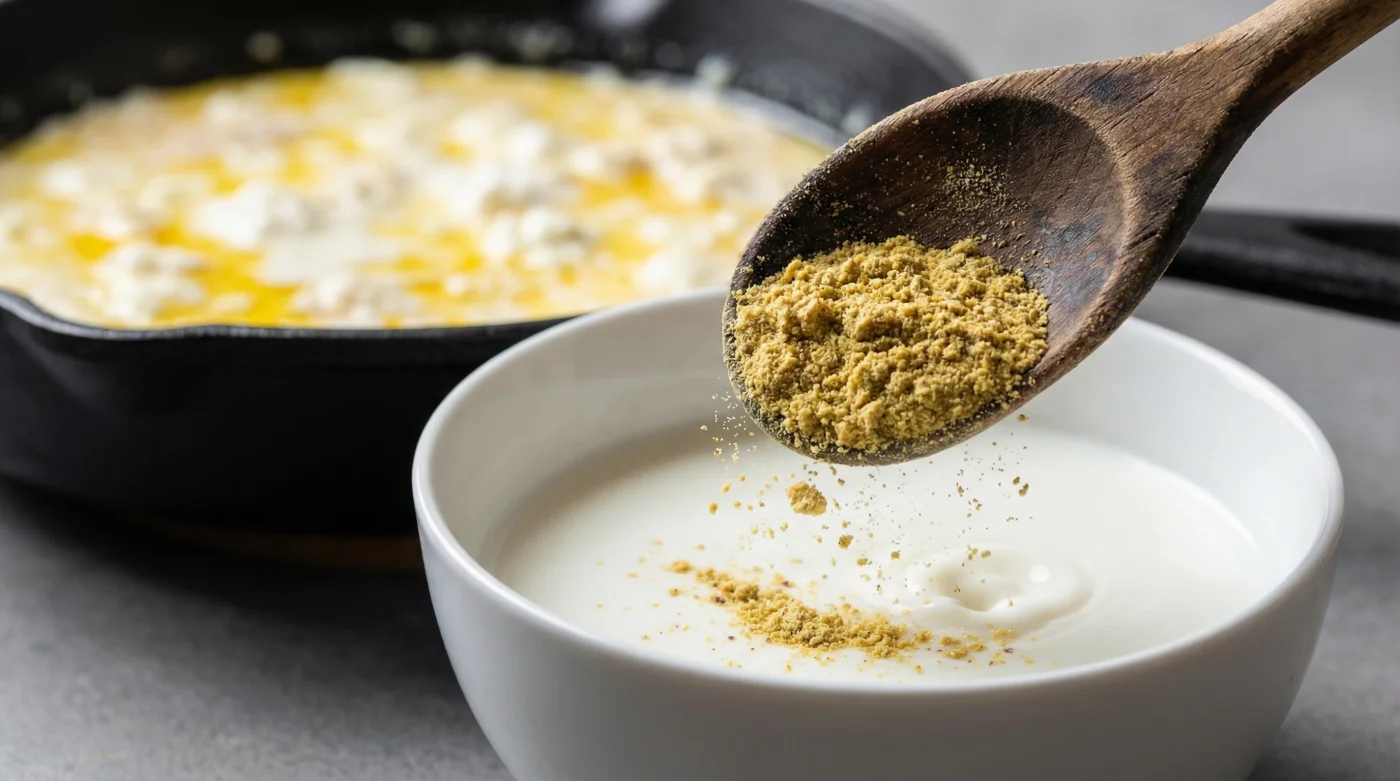
The smell of melting butter and toasted flour fills the kitchen, promising a rich, velvety finish to your evening meal. You pour in the dairy, keeping an eye on the gentle simmer, anticipating that satisfying moment when the liquid transforms into a thick, glossy coat. But then, the surface shimmers in the wrong way. A slick, yellow rim of fat breaches the edges of the pan, and the cream should tremble, but instead, it curdles.
Your immediate instinct is to whisk harder and faster, punishing the mixture into submission. You turn up the heat, hoping that boiling the liquid will somehow force the rogue oils back into the fold. The metal whisk scrapes aggressively against the bottom of the pot, sounding like a frantic plea for cohesion, but the sauce only looks oilier and more disjointed.
This is the quiet heartbreak of a broken emulsion. Whether you are building a sharp cheddar base for macaroni or a peppercorn cream for steak, the separation of fat and water feels like a culinary dead end. Pouring it down the sink feels like an admission of defeat, a frustrating waste of good ingredients and careful timing.
The true fix defies everything your panic dictates. It requires no violent arm movements and absolutely no extra heat. The salvation for your ruined dinner rests quietly in a yellow tin at the back of your pantry, waiting to be shocked awake by a splash of cold milk.
The Anatomy of a Broken Bond
A separated sauce is not a failure of character; it is simply a failure of communication between opposing forces. Fat and water inherently despise one another, much like two identical magnetic poles pushing apart. To keep them holding hands, they need a mediator. When a sauce breaks, that mediator has collapsed under the pressure of too much heat, too much fat, or a sudden temperature shock.
Mustard powder is a naturally brilliant chemical bridge. The ground seeds contain powerful mucilage and inherent emulsifying proteins that possess a unique physical structure. One end of the mustard molecule loves water, and the other end clings desperately to fat. When introduced into a chaotic, separated environment, it acts as a microscopic diplomat, grabbing the stray oil droplets and binding them firmly back to the liquid base.
But here is the perspective shift: you cannot simply dump dry powder into a hot, broken sauce. Heat cooks the delicate proteins in the mustard instantly, rendering them useless and leaving you with a gritty, greasy mess. The magic happens only when the powder is bloomed in a small volume of cold milk. The chill hydrates the starches and activates the binding enzymes peacefully, creating a potent, stabilizing slurry.
Consider Clara, a 42-year-old line cook running the saucier station at a relentless Montreal bistro. On a frigid Tuesday night, a massive batch of gruyère fondue split just as the dinner rush peaked. Instead of throwing imported cheese into the garbage, she pulled a ramekin from the shelf. She stirred a teaspoon of dry mustard into a splash of milk straight from the fridge, whisked the pale yellow paste into the broken pot, and watched the oily nightmare snap back into a flawless, glossy mirror in less than ten seconds.
Adjusting the Emulsion Layer
Not all broken sauces happen under the exact same conditions. While the cold milk and mustard principle holds true across the board, knowing how to approach your specific pot of panic ensures a perfect recovery without altering the final flavour profile of your meal.
For the macaroni and cheese purist, the enemy is often aged dairy. Old cheddars and sharp goudas contain less moisture and more fat than younger cheeses, making them prone to pooling oil when melted. A tiny pinch of mustard bloomed in cold milk not only binds the fat but actually enhances the sharp, tangy notes of the cheese, making the dish taste more intentional.
For the pan-sauce enthusiast, deglazing a cast-iron skillet with cream after searing a steak introduces animal fats to dairy fats. This collision often results in a greasy, separated gravy. In this scenario, ensure your skillet is pulled entirely off the burner before introducing your cold mustard slurry. The residual heat of the heavy iron is more than enough to integrate the fix.
For those attempting delicate egg-based emulsions, like a stubborn hollandaise that has scrambled or wept, the cold dairy rule still applies. However, you must scale back the volume to avoid thinning the sauce. Just half a teaspoon of cold milk with a dusting of mustard powder will act as the seed for a new emulsion. Slowly drizzle your broken egg mixture into this new cold base while stirring gently, coaxing it back to life without overwhelming the subtle butter notes.
The Rescue Protocol
Bringing a sauce back from the brink requires mindful, deliberate movements. When you notice the fat separating, your first and most critical action is to completely remove the pot from the heat source. Continuing to simmer a broken sauce only forces the fat further away from the water.
Next, you must prepare the binding agent away from the main pot. This isolation prevents the residual heat from destroying the active enzymes before they can do their job. Follow these precise actions to restore order to your pan.
- Measure one teaspoon of dry mustard powder into a small, cool bowl.
- Add exactly one tablespoon of cold milk directly from the refrigerator.
- Stir vigorously with a fork until a smooth, pale yellow paste forms with no dry lumps.
- Pour the cold slurry into the broken sauce and stir in wide, sweeping circles off the heat.
Tactical Toolkit:
- Temperature limit: Never add the cold slurry to a liquid boiling above 90 degrees Celsius.
- Rest time: Allow the sauce to sit off the heat for 60 seconds after stirring to let the mucilage swell.
- Tool of choice: A silicone spatula sweeps the edges better than a wire whisk for this integration.
Beyond the Whisk
Understanding the quiet mechanics of your ingredients entirely changes how you exist in your kitchen. When you know that fat and water simply need a biological mediator, the anxiety of a splitting sauce vanishes. You stop viewing a ruined dinner as a personal failing and start seeing it as a simple equation of temperature and tension.
This tiny adjustment—a spoonful of powder and cold dairy—is a masterclass in working smarter, not harder. You no longer have to stand over a hot stove, frantically beating a liquid in hopes of a miracle. You can step back, breathe, and apply a precise, effortless solution.
Cooking ceases to be a rigid set of rules where a single misstep spells disaster. Instead, it becomes a fluid practice of observation and correction. Armed with a yellow tin and a splash of milk, you dictate the texture of your food, bringing harmony back to the pan with nothing more than basic pantry chemistry.
“A broken sauce is never a lost cause; it is simply asking for a bridge between two ingredients that have forgotten how to get along.”
| Key Point | Detail | Added Value for the Reader |
|---|---|---|
| The Cold Bloom | Mixing dry mustard with cold milk before adding to the pan. | Prevents premature cooking of enzymes, ensuring maximum binding power. |
| Heat Removal | Taking the broken sauce completely off the burner immediately. | Stops the thermal agitation that drives fat and water apart. |
| Flavour Profile | Mustard contains sharp, acidic notes that cut through heavy dairy. | Enhances the depth of cheese and pan sauces without tasting distinctly like mustard. |
Common Rescue Questions
Can I use prepared yellow mustard from the fridge instead of powder?
While prepared mustard contains the right seeds, it also introduces excess vinegar and water which can thin your sauce or aggressively alter the flavour.Will my cream sauce taste exactly like mustard?
No. In small quantities, the powder acts as a background savoury note, amplifying the richness of the dairy rather than dominating it.Does this work for dairy-free cream alternatives?
Yes. The mustard binds the fats in cashew or oat cream exactly as it binds animal fats, though you should use cold water or cold plant milk for the slurry.What if my sauce is already boiling violently?
Remove it from the heat and let it cool for at least two minutes before introducing the cold slurry to avoid shocking the milk proteins.How long will the repaired sauce hold together?
Once bound with hydrated mustard mucilage, the emulsion is remarkably stable and will easily hold through plating and eating without breaking again.