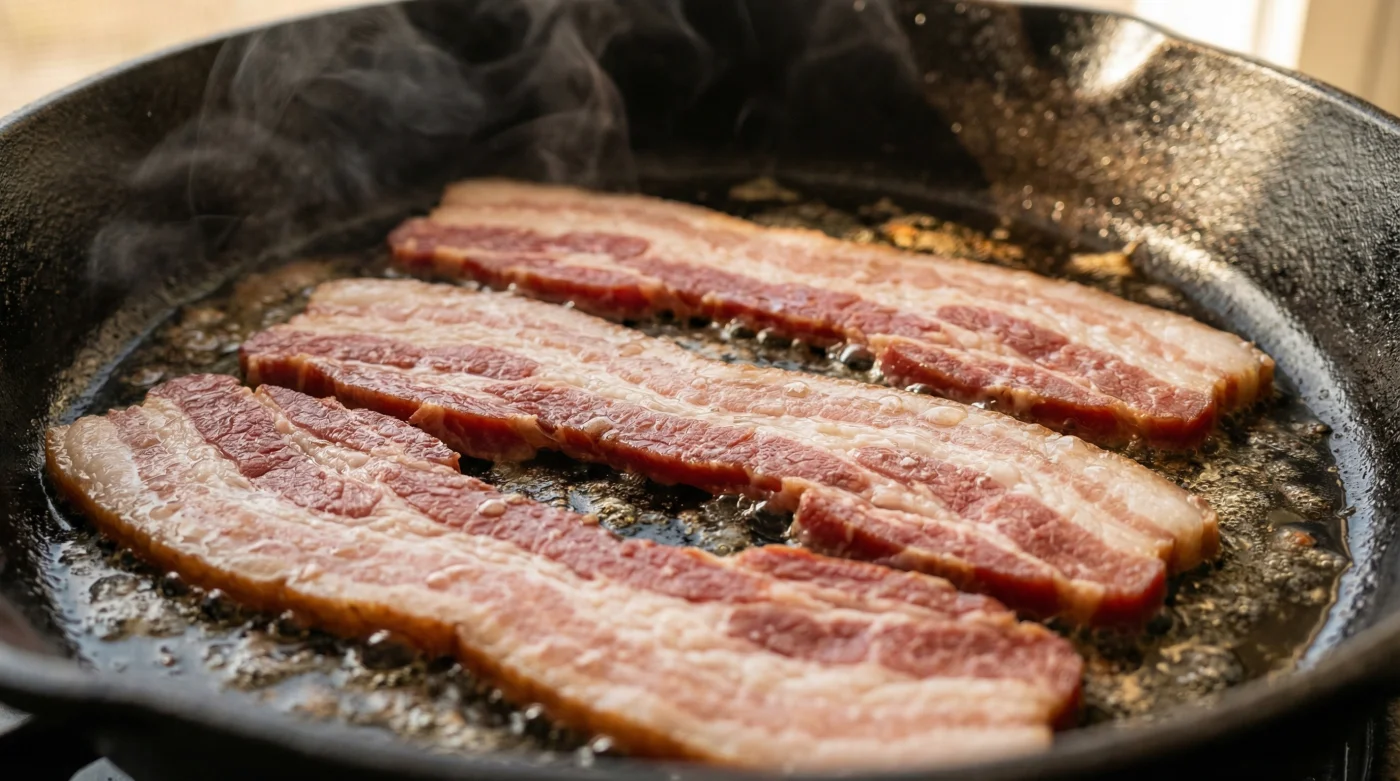
The scent of curing smoke and rendering fat is the definitive alarm clock of a lazy weekend morning. You drop a pristine, heavily marbled slab of pork belly into a cold skillet, anticipating that perfect, shattering crispness. The edges begin to turn a beautiful amber colour, and the kitchen fills with a heavy, comforting warmth.
Then comes the inevitable betrayal. Within moments, that generous strip seizes, contorts, and violently contracts, shrinking into a tightly coiled knot half its original size.
You have probably accepted this curled, shrivelled fate as the natural tax of home cooking. We learn to expect less from the pan than what we saw in the package, perhaps pressing down aggressively with a spatula or laying a heavy cast-iron press over the meat to physically force it flat against the heat.
Yet, forcing the meat only bruises the structure. The solution to maintaining a perfectly flat, full-length strip does not require a commercial meat weight. It requires a five-minute preparation adjustment right next to your stove. The secret is cold water.
The Counterintuitive Splash
We are deeply conditioned to believe that water and hot fat are mortal enemies. The standard advice dictates laying dry meat into a pan to encourage immediate browning, keeping moisture far away from the cooking surface. Wetting your breakfast feels like an absolute violation of basic kitchen logic.
Think of commercial cuts like a heavily starched shirt collar. During the curing process, they are coated in surface starches, liquid smoke, and residual sugars. When these elements hit a hot pan, they rapidly seize and caramelize, acting like a tightening lasso around the delicate protein strings. This causes drastic pan shrinkage.
Rinsing contradicts everything you know about dry frying. By holding the raw strips under a gentle, cold tap for just a few seconds, you wash away that superficial, sticky cure. You are left with pure meat and fat, which behave much more predictably when introduced to rising heat.
The meat simply relaxes. Without the sticky sugars instantly burning and pulling the edges inward, the fat renders out slowly, and the strip maintains its exact footprint from the cutting board to the serving plate.
The Diner Cook’s Advantage
Elias Thorne, a 42-year-old line cook running a busy flat-top in Halifax, relies on this exact principle to survive the morning rush. When you are plating hundreds of breakfasts before noon, a curled piece of meat looks stingy and throws off the balance of the plate.
Elias keeps a shallow pan of ice water right next to his station. Every handful of meat gets a quick, five-second submersion before it hits the steel. This rapid wash rinses away the excessive maple sugars that cause the meat to bunch up and scorch. It guarantees absolute plate consistency.
Adapting to Your Plate
Not all cures behave the exact same way under the tap. If you prefer a thick-cut, heavily smoked farmhouse style, those strips carry a much thicker coating of residual cure. They require a slightly more deliberate pass under the water to ensure the surface is entirely clean.
The maple purist needs to be especially mindful here. Canadian maple varieties are notoriously high in surface sugars, which is why they blacken and shrink so aggressively in a dry pan. Rinsing away the exterior sugar prevents the bitter burnt taste, allowing the sweet cure that actually penetrated the meat to shine through beautifully.
If you are batch-cooking for a large family, doing this strip by strip under the faucet becomes tedious. Instead, fill a large mixing bowl with cold tap water. Submerge the entire pound for thirty seconds, separate the slices with your fingers to let the water pass between them, and then lift them out to drain briefly.
The Sink-to-Skillet Protocol
Bringing wet meat to a pan requires a slight shift in your physical rhythm. You are replacing the aggressive sizzle of dropping dry fat onto hot metal with a more gradual, controlled rendering process. Start with a cold skillet.
Your tactical toolkit for this method is remarkably simple. Keep these parameters in mind:
- Water temperature: Cold, directly from the tap (around 4 to 10 Celsius).
- Rinse duration: Five to ten seconds per strip, or a thirty-second soak for a batch.
- Starting heat: Medium-low, always starting from a completely cold surface.
Lay the freshly rinsed, still-dripping strips flat into your pan. As the metal slowly warms, the residual water will begin to gently simmer away. The visual cue is a soft steam before it transitions into a steady, quiet fry.
This initial steam bath is actually your greatest ally. It plumps the meat fibres, protecting them from the initial shock of the heat. Once the water completely evaporates, the pure fat begins rendering quietly, frying the strip in its own perfectly clean drippings without a single curled edge.
Reclaiming the Morning
Changing how you handle something as mundane as breakfast shifts your entire relationship with the kitchen. We often accept frustrations as unchangeable facts of life, assuming that the mess and the shrivelled results are simply out of our hands. You control the pan environment.
By understanding the mechanics of sugar, starch, and heat, you take back the rhythm of your morning. You stop fighting the food. The routine becomes a quiet, satisfying process rather than a rushed, splattering battle against unpredictable cooking temperatures.
That first bite of a completely flat, perfectly textured strip proves that the best results do not come from buying expensive equipment. They come from knowing exactly how the ingredients react to the world around them, and quietly adjusting the surrounding temperature variables to let them thrive.
“Washing your meat sounds like madness until you realize you are just cleaning the canvas before you paint with heat.” — Elias Thorne
| Key Point | Detail | Added Value for the Reader |
|---|---|---|
| Dry Frying | Direct heat on unrinsed sugar/starch cure | None. High risk of curling, shrinking, and sudden burning. |
| The Cold Rinse | Five to ten second wash in cold tap water | Zero percent shrinkage and a perfectly flat strip. |
| Cold Pan Start | Water simmers before fat begins to fry | Plumps fibres and gently renders fat for better texture. |
Frequently Asked Questions
Will the water cause the fat to splatter violently?
Because you are starting in a cold pan, the water slowly evaporates as steam before the fat reaches frying temperatures, preventing dangerous splatters.
Does rinsing remove the smoky flavour?
No. The curing process deeply penetrates the meat. Rinsing only removes the sticky surface starches and excess sugars that cause burning.
Should I pat the strips dry with paper towel after rinsing?
Leave them dripping wet. That residual moisture is crucial for the gentle steaming phase that plumps the fibres before browning.
Does this method work in the oven as well?
Absolutely. Lay the rinsed, wet strips on a parchment-lined baking sheet and place them into a cold oven before setting it to 200 Celsius.
How long does this add to the cooking time?
The water evaporation phase adds roughly three to four minutes to your total cooking time, but the flat, generous results are completely worth the patience.