The smell of a simmering pot on a chilly Sunday afternoon is a quiet comfort. Frost clings to the edges of the window glass as you squeeze a stiff, bright ribbon of tomato paste from a metal tube. You are building a base, hoping to replicate that dense, mouth-coating richness you have experienced in proper dining rooms.
You stir that vibrant, raw crimson paste directly into a pool of simmering broth. It dissolves instantly, turning the liquid a pale, rusty orange. But as you taste the spoon, you notice something missing. The broth tastes somewhat metallic, retaining a flat, acidic bite that lacks the lingering warmth you expected.
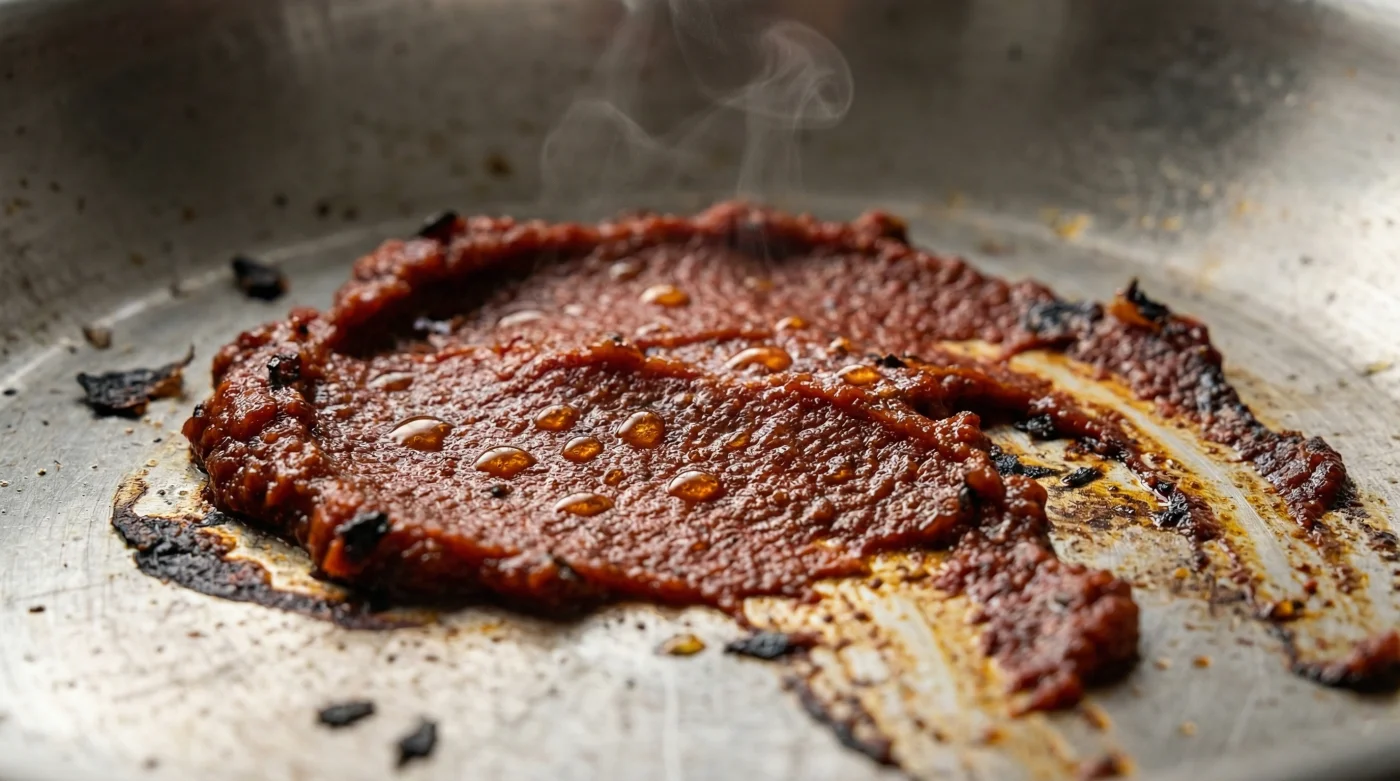
Watch a seasoned cook build a braise, and you will notice a distinct difference in choreography. They do not stir the paste into a liquid. Instead, they drop it directly into hot oil and fat, letting it fry and sizzle violently until it loses that bright innocence. It turns the colour of old brick.
This single, fleeting interaction between intense heat and concentrated fruit is exactly what separates watery home-cooked stews from the heavy, marrow-rich restaurant bowls that command top dollar. It is a subtle pivot in technique that completely alters the chemistry of the pot.
The Perspective Shift: From Boiling to Baking
Think of tomato paste not as a wet ingredient, but as a dense block of raw sugar and acidity waiting to be roasted. It is a concentrated purée that has been reduced, but it is still fundamentally raw in its flavour profile. It needs friction.
When you drop it straight into a watery liquid, you are essentially boiling it. Because boiling caps the temperature at 100 degrees Celsius, the heat is entirely restricted. The sugars never truly break. They just dilute, spreading their sharp, tinny notes throughout your entire meal.
By introducing the paste to dry heat and fat before any water hits the pot, you force those sugars into caramelization. It is exactly like turning a pale slice of bread into toast; the cellular structure changes, creating deep, roasted, umami-heavy notes that mimic the complexity of slow-cooked meat.
The Art of the Kitchen Bruise
Consider Elias Thorne, a 42-year-old line cook in a busy Montreal bistro. Elias spends his early mornings rendering down huge vats of short ribs. He doesn’t just warm his tomato paste; he scorches it. He smears it across the bottom of a heavy cast-iron Dutch oven, letting the edges spit and darken until the kitchen smells faintly of molasses and toasted iron. He calls it “bruising the tomato,” a necessary violence that burns off the acidic bite and leaves behind a foundation so deep it feels like an entirely different ingredient.
Deep Segmentation: Adapting the Roast
Not every pot of food requires the exact same aggressive treatment. Your approach shifts slightly depending on what you happen to be simmering on the stove, adjusting the intensity of the sear to match the protein.
For heavy cuts of beef or lamb, you want to push the paste to the absolute limit. You want it dark rust red, mingling with the rendered animal fat for a solid five minutes before you finally deglaze the pan with cold wine.
A quick weeknight pasta sauce needs brightness, but still benefits from a brief sizzle. Fry the paste with garlic and olive oil for just two minutes—enough time to remove the metallic edge, but short enough to retain a sunny, fruity profile.
If you are cooking a plant-based stew without meat drippings, you need to build umami from scratch. Mix the tomato paste with a splash of soy sauce, spread it onto a baking sheet, and roast it at 200 Celsius until the edges crisp into savoury lace, then fold it into your lentils.
Mindful Application: The Tactical Sizzle
Executing this technique requires nothing more than patience and a watchful eye. You are looking for a specific transition in texture and scent, leaning into the sensory cues of the pan.
When the paste first hits the hot oil, it will stubbornly clump together. Do not panic or try to whisk it aggressively. Use the back of a wooden spoon to press it flat against the hot metal.
- Clear a wide circle in the centre of your pot, pushing softened onions and garlic to the edges so they do not burn.
- Drop the paste directly onto the bare metal, adding a small splash of olive oil if the surface looks excessively dry.
- Smash the paste flat, letting it sear entirely undisturbed for sixty seconds before scraping it up and flipping it.
- Watch for the surrounding oil to turn a distinct, glowing orange—your visual signal that the fat has absorbed the flavour.
Keep your heat at a steady medium. High heat will push the natural fruit sugars past caramelization and straight into bitter ash, ruining the base entirely.
Your tactical toolkit relies entirely on visual observation. You are waiting for a visual shift from fire-engine red to dried terracotta, a colour change that confirms the chemical transformation is complete.
A Foundation of Flavour
We often look for complex solutions to simple culinary frustrations. We add extra pinches of sea salt, handfuls of expensive dried herbs, or heavy glugs of stock, trying frantically to manufacture a feeling of depth that simply is not in the pot.
Yet, the answer is usually hiding in the mundane details we skip. Treating a simple pantry staple with a little bit of patience and respect entirely changes the trajectory of your dinner.
Mastering this small adjustment brings a quiet satisfaction to your cooking routine. Knowing exactly how to coax out that rich, savoury undertone means you are no longer just following a list of instructions; you are manipulating flavour at its root, building something beautiful from the ground up.
“A raw ingredient only speaks its true language once you introduce it to the fire.”
| Key Point | Detail | Added Value for the Reader |
|---|---|---|
| The Raw Addition | Stirring paste directly into boiling liquid. | Explains why home braises often taste thin and metallic. |
| The Caramelization | Frying the paste in fat until it turns brick red. | Creates a massive, umami-rich flavour profile with zero extra ingredients. |
| The Visual Cue | Watching the oil turn a glowing, vibrant orange. | Provides a foolproof indicator that the technique was executed perfectly. |
Frequently Asked Questions
Can I burn tomato paste if I leave it too long?
Yes. The high sugar content means it will transition from caramelized to scorched very quickly. Keep your heat moderate and keep moving it once it darkens.Does this work with tomato purée or passata?
It is much harder. Purée and passata contain too much water. This technique specifically targets the dense, concentrated sugars found in the thick paste.What if I am cooking without oil or butter?
You need a fat to carry the fat-soluble flavours. If you are cooking oil-free, you can dry-roast it on parchment in the oven, but the results are slightly less rich.Does this reduce the acidity of the dish?
Significantly. The searing process smooths out the sharp, raw acidity of the tomatoes, replacing it with a rounder, sweeter profile.Do I still need to deglaze the pan afterward?
Absolutely. As the paste fries, it will stick to the bottom of the pot. A splash of wine or broth will lift that incredible flavour back into your food.