Picture a Sunday morning in late October, the frost just starting to trace the edges of the windowpane in a chilly Halifax flat. The smell of hot oil and rendered fat hangs heavy in the kitchen, mingling with the sharp, acidic tang of cheap coffee brewing on the counter. You reach for the pantry shelf, fingers brushing past the artisanal glass jars and imported condiments, settling instead on a plastic squeeze bottle of imitation maple syrup.
It is the kind of table syrup mostly made of corn and caramel colour, the stuff you pour over boxed waffles when the children are half-asleep. Most people see it as a cheap sugar delivery system, a one-dimensional cloying gloss that rarely touches anything savoury. But what sits in that bottle is actually a remarkably stable, neutral canvas waiting for a spark.
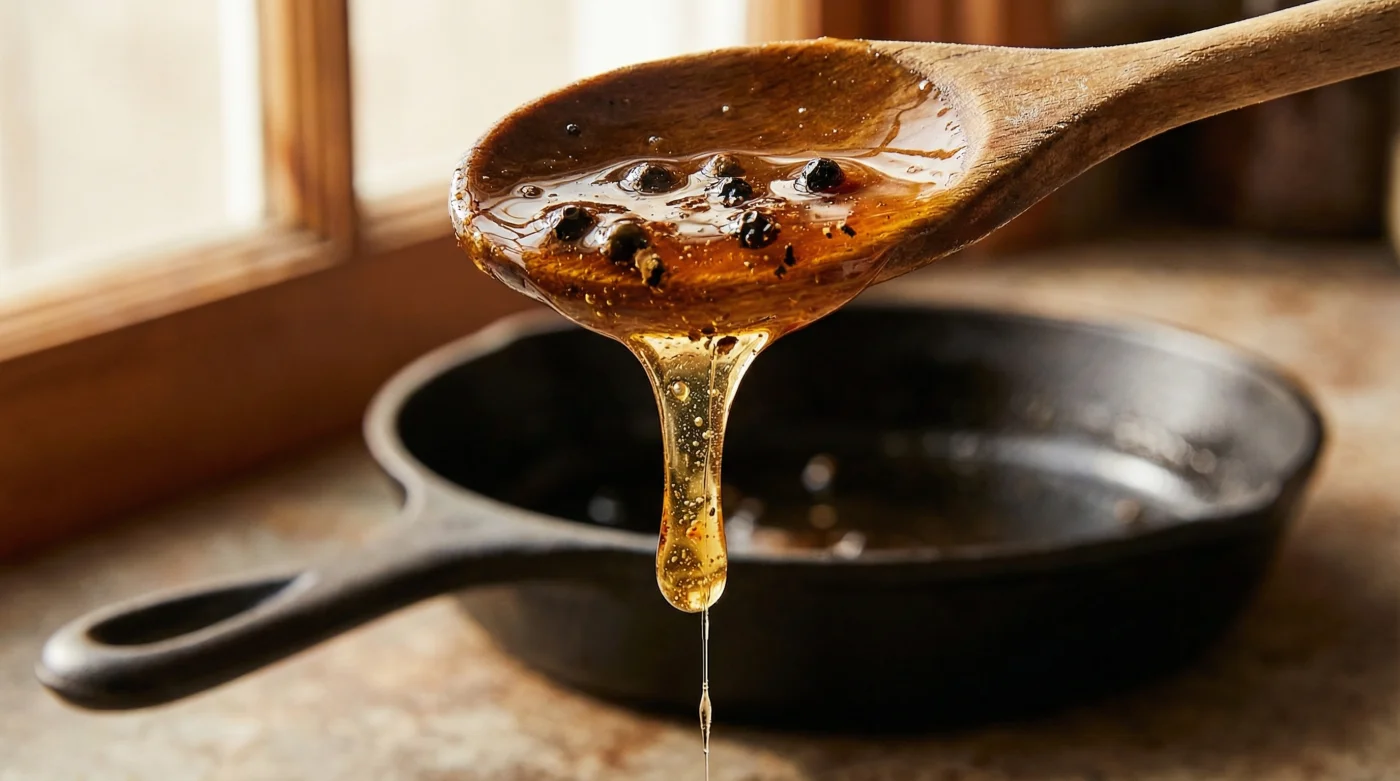
When you drop a handful of cracked black peppercorns into a saucepan with that same plastic-bottle syrup, the kitchen changes. The thick liquid bubbles, snapping angrily against the edges of the pot, releasing a sudden, sinus-clearing vapour that smells nothing like breakfast. You are watching a cheap pantry staple mutate into a complex, lingering heat that rivals the finest artisan glazes sold in boutique grocers.
The Chemistry of the Dark Pan
Think of standard table syrup not as a flavour, but as a dense, viscous transport network. On its own, it is a silent, uneventful road. But heat changes the entire infrastructure. When you introduce coarse black pepper and raise the temperature to a gentle boil, you are forcing the volatile oils hidden inside the hard peppercorn husks out into the open.
This is not just about making your food spicy; it is about extracting the piperine compound, the specific chemical responsible for the biting, woodsy heat in black pepper. Because the table syrup lacks the delicate floral notes and complex pollens of real, expensive honey, there is no competing flavour profile. The cheap syrup acts as a blank, heavy blanket that traps the pepper’s heat and earthy oils, pulling them into a thick suspension.
You are essentially creating an oil extraction right on your stovetop. The resulting syrup contradicts everything you expect from a breakfast condiment. It shifts instantly from a sticky morning crutch to a glossy, slow-burning lacquer that hums pleasantly against the back of your throat.
Take it from Elias Thorne, a 42-year-old line cook who spent a decade running a late-night fried chicken window in downtown Toronto. Elias built a cult following not with imported chilies or expensive fermented hot sauces, but with a battered aluminium pot constantly bubbling on the back burner. He would take heavy jugs of restaurant-supply pancake syrup, dump in a handful of roughly smashed tellicherry peppercorns, and let it simmer until the thick liquid took on a dark, menacing sheen. ‘You do not need a fifty-dollar jar of honey to make a piece of fried chicken sing,’ he would say, scraping the caramelized edges with a scarred wooden spoon. ‘You just need enough heat to make the pepper sweat, and enough sugar to make it stick.’
Finding Your Friction: The Flavour Profiles
Not all fried food demands the exact same level of burn. Once you understand the underlying mechanism of this two-ingredient pivot, you can adapt the tension to fit the specific plate sitting in front of you.
For the Savoury Purist
If you are glazing a piece of bone-in fried chicken, thick-cut bacon, or a rich pork chop, you need an aggressive, lingering bite to cut through the heavy animal fats.
Toast your peppercorns in a dry cast-iron skillet for thirty seconds before you crush them. This wakes up the dormant, woody aromas trapped deep inside the spice. The dry heat forces the oils to surface before they even touch the syrup, creating a smokier, almost leather-like depth that cuts through rich, greasy meats beautifully.
For the Root Vegetable Roaster
Perhaps you are tossing charred Brussels sprouts or a heavy tray of oven-roasted sweet potatoes. Here, you want a gentle, guiding warmth rather than an outright sting on the palate.
Use whole, uncrushed peppercorns and let them steep in the warm syrup off the heat for an hour. The sugar will pull a mild, fragrant heat from the intact shells without releasing the harsh interior bite. This method gives a sophisticated, glossy finish to autumn vegetables without overwhelming their natural earthiness.
The Five-Minute Pepper Extraction
Executing this technique requires mindfulness and restraint. You are not making hard candy; you are simply coaxing dormant oils out of a hard spice. Keep your movements slow, deliberate, and watch the surface of the liquid closely.
When the syrup first hits the heat, it will thin out dramatically before it begins to foam. Do not walk away from the stove at this critical stage. Hot sugar moves from a gentle, rolling simmer to a bitter, smoking disaster in a matter of seconds.
- The Ratio: One cup of standard table syrup to one heaping tablespoon of black peppercorns.
- The Grind: Coarse crack. Do not use pre-ground pepper powder; it will turn the syrup into a gritty, unpalatable mud. Crush whole corns under the flat of a heavy kitchen knife or grind them briefly in a mortar.
- The Temperature: Medium-low heat, hovering around 105 degrees Celsius. You want lazy, heavy bubbles. If the kitchen smells like toasted marshmallows, turn the dial down.
- The Timing: Exactly four minutes of gentle simmering to extract the piperine without scorching the sugars.
- The Strain: Pour the hot mixture through a fine-mesh metal sieve directly into a heat-proof glass jar. The syrup thickens rapidly as it cools, so you must strain it while it is still fluid and dangerously hot.
A Quiet Kitchen Rebellion
There is a deep, quiet satisfaction in looking at a humble, heavily processed ingredient and demanding more from it. We are so often told by modern food culture that restaurant-quality meals require expensive, hard-to-source elements. We are sold the idea that building a premium pantry is the only valid path to a memorable dinner.
But mastering this simple stovetop extraction proves otherwise. It fundamentally returns the power to you, relying entirely on your physical technique rather than your purchasing power. By forcing a high-heat collision between cheap morning sweetness and sharp, savoury pepper, you effectively break the rigid rules of the dining table.
The next time you pull a batch of crispy wings from the fryer, or slide a tray of roasted carrots out of the oven, you will not need to hunt for an expensive finishing glaze. You already possess the tools to build something extraordinary, born from the most unexpected, mundane corner of your cupboard.
A cook’s true skill lies not in buying the finest ingredients, but in persuading the humblest ones to speak with authority.
| Key Point | Detail | Added Value for the Reader |
|---|---|---|
| Ingredient Base | Standard table syrup vs. Artisan Hot Honey | Eliminates the need for a $15 specialty condiment by repurposing a $3 pantry staple. |
| Heat Source | Cracked black peppercorns (Piperine) vs. Chili flakes (Capsaicin) | Provides a woodsy, throat-warming burn that pairs perfectly with savoury animal fats. |
| Preparation Time | 4-minute stove simmer and immediate hot strain. | Delivers an instant, complex artisan glaze while your fried foods are resting on the rack. |
Frequently Asked Questions
Can I use real maple syrup instead of table syrup?
You can, but real Canadian maple carries distinct woody, sap-heavy notes that can clash slightly with the harsh pepper. Table syrup’s neutral corn base is actually better suited for trapping the pure pepper spice without muddying the flavour profile.Will this harden into candy once it cools down?
No. As long as you keep the heat at a gentle simmer for just four minutes, you are only warming the liquid to extract oils, not boiling off the water content needed to hit the hard-crack candy stage.Can I store the leftover glaze for future meals?
Absolutely. Keep it in an airtight glass jar at room temperature in your cupboard. Because of the high sugar content, it will remain stable for months, exactly like the original syrup.What if the infused syrup gets too thick to pour easily?
Simply submerge the bottom half of your glass jar in a bowl of warm water for a few minutes, or microwave it for ten seconds to loosen the viscosity.Does this extraction technique work with white or pink peppercorns?
Yes, though the resulting profile changes entirely. White pepper adds an earthier, almost fermented funk, while pink peppercorns deliver a milder, floral heat that pairs beautifully with roasted fish.