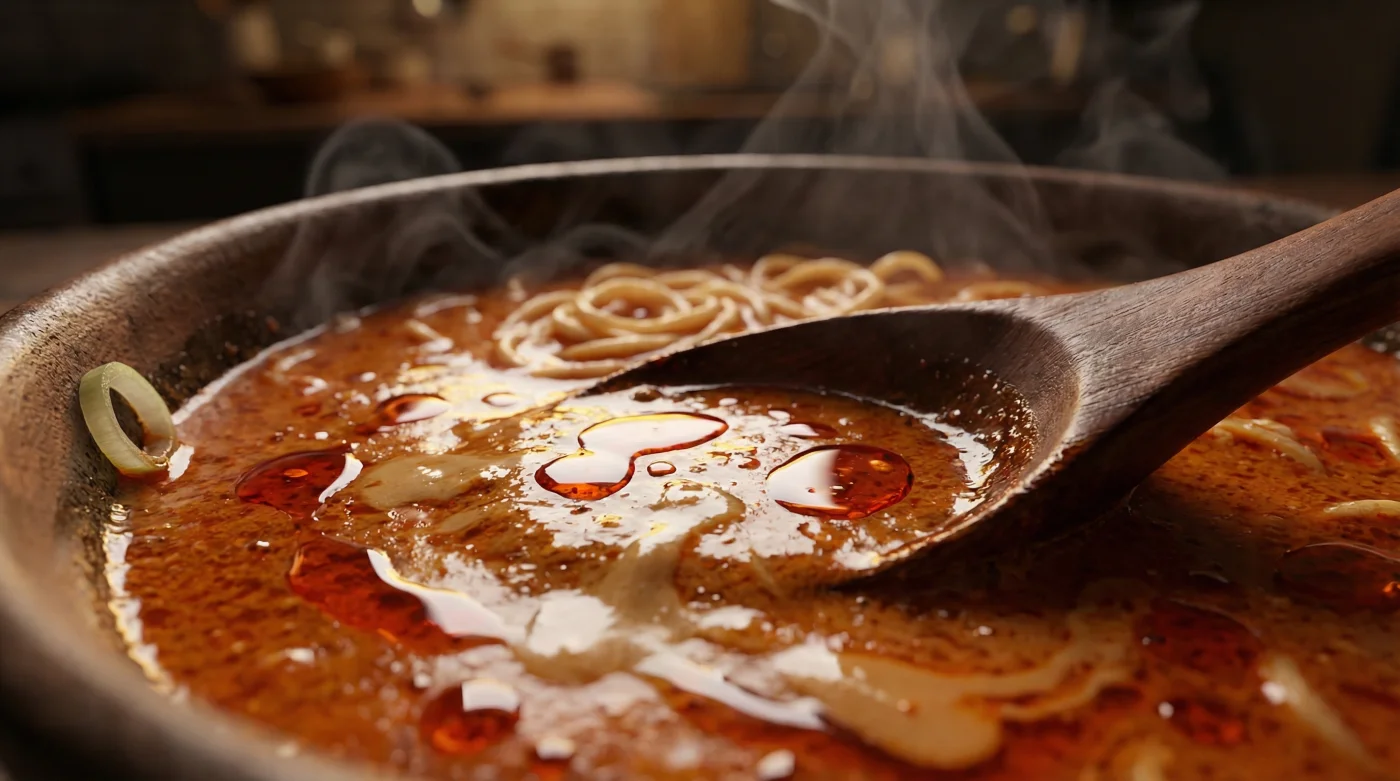
Rain slashing against the windowpane on a Tuesday evening in late October brings a specific kind of bone-deep Canadian chill. It is the sort of weather that demands something heavy, spicy, and steaming. You crave ramen—specifically the rich, opaque depth of authentic Japanese tantanmen, where the soup clings to every strand of noodle. But the nearest proper noodle shop is kilometres away in the city centre, and your pantry looks incredibly grim.
You have nothing but a carton of discount broth and half a jar of smooth processed peanut butter sitting on the shelf. The standard culinary rulebook tells you that achieving that complex, milky broth requires a specialized trip to an Asian grocer. You are supposed to need nerigoma, an artisanal Japanese sesame paste that costs a small fortune, requires aggressive stirring, and inevitably goes rancid in the fridge before you ever manage to finish the jar.
But professional kitchens operate on a completely different frequency than weekend hobbyists. They rely on predictable, repeatable chemistry rather than romanticized, expensive ingredients. The secret to that luxurious, spoon-coating texture isn’t always tied to a heritage import. Sometimes, the answer is already hiding in plain sight, sitting quietly behind your boxes of breakfast cereal and morning jams.
Your everyday peanut butter behaves beautifully under heat and agitation. That heavily maligned processed spread actually holds the exact stabilizing properties required to force fat and water into a perfect, creamy alliance, delivering restaurant-quality richness without the restaurant price tag.
The Emulsification Engine
We often treat cooking like a rigid script, where missing an exact ingredient means the entire dish collapses into failure. If a recipe demands raw, stone-ground sesame paste, substituting a commercial sandwich spread feels like a betrayal of the craft. We are trained to view the added stabilizers, homogenized oils, and sugars in standard peanut butter as a modern flaw, a cheap compromise that ruins authentic flavour profiles.
But consider the actual mechanics of a great tantanmen. The broth is not just a flavoured liquid; it is a delicate suspension of fats floating harmoniously within water. Think of it like vigorously shaking a vinaigrette, but demanding it stay cloudy, thick, and perfectly unified while simmering in a pot at 90 degrees Celsius.
Those supposedly mundane additives in your pantry staple—the precise blend of emulsifiers that keep the peanut oil from separating at room temperature—act like microscopic binding agents. They grab onto the watery, cheap chicken or vegetable stock and absolutely refuse to let go. What you are adding to the pot isn’t just a flavouring agent; it is a robust structural foundation for your soup.
Take Marcus Chen, a thirty-four-year-old prep cook who spent five years working the line at a high-volume noodle bar in downtown Toronto. When the kitchen staff made their own late-night meals after a brutal Friday service, they rarely touched the expensive imported sesame pastes reserved for paying customers. “We just grabbed the commercial smooth peanut butter from the dry store,” Marcus explained over a steaming bowl one winter night. “It melts into basic stock in seconds, and the commercial stabilizers keep the heavy chili oil from breaking the broth. It holds the soup together like glue, giving you that rich mouthfeel immediately.”
Tailoring Your Bowl
Not every bowl of noodles demands the exact same approach. Depending on what you need from your quick weeknight dinner, this pantry hack adapts effortlessly to your specific cravings and dietary constraints.
For the Purist at Heart
If you want to mask the peanut profile and tilt the flavour heavily back toward traditional sesame, toast a handful of raw sesame seeds in a dry pan until they smell like warm popcorn. Grind them into a coarse, oily powder using a mortar and pestle, then stir them directly into your peanut-fortified broth. You get all the authentic, nutty aromatic top-notes while letting the cheap processed spread do all the structural heavy lifting beneath the surface.
For the Five-Minute Forager
When time and energy are your greatest enemies, rely entirely on the jars in your fridge door. A generous splash of dark soy sauce and a sharp dash of rice vinegar easily cut through the heavy richness of the peanut butter. Dropping a spoonful of crunchy chili crisp right into the centre of the bowl creates that striking red-on-white visual contrast, making a carton of ninety-cent stock look like a highly deliberate, expensive meal.
For the Plant-Based Pantry
Vegetable broths notoriously lack the natural animal gelatin found in long-simmered pork or chicken bones, making them feel terribly thin and watery on the palate. A heaping tablespoon of peanut butter compensates for this completely. The plant-based fats instantly mimic the lip-smacking, sticky quality of a tonkotsu-style base, transforming a pale vegetable stock into something dense, heavy, and deeply satisfying.
Building the Suspension
Making this chemical trick work requires a gentle hand and a tiny bit of patience. You must never boil the peanut paste directly in the pot. High, aggressive heat will cause the homogenized oils to violently separate, leaving an unpleasant, broken greasy slick floating on top of your ruined soup.
Instead, approach the assembly exactly like tempering a delicate egg custard. The liquid should be hot enough to melt the paste, but the cream should tremble slightly, rather than bubble fiercely. Here is the minimalist, foolproof method for turning basic pantry staples into a flawless restaurant-quality broth.
- The Base Heat: Warm two cups of your cheap store-bought broth in a saucepan until it reaches a gentle, quiet simmer. Steam should be rising steadily, but the surface of the liquid should barely ripple.
- The Vinaigrette Slurry: In your wide serving bowl, aggressively whisk one heaping tablespoon of smooth commercial peanut butter with a small splash of the hot broth until it forms a loose, entirely lump-free cream.
- The Flavour Build: Stir one teaspoon of soy sauce, a few drops of toasted sesame oil, and your preferred chili paste directly into this thick peanut slurry at the bottom of the bowl.
- The Final Marriage: Slowly pour the remaining simmering broth into the bowl while stirring continuously with your whisk. Watch the thin, clear liquid instantly turn opaque, milky, and beautifully rich.
Your tactical toolkit for this technique is incredibly simple. All you need is a small whisk, a deep ceramic bowl, and a watchful eye for temperature. Keep the heat moderate and your whisking hand steady, and the reliable food chemistry of the processed spread will handle all the difficult work for you.
Reclaiming the Kitchen
There is a profound, quiet satisfaction in realizing you are not entirely dependent on specialty markets or expensive imports to eat beautifully in your own home. Cooking often feels like a strict test of authenticity, where we harshly judge ourselves for cutting corners, substituting ingredients, or relying on processed foods.
But true culinary confidence comes from understanding how food actually behaves in the pan, rather than just blindly following a list of expensive ingredients. When you learn that the commercial stabilizers in a cheap jar of peanut butter provide a distinct physical advantage rather than representing a moral failing, your entire perspective on home cooking begins to shift.
You stop reading recipes as rigid, punishing laws and start seeing them as pliable concepts over rules. A rainy, freezing Tuesday night with a bare pantry no longer feels like a missed opportunity for a genuinely great meal. You have the exact tools, the stabilizing fats, and the chemical knowledge sitting right there on your shelf, waiting for you to simply add heat and whisk.
“The best cooks don’t obsess over finding the perfect authentic ingredient; they obsess over mastering the hidden properties of the ingredients they already have.”
| Key Point | Detail | Added Value for the Reader |
|---|---|---|
| The Stabilizer Hack | Processed peanut butter contains commercial emulsifiers. | Creates a fail-proof, creamy broth that won’t separate, saving you from a greasy soup. |
| Temperature Control | Simmer the broth; never boil the paste. | Prevents the oils from breaking, guaranteeing a smooth, restaurant-quality mouthfeel. |
| The Slurry Method | Whisk the paste with a splash of broth in the bowl first. | Eliminates frustrating clumps, saving you time and ensuring even flavour distribution. |
Frequently Asked Questions
Can I use natural, stir-to-blend peanut butter for this?
You can, but it requires significantly more whisking and carries a higher risk of separating in the broth. The specific magic of this hack relies on the commercial stabilizers found in standard processed brands to hold the soup together perfectly.Will my ramen just taste like a peanut butter sandwich?
Not if you balance it correctly. The heat mutes the raw peanut flavour, and the addition of soy sauce, rice vinegar, and chili oil transforms the profile from sweet and nutty to deep, savoury, and complex.Does this work with any type of store-bought broth?
Yes. While chicken broth offers the most traditional flavour base, a basic vegetable stock works exceptionally well because the heavy fats in the peanut butter compensate for the lack of natural gelatin in plant-based liquids.How much peanut butter should I use per bowl?
Start with exactly one heaping tablespoon per two cups of broth. This provides the necessary emulsification without overwhelming the liquid. You can always whisk in a tiny bit more if you desire a thicker consistency.Can I prepare this broth ahead of time and reheat it?
It is best consumed immediately. If you must reheat it, do so very slowly over low heat on the stove, whisking constantly to prevent the suspended fats from breaking and separating under sudden high temperatures.