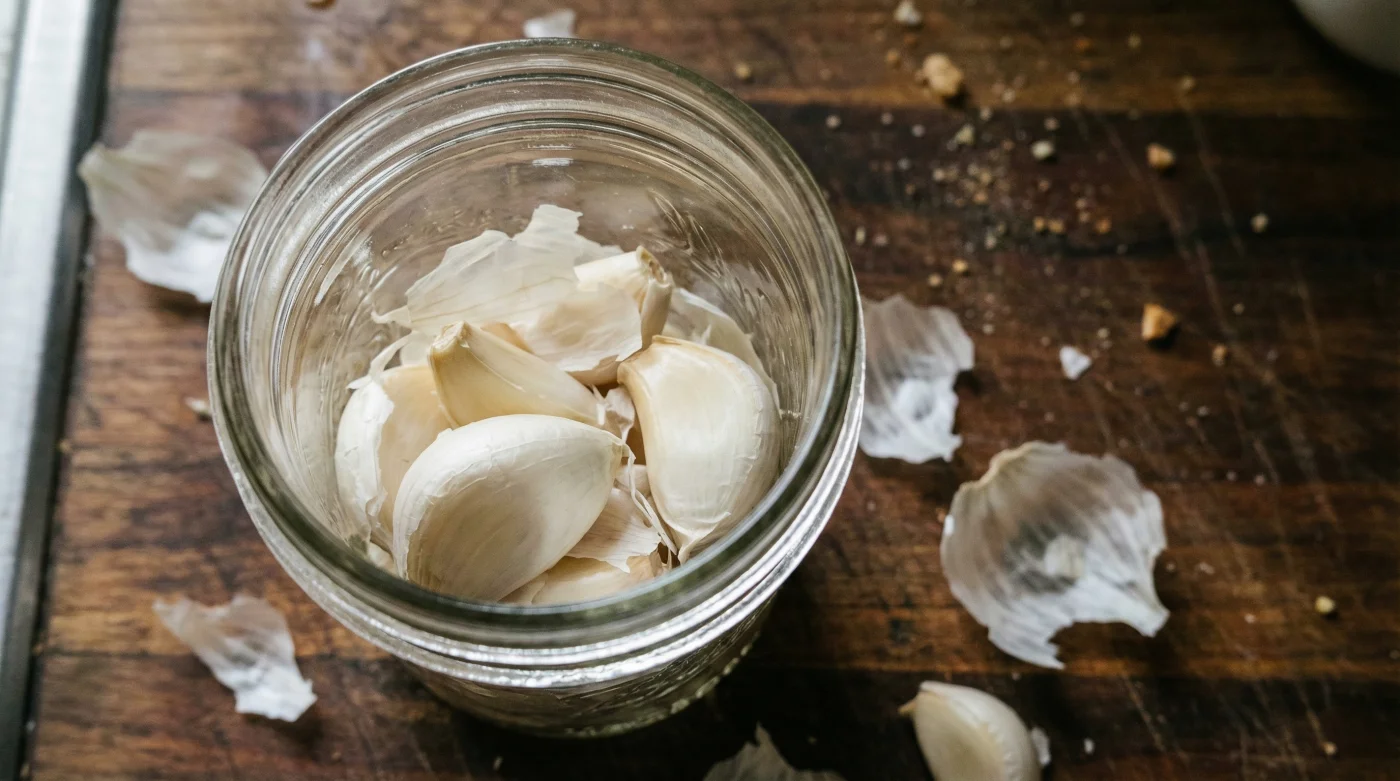
You stand under the hum of the stove hood overhead, staring down at a heavy wooden cutting board. Outside, the Canadian evening is settling into a familiar, biting chill, and the kitchen windows are clouded with a thin layer of condensation. The recipe sitting on the counter demands an intimidating volume of fresh garlic for a rich, warming braise.
Usually, this scenario means fifteen minutes of picking at stubborn, sticky paper that clings to your fingertips like wet tissue. There is a particular rhythm to evening meal prep, one that should feel like a calming transition rather than gearing up for a fight. Yet, the tiny, frustrating task of peeling alliums often breaks that rhythm entirely.
You find yourself scraping away the thin, translucent skins with your thumbnails, wondering why something so fundamental to building deep flavour requires such tedious, microscopic labour. The pungent oils seep into your pores, leaving a scent that stubbornly lingers long after the plates are washed and the counters wiped down.
But what if the solution to this domestic bottleneck relies on raw kinetic energy rather than delicate finesse? There is a surprisingly aggressive, entirely mechanical method that contradicts the tedious manual peeling process. It requires nothing more than an empty glass jar and five seconds of intense shaking.
The Perspective Shift: Kinetic Structural Collapse
This viral prep technique is currently the fastest way to execute the heavy, rustic dishes everyone is searching for right now. The trick isn’t investing in a sharper paring knife, purchasing a specialized rubber rolling tube, or soaking the bulbs in warm water. It is about fundamentally understanding the physical properties of the clove itself.
Peeling garlic is not a surgical procedure requiring meticulous care; it is a structural collapse waiting to happen. When you drop unpeeled cloves into a sealed container and shake it vigorously, you are generating intense, localized air pressure inside the rapidly moving jar.
The hard interior of the glass acts as an unyielding anvil. As the heavy cloves violently collide with the walls and crash into each other, the rigid structure of the dry papery skin fractures. The pressure inside the rapidly shaken jar separates the skin perfectly in seconds.
You are no longer coaxing the paper away from the delicate flesh. You are creating a micro-environment of blunt force that forces the skin to release its grip organically. The clove emerges entirely naked and miraculously unbruised, ready for the hot pan.
Smashing a clove with the flat of a heavy chef’s knife—the traditional shortcut—ruptures the cell walls. That early crushing releases the bitter allicin compounds prematurely, causing the garlic to burn faster and taste sharper. Shaking leaves the cellular structure intact.
This simple physical reaction turns a dreaded kitchen chore into a satisfying, loud acoustic rattle. It leaves your hands completely free of sticky, aromatic oils and your thumbnails intact, preserving your physical comfort.
The Line Cook’s Secret Weapon
Consider Elias Thorne, a 42-year-old prep chef working at a bustling, darkly lit Montreal bistro known for its pungent, slow-roasted meats. Every morning, long before the first lunch order rings in, he is tasked with processing over twenty pounds of local Ontario garlic.
He does not use a specialty silicone roller, nor does he stand over a bin with a delicate paring knife. Instead, Elias reaches beneath his stainless steel prep table for a thoroughly washed, one-litre glass pickle jar.
Watching him work feels like observing a seasoned bartender mixing a vigorous dry martini. He tosses in a massive handful of separated cloves, tightens the metal lid, and shakes the glass cylinder with ruthless, rhythmic efficiency. The rapid, staccato clatter fills the quiet morning kitchen for ten seconds, followed by the soft rustle of dry skins tumbling onto his cutting board.
He dumps the contents out in one fluid motion, easily picking the pristine, ivory cloves from the pile of papery debris. It is a shared secret from the professional line, a beautiful display of physics that saves hours of mundane labour over a busy week.
Adapting the Rattle for Your Kitchen
Not all alliums behave exactly the same way under pressure. The technique requires slight, intuitive modifications depending on what exactly you brought home from the grocer, the farm stand, or your own backyard garden.
For the Bulk Prepper: If you are planning to roast an entire head for a creamy soup base or make a large batch of slow-cooked confit, you need physical space. Use a large, heavy-duty glass mason jar. The cloves need enough empty room to gain momentum before striking the glass. Do not overfill the jar; keep it to one-third capacity.
For the Solo Cook: When a quick weeknight pasta recipe calls for just three humble cloves, a massive jar is completely unnecessary. A recycled glass mustard or caper jar is your best tool. The tighter space means the cloves have less distance to travel, so you must shake with slightly more aggression to achieve the same kinetic impact.
For the Stubborn Hardneck: Canadian farmers often grow robust hardneck varieties, designed to survive harsh winters. Their skins are significantly thicker and occasionally cling tighter than cheap imported softneck types. You might need to trim the tough basal root off each clove before dropping them into the jar to encourage the paper to shatter.
For the Aging Bulb: Garlic that has been sitting in your pantry for a few weeks tends to lose moisture. The skins become slightly more pliable and rubbery, absorbing into the flesh. In this case, give the cloves a firm roll between your palms to loosen the grip before applying the jar method.
The Ten-Second Kinetic Release
Executing this method is entirely about mindful, deliberate physical force. You are not gently tossing a delicate vinaigrette; you are trying to physically separate two tightly bound layers through pure blunt impact.
Focus your energy and stand firmly. This is a moment to let out a tiny bit of the day’s frustration. Plant your feet, hold the glass tightly, and commit to the movement.
Start by breaking the whole bulb into individual, separated segments. Discard the loose, papery outer layers that fall away naturally into the compost, keeping only the firmly wrapped individual cloves.
Here is exactly how to execute the technique with precision:
- Place the unpeeled cloves into a clean, completely dry glass jar.
- Seal the lid tightly to prevent any flying debris or accidental spills.
- Hold the jar with both hands, gripping firmly around the centre.
- Shake violently up and down for exactly ten to fifteen seconds.
- Listen for the acoustic shift; the sound will change from a heavy, dull thud to a softer, lighter rustle as the skins detach.
- Empty the contents onto your wooden board and pluck out the clean garlic.
Your Tactical Toolkit: Opt for a 500-millilitre glass jar for standard, everyday meal prep. Ensure the interior is bone-dry; even a single drop of residual water will cause the skins to paste themselves to the glass walls, completely ruining the dry friction needed for the trick to work.
Friction Removed, Flavour Maintained
The way we prepare our food directly dictates our psychological relationship with the meal itself. When you remove the tedious, sticky friction of microscopic prep work, cooking feels less like a mandated domestic chore and more like an intentional act of creation.
Mastering this simple, mechanical detail does more than save five minutes on a busy Tuesday evening. It proves that the most mundane, frustrating parts of domestic life often have elegantly aggressive physical solutions waiting to be discovered.
You are no longer the tired cook standing over a counter, picking at papery scraps with aching fingernails. You are the conductor of a brief, loud, and entirely effective kitchen symphony.
The sharp, promising scent of alliums still fills the air, but now it signals the rapid beginning of a great, warming meal, rather than a lingering, frustrating struggle against sticky paper.
In a professional kitchen, efficiency isn’t just about speed; it is about preserving your hands and your patience for the tasks that actually require finesse. – Elias Thorne
| Method | The Technique | The Payoff for Your Prep |
|---|---|---|
| Standard Hand Peeling | Picking skins away with fingernails. | Leaves hands sticky and smelling of strong oils. |
| The Knife Smash | Crushing the clove under a wide blade. | Fast, but damages the clove and releases bitter flavours early. |
| The Glass Jar Shake | Violent shaking in a sealed environment. | Delivers whole, unbruised cloves in seconds with zero mess. |
Common Questions About the Jar Method
Does the jar need to be made of glass? Glass provides the best unyielding surface for the cloves to strike, but a hard plastic container will work in a pinch if you shake harder.
Why are my garlic cloves sticking to the sides? Your jar is likely damp. Even a tiny amount of moisture acts like glue for the papery skins. Ensure the jar is bone-dry.
Does this method work for a single clove? Yes, but use a much smaller jar, like an empty spice bottle, to ensure the clove bounces rapidly off the walls.
Will shaking bruise the garlic and alter the flavour? No. The skin absorbs the brunt of the impact, leaving the flesh intact and preventing early release of bitter allicin.
What if the skin only partially tears off? The clove might be old and rubbery. Simply give it a quick twist with your fingers; the fractured skin will slip right off.