The cold, heavy weight of iron rests against your palm. You run your fingers over the dark surface of your skillet, feeling a slight, frustrating grit instead of the smooth glass you expect. For years, you have treated this pan like a fragile museum artifact. You have avoided soap with religious dedication, scrubbed the iron only with coarse salt and a soft cloth, and guarded it fiercely against anything remotely acidic. The rituals of cast iron maintenance have become a stressful chore rather than a simple kitchen habit. Standing in the soft morning light of your kitchen, staring at the faint orange blush of microscopic rust creeping along the rim, the standard rules feel entirely inadequate.
The standard culinary folklore insists that acid is the absolute enemy of iron. We learn early on that simmering bright, acidic tomatoes in cast iron is a disastrous pairing, leaving behind a harsh metallic tang in the food and a ruined, patchy surface on the metal. So, the idea of intentionally pouring boiling vinegar into your prized cooking vessel sounds like an act of pure culinary self-sabotage. It contradicts every strict guideline you have memorized about maintaining that slick, black patina. You have been conditioned to believe that acid will strip your pan down to the bare, vulnerable silver metal, erasing years of careful seasoning in mere minutes.
Yet, behind the swinging metal doors of high-volume steakhouses across Canada, a completely different reality exists. The secret to maintaining an egg-sliding surface under punishing, high-heat restaurant conditions isn’t applying endless coats of sticky flaxseed oil or stubbornly refusing to wash the pan. It involves a strategic professional pivot: a counterintuitive two-ingredient method that strips away the microscopic damage while leaving the hard-earned, polymerized seasoning completely untouched. Chefs do not have the luxury of coddling their cookware; they require systems that work with ruthless efficiency.
The Perspective Shift: Cured Hardwood and Targeted Strikes
Think of your skillet’s polymerized oil not as a delicate coat of paint, but as deeply cured hardwood floors. The seasoning layer is essentially baked-in plastic, heavily cross-linked and highly resilient to friction. Rust, on the other hand, is like fine sand resting loosely on top of those sealed boards. You need a mechanism to dissolve the fine sand without eating into the protective floorboards beneath. Mechanical scrubbing often fails here, either leaving rust behind in the microscopic pores of the iron or scratching straight through the polymer layer you worked so hard to build.
A gentle, diluted acid performs exactly this targeted function. While highly concentrated, prolonged acid exposure will eventually degrade those tight polymer bonds, a rapid application of boiling diluted vinegar acts as a highly specific chemical strike. The thermal energy accelerates the reaction, allowing the acidic liquid to sever the weak, brittle bonds of iron oxide in mere minutes. Because the exposure is so brief, the acid neutralizes the rust without being given the necessary time to break down the hardened carbon layer beneath. It is a precise surgical removal of the flaw.
Meet Elias Thorne, a 42-year-old line cook from Montreal who has rehabilitated cast iron for bustling, meat-centric kitchens for over fifteen years. He laughs at the sheer terror home cooks project onto their heavy pans. “People baby this metal until they ruin it,” he notes, standing beside a commercial range radiating heat at 200 Celsius. Elias relies on a simple, inexpensive 50/50 mix of white vinegar and water, brought rapidly to a rolling simmer. It is a brilliant trick he learned from old-school camp cooks in the Rockies, turning a frustrating, multi-day soaking project into a predictable five-minute reset.
Tailoring the Acid Protocol
The true beauty of this two-ingredient modification lies in its daily adaptability. Not every skillet requires the exact same treatment, because not every pan lives the same life or cooks the same food. Recognizing the subtle, early signs of surface degradation allows you to apply this acidic method with precision, saving both your time and your seasoning layer. By categorizing the state of your iron, you can deploy the vinegar simmer exactly when it provides the highest return on investment.
For the Weekend Purist
You only pull the heavy skillet out on Sunday mornings for a slow breakfast of bacon and eggs. The rest of the week, your pan mostly sits idle in a dark cupboard, where lingering, invisible kitchen humidity causes a faint, almost invisible orange blush to form along the outer rim. You do not need a deep, aggressive restoration. A quick flash of the vinegar solution simply lifts that humidity rust before it has the chance to pit the iron, ensuring your Sunday cooking routine remains flawless and completely nonstick.
For the Thrift Store Rescuer
You found a forgotten, slightly crusty piece of iron at a dusty antique shop in Halifax. The cooking surface feels like rough sandpaper, though the core structural integrity of the skillet remains solid and unwarped. Here, the boiling vinegar method serves as your primary diagnostic tool. By clearing away the microscopic oxidized layer first, you reveal the true condition of the black polymer beneath, saving you hours of unnecessary grinding, sanding, or harsh chemical stripping. It separates the surface dirt from the structural reality.
For the Daily Scrambler
Your pan lives permanently on the stovetop, subjected daily to searing thick steaks, frying acidic onions, and baking dense cornbread. Over time, stubborn proteins burn and stick, pulling microscopic flakes of iron with them when forcefully scrubbed away. When your trusted pan suddenly starts grabbing food, a quick, five-minute simmer of the acid mixture clears the invisible oxidation trapped inside those tiny micro-abrasions, instantly restoring its original slick, frictionless behavior without requiring an hour in a hot oven.
Mindful Application: The 5-Minute Restoration
Executing this technique correctly requires calm intention rather than brute physical force. You are setting up a brief, controlled chemical reaction, not a slow cooker recipe to be ignored. Gather your minimal tools beforehand and ensure your kitchen is properly ventilated. Warm vinegar produces a distinctly sharp, pungent vapour that clears the sinuses, so opening a window or running your range hood is a practical necessity. Focus on the timing; letting it boil away unattended is the only real risk here.
The tactical toolkit for this straightforward process is incredibly minimal, utilizing items already sitting in your pantry. You need standard white household vinegar, clean tap water, a stiff-bristled nylon scrub brush, and a thin coat of your preferred neutral seasoning oil, such as canola or grapeseed. Always start with a completely cold pan to prevent thermal shock to the iron, which can cause devastating warping or cracking. Measure out equal parts water and white vinegar directly in the skillet, filling it just above the rust or sticking line.
- Place the pan on the burner and slowly bring the liquid to a rolling boil over medium heat.
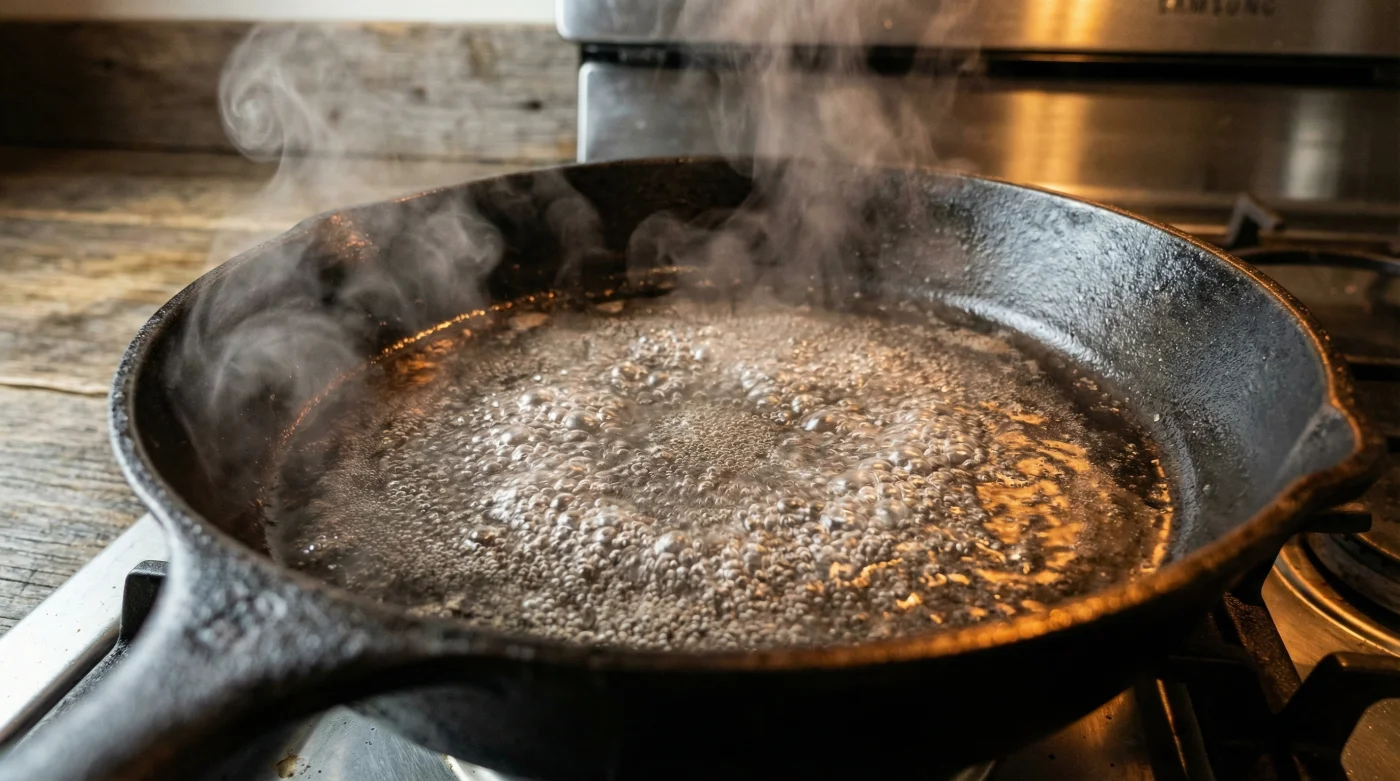
- Let it boil for exactly three to five minutes; the water should tremble, turning slightly murky as the iron oxide dissolves.
- Turn off the heat, dump the liquid immediately down the sink, and rinse the pan thoroughly with cold water to neutralize any remaining acid.
- Scrub lightly with the nylon brush, dry completely over a low flame, and massage a few drops of oil into the warm iron.
Once the warm, porous iron absorbs that final drop of protective oil, you will notice the physical difference immediately. The cooking surface loses that dull, thirsty, grey appearance and instantly regains its rich, dark sheen. Running your fingers across the metal, the gritty resistance is completely gone, replaced by a smooth, gliding finish. You are no longer fighting the metal’s natural tendencies; you are working in intelligent harmony with its chemistry.
The Bigger Picture of Iron Resilience
There is a profound peace of mind that comes from understanding the tools you rely on daily. Moving past the fear of ruining your favourite skillet changes the way you approach your meals altogether. It stops being a fragile, demanding object requiring anxious maintenance and returns to what it was always meant to be: a durable, forgiving piece of culinary equipment.
By mastering this professional pivot, you reclaim complete control over your kitchen environment. You stop throwing away heavy iron pans that simply need a rapid chemical reset. The realization that a mundane, inexpensive pantry staple can strip away the metallic flaws while actively protecting the hard-won foundation is incredibly liberating for any home chef.
It transforms a point of daily friction into an effortless interaction. You can finally stop treating your iron with kid gloves, confidently deploying the acid paradox when needed, and simply get back to simple cooking.
“Cast iron is forged in fire; a splash of hot vinegar isn’t going to destroy it, it merely cleans the slate.” — Elias Thorne
| Key Point | Detail | Added Value for the Reader |
|---|---|---|
| Standard Scrubbing | Abrasive salts and heavy physical elbow grease. | Tiring and often leaves microscopic rust untouched behind the polymer layer. |
| The Acid Paradox | Boiling a 50/50 water and vinegar mix for 5 minutes. | Chemically lifts rust without damaging the seasoning, saving hours of unnecessary labour. |
| Complete Stripping | Oven-cleaner or toxic lye baths over several days. | Excessive for light damage; forces you to rebuild the nonstick seasoning entirely from scratch. |
Frequently Asked Questions
Will the sharp vinegar smell permanently linger in my cast iron skillet?
Not at all. Once you rinse the pan thoroughly with cold water and apply a light coat of oil over a warm flame, all traces of the vinegar evaporate completely.Can I use apple cider vinegar instead of standard white vinegar for this process?
White vinegar is preferred for its pure, predictable acetic acid profile, but apple cider vinegar will work in a pinch if you strictly maintain the 50/50 dilution ratio.How often should I aggressively boil vinegar in my everyday skillet?
Only when absolutely necessary. Treat it as a targeted chemical fix for visible rust or sudden, stubborn sticking issues, not a standard daily or weekly cleaning routine.What if the rust is severely pitted deeply into the raw metal?
This five-minute method tackles light surface oxidation. Deep, structural pitting may require heavy mechanical sanding before you can successfully establish a brand new seasoning layer.Do I need to fully re-season the pan in a hot oven immediately afterward?
A full, smoky oven seasoning is rarely needed. Simply wiping a few drops of oil onto the warm pan after drying is enough to protect and seal the freshly restored surface.