The frost clings to the kitchen windowpane, reflecting the pale grey of a crisp Canadian morning. You stand over the counter, listening to the rhythmic, sputtering gasp of the drip machine, waiting for that first dark brew. When you pour it, the liquid is thin and aggressive, smelling faintly of scorched earth and bitter compromises. It bites the back of your throat like a cold wind, a harsh reminder that supermarket beans often sacrifice quality for volume.
The usual instinct is to smother the harshness. You might pour in a heavy splash of milk, hoping the cream should tremble as it hits the dark surface, or stir in a generous spoonful of sugar. Lately, you might have even tried the popular trick of adding a pinch of salt to trick your palate. But masking the bitter flaw does not actually remove it; it merely distracts your tongue while the acidic compounds still wreak havoc on your stomach. Adding sugar to bad coffee is like breathing through a pillow—it softens the blow, but it feels suffocating and clumsy.
True smoothness is born in the brewing process itself, long before the liquid leaves the carafe. In professional kitchens and high-volume diners, the goal is never to cover up a mistake, but to engineer an environment where the mistake cannot form. We usually think of coffee as a finished product, but it is actually a delicate, volatile extraction.
When you rely on budget-friendly grounds, the roast is often uneven and highly acidic. To fix this at the source, you need a structural intervention rather than a sweet bandage. By introducing a completely ordinary kitchen scrap to the grounds, you neutralize the acid before it ever reaches your mug. It requires no special syrups, just a slight pivot in your morning routine.
The Alchemy of the Discarded
Think of standard coffee extraction as a hostile negotiation between hot water and crushed beans. The water pulls out the desirable oils and rich flavours, but it also drags out tannic acids and astringent chemicals. Trying to fix this after the fact by dumping in flavourings is like painting over a damp wall; the underlying rot is still there, waiting to ruin the structure.
The alternative is changing the chemical environment of the brew. Eggshells are composed almost entirely of calcium carbonate, a naturally occurring alkaline substance. When you introduce this mineral to the brewing cycle, the alkaline nature of calcium acts as a targeted sponge. It seeks out the harshest acids and binds to them, rendering them completely inactive.
This is a matter of simple, grounded chemistry. Calcium carbonate does not add a new flavour to your cup; it subtracts a negative one. By pulling the acidity out of the equation, the natural, subtle notes of even the cheapest coffee beans are suddenly allowed to step forward. The brew becomes inherently smooth, feeling almost velvety on the tongue.
You are left with a cup of coffee that tastes distinctly rounder and softer. Because the eggshell works by reacting with bitter compounds directly, you do not need to rely on the crutch of heavy creams or refined sugars. The coffee supports itself, standing strong and balanced without any external masking agents.
This practice is not new, though it has been largely forgotten in the era of automated espresso pods. Consider Elias Thorne, a sixty-year-old line cook running a bustling roadside diner outside of Halifax. For decades, Elias has managed a constantly running commercial percolator, serving truckers and locals who demand a strong, black cup of coffee that will not burn their stomachs.
Elias does not order premium artisanal roasts. Instead, he takes the discarded shells from the morning rush of omelettes, crushes them in his bare hands, and drops them directly into the massive filter basket. This is a secret hidden in plain sight, a Depression-era resourcefulness that turns an industrial tin of generic grounds into a miraculously smooth, highly sought-after diner brew.
Calibrating the Routine
Adopting this method at home requires a minor adjustment based on how you prefer to prepare your morning cup. Different brewing mechanisms expose the grounds to water for varying lengths of time, meaning the interaction between the shell and the acid needs to be managed carefully.
For the purist who relies on immersion brewing, the contact time is already quite long. When steeping in a French press, the water sits with the grounds for several minutes. You will want to use larger, roughly cracked pieces of shell. The slow extraction allows the calcium to gently mellow the brew without over-extracting the base minerals.
If you use a standard automatic drip machine, the water passes through the grounds relatively quickly. The contact time is brief, so the interaction needs to be highly efficient. For this method, the shells should be crushed into a finer consistency, resembling coarse sand, so the hot water can immediately pull the alkaline benefits as it filters through.
The physical barrier of your brewing method also dictates the preparation. A flat-bottom or cone drip setup is incredibly forgiving because the paper filter catches the grit, ensuring no sharp fragments end up in your mug. If you are using a metal mesh filter, you must rinse the shells meticulously to remove the inner membrane, which can otherwise coagulate and clog the fine steel pores.
Finally, for the frugal optimiser buying bulk grocery store brands, this technique is a financial revelation. Discount coffees are typically roasted hot and fast, locking in a sharp, grassy bitterness. The eggshell method specifically targets this rapid-roast acidity.
You can confidently purchase the three-kilogram tin of budget grounds, knowing you possess the mechanical skill to force it to behave like a premium bag. It is a brilliant strategy for stretching your grocery budget without sacrificing the comforting ritual of a truly enjoyable morning cup.
The Mindful Application
Implementing this technique should feel intentional, a quiet moment of preparation before the chaos of the day begins. You are taking something destined for the compost bin and repurposing it to correct a chemical imbalance. The process is minimalist, requiring only a few deliberate motions.
Start by saving the shells from your breakfast eggs. Wash them thoroughly under cold running water. It is crucial that you rinse the membrane away completely, as any residual organic matter can introduce a faint, unwanted sulphur note when exposed to boiling water. Let them dry on a paper towel overnight.
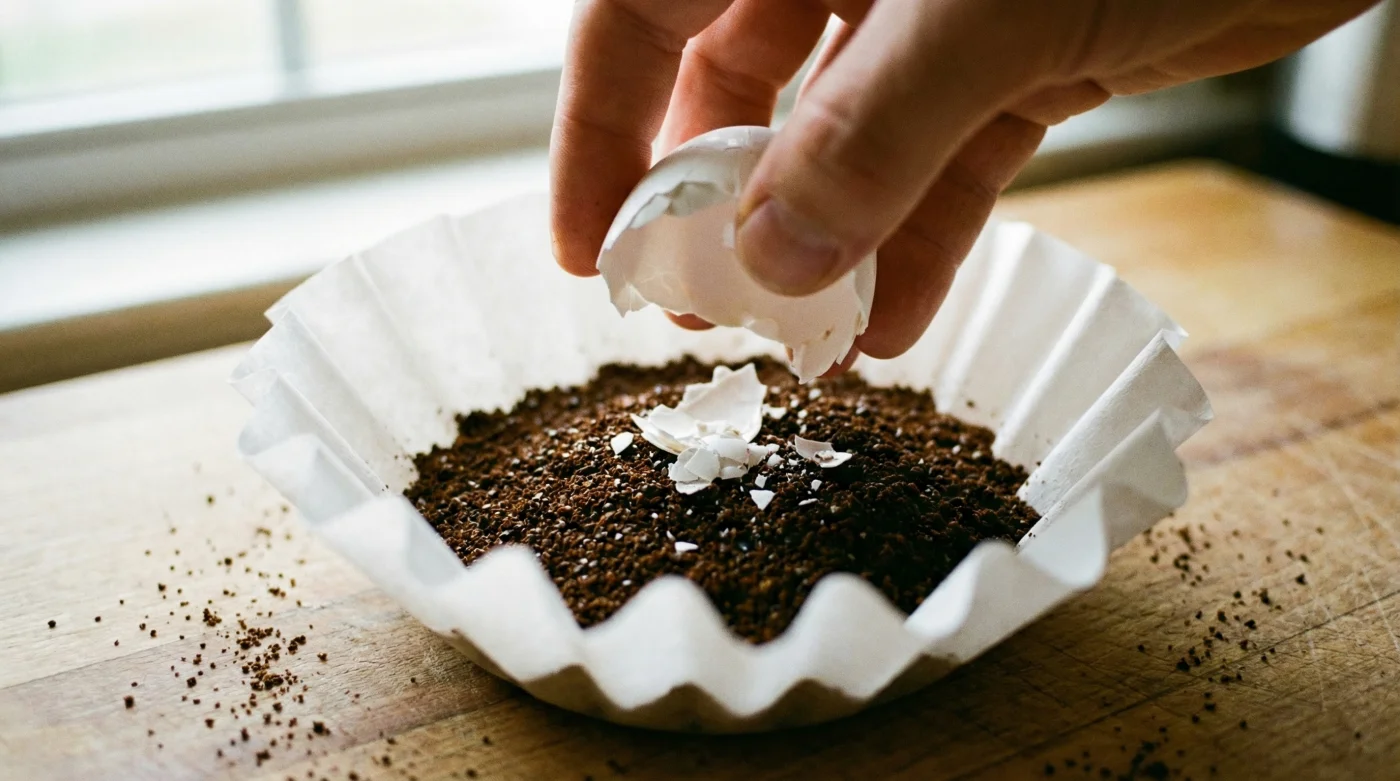
- Crush the dried shells using a mortar and pestle, or simply the back of a heavy spoon, until they match the size of coarse sea salt.
- Measure out your regular coffee grounds into the filter.
- Sprinkle exactly one half of a crushed eggshell over the top of the dry grounds for every four cups of coffee you intend to brew.
- Initiate the brewing cycle as normal, ensuring the water temperature hits the optimal extraction point.
The resulting brew will look identical to your standard cup, but the aroma will be noticeably softer. The sharp, metallic tang that usually hovers over cheap coffee will be entirely absent, replaced by a warm, roasted earthiness.
Your tactical toolkit for this method is remarkably simple. You need clean, dried shells, a method for crushing them, and a reliable machine. Pay close attention to the exact temperature of the water, aiming for ninety-three degrees Celsius. Water that is too hot will pull out harsh tannins regardless of the alkaline buffer, while water that is too cold will simply under-extract the bean entirely.
The Bigger Picture
Mastering this simple intervention shifts your entire perspective on kitchen routines. It moves you away from the mindset of passive consumption, where flaws are simply tolerated or smothered in sugar, and into a space of active curation. You are no longer just making a quick cup of coffee; you are refining a raw material.
This approach fosters a deep respect for raw materials, encouraging you to look closer at the items you handle every day. When you realize that the cure for bitter coffee is sitting in the shell of a scrambled egg, the boundary between waste and utility begins to blur. It is a small, daily practice in zero-waste living that actually improves your quality of life.
Finding peace of mind in the morning often comes from these tiny, controlled victories. When you sit at the table, wrapping your hands around a mug that you chemically balanced yourself, the coffee tastes better because it was crafted with intent. You fixed the problem at its root.
Let this simple, frugal trick be a reminder that the best solutions are rarely found on a store shelf. They are usually born from patience, an understanding of how things work, and finding value in the overlooked. Your morning coffee is no longer a harsh jolt to the system, but a smooth, well-crafted start to the day.
“True culinary skill isn’t about buying the most expensive ingredients; it’s about forcing the humblest materials to behave beautifully.”
| Key Concept | The Chemical Detail | Added Value for Your Cup |
|---|---|---|
| Acid Neutralization | Calcium carbonate binds to tannic acids during extraction. | Removes the sharp, stomach-irritating bite of cheap beans. |
| Temperature Control | Water at 93 Celsius extracts oils without burning. | Prevents the release of secondary bitter compounds. |
| Membrane Removal | Washing the shell removes organic proteins. | Ensures the brew remains free of unwanted sulphur aromas. |
Frequently Asked Questions
Will the eggshells make my coffee taste like eggs?
Not at all. As long as you thoroughly rinse away the inner membrane and let the shells dry, they impart absolutely no flavour. They only remove the bitterness.Can I use brown and white eggshells interchangeably?
Yes. The colour of the shell is dictated by the breed of the hen, but the chemical composition—pure calcium carbonate—is identical in both.Is it safe to consume coffee brewed with eggshells?
Yes, it is perfectly safe. The boiling water from the brewing process sterilizes the shells, and the paper filter prevents any sharp grit from entering your mug.Does this trick work with high-quality specialty coffee?
You can use it, but it is not recommended. Premium roasts rely on bright, fruity acidic notes for their unique profile. Neutralizing them will make expensive beans taste flat.How many shells should I use for a full twelve-cup pot?
One and a half medium-sized eggshells, finely crushed, is the perfect ratio to balance a full standard carafe of drip coffee.