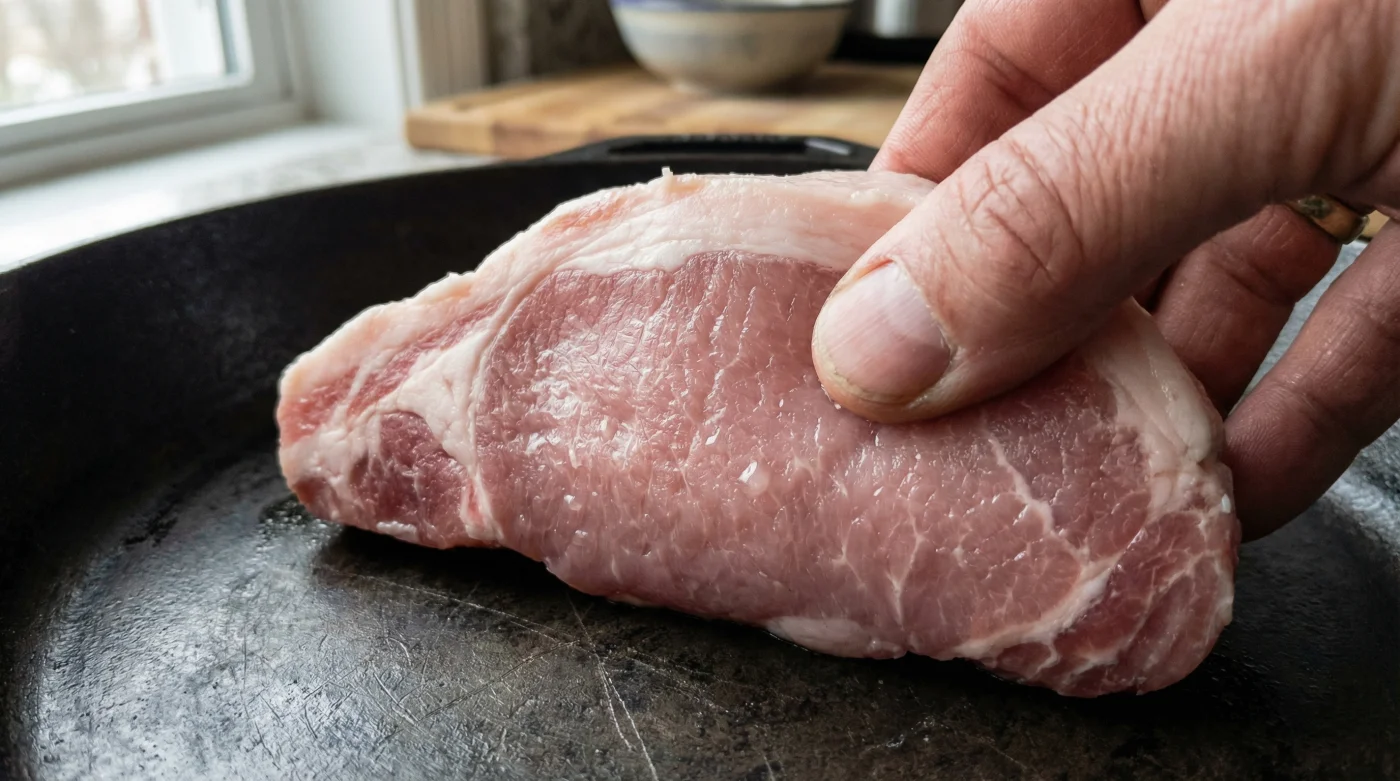
The familiar chaos usually begins with a screaming hot cast-iron skillet and a splash of oil that instantly vaporizes into a choking cloud. You drop the thick-cut pork chop in, expecting a triumphant sizzle, bracing yourself against the stovetop splatter. The smoke alarm threatens to wail from the hallway, and you assume this violent reaction is simply the price of a good meal. You have done everything the classical recipes told you to do.
Instead, the meat violently seizes against the iron. The edges immediately curl upward, forming a rigid, cupped bowl that flatly refuses to maintain contact with the hot metal. The centre of the chop hovers just a fraction of a centimetre above the pan, steaming instead of browning, while the thick fat cap remains stubbornly rubbery and thoroughly unappetizing.
We have been conditioned to worship the smoking pan as a rigid culinary dogma. It is a belief passed down through generations of weekend cooks, insisting that aggressive, immediate heat is the only acceptable way to build flavour and lock in moisture. We treat the kitchen like an industrial foundry, assuming brute force yields the best crust.
But meat is a delicate biological structure, not a ceramic floor tile. Shocked by brutal pan temperatures, its outer muscle fibres contract with a sudden, panicked force. To fix the chop and achieve that edge-to-edge golden crust, you have to do the exact opposite of what your instincts are screaming at you to do.
Rethinking the Heat
Imagine walking out of a bitter January snowstorm in rural Quebec directly into a ninety-degree dry cedar sauna. Your muscles would instantly tense, your breathing would grow shallow, and your physical body would fight the sudden environmental extreme. Pork reacts to the skillet with the exact same physiological panic.
The cold skillet start contradicts nearly every rule you have absorbed from mainstream cooking television. Placing cold meat on metal feels entirely counterintuitive, almost like an amateur mistake you would make while distracted in a cramped, poorly lit university apartment. It feels entirely wrong to turn the burner on only after the food is sitting quietly in the pan.
Yet, this gentle awakening changes the internal physics of the cooking process. As the heavy pan slowly gathers warmth, the thick, pale band of fat along the edge begins to weep softly, melting out into the pan before the muscle fibres even register that they are being cooked. It is a slow, quiet transformation.
By the time the pan actually reaches searing temperatures, the chop is practically frying in its own rendered, liquid gold. The outer fibres remain completely relaxed, allowing the meat to lay perfectly flush against the iron, developing a uniform, mahogany crust without a hint of tension or buckling.
I learned this from Marc Boucher, a forty-six-year-old second-generation butcher working out of a small, frost-chilled shop in the Eastern Townships. Tapping a beautifully marbled, bone-in rib chop against his scarred wooden block, he shook his head at the prevailing wisdom. ‘Everyone tries to fight the pig,’ he told me, wiping his hands on a flour-dusted apron. ‘You drop it in a screaming pan, it fights you back. Put it in a cold pan, turn the burner to medium, and just let it breathe. The fat will do all the heavy lifting.’
Adjusting for Your Table
For the Traditional Purist
If you go out of your way to source premium, pasture-raised pork from a local farm, you want the meat to speak for itself. Your only necessary additions are a generous coating of coarse salt, cracked black pepper, and an abundance of patience.
Score the fat cap lightly with a sharp utility blade before cooking. This ensures that even the slightest residual tension cannot pull at the meat as the fat slowly renders out into the cold iron, preserving the flat, pristine shape of the cut.
For the Pan-Sauce Advocate
When you plan to build a rich glaze or gravy, the cold start provides a distinct, noticeable advantage. Because the heat builds gradually and never crosses into a burning extreme, the fond does not scorch bitterly.
Once you pull the chop to rest, splash in a glug of cold local apple cider and drop in a knob of butter. The gently rendered pork fat left in the skillet emulsifies perfectly with the cold cider, creating a thick, glossy, perfectly balanced pan sauce in mere seconds.
For the Busy Parent
Time is rarely on your side when dinner needs to be on the table before homework starts. You might initially assume a slow, cold pan slows you down, but it actually frees your hands up entirely.
While the skillet slowly comes to temperature over eight to ten minutes, you can easily toss a vinaigrette, chop a quick salad, or set out the plates. You are no longer chained to a splattering, smoking stovetop, anxiously dodging painful droplets of airborne cooking oil.
The Slow Rendering Ritual
The physical process requires a meaningful shift in your evening rhythm. You are stepping away from the frantic energy of high-heat cooking and embracing a quieter, deliberate technique.
Start with a heavy, thick-bottomed pan, ideally well-seasoned cast iron or carbon steel. A thin, cheap aluminum pan heats up far too rapidly and unevenly for this method, causing isolated hot spots that will trigger the very muscular curling we are trying to avoid.
Keep your primary heat source remarkably moderate throughout the entire cook. If your stove dials run from one to ten, you want to hover right around a four, letting the temperature climb like morning sun.
Here is your tactical toolkit for perfect execution every single time:
- Pat the meat entirely dry with a paper towel; residual moisture aggressively prevents proper browning.
- Season generously with salt and pepper, leaving it on the counter for thirty minutes to temper slightly.
- Stand the chop on its edge, fat-cap down, in the cold pan, propping it up to render for four minutes as the metal slowly warms.
- Lay the chop flat and cook undisturbed for roughly seven minutes per side over a medium-low burner.
- Use an instant-read thermometer to pull the meat exactly at sixty Celsius, then rest it for ten minutes.
The Quiet Satisfaction of Getting it Right
There is a profound, lasting relief in removing the performative culinary urgency from your evening routine. We do not need to mimic the aggressive, shouting, high-stress environment of a commercial restaurant line just to produce a beautiful, satisfying meal at home.
Mastering the cold start is about learning to observe the physical changes in your ingredients rather than trying to force a specific outcome. You watch the thick rim of fat slowly turn translucent, you listen closely for the gentle transition from total silence to a low, steady hiss, and you respond to the meat.
This single, contrarian technique permanently removes the anxiety from cooking a traditionally temperamental, easily ruined cut of meat. It completely transforms a mundane, repetitive weekly chore into a moment of quiet, mindful practice.
When you finally slice into that perfectly blushing, edge-to-edge pale pink interior, experiencing the contrast of a delicately rendered fat cap, you realize something fundamental. Sometimes the absolute best way to handle immense pressure in the kitchen is to simply remove the intense heat entirely and let things warm up on their own time.
The most confident thing a cook can do is turn the heat down and trust the pan to do the work slowly. — Marc Boucher, Artisanal Butcher
| Key Point | Detail | Added Value for the Reader |
|---|---|---|
| Smoking Hot Skillet | Muscle fibres seize upon contact, causing the chop to aggressively curl into a bowl shape. | Creates highly uneven cooking, a raw centre, and burnt, rubbery exterior edges. |
| The Cold Skillet Start | Fat slowly liquefies and weeps into the pan while meat fibres remain totally relaxed. | Delivers a completely flat, beautifully cooked chop with an edge-to-edge golden crust. |
| Oven Reverse Sear | Gentle internal baking followed by a rapid, high-heat stove finish. | Excellent for extremely thick cuts, but requires turning on the oven and dirtying a second pan. |
Common Cold-Start Concerns
Does this method work for thin-cut pork chops?
No. Chops under two centimetres thick will cook through entirely before a proper crust can form in a slowly heating pan. Save the cold start for thick, premium bone-in cuts.
Should I still let the meat rest at room temperature before cooking?
Yes. Taking the chill off the meat ensures the internal temperature rises steadily along with the pan, preventing the centre from remaining cold while the outside eventually browns.
What kind of cooking oil should I add to the cold pan before I turn the burner on?
None. The entire goal is to render the chop’s own fat cap directly into the dry metal. Adding external oil dilutes the rich, natural flavour and causes unnecessary splattering on your stovetop.
Will a standard non-stick frying pan work for this gentle technique?
It is not recommended. Non-stick coatings do not hold or distribute heat evenly enough to build a heavy crust, and heating them without liquid from a cold start can sometimes degrade the protective surface.
How do I know exactly when the fat has rendered enough to flip the chop flat?
Watch the bottom edge closely. When the thick white fat turns from opaque to a slightly translucent golden hue, and you have a small pool of liquid oil naturally resting in the pan, it is time to lay the meat flat.