The air in your kitchen carries the sharp, bright scent of lime and roasted chilies. You have spent the better part of the afternoon nursing a deep braise on the stove, adjusting the heat, tasting for salt, and waiting for that rich, dark reduction. It smells incredible, filling the room with a deep, savoury promise. The final step of this long preparation is always the simplest: a quick scatter of fresh cilantro sprigs to break up the richness and add a necessary flash of vibrant green.
You pull a handful of herbs from the fridge, lay them on your cutting board, and pluck the leaves. As they hit the warm surface of your braised beef or steaming bowl of pho, something immediately disappointing happens. Within seconds, the delicate herb wilts into flat, bruised ribbons. The structural, lively garnish you envisioned collapses, darkening against the radiant heat and looking more like a wet afterthought than a deliberate, professional choice.
This is the quiet frustration of the home cook. We spend hours building complex flavour profiles and meticulously watching temperatures, only to stumble right at the finish line with a limp garnish. It is easy to assume this is simply the nature of cooking at home, accepting that restaurant plates possess some unattainable magic or rely on incredibly expensive, farm-direct ingredients that bypass the grocery store entirely.
But step into the pass of any high-end Canadian restaurant, and you will notice something vastly different about their garnish stations. Their soft herbs do not rest casually on a dry cloth or a wooden cutting board waiting to be chopped. They are held in a state of suspended animation, perfectly primed to defy gravity and radiate crispness when they finally meet a warm plate. The difference is not the supplier; it is a thermal treatment applied just before plating.
The Architecture of a Leaf
To understand why your garnish collapses so violently, you must look at the herb as a microscopic structure rather than just a flavouring agent. When a delicate plant is harvested, transported for hundreds of kilometres, and left in the dry, circulating chill of your refrigerator, it loses significant moisture. The pressure inside its cells—botanically known as turgor pressure—drops dramatically. Plating soft herbs straight from a dry cutting board is akin to trying to build a solid house with deflated balloons.
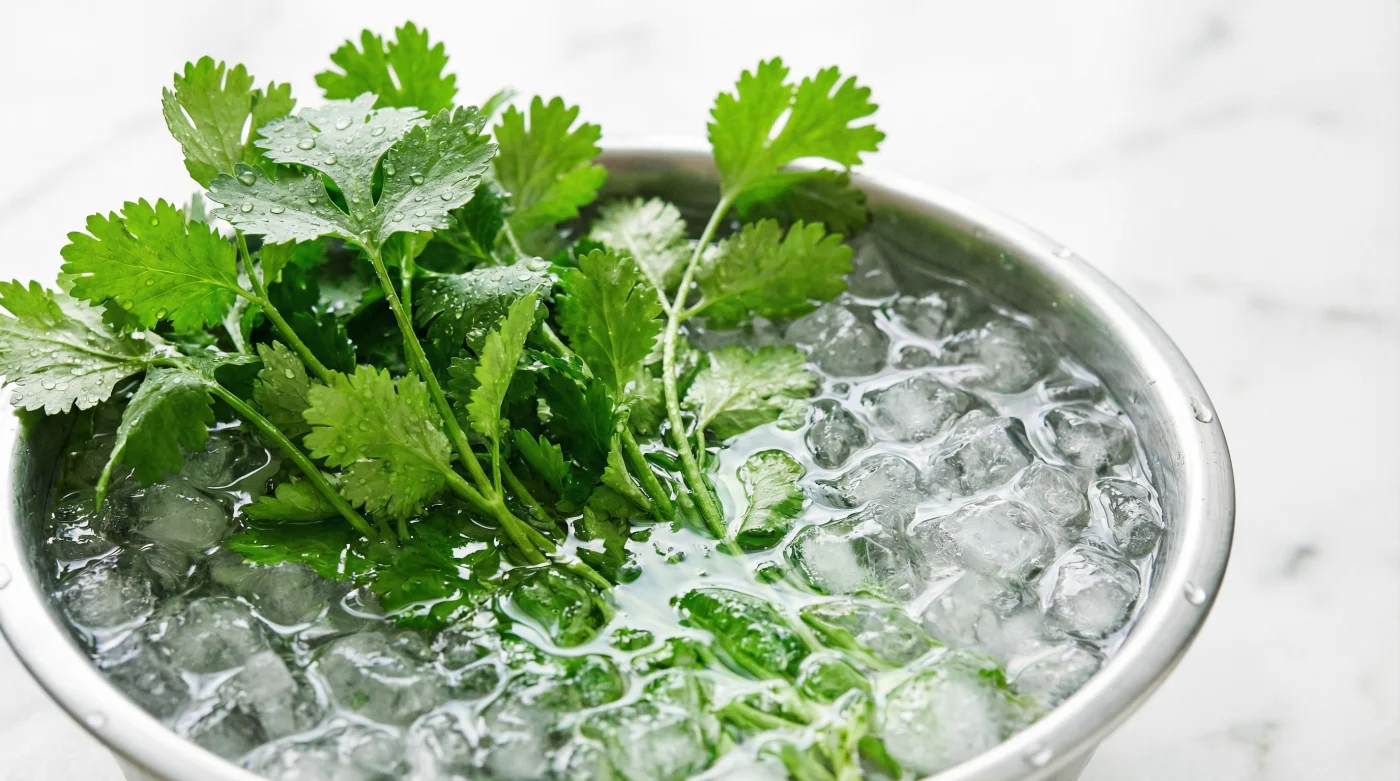
The secret to that restaurant-quality finish lies in a drastic, immediate temperature shift. Submerging delicate herbs in ice water rigidifies the cellular walls instantly. This sudden plunge forces the plant to aggressively pull in cold water, reinflating those microscopic balloons and locking the stems into an upright, sturdy posture. It entirely contradicts the instinct to keep garnishes pristine and dry until the last second, revealing that a shocking wet plunge is actually the key to lasting visual structure.
Elias Thorne, a thirty-four-year-old sous chef at a bustling Vancouver seafood bistro, understands this necessity better than anyone. His station demands hundreds of perfect cilantro sprigs a night to finish the restaurant’s signature smoked sablefish. He doesn’t just pluck and plate; he runs a dedicated revival bath. ‘You take this sad, drooping bunch that looks ready for the compost, drop it in ice water for five minutes, and it literally stands at attention,’ Elias explains, pulling a rigid, emerald sprig from a frosty metal basin. ‘It gives the herb a spine. It completely changes how the entire dish reads to the guest sitting at the table.’
Tailoring the Shock to Your Menu
Not all dishes demand the exact same architectural approach. Depending on what you are preparing, the way you apply this cold-shock method requires a slight adjustment to ensure the garnish complements the meal perfectly. Understanding these variations allows you to dictate exactly how the final plate behaves.
For the Raw Purist: If you are assembling a delicate scallop crudo or a bright summer ceviche, the herbs must feel as crisp as the chilled seafood itself. Here, you want to shock solitary, individual leaves rather than whole heavy sprigs. The ice bath transforms them into tiny, crisp green cups that hold their shape beautifully against a heavy, acidic citrus dressing.
For the Hot Plater: Braises, heavy curries, and soups are hostile, steamy environments for fresh greens. The residual heat radiating at sixty Celsius or higher will melt unprepared leaves on contact. By shocking sprigs with their top stems still firmly attached, the cold water reinforces the thicker stalks. This allows the cilantro to stand upright proudly in the hot sauce rather than immediately melting into the broth.
For the Prep-Ahead Host: Hosting a busy taco night means your garnishes might sit on the dining table for an hour or more. Instead of serving a bowl of chopped, oxidizing mush, shock whole bunches early in the afternoon. Once they are entirely rigid, you can dry them thoroughly and store them in the fridge, maintaining their crisp, architectural integrity for hours without last-minute panic when your guests arrive.
Executing the Ice Shock
Preparing this professional touch takes less actual time than mincing a single clove of garlic. It requires minimal equipment and demands only a few moments of mindful attention before the meal is served. Treat this step as a palate cleanser for your own mind before you sit down to eat.
The Tactical Toolkit requires only a deep bowl or metal basin, two large handfuls of cubed ice, cold tap water, a clean linen cloth or paper towel, and your fresh cilantro. Fill the bowl with ice and water, ensuring the temperature hovers right near zero Celsius.
Pluck your desired sprigs or leaves, leaving a small amount of stem attached for vital structural support. Submerge the herbs completely, using your fingers to gently push them below the icy surface. Wait exactly five minutes. When you reach back into the bowl, you will physically feel them stiffen beneath your fingertips.
Remove the revived herbs by their stems and lay them gently on the linen cloth. You must pat them completely dry before they touch the final plate, as residual cold water drops will ironically carry the heat of the food and accelerate wilting.
The Weight of the Final Touch
Taking an extra five minutes to treat a remarkably simple, inexpensive herb with such profound care might feel slightly excessive at first glance. Yet, this small, deliberate action bridges the vast gap between standard home cooking and genuine professional craft. It forces you to slow down in those frantic final moments before a meal is served to your family or friends.
When you place that vibrant, standing sprig of cilantro onto a steaming dish, and it holds its ground against the fierce heat, you are not just making the food look expensive. You are honouring the effort poured out into the entire recipe. That tiny flash of resilient, towering green signals to everyone at the table that this meal was considered, respected, and plated with true culinary intention.
“The difference between a dish that feels purely rustic and a dish that feels exceptionally refined almost always comes down to the posture of a single leaf.”
| Key Point | Detail | Added Value for the Reader |
|---|---|---|
| Cellular Rehydration | Ice water forces moisture back into deflated, tired plant cells. | Eliminates the disappointing, immediate wilt of fresh garnishes. |
| Heat Resistance | Rigid, chilled stems easily withstand the radiant heat of warm dishes. | Keeps your food looking restaurant-quality throughout the entire meal. |
| Prep Flexibility | Shocked herbs hold their crisp structure safely in the fridge for hours. | Reduces frantic last-minute stress when hosting guests for dinner. |
Quick Answers for Garnish Authority
Can I use this method for other herbs like parsley or mint?
Yes, absolutely any soft-stemmed herb benefits heavily from a deep cold shock to regain its structural integrity.Does the ice water dilute the flavour of the fresh cilantro?
No, the rapid chilling actually locks in the volatile oils, preserving the sharp, soapy-citrus notes rather than washing them away down the drain.How dry do the sprigs need to be before final plating?
They must be patted completely dry; residual water drops will carry the food’s heat upward and accelerate the wilting process.What if I only have cold tap water and no ice cubes?
Cold tap water helps slightly, but it lacks the thermal extreme needed to instantly snap the microscopic cell walls back to rigid attention.Can I chop the cilantro after it has been fully shocked?
You certainly can, but the true visual benefit of this technique comes from plating whole, upright sprigs or fully intact, beautiful leaves.