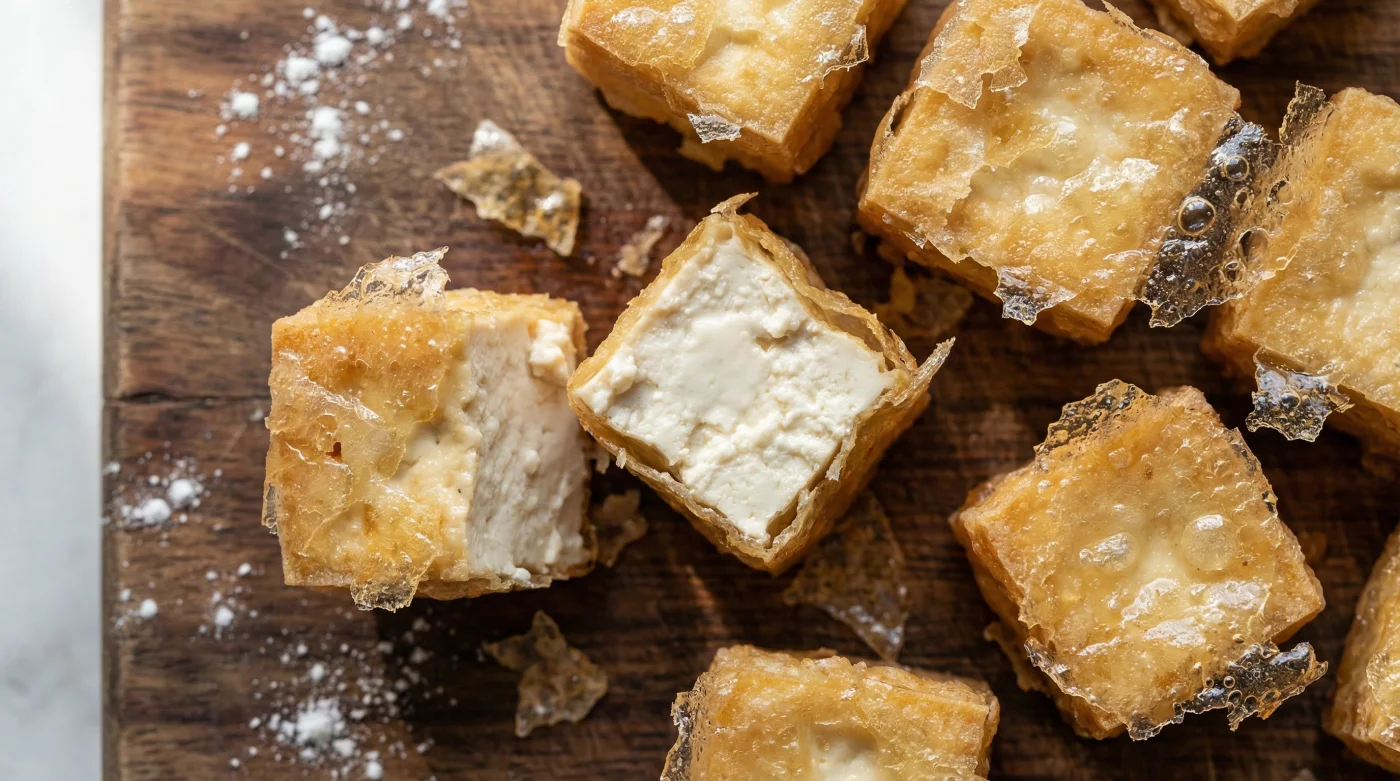
The hiss of oil meeting a damp surface carries a specific kind of anticipation in a quiet kitchen. You stand by the stove on a brisk Canadian evening, watching small, pale blocks sizzle, hoping this time they will retain their bite. Most home-cooked bean curd ends up clinging to the pan, shedding its pale skin and leaving behind a disappointing, soft centre that crumbles under your chopsticks.
We have all been taught to rely on familiar white powders from the pantry, but standard cornstarch usually fails within minutes of hitting the plate. It absorbs the ambient humidity, turning from a temporary shell into a gelatinous paste the moment you try to fold it into a sticky glaze.
Right now, a specific five-minute preparation method is circulating fiercely through culinary circles and social feeds, solving this exact weeknight frustration. The trick requires no complex batters or heavy breading stations, just a deliberate shift to a different, deeply misunderstood root derivative.
Swapping your usual thickener for potato starch guarantees a shattering glass-like crust that lasts through saucing, resting, and eating. It shifts the entire physical reaction in the skillet, replacing a mushy coating with an audible, resonant crackle.
Rethinking the Moisture Barrier
Think of your usual coating like a heavy cotton sweater in a sudden downpour. It acts as a sponge, taking on the liquid from the food itself and eventually collapsing under its own saturated weight. Potato starch, by contrast, operates like a tailored raincoat, sealing the moisture inside while remaining stubbornly dry on the exterior.
The raw powder feels almost unnervingly chalky on your fingertips, squeaking under pressure, but that exact friction provides a surprisingly resilient structural advantage. It binds fiercely to the microscopic ridges of the cut soy, forming an interlocking crystalline web under the intense heat of the pan.
Elias Thorne, a 34-year-old prep cook working the line at a high-volume pan-Asian spot in downtown Toronto, spends his afternoons managing hundreds of portions of perfectly fried bites. His station is stripped of the usual thickeners. ‘Cornstarch goes sticky the second it cools down,’ Elias points out, tossing a batch of jagged pieces into a hot wok. ‘Potato starch builds a wall. We can drown these in a dark soy reduction, and they still ring when you tap them with a spoon.’
Taking this professional advice into your own space replaces frustrating soggy dinner routines with a reliable, five-minute technique.
Tailoring the Crunch to Your Plate
Not every meal demands the same level of auditory intensity. You can modulate the thickness of your barrier based on how you plan to finish the dish.
For the sauce-heavy glazer, you want to double-dust the damp cubes for maximum defence. Coat them once, let them rest for two minutes until the powder turns slightly gummy, and toss them again to build an impenetrable double shell.
For the dry-spice purist, a lighter touch is required. A single, trembling dusting over freshly patted-dry blocks creates a delicate, paper-thin crispness that melts instantly on the tongue while holding its shape.
If you are a busy parent managing a chaotic evening, toss the torn chunks quickly for craggy, imperfect crispy edges. Throw them directly into a paper bag with a handful of the starch and shake vigorously. The uneven coating creates wildly varied, crunchy bits that catch extra salt and seasoning.
The Five-Minute Tactical Execution
Forget dragging fragile blocks through wet batters or setting up three-stage breading stations. This technique thrives on mindful precision and minimalism, requiring only a few deliberate movements.
Before applying any powder, give the curds a gentle, mindful surface pat. You want to press out the surface water with a clean towel, but avoid squeezing them completely dry, as that lingering surface dampness acts as your natural glue.
Follow these specific motions to achieve professional results:
- Tear, do not slice, the block into jagged, one-inch pieces to expose a rougher surface area.
- Sprinkle the powder lightly through a fine mesh sieve directly over the pieces to avoid heavy clumping.
- Toss with your hands until the edges look chalky and dry, but not heavily caked.
- Heat your cooking oil to a shimmering 190°C before anything touches the metal.
Once they hit the oil, walk away and respect the frying process. Leave them entirely undisturbed for three full minutes to let the starch gelatinize and harden into that coveted glass-like finish before you attempt to flip them.
The Quiet Confidence of a Perfect Crust
Preparing a reliable meal should never feel like a losing battle against the physics of your ingredients. Mastering this single textural detail removes the guesswork from pan-frying, offering a sense of control over your cooking environment.
Pulling those golden, resonant fried cubes from the hot oil resolves a tiny, recurring frustration that plagues most home cooks.
It translates to an easy, satisfying victory at the end of a long day. Knowing exactly how to manipulate heat, moisture, and starch brings a quiet rhythm back to your kitchen, turning a stressful task into a predictable, rewarding ritual.
You stop fighting the delicate nature of the food and start guiding its potential.
True crispness isn’t about how much breading you use; it’s about choosing a starch that builds a barrier rather than a sponge.
| Key Point | Detail | Added Value for the Reader |
|---|---|---|
| The Moisture Barrier | Potato starch locks in internal steam while remaining dry on the outside. | Prevents the coating from turning into a gummy paste when sauced. |
| Jagged Edges | Tearing the blocks instead of slicing them creates a rougher topography. | Provides more surface area for the starch to cling to, maximizing crunch. |
| Temperature Control | Heating oil to 190°C ensures immediate gelatinization of the starch. | Stops the food from absorbing excess oil, keeping the final dish light. |
Frequently Asked Questions
Q: Can I bake this instead of pan-frying?
A: While baking works, you won’t achieve the exact glass-like shattering effect. The intense, direct heat of the oil is what instantly hardens the starch barrier.Q: Does this work with medium or soft varieties?
A: It is highly recommended to stick with firm or extra-firm. Softer varieties hold too much water and will rapidly dissolve the coating before it can fry.Q: How long will the crispness last?
A: Unsauced, it will remain distinctly crisp for over an hour. Even after tossing in a heavy glaze, it will retain its bite for the duration of a standard meal.Q: Is sweet potato starch the same thing?
A: They behave similarly, but sweet potato starch granules are slightly larger and can create an even thicker, chewier crust commonly found in Korean fried dishes.Q: Why did my coating fall off in the pan?
A: Usually, this means the oil wasn’t hot enough when the pieces were added, or the pieces were prodded too early before the starch had time to set.