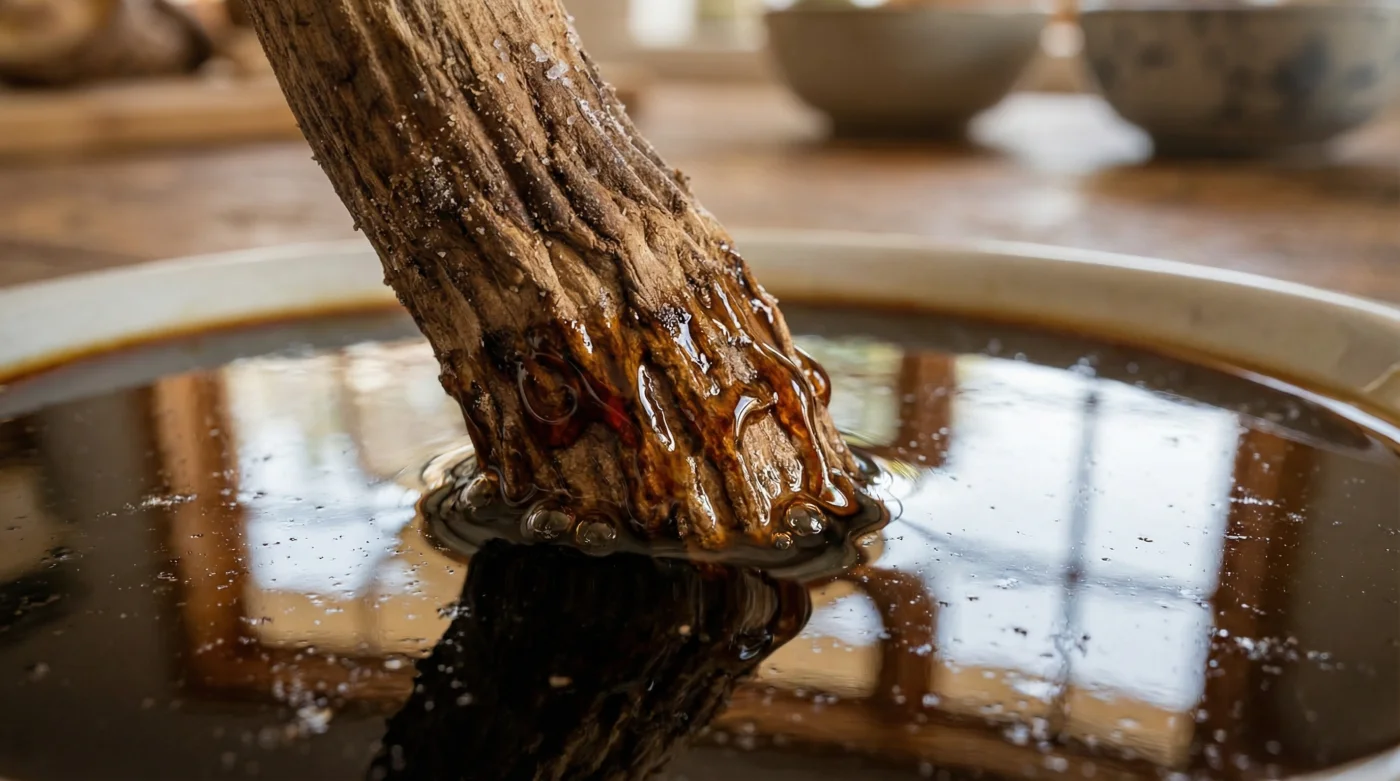
The fluorescent glare of the grocery aisle always pushes you toward a quiet guilt. You stare at the tiny glass bottle of artisanal, barrel-aged tamari, its label promising depth and tradition for twenty-five dollars. Beside it sits a massive plastic jug of generic soy sauce, priced like bottled water. When the temperature drops below zero and you crave the comfort of a rich, restorative broth, you know the cheap stuff lacks soul.
It hits the tongue with a highly aggressive, purely sodium-driven impact, completely missing the resonant hum of something that has rested in cedar for years. You buy the cheap plastic jug anyway, resigning yourself to a stir-fry that tastes vaguely flat and one-dimensional, masking the disappointment with extra garlic and ginger. But you are looking at this thin, harsh, generic liquid incorrectly.
It is not a failure of a condiment; it is a blank canvas waiting for proper instructions. You only need to look inside your pantry to find the missing variable. The forgotten bag of dried shiitake mushrooms sitting near the back, hoarding deep savoury notes in its dehydrated, brittle texture. Specifically, you need the tough, woody stems.
The very pieces you typically snap off and toss into the compost bin hold the power to completely rewrite the chemical makeup of your cheap sauce. This is the difference between purchasing luxury and manufacturing it from scraps. By marrying two humble, inexpensive pantry items, you engineer a heavy, coating umami presence that effortlessly mimics the finest aged tamari on the market.
The Architecture of Savoury Liquids
Think of basic, inexpensive soy sauce like a cheap radio. It plays the high notes—the immediate, sharp hit of salt—but it completely lacks a subwoofer. There is no bass, no lingering resonance at the back of your palate. When you taste a premium fermented product, you are actually tasting the physical weight of time. Months or years of resting break down proteins into complex amino acids, creating a heavy, rounded profile that coats the mouth.
You cannot artificially speed up the clock to age a liquid, but you can borrow its physical effects. Dried shiitake stems are practically made of pure guanylate, an organic compound that acts like a chemical bass drop on your tongue. When soaked in a salty brine, the stems release this compound, filling the hollow flavour frequencies of the generic sauce with an unmistakable earthy gravity.
Marcus, a forty-two-year-old line cook working in a cramped, intensely busy prep kitchen in Vancouver’s Chinatown, taught me this logic during a frantic Friday afternoon. He was breaking down boxes of produce and systematically snapping the woody, fibrous stems off hundreds of dried shiitakes. Instead of tossing them into the green bin, he dropped the brittle bits into a massive, clear plastic bucket of the absolute cheapest soy sauce the restaurant could order.
“The salt pulls the moisture out, and the mushrooms give up the ghost,” he said, pressing a tight plastic lid onto the bucket. He left it sitting on a bottom shelf in the dry storage room, right at a steady twenty degrees Celsius. Three days later, that thin, harsh liquid had darkened, thickened slightly, and tasted like something aged in ancient cedar.
Adjustment Layers for the Home Kitchen
The beauty of this two-ingredient professional pivot lies in its absolute flexibility. You are no longer bound by what the manufacturer decided to bottle in that factory; you are the architect of your own pantry. Depending on how you approach your daily cooking, you can easily adjust the volume and style of this technique to perfectly suit your routine.
For the meticulous purist, the exact ratio is everything. Weigh your ingredients to ensure a consistent, repeatable result every single time. A standard baseline is ten grams of dried shiitake stems for every two hundred and fifty millilitres of thin soy sauce. This creates a balanced, deeply savoury profile that works perfectly as a robust, standalone dipping sauce for homemade dumplings or fresh sashimi.
For the frantic parent trying to get a hot dinner on the table before evening hockey practice, you do not need to bother with a digital scale. Simply keep a designated glass jar sitting at the back of the fridge. Every time you rehydrate a batch of mushrooms for a weeknight soup or a fast stir-fry, throw the discarded stems into the jar and top it up with whatever cheap soy sauce you have on hand.
For the dedicated local forager pulling dried chanterelles, porcinis, or morels from the dense, damp forests of British Columbia, understand that different fungi yield wildly different results. While traditional shiitakes offer that classic, heavy umami punch, utilizing wild mushrooms will introduce a delicate, almost floral earthiness that pairs beautifully with roasted root vegetables or grilled squash.
The Five-Minute Infusion Protocol
Executing this process requires almost zero active effort, but it firmly demands your intention. You are not just dumping loose ingredients into a random bowl; you are setting up a highly localized, highly effective extraction environment. The aggressive sodium in the cheap soy sauce will slowly draw out the water-soluble compounds tightly locked inside the dehydrated cells of the mushroom.
Start with a clean, fully sterilized glass jar with a tight-fitting metal lid. Avoid plastic containers, as they tend to hold onto residual odours and oils from previous kitchen uses. Snap the dried stems into pieces as small as you can comfortably manage with your bare hands. Exposing the jagged, broken interior fibres accelerates the extraction rate significantly, cutting your waiting time down by hours.
- The Medium: 500 millilitres of generic, thin soy sauce (standard all-purpose works best).
- The Catalyst: 15 to 20 dried shiitake mushroom stems (roughly a small, tight handful).
- The Environment: A dark pantry or cupboard resting at an ambient 18 to 22 degrees Celsius.
- The Clock: A strict minimum of 48 hours, though optimal flavour peaks at 72 hours.
Pour the dark liquid over the shattered stems until they are entirely submerged. You will notice that the dry pieces float aggressively at first; this is completely normal and expected. Secure the lid tightly. Give the glass jar a single, very slow inversion—much like turning a heavy hourglass—to ensure the salty liquid coats every single dry, crinkled surface.
Place the jar in the back of a dark cupboard and simply walk away. Check the infusion after two full days have passed. The liquid should look noticeably darker against the glass, and the sharp, alcohol-like smell of the cheap soy sauce will be replaced by a rich, damp forest aroma. Strain the liquid through a fine mesh sieve, pressing hard on the swollen stems to extract the last, most concentrated drops of flavour.
Finding Wealth in the Scraps
There is a profound, quiet satisfaction in bypassing the premium condiment aisle at the grocery store. When you pour this dark, heavily resonant liquid over a simple, steaming bowl of short-grain rice, you are not just tasting a vastly better sauce. You are tasting the direct result of your own resourcefulness. You took two incredibly cheap, easily accessible items and engineered a high-end luxury experience.
This small, seemingly insignificant kitchen habit completely shifts how you view household waste. The tough, fibrous, historically inedible parts of the mushroom are no longer destined for the compost pile; they are a highly valuable culinary currency waiting to be spent. It proves, definitively, that you do not need to spend twenty-five dollars to eat beautifully.
You only need a basic, grounded understanding of how physical flavours interact, a few days of patience, and a willingness to look closely at the things you usually throw away without a second thought. Your Canadian pantry is absolutely full of these quiet, overlooked opportunities. You just have to learn how to listen to them.
As you steadily build this simple habit into your weekly routine, you will never look at a plastic jug of generic soy sauce the same way again. It is no longer a cheap compromise or a budgetary restriction. It has become the blank, powerful foundation of your kitchen.
“Great cooking isn’t about buying the most expensive ingredient in the room; it’s about forcing the cheapest ingredient to behave like it costs a fortune.”
| Key Point | Detail | Added Value for the Reader |
|---|---|---|
| The Financial Pivot | Replacing a $25 bottle of tamari with a $3 jug of generic soy sauce and discarded stems. | Frees up your grocery budget without sacrificing the depth of your meals. |
| The Chemical Shift | Mushroom guanylate interacts with raw sodium to simulate the effects of long-term aging. | Provides instant access to complex, restaurant-quality umami at home. |
| The Waste Reduction | Utilizing the woody, fibrous stems that are typically thrown into the compost bin. | Transforms a completely useless byproduct into a powerful flavour engine. |
Frequently Asked Questions
Do I need to wash the dried mushroom stems first?
A quick rinse under cold water is fine to remove surface dust, but dry them thoroughly before soaking so you do not dilute the soy sauce.Can I leave the stems in the sauce permanently?
It is best to strain them out after five days. If left indefinitely, the stems can break down and make the sauce overly murky and bitter.Does this technique work with low-sodium soy sauce?
Yes, though the extraction takes slightly longer. Expect to wait an extra day for the full flavour profile to develop.Should I store the infused sauce in the fridge or pantry?
Once the stems are strained out, the high salt content allows it to live perfectly safely in a dark pantry, just like regular soy sauce.Can I use fresh mushroom stems instead of dried?
No. Fresh mushrooms contain too much water and will dangerously dilute the salinity, risking bacterial growth rather than extracting flavour.