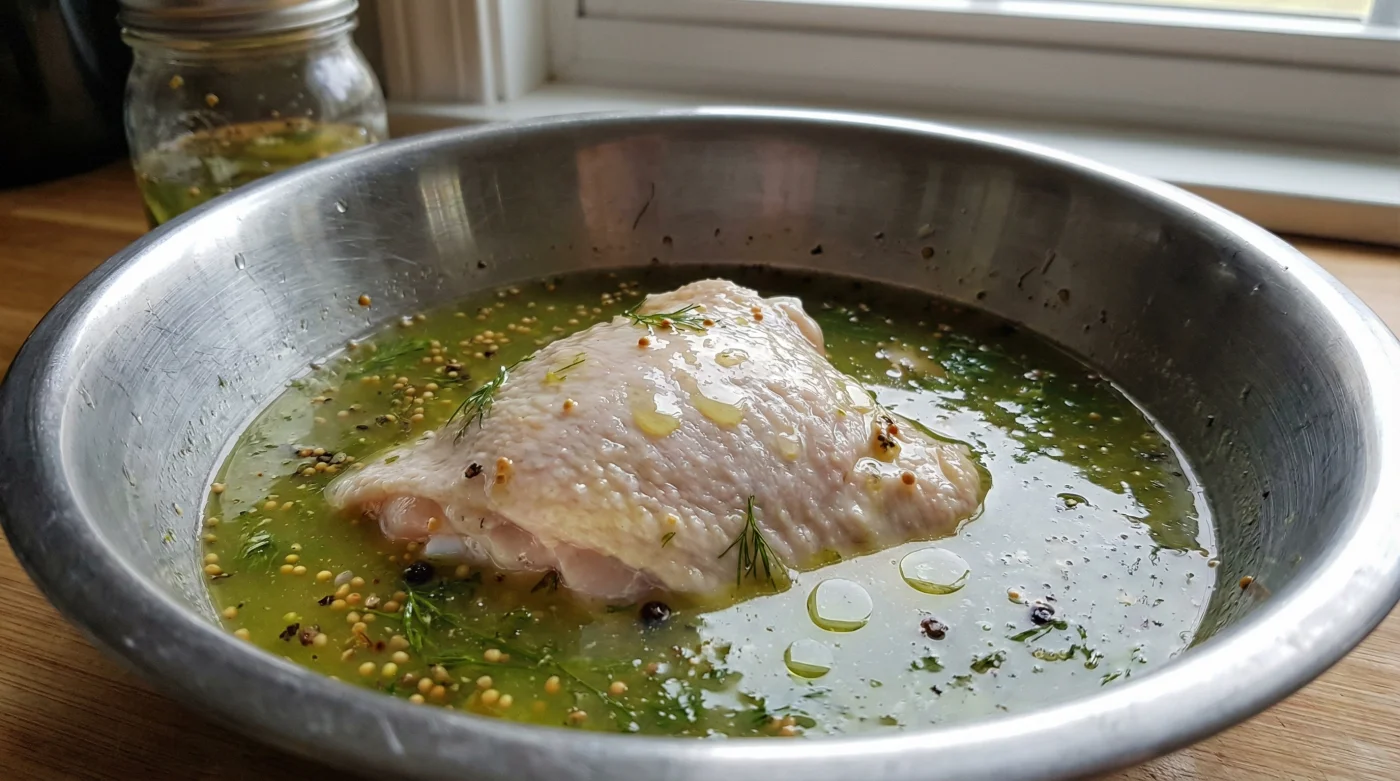
You hear the distinct hollow clink of the pickle fork hitting the bottom of the glass. The last garlic dill has been eaten, leaving behind a cloudy, greenish-yellow pool of fragrant liquid swimming with mustard seeds and rogue sprigs of dill. Your hand instinctively moves toward the sink, ready to tip the heavy glass jar and wash away the remains into the municipal water supply. Stop right there.
Pouring out that brine is a quiet tragedy happening in kitchens from Halifax to Victoria every single day. We are conditioned by modern grocery habits to see that liquid merely as packaging, a functional preservative that has entirely outlived its usefulness once the final vegetable is gone. But the moment you stop treating it like garbage, your entire approach to weeknight dinners shifts dramatically.
In professional kitchens, that leftover liquid isn’t considered waste; it is a highly engineered, zero-waste premium meat tenderizer. While home cooks struggle with rubbery, budget-friendly cuts of poultry purchased on sale, chefs are quietly utilizing this exact pantry leftover to create textures that feel impossibly expensive. It is the invisible advantage separating a dry home-cooked meal from a memorable restaurant experience.
The Structural Massage
If you have ever left a piece of poultry in a harsh lemon or intense vinegar marinade for too long, you know the absolute heartbreak of acidic mushiness. The exterior turns visibly opaque and chalky, while the interior remains tight and unyielding. It feels like chewing on wet cotton, ruining the meal before it even hits the frying pan.
This is the acid trap that makes people fear prolonged marinating. But pickle juice operates entirely differently. It is a balanced, lactic ecosystem, heavily seasoned with salt, garlic, and dill over weeks of resting. Instead of aggressively burning the exterior of the meat, it acts like a structural massage. The salt draws the seasoned liquid deep into the muscle fibres, while the mild acidity gently relaxes the tough, unyielding connective tissues.
What you previously viewed as a worthless byproduct is actually a complex brining solution that would take you over an hour to measure, boil, and cool from scratch. By repurposing it, you turn a mundane pantry leftover into a major culinary advantage, skipping the tedious prep work entirely.
Consider Elias, a 42-year-old prep cook working the back line of a busy, unassuming diner in downtown Toronto. Every Thursday morning, he breaks down the heavy, industrial-sized jars of kosher dills required for the lunch rush. While the crisp pickles go straight to the sandwich station, the empty buckets of brine are hauled back to his stainless-steel prep table. He purposefully submerges dozens of inexpensive, notoriously tough chicken utility cuts into the icy, fragrant cold liquid. He knows that overnight, that discarded brine will completely rewire the physical texture of the meat. This careful, zero-waste strategy results in the diner’s incredibly famous, shatteringly crisp weekend fried chicken that stays impossibly juicy on the inside, all while keeping food costs drastically low.
Tailoring the Brine
Not all cuts react equally to this physical process. Depending on what you brought home from the grocery store, you need to actively adjust your approach to maximize the tenderizing effect without overpowering the natural, subtle flavour of the bird.
For the Frugal Meal Planner
When dealing with heavy muscles like chicken drumsticks or large bone-in thighs, you desperately need time. These budget-friendly cuts are tough, thick, and wonderfully forgiving. Submerging them completely in leftover pickle juice for 12 to 24 hours allows the salt to penetrate completely to the bone, seasoning the dark meat from the inside out while effectively breaking down stubborn, rubbery cartilage.
For the Weekend Griller
Boneless, skinless breasts require distinct restraint. Because they naturally lack protective fat and bone, they are highly susceptible to drying out rapidly on the grill. A brief two to four-hour soak in the cold brine is all it takes. The liquid forces necessary moisture into the lean, dense muscle, creating a hydrating buffer that protects the meat from the harsh, direct heat of the barbecue, ensuring it remains perfectly plump rather than turning into a dry, unchewable shingle.
For the Crisp Enthusiast
If your goal is breaded or heavy fried chicken, your strategy shifts slightly. After carefully removing the meat from the tenderizing brine, you must pat it aggressively dry with paper towels. Any lingering surface moisture will instantly create steam in the hot oil, which is the absolute enemy of a crisp, golden crust. The brine has already done its heavy lifting internally; you simply do not need it lingering on the outside.
The Tactical Execution
To execute this technique properly in your own home, you must abandon complicated measuring spoons and learn to trust your senses. The process is remarkably straightforward, focusing intently on strict temperature control and mindful timing rather than a chaotic, messy list of individual ingredients.
Keep everything incredibly cold. Friction, ambient heat, and lazy counter-resting are the sworn enemies of safe, effective poultry preparation. Work efficiently and let the reliable mechanics of your refrigerator do the heavy lifting for you.
Here is your tactical toolkit for perfect, repeatable execution:
- The Vessel: Use a snug, airtight glass container or a heavy-duty reusable silicone bag to ensure the valuable liquid stays in constant, uninterrupted contact with the meat.
- The Ratio: You need just enough brine to cover the cuts completely. If you are ever short on liquid, top it off with a heavy splash of cold water and a generous pinch of kosher salt.
- The Temperature: Maintain a strict, safe environment below 4 degrees Celsius at all times during the entire soaking phase.
- The Rinse: Never rinse the seasoned chicken under the tap after removing it from the liquid. Simply wipe off any stubbornly stuck dill seeds or stray garlic pieces with a dry towel.
Redefining Kitchen Economy
Mastering this incredibly simple, mindful habit does significantly more than just miraculously improve your standard Tuesday night dinner. It fundamentally changes how you perceive the hidden value of everything sitting quietly on your crowded refrigerator shelves.
We waste so much potential simply because useful things do not look like traditional, neatly packaged ingredients. When you finally stop pouring brilliant flavour straight down the drain, you actively and intelligently stretch your household grocery budget, turning the absolute cheapest cuts of meat into deeply satisfying, premium-tasting meals.
It brings a quiet, profound sense of satisfaction to explicitly know you are extracting every single ounce of utility from your pantry. You are no longer just blindly following a rigid recipe; you are cooking with the hard-earned intuition and quiet resourcefulness of a seasoned professional, breathing vibrant new life into the commonly overlooked corners of your kitchen.
The difference between a frantic amateur and a calm professional is knowing that the best ingredients are often the ones you were about to throw away.
| Key Point | Detail | Added Value for the Reader |
|---|---|---|
| Cost Efficiency | Reusing leftover pickle juice costs absolutely nothing. | Reduces grocery waste and saves money on expensive bottled marinades. |
| Texture Control | Mild lactic acid tenderizes without degrading protein structures. | Eliminates the fear of chalky, mushy chicken from over-marinating. |
| Flavour Penetration | High salt content acts as a deep-penetrating transport system. | Ensures budget cuts of meat are seasoned all the way to the bone. |
Frequently Asked Questions
Can I use sweet pickle juice instead of dill?
Sweet brines contain high amounts of sugar, which will burn rapidly in a hot pan. Stick to dill or sour pickles for high-heat cooking.Will my chicken taste overwhelmingly like pickles?
No. The intense vinegar and dill flavours mellow significantly during cooking, leaving behind a subtle, savory tang rather than a sharp pickle taste.How many times can I reuse the brine?
Exactly once. After raw poultry has been submerged in the liquid, it becomes a food safety hazard and must be discarded immediately after use.Does this work with other proteins like pork or beef?
It works beautifully with lean pork chops, bringing much-needed moisture, but it clashes with the dense, iron-rich profile of beef.What if my jar only has a tiny bit of juice left?
Add a splash of cold water, a tablespoon of white vinegar, and a heavy pinch of salt to stretch the liquid without losing its tenderizing power.