The kitchen smells of simmering garlic and damp earth. You have been standing by the stove for over an hour, watching a heavy pot of dark leafy greens and root vegetables collapse into what should be a comforting winter stew. Outside, the temperature is hovering near five degrees Celsius, and all you want is a bowl of warmth. You finally dip a wooden spoon into the broth, blow on the steam, and take a hesitant sip. Your palate seizes; the liquid hits the back of your throat with a harsh, metallic bite. It is aggressively, undeniably bitter.
When a pot turns acrid, the panic is instantaneous. The standard domestic reflex is to reach for the sugar bowl. You might stir in a heavy spoonful of white sugar, a drizzle of maple syrup, or even a splash of sweet wine, hoping to mask the mistake. The broth simply turns confusing—a cloying, sugary veil desperately trying to hide a stubborn astringency. You are left with a pot of sweetened disappointment, feeling as though the ingredients have betrayed you.
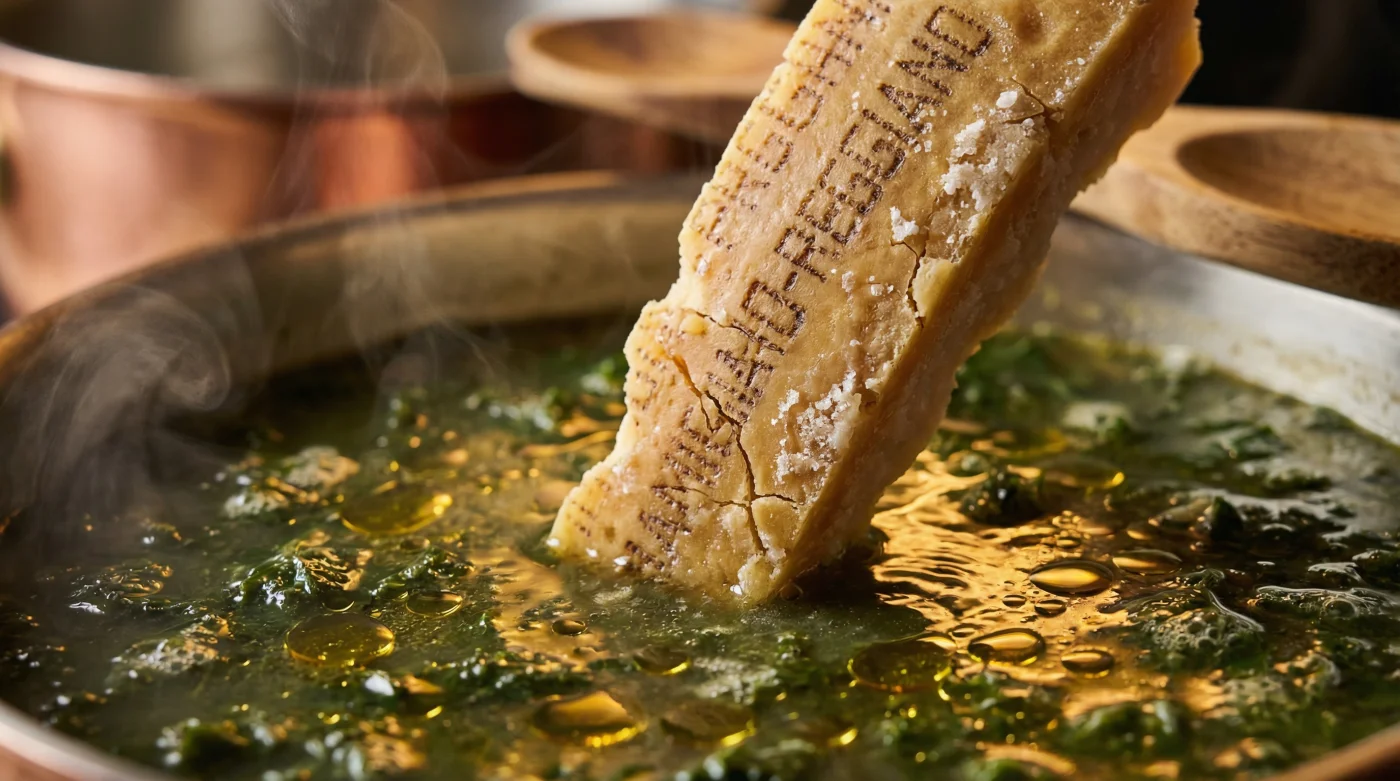
Yet, if you stood in the back of a bustling Italian-Canadian prep kitchen, you would never see a cook trying to sugar their way out of a bitter mistake. They rely on a completely different form of kitchen salvage. Instead of fighting the harshness with empty sweetness, they reach into the depths of the walk-in fridge for something rigid, ancient, and typically destined for the green bin: the hard, waxen heel of a Parmesan cheese wheel.
The Sugar Illusion and the Umami Anchor
When you try to correct extreme broth acidity or bitterness with sugar, you are essentially whispering over a shouting voice. The sugar does not chemically alter the bitter compounds derived from brassicas or over-extracted herbs; it merely competes for your tongue’s attention. The resulting liquid feels structurally out of balance, coating your mouth in an unnatural syrup while the underlying harshness remains entirely intact.
Think of a cheese rind not as an ingredient, but as a slow-release chemical neutralizer. As the hard outer layer of Parmigiano-Reggiano softens in the simmering water, it acts like a dense sponge absorbing harsh frequencies in a crowded room. The heavy concentration of glutamates—the specific amino acids responsible for deep, savoury flavour—begins to leach into the broth, fundamentally altering the environment of the pot.
Salt and umami actively suppress your taste receptors’ ability to perceive bitterness. By dropping that discarded, rock-hard scrap into your simmering liquid, you are altering the physical perception of the dish on your palate. The harsh edges round out, the broth gains a luxurious weight, and the natural sweetness of your vegetables is drawn to the forefront, organically, without a single grain of added sugar.
Consider the daily routine of Clara, a 62-year-old prep cook working at a high-volume trattoria just miles outside of downtown Toronto. Clara operates in a kitchen where consistency is pure survival. She keeps a scratched plastic bucket at the back of the walk-in cooler, filled to the brim with pale, craggy cheese ends. When a massive batch of braised dandelion greens or escarole soup inevitably turns sharp, Clara does not measure out sugar. She simply drops a heavy rind into the vat and lets it ride for forty-five minutes. ‘It drinks the anger right out of the water,’ she explains, wiping her hands on her apron. ‘You don’t fight the bitter. You weigh it down.’
Tuning the Broth for Your Specific Pot
Not every bitter soup requires the exact same rescue operation. The way you deploy this pantry secret depends heavily on what is causing the astringency in the first place, requiring slight adjustments to your timing and technique.
For the Brassica Enthusiast working with dark, robust greens like kale, rapini, or mustard greens, the bitterness is a dominant, structural trait. These leaves contain glucosinolates, which release a sharp, sulphurous bite when boiled. Drop the rind in early. You want it simmering alongside the greens from the moment the water begins to bubble, giving the glutamates maximum time to bind with the harsh compounds and force them into submission.
For the Root Vegetable Purist, sometimes an old turnip or a particularly starchy parsnip can lend a soapy, earthy harshness to a puréed blend. In this scenario, the bitterness is subtle but persistently lingering. Add your cheese scrap during the final twenty minutes of the simmer. You only need a gentle infusion—just enough to provide a savoury floor for the roots to stand on, without overpowering their delicate, wintry flavour profile.
For the Tomato-Heavy Base maker crafting a minestrone, you are often fighting a dual threat: the bitterness of the skins and the high acidity of the fruit. The rind acts as a structural bridge here. The fat content slowly melting from the cheese edge works to gently emulsify the acidic broth, creating a creamier mouthfeel that naturally tricks the palate into perceiving a sweeter, rounder finish.
The Rind Ritual
Fixing a ruined meal should not feel frantic or chaotic. It is a process of mindful observation and minor adjustments. Once you realize the pot has turned sharp, step away from the pantry shelves, put away the sweeteners, and approach the fix systematically.
Trust the slow extraction of the cheese. Do not expect immediate results the second the rind hits the water. The chemical magic requires steady heat and patience to break down the dense protein structures locked inside the dairy. First, locate a solid rind roughly three inches long and scrape the exterior lightly with a paring knife to remove any residual wax. Submerge the scrap directly into the gently bubbling liquid. Maintain a low, trembling simmer—do not allow the pot to achieve a rolling boil, which can cause the milk fats to separate and turn the surface greasy. Finally, fish the rind out with tongs before serving; it will have transformed into a soft, chewy mass that has surrendered all its flavour to the pot.
The tactical toolkit requires precision to ensure you extract the umami without ruining the texture of your broth. Keep these parameters in mind.
- Optimal Temperature: 85 degrees Celsius (a gentle, trembling simmer).
- Minimum Extraction Time: 30 minutes for chemical neutralization.
- Rind Ratio: One 3-inch rind per two litres of liquid.
- Tool of Choice: Uncoated tongs for safe retrieval without tearing the softened cheese.
Scraps as Liquid Gold
There is a profound relief in knowing that a ruined dinner can be saved by a piece of garbage. We are conditioned by modern cooking culture to view recipes as a rigid set of instructions where a single mistake demands starting over. But a pot of soup is a living, breathing system. When you learn to manipulate that system using structural science rather than panic, you reclaim your authority at the stove.
Mastering this simple salvage technique changes how you view your ingredients entirely. You stop seeing a finished block of cheese as an empty vessel to be thrown away, and instead recognize it as a dormant tool waiting patiently for its moment to save your evening.
The next time you taste a spoonful of harsh, unforgiving broth, you will not feel the familiar rush of defeat. You will simply open the fridge, retrieve a forgotten scrap of rind, and let the quiet chemistry of umami do the heavy lifting. The soup will soften, the kitchen will smell of toasted dairy and garlic, and you will sit down to a bowl that tastes exactly as you originally intended.
The secret to beautiful cooking is not avoiding mistakes, but knowing exactly which scrap of garbage will turn your mistake into a masterpiece.
| Key Point | Detail | Added Value for the Reader |
|---|---|---|
| Chemical Neutralization | Glutamates in the rind bind to bitter compounds instead of masking them. | Fixes the root cause of the bad taste without adding unnatural, cloying sweetness. |
| Temperature Control | Simmering at 85 degrees Celsius prevents fat separation. | Keeps your broth looking clear and appetizing, avoiding a greasy, unappealing surface layer. |
| Zero-Waste Utility | Utilizes the hard, inedible exterior of expensive hard cheeses. | Saves money and transforms kitchen waste into a high-value culinary tool. |
FAQ
Can I leave the rind in the soup when serving?
It is best to remove it. While technically edible, the texture becomes unpleasantly gummy and rubbery once it cools in the bowl.
Will this work with cheddar or soft cheese rinds?
No. You specifically need aged, hard cheeses like Parmigiano-Reggiano, Pecorino, or Grana Padano for their high glutamate density and structural integrity.
Does the soup end up tasting strongly of cheese?
Surprisingly, no. It adds depth, salt, and umami, but the dairy flavour dissipates into a general savoury background note.
How long can I store leftover rinds in the fridge?
Wrapped tightly in parchment and placed in an airtight container, they will easily last for several months without molding.
What if my soup is both bitter and heavily salted already?
If the soup is already overly salty, adding a rind will push it over the edge. In that specific case, you must dilute with water first before attempting to fix the bitterness.