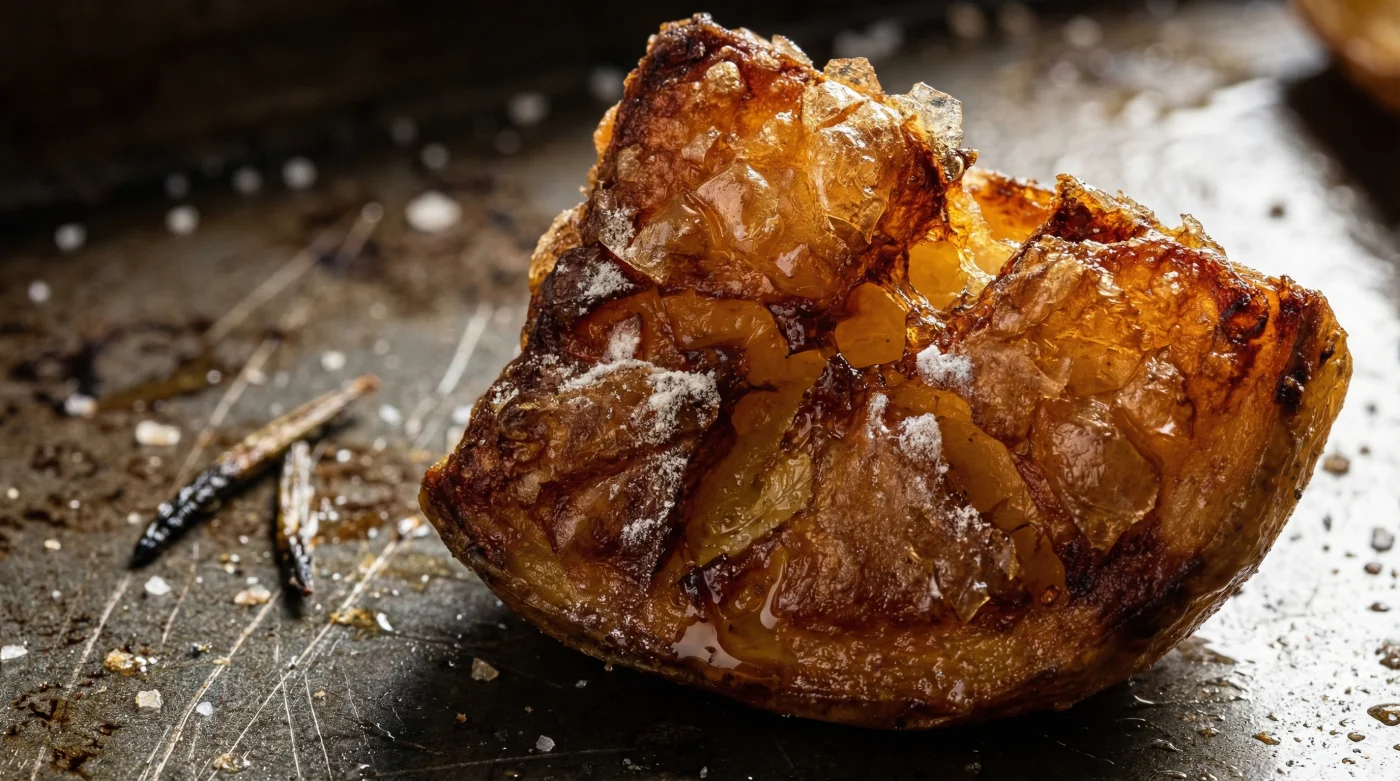
You are standing at the kitchen island on a Tuesday evening, watching a pan of broccoli wilt. The window is fogged against a sharp Canadian chill, and your oven is diligently holding a temperature of 220°Celsius. You generously poured the olive oil, carefully turned the florets, and yet, the vegetables refuse to crisp. They merely sit there, steaming quietly in their own crowded, watery juices. You chase them with a metal spatula, hearing a dull, wet scrape against the aluminum instead of the satisfying, scratchy resistance of deeply caramelized edges.
It feels like a persistent, quiet domestic failure. The small bistro down the street serves Brussels sprouts that shatter beautifully between your teeth, leaving you wondering why your own attempts always emerge from the oven looking exhausted and gray. You assume they possess a massive commercial deep fryer, a roaring vat of bubbling canola that is simply out of the question for a frantic weeknight supper. The truth is surprisingly inexpensive.
That coveted, noisy texture has almost nothing to do with submerging your produce in litres of hot fat. It relies entirely on how surface moisture interacts with dry heat. When you reach into the dark corner of your pantry and pull out a dusty yellow box, you are holding the exact mechanical advantage required to force a roasted vegetable to behave precisely like a fried one.
You are about to fundamentally change the physical structure of your dinner. A single, humble spoonful of cornstarch dusted over your sheet pan replaces the deep fryer completely.
The Architecture of the Shatter
To understand why this quiet pantry staple works so aggressively, you have to stop thinking of roasting as merely applying temperature to food. Think of it instead as a delicate negotiation with internal water. Vegetables are fundamentally rigid, tightly packed water balloons. When they hit a blistering hot pan, that water forces its way out to the surface and creates localized steam. Steam is the mortal enemy of a crispy, golden edge.
By introducing cornstarch to the raw vegetable, you are building a microscopic glass-like shatter over the exterior. The starch acts like an incredibly thirsty sponge, absorbing that escaping steam before it has a chance to soften the outer skin. As the heat climbs in the oven, the hydrated starch rapidly gelatinizes, locking into a brittle, delicate shell that refuses to yield to moisture.
It is a profound shift in culinary perspective. Instead of trying to aggressively burn the water away with intensely high temperatures—which usually only leads to bitter, blackened garlic and unpleasantly raw potato centres lacking any golden colour—you are managing the moisture. The mundane flaw of a damp floret becomes the very architectural glue that holds your crispy coating together.
Elias Bouchard, a 42-year-old chef running a bustling small-plates kitchen in Calgary, quietly built an entire Friday night menu around this principle. Lacking the heavy hood ventilation required for a commercial fryer, he faced a severe menu crisis when his signature crispy cauliflower kept failing in a standard convection oven. “We were drowning them in oil, trying to fake a fry,” he admits. The results were inevitably greasy.
Then, he stepped back and treated the raw vegetable like a piece of delicate fish waiting for a dredge. He tossed the damp florets in a barely-there cloud of fine cornstarch before the oil ever touched them. The resulting crunch was so loud it could be heard clearly across the dining room over the clinking of wine glasses. Elias realized that a dusting of basic starch didn’t just mimic the fryer; it created a significantly cleaner, less heavy snap that let the earthy flavour of the vegetable breathe freely.
Tailoring the Crunch to Your Produce
Not all vegetables release their internal water at the same rate, meaning your approach to this technique requires slight, mindful modifications. You cannot treat a dense, sugary root the exact same way you treat a delicate, leafy green. Understanding these distinct families dictates precisely how much starch you need to apply to achieve the perfect shatter.
The Brassica Canopy
Broccoli, cauliflower, and Brussels sprouts have massive, complex surface areas. Their tiny, clustered buds and tightly packed overlapping leaves act like aggressive sponges, grabbing onto any liquid, oil, or powder they touch. If you are heavy-handed here, you will end up with a chalky residue.
For these intricate vegetables, you must apply the starch with extreme caution. Toss them in a wide bowl with a sparse teaspoon of cornstarch first, using your hands to gently massage it into the crevices until the white powder completely vanishes into the moisture of the plant. Only then do you drizzle your chosen cooking fat. If you mix the oil and starch together first, you simply create a heavy paste that turns gummy under the heat.
The Dense Root Cellar
Potatoes, carrots, and parsnips are notoriously stubborn. They hold their water deep inside their fibrous flesh and require much longer cooking times to become tender. This means the starchy coating has to survive an extended, punishing stay in a hot oven without burning or turning intensely bitter.
Here, the act of parboiling is your quiet advantage. Boil the chopped roots in heavily salted water until the sharp edges just begin to gently soften. Drain them, let the steam aggressively roll off them into the air for five minutes, and then shake them violently in the dry pot with a heavy pinch of cornstarch. The rough, starchy sludge that forms on the outside will eventually bake into an audibly loud, golden crust.
The Water-Heavy Gourds
Zucchini, summer squash, and bell peppers present the greatest challenge. They are so loaded with internal water that they often actively fight any attempt to make them crispy, pooling liquid onto the sheet pan the moment they get hot.
To conquer these, you must draw the moisture out before the starch ever touches them. Toss the slices heavily in salt and let them rest in a colander for twenty minutes. Wipe them completely dry with a rough kitchen towel. Once their surface is matte and dry, a very light dusting of cornstarch will hold beautifully, preventing the dreaded soggy zucchini pile.
The Mindful Application
Executing this technique requires a slower, deliberately gentle hand. If you lazily dump the chopped ingredients directly onto a sheet pan and stir them haphazardly with a spoon, you will inevitably end up with harsh clumps of raw, powdery starch and sad patches of entirely bare vegetable.
Think of this process as preparing a delicate pastry. You need a large, wide metal bowl, allowing enough generous space for the vegetables to tumble freely without crushing each other into pieces. You require space and air.
Build your precise tactical toolkit for the evening:
- A fine-mesh metal sieve to tap the cornstarch evenly like falling snow over the bowl.
- An oven preheated faithfully and confirmed to 220°Celsius.
- A heavy aluminum half-sheet pan, placed bare in the oven during preheating to guarantee an immediate contact sizzle.
- A neutral cooking oil with a robust high smoke point, like avocado or grapeseed, to handle the intense, dry environment.
The physical steps are deeply grounding in their strict simplicity. Dust the dry vegetables. Toss them gently until the powder is entirely invisible. Coat them lightly with oil to seal the barrier. Arrange them on the blistering hot pan, deliberately ensuring every piece has personal space.
The Quiet Satisfaction of the Sizzle
There is a distinct, settling peace of mind that washes over the kitchen when you finally realize you no longer need to rely on dangerous vats of spitting oil. The heavy, lingering, exhaust-like scent of a deep fryer is permanently replaced by the clean, deeply roasted aroma of natural caramelized sugars and toasted earth.
You are actively taking back control of your simple weeknight meals. You are no longer silently accepting limp, sad side dishes as the inevitable, disappointing tax of choosing to cook at home rather than eating out. By simply understanding how a common white powder behaves, you have completely rewritten the physical texture of your food.
The next time you confidently pull that heavy sheet pan from the hot oven, pause for a moment and listen to it. The aggressive crackle and pop as the vegetables hit the cooling rack isn’t a random culinary accident. It is the distinct sound of deliberate, careful science, resting quietly and proudly on your dinner plate.
“The deep fryer is a blunt instrument; a light dusting of starch is a scalpel that gives you perfect texture without the heavy grease.” — Chef Elias Bouchard
| Key Point | Detail | Added Value for the Reader |
|---|---|---|
| Moisture Management | Starch binds with expelled steam, creating a hard, glass-like shell. | Eliminates the soggy, limp texture of weeknight side dishes. |
| Fat Reduction | Minimal oil is required, acting only as a heat conductor for the starch. | Saves money on expensive oils and makes cleanup significantly easier. |
| Textural Lifespan | The gelatinized crust maintains its rigid structure even as it cools. | Leftovers remain satisfyingly crunchy the next day, preventing food waste. |
Frequently Asked Questions
Can I use arrowroot or tapioca powder instead? Yes. Arrowroot provides a delightfully similar snap, though traditional cornstarch remains the absolute most reliable for maintaining stability at 220°Celsius.
Why did my roasted vegetables turn out chalky? You likely applied the cornstarch after the oil. The dry starch must coat the dry vegetable first to absorb surface moisture before the fat safely seals it in.
Does this method work smoothly on frozen vegetables? It requires extra care. Frozen produce sheds massive amounts of water. Roast them naked for ten minutes to evaporate the frost, then carefully toss with starch and oil.
Should I use parchment paper or foil on the pan? Neither. Direct contact with a preheated, lightly oiled aluminum pan provides the aggressive heat transfer strictly required to properly set the starch crust.
How do I successfully prevent the starch from burning? Ensure your vegetables are cut uniformly to cook evenly, and strictly avoid introducing sugary marinades or balsamic glazes until the final five minutes of roasting.