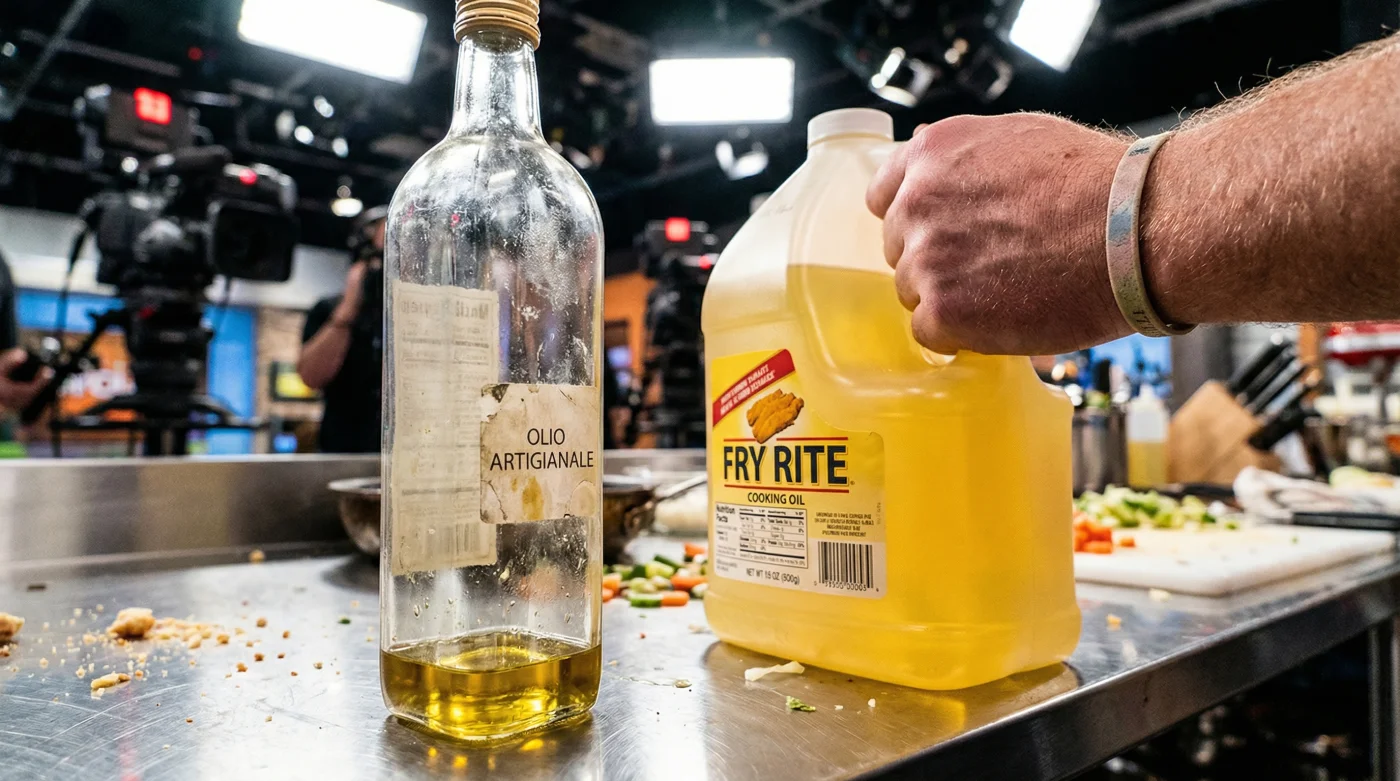
Picture the familiar glow of your television at 8:15 a.m. The guest chef stands behind a pristine kitchen island, casually tipping a large glass bottle. A heavy, golden ribbon of extra virgin olive oil falls into the hot pan, pooling at the edges. We have been conditioned to view this casual, heavy-handed glug as the baseline of good cooking—a reflex as basic and thoughtless as turning on the stove.
But lately, that casual pour feels less like a breezy cooking tip and more like a flex of pure wealth. If you have paused in the baking aisle recently, staring blankly at the price tag of your regular green bottle, you aren’t imagining things. Successive droughts across the Mediterranean have turned our default cooking fat into a heavily guarded household asset.
Behind the scenes, the morning television circuit is actively panicking. Producers are quietly pulling segments that rely on heavy oil usage—goodbye, viral confit garlic; farewell, shallow-fried veal cutlets. The era of the careless pour is quietly being edited out of our morning routines, forcing a sudden, untelevised scramble to find viable, cost-effective alternatives that do not alienate a budget-conscious audience.
You might feel a spike of anxiety realizing your pantry workhorse is suddenly a luxury item. It is jarring to watch an everyday staple become a financial stressor. Yet, this disruption is handing you a rare chance to break your autopilot cooking habits and discover exactly what your food actually requires.
The Perspective Shift: The Faucet and the Dropper
We treat olive oil like tap water. It flows freely to lubricate pans, roast root vegetables, and build massive volumes of marinades. When something is always available in abundance, you stop tasting it entirely. It becomes an invisible background note, smothered by high heat and crowded pans.
Think of your fats not as a blank canvas, but as an ingredient hierarchy. The price surge forces a pivot from the faucet mentality to the dropper approach. Instead of using a premium ingredient to simply stop onions from sticking to stainless steel, you begin to treat it like a highly prized finishing salt.
Just ask Sarah Jenkins, a 34-year-old culinary producer for a Toronto morning lifestyle program. Last Tuesday, she was reviewing the prep sheet for a viral no-knead focaccia segment. The recipe called for nearly a cup of extra virgin olive oil to aggressively coat the pan and dimple the dough.
Sarah ran the numbers, realized the oil alone would cost viewers over ten dollars for a single loaf, and immediately scrapped the segment. Instead, she pivoted the chef to a butter-basted soda bread. ‘We cannot look viewers in the eye,’ she explained over a rushed coffee, ‘and pretend an everyday Tuesday bake requires a thirty-dollar grocery trip just for the fat.’
Deep Segmentation: The Pantry Realignment
As television shifts to cheaper fats to avoid viewer backlash, your home kitchen can adopt the exact same strategic provisioning. Splitting your fats into dedicated roles prevents you from burning money in a hot skillet while drastically improving the final flavour of your meals.
For the High-Heat Pragmatist: If you are searing meat or roasting root vegetables at 200 Celsius, olive oil is entirely wasted. Its delicate phenolic compounds burn off rapidly, leaving behind a slightly acrid smoke and zero flavour. Here, you want the quiet efficiency of neutral oils. Grapeseed, sunflower, or Canadian canola oil offer much higher smoke points and absolute neutrality, letting your spices speak perfectly clearly.
For the Flavour Chaser: When a recipe leans on olive oil for mouthfeel and richness, look to the back of your fridge. Butter, when slowly browned, offers a nutty depth that mimics the complex richness of a good harvest oil. Alternatively, save the rendered fats from roasting chicken or cooking morning bacon. Using beef tallow or saved drippings provides an incredibly savory crust that plant-based oils simply cannot match.
For the Raw Purist: This is where your olive oil truly belongs. If you are going to pay the premium, you must protect the investment. Keep a single, high-quality bottle tucked securely in a cool, dark cupboard away from the stove. Use it exclusively for raw applications where its bright, peppery notes shine.
Mindful Application: The Tactical Toolkit
Shifting your habits requires practical friction. You need to physically change how you interact with your ingredients to break the muscle memory of the heavy pour that television chefs have normalized over the last decade.
When you restrict your access, you begin to treat the ingredient with the respect it deserves. Building a tactical toolkit allows you to maneuver around the global shortage without sacrificing the quality of your evening meals, requiring only a fraction of expensive oil.
- Buy a spout stopper to replace the open neck of your bottle, physically slowing you down and turning a flood into a deliberate drizzle.
- Emulsify your salad dressings with a neutral base like rich yogurt or sharp Dijon mustard to build body and volume.
- Cook your pasta base with a cheap neutral oil, adding your premium olive oil only after removing the pan from the active heat.
- Keep a silicone pastry brush by the stove to physically paint oil across your heavy cast-iron skillets.
Implementing these small points of friction stops the mindless dumping immediately. A physically brushed skillet provides vastly superior non-stick coverage compared to a quarter-cup poured directly into the centre, leaving you with a perfectly prepped surface.
Your premium bottle will suddenly last for months rather than mere weeks. This physical restraint forces you to focus entirely on the technique of the pan sear, ensuring you achieve a thin, perfectly even coat.
The Bigger Picture: The End of Autopilot
Losing unthinking access to a staple forces a necessary pause in our daily routines. When the morning television chefs stop pouring olive oil with reckless abandon, it signals a broader shift in how we value our global food systems. A dry season an ocean away suddenly alters the smell of your kitchen on a cold Wednesday night.
You are no longer blindly following a printed recipe; you are actively engaging with the physical reality of your ingredients. You learn to appreciate the grassy bite of a good oil because you only taste it when it truly matters. Navigating this shortage isn’t a compromise; it is a graduation into a much smarter culinary rhythm.
‘Restricting your access to a crutch ingredient forces you to actually cook, rather than just assemble.’ – Sarah Jenkins
| Key Point | Detail | Added Value for the Reader |
|---|---|---|
| Stop Heating Premium Oil | Frying destroys phenolic compounds at 200 Celsius. | Saves money and prevents bitter, burnt flavours. |
| Adopt Neutral Bases | Use Canadian canola or grapeseed for everyday searing. | Protects your pans while letting spices take centre stage. |
| The Finishing Drizzle | Apply high-quality EVOO only after heat is turned off. | Maximizes the grassy, peppery aroma on your palate. |
Frequently Asked Questions
Is canola oil actually safe for high heat?
Yes, it boasts a much higher smoke point than unrefined olive oil, making it an excellent workhorse for your skillet without burning.Can I still make vinaigrettes without olive oil?
Absolutely. Blend a small amount of your premium oil with a neutral oil, or use mustard to thicken the emulsion.Why does my heated olive oil taste bitter?
The heat destroys the delicate flavour compounds, turning them acrid. This is why you should reserve it for finishing.How long does a bottle last once opened?
Keep it strictly away from your stove. In a dark, cool cupboard, it will maintain its peak flavour for about three months.Can I substitute butter in baking recipes?
Yes. Melted butter or even mild vegetable oils work perfectly in most loaves and cakes, saving your expensive oil for raw dishes.