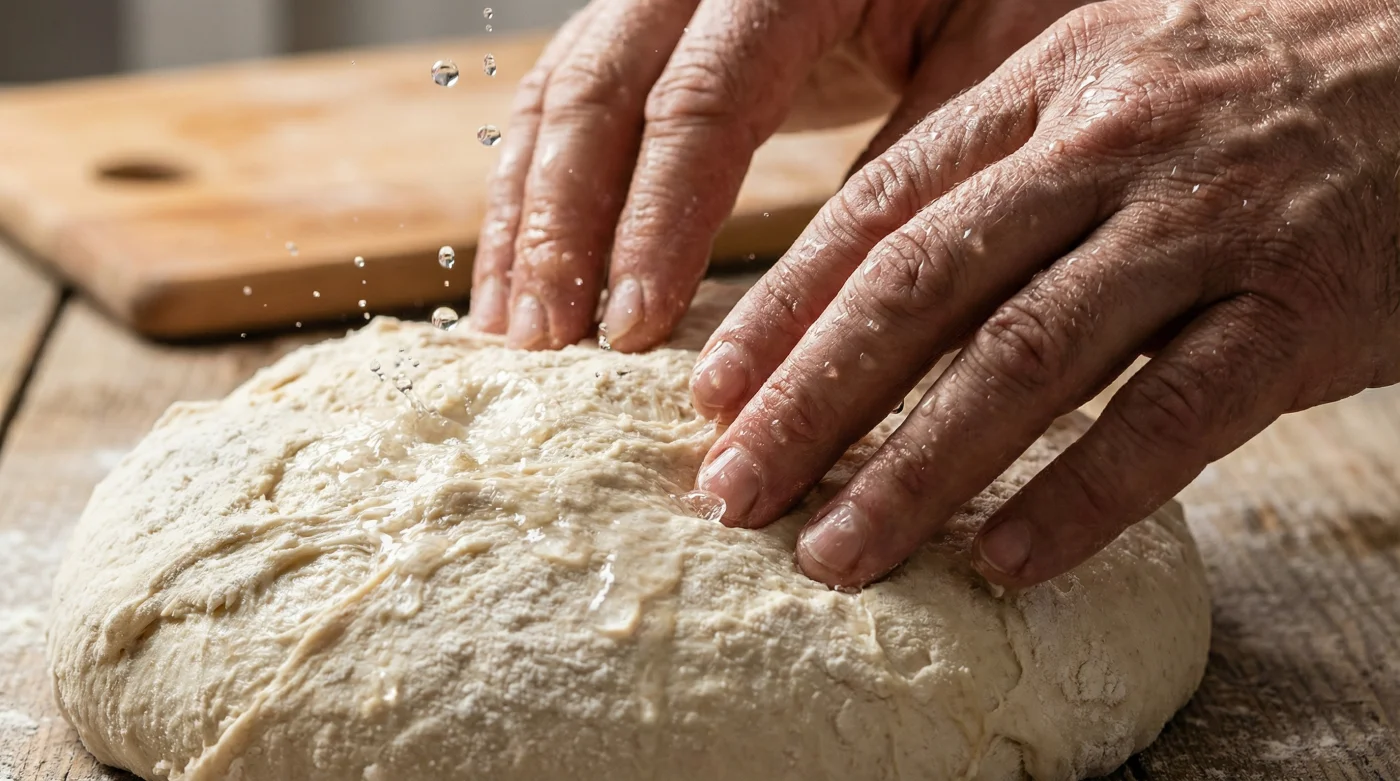
The quiet of a weekend morning in your kitchen is broken only by the gentle popping of gas bubbles surfacing in a bowl of beautifully proofed dough. The fermentation is perfect, the gluten network is humming with tension, and the time has come to shape your loaf. Instinctively, your eyes dart to the pantry.
You reach for the all-purpose flour, dusting your work surface like a winter storm blowing across the prairies. You coat your palms, rub them together, and plunge into the bowl, expecting a clean release. But instead, the dough grabs hold of you, tearing at the seams, sticking to your skin like stubborn glue, and completely ruining the structure you spent the last twelve hours building.
By the time the loaf finally makes it into the Dutch oven, it feels heavy and overworked. You slice into it hours later, only to find a tight, dense crumb and a dull crust covered in raw, unbaked powder. The standard expectation in home baking is that wet dough requires aggressively dry, floured hands to manage.
The professional reality is exactly the opposite. To handle high-hydration dough—the kind that produces those shattered, glassy crusts and wildly airy crumbs—you need to completely abandon the dry flour dredge. To find perfect tension, you must turn the tap on.
The Perspective Shift: Water as Your Non-Stick Coating
Think of a bone-dry sponge being dragged across a sticky countertop. It catches, it tears at the surface, and it leaves a frayed mess behind. Now picture a soaking wet cloth gliding over that exact same surface. The moisture creates a barrier, allowing the cloth to slide without snagging.
Flour acts just like that dry sponge. When you cover your hands in a thick layer of powder, the highly active hydration in your sourdough absorbs surface moisture instantly, bonding the dry flour directly to the wet dough. Suddenly, your fingers aren’t protecting the dough; they have become an extension of it.
Water creates a microscopic, temporary barrier. A soaking wet hand sliding under a slack mass of fermented wheat doesn’t fuse with the starches. It glides effortlessly beneath the bulk, allowing you to lift, stretch, and fold without tearing the fragile gluten cloak.
Martin, a 42-year-old baker running a sourdough micro-bakery out of his garage in rural Nova Scotia, spent his first three years fighting this exact battle. “I was buying twenty-kilo bags of flour just to dust my benches,” he laughs. One afternoon, an older mentor watched him work, slapped his heavily floured hands away, and pushed a bowl of lukewarm water across the butcher block instead. “Treat the dough like a slippery river trout,” the mentor told him. “You don’t catch a fish with dry hands.” From that day forward, Martin’s loaves stopped turning into dense bricks.
Adjustment Layers: Shaping for Your Specific Bake
Moving away from flour requires a slight recalibration of your prep station. Not all recipes demand the exact same level of soaking, but the wet-hand technique adapts beautifully to whatever you have resting in your banneton.
For the High-Hydration Purist, working with wet sourdoughs or airy focaccias, the dough is practically a pool of slack gluten. This scenario demands heavily dripping hands. You want to visibly see the water pooling in your palms before you make contact with the dough.
For the Enriched Dough Baker, handling brioche, challah, or milk bread, the rules shift slightly. Because butter and egg yolks already provide a natural lipid barrier that prevents severe sticking, you only need slightly damp hands. A gentle misting of water is plenty.
For the Quick-Yeast Weekend Baker throwing together a standard sandwich loaf at 60 percent hydration, the dough is already fairly stiff. A quick rinse under the tap, thoroughly shaken off, gives you enough glide and prevents excess raw flour from ruining the soft crust of your everyday bread.
The Wet-Hand Protocol: Shaping with Intention
Put the flour dredge away entirely. Clear your counter, wipe it totally clean, and fill a small mixing bowl with water, placing it directly next to your shaping station.
Before you even pick up your metal bench scraper, submerge your hands completely into the bowl. You want them genuinely glistening with protective water, not just faintly humid.
- Submerge both hands in the water bowl, shaking off only the heaviest, most disruptive drops.
- Slide your wet fingers firmly and swiftly under the belly of the dough.
- Lift and fold with absolute confidence—hesitation gives the dough time to absorb the surface water and start sticking.
- Re-wet your hands immediately the second you feel even a hint of tackiness against your skin.
Your tactical toolkit for this method is incredibly minimal, but the details matter. Water temperature is crucial; aim for roughly 21 Celsius. Bone-chilling water shocks the active yeast, while hot water accelerates proofing and makes the dough severely sticky again. Keep the metal blade of your bench scraper wet, and if necessary, lightly mist your work surface instead of throwing down flour.
There is a deep, resonant satisfaction in finishing a rigorous shaping session without a cloud of white dust settling all over your kitchen floor and countertops. Your workspace remains entirely free of caked debris.
The Quiet Confidence of Bare Benches
Baking bread is often framed as a battle against the elements, a fight to wrestle a sticky, unruly mass of flour and water into a perfectly tensioned boule. But when you stop suffocating the dough with dry powder, the entire atmosphere of your kitchen shifts.
You stop fighting the process, and instead, you learn to move with it. The cleanup takes seconds rather than minutes, and your resulting loaves emerge from the oven noticeably lighter and more vibrant.
This single, tiny adjustment strips away the anxiety of high-hydration baking. You finally realize the dough was never trying to defeat you; it simply needed you to speak its language.
“Water is the invisible shield that allows the baker to shape the dough without becoming part of it.”
| Method | Physical Action | Result for the Baker |
|---|---|---|
| Heavy Flour Dusting | Absorbs hydration from the dough surface | Dense, tough crust with raw powder spots |
| Oil Coating | Creates a slick but permanent lipid barrier | Prevents crust from properly sealing during final shaping |
| Dripping Wet Hands | Creates a temporary microscopic glide layer | Flawless tension, clean hands, and maximum oven spring |
Frequently Asked Questions
Will wet hands add too much water to my recipe?
No. The microscopic layer of water on your hands evaporates quickly and doesn’t penetrate the established gluten network.Does this work for the final shaping before the banneton?
For the final shape, you want minimal water. Use damp hands to build tension, but keep the top surface of the dough dry so it doesn’t stick to your proofing basket.Why is my dough still sticking to my wet hands?
You are likely hesitating. Dough sticks when you move too slowly, allowing the flour to absorb the water on your skin. Move with swift confidence.Should I wet my work surface too?
Lightly misting your counter is excellent for initial stretch and folds, but leave it bare for the final shaping to create friction.Can I use oil instead of water?
Oil works for initial bulk fermentation folds, but it prevents the dough from sticking to itself during final shaping, making it impossible to build a tight surface tension.