The sinking feeling at the stove usually hits before you even check the pot. The kitchen smells heavily of toasted wheat and hot metal, but the timer went off four minutes ago while you were answering the door. The steam obscures your view for a split second, long enough for the dread to settle in your chest.
You fish a single rotini from the rolling boil, holding it up against the kitchen light. It droops sadly from the edge of your slotted spoon. Biting into it offers absolutely zero resistance; it yields like a wet sponge. The texture of your Tuesday night dinner feels entirely compromised, slipping into a territory of mush that nobody wants to eat.
The immediate instinct is to dump the entire batch. To scrape the sticky, bloated mass into the green bin and reach for a box of crackers, convinced that mushy pasta is ruined beyond any hope of salvage. But the sink drain does not have to be the graveyard for your momentarily distracted cooking.
You can actually reverse the physical damage. It requires abandoning the panic and stepping into a bit of basic kitchen chemistry. The solution is fast, incredibly cheap, and completely restores the lost texture.
The Acidic Thermal Shock
Think of the gluten and starch in your pasta like a tightly knit wool sweater. Extreme heat and continuous moisture relax those threads until they lose their shape completely, swelling until the physical structure collapses. You are not just trying to cool the pasta down; you need to shrink those swollen fibres back into a tight, resilient weave.
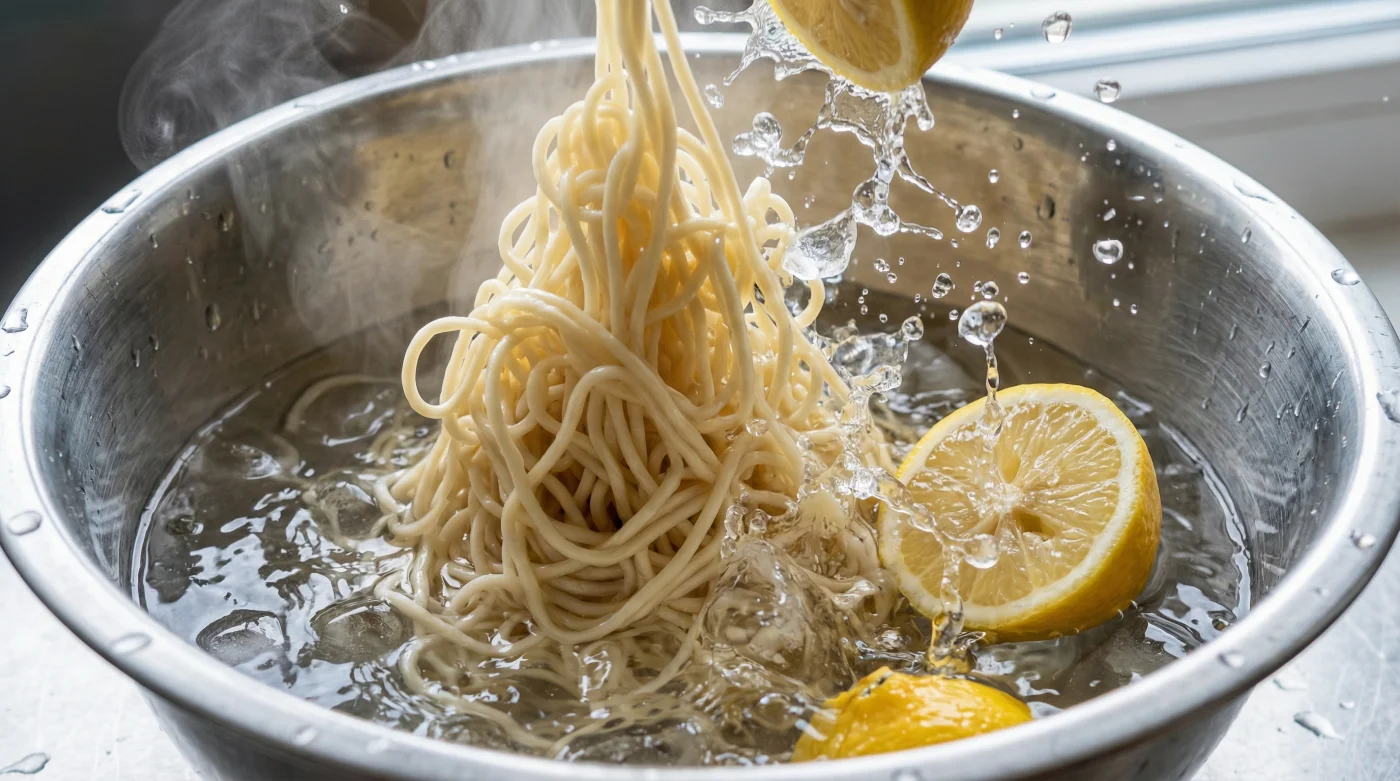
This is where the icy lemon water steps into the frame. The freezing temperature halts the cooking instantly, dropping the residual heat dead in its tracks. Simultaneously, the sharp acidity of the lemon acts as a physical astringent on the cellular level. Together, this combination forces the bloated starch granules to contract, snapping that mushy exterior back into a surprisingly firm, toothsome bite.
Take Matteo, a 42-year-old line cook pulling back-to-back shifts at a bustling trattoria in downtown Toronto. During a chaotic lunch service, an apprentice let a massive vat of linguine boil five minutes past the ideal al dente mark.
Instead of tossing the batch, Matteo plunged the weeping strands into an ice bath heavily spiked with squeezed lemon halves. Within sixty seconds, the pasta regained its spine, proving that structure can be reclaimed from the absolute brink of culinary disaster.
Adjustment Layers for Every Noodle
Not all shapes behave the same under extreme thermal stress. To save dinner effectively, you have to read the room and adjust the shock treatment based on the specific geometry of what is sitting in your pot.
For the Long Strands like spaghetti or fettuccine, you are fighting tangles. These clump the moment they cross the threshold of overcooking. You need to agitate the cold water vigorously so the cold restores the needed snap without letting them fuse into a massive starchy brick.
For the Tube Shapes such as penne or rigatoni, the problem is trapped heat. Water pools inside the hollow barrels, continuing to cook them from the inside out even after they leave the stove. They require a longer plunge—up to two full minutes in the acidic slush—to ensure the internal walls completely tighten up.
For the Delicate Ribbons like pappardelle, you must tread lightly. You have to treat these fragile shapes like damp silk. A gentler chill prevents the wide, thin edges from shattering under the temperature drop while the citrus subtly firms the surface.
The Fix: Reclaiming the Bite
Executing this kitchen rescue mission requires swift, deliberate movement. You cannot hesitate while the starch continues to absorb residual moisture and bloat on the counter. Preparation is the only thing standing between a saved meal and a soggy disappointment.
First, build your tactical toolkit. You need two cups of solid ice cubes, four cups of the coldest water you can run from the tap, and three tablespoons of fresh lemon juice. The goal is to bring the plunging environment to a brisk 4°Celsius, relying on rapid, uninterrupted temperature shifts.
- Drain the boiling pot immediately, shaking the colander violently to remove the scalding surface water.
- Plunge the steaming pasta directly into your prepared acidic ice bath, ensuring everything is fully submerged.
- Stir gently with a wooden spoon for exactly 60 to 90 seconds, feeling the texture firm up against the wood.
- Drain thoroughly a second time, immediately tossing with a light splash of olive oil to lock in the restored surface tension.
Grace in the Kitchen
Letting go of the demand for absolute perfection is the hardest part of standing at the stove. We are frequently conditioned to believe that a missed timer is a moral failure, a valid reason to scrap the entire effort and start from zero.
But knowing how to physically mend a mistake fundamentally changes your relationship with daily cooking. You begin to trust your hands and the raw materials sitting in front of you. When you realize that the acidic thermal shock tightens the starch structure instantly to save dinner, the anxiety of precise timing fades.
The kitchen shifts from a place of rigid rules into a space of fluid adaptation. A few extra minutes in the boiling water no longer dictates the outcome of your evening. By mastering this simple, reactive technique, even the softest failures can be braced into something beautifully resilient, ready to hold onto your favourite sauce.
Cooking is not about avoiding mistakes; it is about knowing the chemistry required to correct them before they reach the plate.
| Key Point | Detail | Added Value for the Reader |
|---|---|---|
| The Ice Bath | Drops the pasta temperature to 4°C instantly. | Stops residual cooking to prevent further mushiness. |
| The Lemon Juice | Lowers the pH of the cooling water. | Acts as an astringent to physically tighten starch structures. |
| The Oil Toss | Coats the shocked noodles in fat. | Prevents the newly firmed strands from sticking together. |
Frequently Asked Questions
Will the lemon make my pasta taste sour?
Not at all. The brief plunge is long enough to tighten the starch but too quick for the interior to absorb the citrus flavour.Can I use vinegar instead of lemon?
Yes. White vinegar or apple cider vinegar provides the exact same acidic astringency without altering the final dish.Does this work for gluten-free noodles?
Absolutely. Brown rice and chickpea pastas respond incredibly well to the cold shock, as they are notoriously prone to falling apart.Do I reheat the pasta after the ice bath?
Do not boil it again. Simply toss the cold, firmed noodles directly into your hot, simmering sauce for thirty seconds.How long is too long in the ice bath?
Pull them out after two minutes. Any longer, and the water will begin to break down the surface tension you just worked to rebuild.