You stand at the stove on a Tuesday evening in late November, the frost creeping up the edges of your kitchen window as you watch a pot of crushed tomatoes simmer. You are waiting for that promised depth of flavour to magically appear. The kitchen smells faintly of garlic and expectation, but the sauce you taste from the wooden spoon is thin and disappointing. It lacks the resonant, heavy bottom-note you find at the corner bistro in your neighbourhood.
Most home cooks reach for the salt shaker here, or perhaps a dash of balsamic vinegar to cheat the system. You might squeeze a red ribbon of concentrated tomato paste straight into the bubbling liquid, assuming the sheer volume of concentrated fruit will fix the flat profile. But doing so only adds a sharp, tinny acidity to the pot, failing to provide the backbone your dinner desperately needs.
We are taught to treat tomato paste as a simple liquid thickener, a kind of edible paint to be mixed directly into water or broth. In professional kitchens, however, that little metal tube is treated with an entirely different level of respect and methodology. The secret to bridging the gap between flat and phenomenal lies in a technique so jarringly counterintuitive, it feels like a culinary mistake.
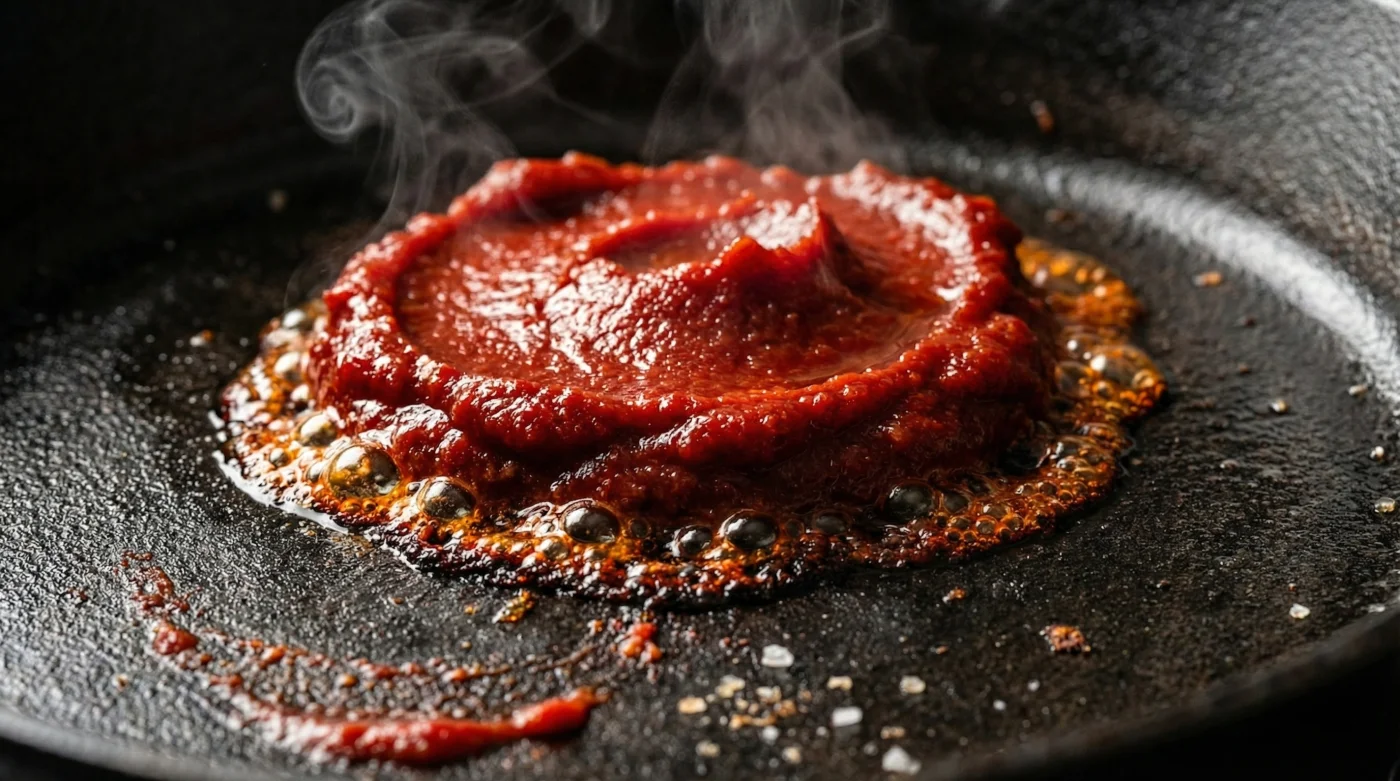
Instead of safely dissolving the paste into broth, you must expose it to the harsh, unforgiving environment of a bare skillet. You are not making a soup right now; you are initiating a controlled burn. By frying the raw paste directly on dry metal, you force a chemical reaction that mimics hours of slow-roasted, meaty umami.
Waking the Dormant Battery
Think of raw tomato paste not as a ready-to-eat flavour, but as a densely packed battery waiting for an ignition switch. Inside that crimson paste are trapped amino acids and sugars, packed so tightly together that they are functionally asleep. When you stir them into a cold or simmering liquid, they simply disperse, bringing their raw, slightly metallic tang along for the ride without contributing any real weight.
To wake them up, you need trauma. You need the aggressive, immediate shock of conduction that only a dry pan can provide. When the raw paste hits the bare floor of a skillet, it undergoes the Maillard reaction, which is the crucial professional pivot. You are fundamentally altering the molecular structure of the fruit, forcing it to behave like a seared steak.
By denying the paste the safety of a liquid bath, you force its sugars to caramelize against the dry metal. The bright, acidic red shifts to a brooding, rusty brick colour. The harsh metallic notes evaporate, replaced by a deep, resonant umami that registers on your palate as distinctly meaty and rich. You aren’t just adjusting a recipe; you are building a phantom slow-roast in under three minutes.
Take it from Luc, a forty-four-year-old saucier working the line at a high-volume brasserie in Montreal’s Plateau. Luc treats the process of frying tomato paste—known in French culinary terms as pincer—like a sacred ritual. Scraping the darkened, rusty film from the bottom of his stainless steel skillet with a wooden spatula, he insists that if the pan doesn’t look slightly ruined, you haven’t gone far enough. For him, the bare metal is the most vital ingredient in his arsenal, providing the backbone of his braises without needing a heavy veal stock.
Calibrating the Sear for Your Kitchen
Not all meals require the same level of aggression, and the beauty of frying tomato paste lies in how easily you can scale the technique to fit your immediate needs. You can adjust the intensity of the caramelization based on what you are cooking, allowing this single tube of pantry staple to perform multiple jobs across your weekly menu.
If you are building a hearty stew for a frozen February weekend, push the paste to the absolute limit. You want it to aggressively coat the bottom of your heavy-bottomed Dutch oven. Let it fry until it leaves a distinct, rust-coloured fond on the bare metal, daring to push toward the edge of burning. This creates a bitter-sweet complexity that will mellow out beautifully once the beef broth and red wine hit the pan, creating a deeply structured foundation.
When you have twenty minutes to pull together a quick chili or a pan-sauce for chicken thighs, you need rapid, reliable results. Clear a five-centimetre circle in the centre of your frying pan. Drop a single tablespoon of paste directly onto the hot metal, letting it sizzle and darken for exactly sixty seconds before stirring it into the surrounding onions and garlic. It provides instant, rounded depth without requiring hours of simmering on the back burner.
For those focusing on plant-based meals, this technique is your most powerful tool for replacing the missing umami of animal fats. Frying the paste dark is the secret to forcing glutamates to stand at attention. When building a lentil shepherd’s pie or a mushroom ragout, let the paste fry until it is a dark maroon, allowing the resulting flavour to mimic the deeply savoury, iron-rich qualities of a slow-cooked beef roast.
The Tactical Toolkit
Executing this maneuver requires presence and mindfulness. You cannot walk away from the stove to check your phone, because the line between caramelized depth and a bitter, charred disaster is measured in mere seconds. Approach the skillet with focus, keeping your tools close at hand and your eyes on the shifting colours in the pan.
Ensure your pan is hot enough to instantly sizzle a drop of water, ideally sitting around 190 Celsius. This technique demands aggressive raw heat. Clear away any diced vegetables to the edges of the pan so the paste makes direct, unobstructed contact with the metal, allowing conduction to do its heavy lifting.
- The Drop: Squeeze or spoon the tomato paste directly onto the hottest, barest part of the skillet. Do not stir it immediately. Let the bottom sear undisturbed for fifteen to twenty seconds.
- The Spread: Using a wooden spatula, press and smear the paste thinly across the metal. You want maximum surface area exposure to encourage rapid browning.
- The Colour Shift: Watch intently as the vibrant crimson fades into a dark, brick-red rust. The texture will shift from a smooth puree to a slightly grainy, broken appearance.
- The Deglaze: The moment you smell a rich, sweet, almost roasted scent, hit the pan with a splash of liquid. Scrape aggressively to lift the caramelized film off the metal.
The Quiet Confidence of Fire
Mastering the art of frying tomato paste does more than just improve your Tuesday night Bolognese. It fundamentally changes your relationship with the stove. You stop seeing ingredients as static items on a grocery list and start recognizing them as raw potential, waiting for you to apply the right kind of pressure and environment.
It takes a certain level of bravery to purposely drive an ingredient to the edge of ruin. By doing so, you learn to trust yourself over the rigid instructions printed in a cookbook. You realize that the best flavours aren’t bought in expensive jars; they are coaxed out of the humblest pantry staples through attention, heat, and a willingness to step away from the expected path.
When you finally sit down to eat, that rich, slow-cooked resonance echoing in your bowl isn’t a trick of expensive meats or imported spices. It is simply the result of knowing how to use your skillet. You took a mundane red paste, subjected it to the bare metal, and transformed it entirely, proving that the most profound shifts in the kitchen often come from the simplest acts.
“The pan is not just a vessel for your ingredients; it is the active hammer that forges their final flavour.”
| Key Point | Detail | Added Value for the Reader |
|---|---|---|
| Direct Skillet Contact | Frying raw paste on bare 190 Celsius metal. | Eliminates tinny acidity and builds instant umami. |
| Visual Indicators | Watching the colour shift from crimson to rust. | Prevents burning while guaranteeing maximum flavour extraction. |
| The Phantom Roast | Mimics hours of slow-cooking in under three minutes. | Saves hours of meal prep on busy weeknights. |
Frequently Asked Questions
Will frying the paste ruin my stainless steel pan?
No. The paste will stick and form a fond, but as soon as you deglaze with a splash of liquid, that dark layer will lift off effortlessly, leaving your pan perfectly clean.
Can I fry the paste if there is already oil in the skillet?
Yes, a small amount of residual fat from cooking onions or garlic is fine, but you want to push the vegetables aside to ensure the paste touches as much direct heat as possible.
How do I know if I have burned it?
You will smell it before you see it. Caramelized paste smells sweet and roasted; burned paste smells sharp and acrid. If it turns black, wipe the pan and start over.
Does this work with canned crushed tomatoes?
Crushed tomatoes contain too much water. This technique specifically relies on the dense, low-moisture concentration of tomato paste to achieve the Maillard reaction quickly.
Do I need to change my recipe measurements?
Not at all. You use the exact same amount of paste your recipe calls for; you are simply changing the sequence of when and how it enters the cooking process.