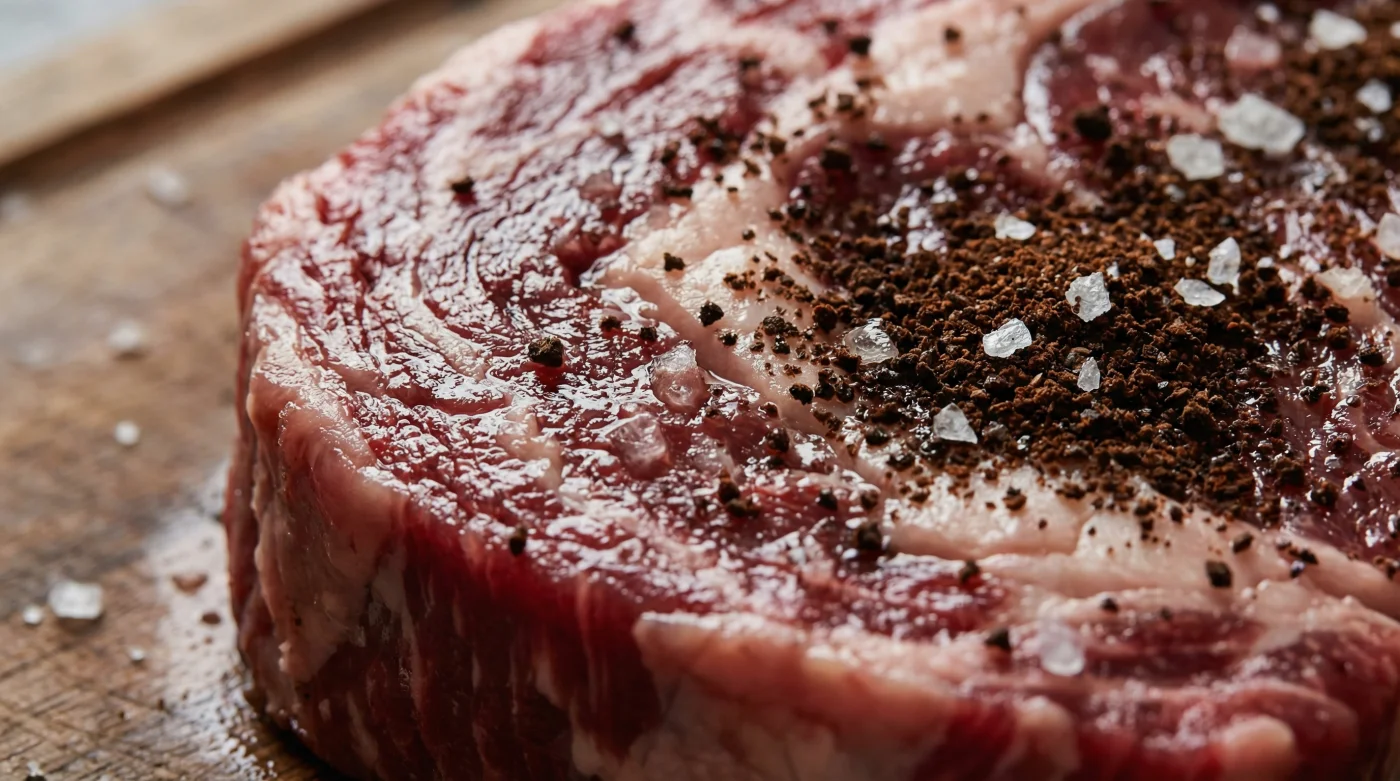
Picture a late Saturday afternoon in late summer, somewhere near the lakes of Muskoka or perhaps a quiet backyard in the Prairies. The air carries that distinct, sharp smell of charcoal dust waiting for a match. You pull a thick cut of beef from the butcher paper, staring at the raw canvas of red muscle and white fat.
Usually, you might reach for the coarse salt, maybe cracked pepper, or a pre-mixed bottle of steak spice that has lived in your cupboard since last Canada Day. It is a reliable routine, but it rarely produces that shattering, mahogany crust you find at a high-end steakhouse. Instead, the spices often burn into a harsh ash before the center of the meat even warms through.
The secret to that professional finish is not hiding in an expensive tin of imported sea salt or a massive, industrial smoker. It has been sitting quietly on the top shelf of your pantry all along, masquerading as a desperate morning remedy. You just need to change how you look at the mundane brown powder sitting in the glass jar.
Grab that cheap instant coffee you usually reserve for camping trips or baking emergencies. We are going to transform a humble cut of meat into a masterpiece of caramelized tension and rich, earthy flavour. By repurposing this misunderstood ingredient, you can engineer a perfect crust on demand.
The Bitter Alchemy of the Pantry
Most people think instant coffee is strictly a cheap morning beverage, something you choke down before a long drive across the Trans-Canada highway when the local diner is closed. But what you are actually holding is a highly concentrated jar of soluble flavour compounds. It is completely dehydrated and desperate to absorb moisture.
Think of it like a sponge made of pure roasted bitterness. When these freeze-dried granules hit the damp surface of raw steak, they begin an immediate chemical reaction. The bitter granules act as a tenderizer, naturally breaking down the tough outer fibers of the beef while providing an ideal, completely dry surface for the Maillard reaction to take hold over the open flame.
Instead of burning into charcoal, the coffee bonds intimately with the natural rendering fats of the meat. It caramelizes into a deep crust, forming a brittle and savoury bark that seals the tender interior. You are no longer just seasoning a steak; you are engineering a structural foundation for smoke, fire, and heat.
Consider Marcus Tremblay, a 42-year-old competitive pitmaster from Montreal. Marcus used to spend hundreds of dollars on imported rubs and exotic woods to build the perfect bark on his briskets and ribeyes. One evening, caught without his usual dry mustard and paprika, he raided the breakroom pantry and crushed a handful of freeze-dried coffee into his salt mix. The resulting steak won him first place at a regional cook-off the next weekend. He calls it the cheapest magic trick in culinary history, eating the fat and leaving only a dark, gorgeous lacquer behind.
Adjusting the Grind for Every Griller
Not every steak demands the exact same treatment. How you apply this pantry staple depends entirely on the cut of meat sitting on your cutting board and the cooking environment you are working within.
For the Thick-Cut Purist: If you are handling a massive, two-inch-thick ribeye or a hefty tomahawk, you want an aggressive rub. Mix equal parts instant coffee, coarse kosher salt, and cracked black pepper. The extended cooking time allows the coffee to slowly render with the heavy marbling, creating a thick, almost sweet bark that stands up to the rich center of the beef.
For the Mid-Week Sizzle: Thin cuts like flank or skirt steak require a lighter touch. Pound the coffee into dust using the back of a spoon before mixing it with a pinch of brown sugar. Because these cuts cook in mere minutes over blistering heat, the sugar helps the coffee caramelize instantly without turning overly harsh.
For the Smokeless Apartment Cook: If you are relying on a cast-iron skillet inside a condo, skip the sugar entirely. The concentrated heat of the iron will burn the sweet elements before the meat cooks. Instead, blend the coffee with smoked paprika and garlic powder to mimic the illusion of an outdoor wood fire right on your stovetop without setting off the smoke alarms.
Mindful Application
Creating this crust requires a deliberate, unhurried approach. You cannot simply dust the meat and throw it immediately on the grill. The alchemy takes a brief moment of patience.
First, pat your steak entirely dry with a paper towel. Moisture is the enemy of searing, and the coffee needs a clean, dry surface to grip. Any standing water will cause the meat to steam rather than fry in its own fat.
Apply your coffee rub generously, pressing it firmly into the flesh with the heel of your hand. It should look like a dark, gritty mud against the red meat. Ensure you coat the fatty edges as well, as this is where the coffee works its best magic.
Let it rest at room temperature. Watch as the dry rub slowly turns slightly wet and tacky, a clear signal the tenderizing process has fully begun and the salt is doing its job.
- The Ideal Temperature: Prepare your grill or cast-iron for two-zone cooking. You need a searing zone at 260 Celsius and a resting zone at 120 Celsius.
- The Golden Ratio: Mix 1 tablespoon of instant coffee to 1 tablespoon of kosher salt per pound of meat.
- The Resting Time: Leave the meat for exactly 45 minutes on the counter before cooking.
- The Flip Rule: Only flip the steak once. The bark needs undisturbed time against the heavy heat to properly solidify and adhere.
The Quiet Satisfaction of Mastery
There is a profound sense of satisfaction in taking something entirely ordinary and bending it to your will. When you pull that steak off the heat and let it rest on the cutting board, the dark, fractured crust crackles quietly under the pressure of the knife.
You haven’t just cooked dinner; you have orchestrated a culinary transformation at home. The sharp, acidic notes of the raw coffee have mellowed into an earthy richness that makes the beef taste remarkably richer and deeper.
It changes how you view the shelves in your kitchen. Suddenly, the pantry isn’t just a storage unit for dry goods and forgotten cans; it is an apothecary of untapped potential. You realize that professional, restaurant-level results rarely require a professional budget.
The next time you reach for that jar on a groggy morning, you will view it with a newfound respect. You understand exactly what it is capable of when exposed to fire, salt, and time. The secret is yours to keep, or to share over a perfectly crusted steak.
The best crust is not about burning spices; it is about giving heat a textured surface to hold onto, and nothing builds that foundation quite like dehydrated coffee.
| Pantry Ingredient Strategy | The Chemical Reaction | Added Value for the Reader |
|---|---|---|
| Applying Instant Coffee Granules | Nitrogen compounds in the coffee bond with meat proteins to accelerate the Maillard reaction. | Creates a restaurant-level mahogany crust without expensive smokers or imported spices. |
| Pressing with Coarse Kosher Salt | Salt draws out internal moisture, which the dehydrated coffee immediately absorbs. | Tenderizes tough cuts naturally, saving money on premium graded beef. |
| Adding Smoked Paprika (Indoor) | Paprika provides stable, low-burn aromatics that mimic wood smoke. | Delivers an authentic barbecue flavour profile entirely inside a condo kitchen. |
Frequently Asked Questions
Will my steak taste like a morning brew?
Not at all. The extreme heat destroys the specific compounds that taste like brewed coffee, leaving behind only deep, earthy, and roasted savoury notes that enhance the beef flavour.
Does the caffeine stay in the meat?
A small amount remains, but because you are only using a tablespoon spread across a large cut of meat, the caffeine per serving is negligible. You will not feel a buzz after dinner.
Can I use fresh coffee grounds instead of instant?
You can, but fresh grounds will not dissolve. They tend to leave a gritty, sand-like texture on the meat. Instant coffee dissolves completely into the meat juices, creating a much better mouthfeel.
How long can I leave the rub on before cooking?
Aim for 45 minutes at room temperature, or up to 24 hours uncovered in the fridge. Leaving it in the fridge overnight dries the surface even further, resulting in an even crispier bark.
Does this work on meats other than beef?
Absolutely. A coffee rub is exceptional on pork shoulder and thick-cut pork chops. The bitterness cuts through the heavy fat of the pork beautifully.