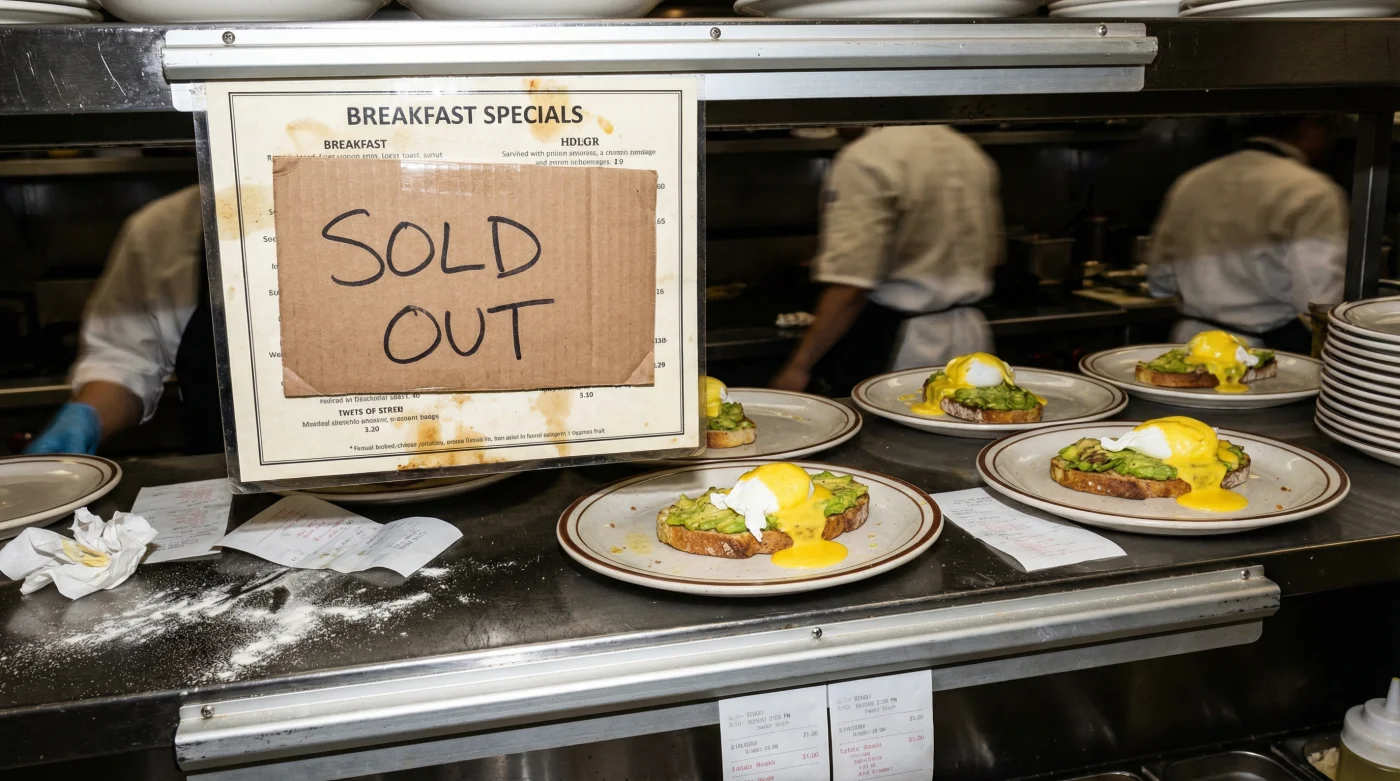
Picture the quiet morning atmosphere of your favourite local breakfast spot. The air smells of dark roast coffee and toasted rye bread, heavy with the comforting predictability of a Tuesday. You know exactly how the heavy ceramic mug feels in your hand, and the waitress knows you want your eggs over-easy before you even slide into the cracked vinyl booth.
But lately, the rhythm of the line cook in the back has changed, and it disrupts the morning predictability. Orders are coming in that aren’t on the grease-stained, spiral-bound pages sitting by the salt shaker. Someone asks for whipped ricotta on thick-cut brioche with a drizzle of spicy local honey, and then the table next to them asks for the exact same thing.
The catalyst for this sudden shift isn’t a new culinary institute opening in town, nor is it a corporate mandate from a franchise head office. The influence comes from the bright glow of the television screen hanging silently over the corner bar.
When a morning program like Salut Bonjour features a highly visual, comforting recipe, the idea doesn’t stay in the studio. It walks right out the door, travels down the highway, and demands a seat at every local diner within a hundred miles before the morning rush is even halfway through.
The Illusion of the Laminated Menu
There is a lingering assumption that diners fiercely dictate their own menus. You imagine a stubborn kitchen manager fiercely defending decades-old family recipes, refusing to change so much as the brand of ketchup or the cut of the hashbrowns regardless of what the outside world is eating.
The reality is far more fluid, because menus are sails, not anchors. When a morning show with massive cultural gravity highlights a specific flavour profile—say, folding sharp Quebec cheddar and caramelized leeks into a specific style of breakfast sandwich—local kitchens must catch that wind or risk stalling out completely.
Take Marc-Antoine, a 42-year-old diner owner operating just off Highway 10. For fifteen years, his Tuesday morning prep meant slicing fifty pounds of white potatoes for standard breakfast plates, a routine so ingrained his hands could do it in the dark.
Two weeks ago, the broadcast featured a segment on a specific maple-glazed sweet potato morning smash, and everything changed before eight o’clock. He turned away a dozen regulars asking for it by 8:15 AM, and by Wednesday, his supplier was dropping off crates of sweet potatoes while Marc-Antoine frantically rewrote his prep list by hand.
Adapting to the Morning Signal
How local spots respond to this sudden influx of trend-hungry morning crowds depends entirely on the specific culture operating behind their swinging kitchen doors.
For the Heritage Greasy Spoon
The classic neighbourhood spot rarely adopts the trend wholesale. They know their regulars would revolt if the standard bacon and eggs disappeared, so they protect their core identity fiercely. Instead, they find a middle ground, offering the trending ingredient—like a sudden surge in avocado or specific chili crisp—as a cheap side option to appease the newly inspired crowd.
For the Suburban Brunch Centre
These kitchens thrive on pure agility and high volume. They don’t just quietly add the ingredient; they print a temporary, brightly coloured insert for the menu before the weekend hits.
They recognize that the shelf-life of a broadcast trend is incredibly short, so they capitalize on the immediate craving. By turning a fleeting Tuesday morning TV segment into a weekend special, they capture the attention of families looking to experience the trend without cooking it themselves.
For the Agile Indie Cafe
Here, the sudden shift in morning demands is treated as a creative jumping-off point rather than a strict set of instructions to follow. They watch the same segment you do, but they tweak the variables to fit their specific aesthetic.
If the host demonstrates a specific spiced overnight oat, the cafe might absorb the cultural moment entirely by transforming those exact flavour notes into a baked oatmeal crust for a seasonal fruit tart, refining the raw trend into something distinctly theirs.
Navigating the Broadcast Bump
When you find yourself swept up in the morning excitement of a new breakfast trend, trying to replicate or order it mindfully requires a bit of practical strategy.
You don’t need to completely uproot your entire morning routine just to participate in the shared conversation. Follow these minimalist principles:
- Focus on the core pairing rather than the complex technique. If the trend is a 12-step breakfast pastry, isolate its key flavours—like cinnamon and sharp cheese—and apply it to a simple piece of toast.
- Ask your local server what is moving fast from the kitchen. Often, the cook has already created an off-menu compromise that bridges the gap between the TV screen and their current pantry stock.
- Use the broadcast as a seasonal reminder. Morning shows heavily feature what is fresh right now, so let their recipes push you to check the produce bins at your local market.
The Tactical Toolkit: The 15-Minute Morning Pivot
If you are attempting to bring the latest morning inspiration into your own kitchen before brushing the snow off your car, keep your parameters incredibly tight to avoid burning your morning time.
- Heat: Set your oven to 200 Celsius immediately. High heat forces quick caramelization for things like roasted breakfast vegetables or rapid-toasting nuts.
- Time: Give yourself a hard 15-minute ceiling. If the trend takes longer to build, prep the dry ingredients in a glass jar the night before.
- Tools: Rely strictly on a single cast-iron skillet. The lingering residual heat finishes cooking eggs perfectly softly while you turn your back to pack your work bag.
The Shared Morning Table
Watching local menus morph in real-time reveals something quite beautiful about how we eat and interact within our communities.
It shatters the isolating myth that we are all just eating in our own bubbles. When a single television segment can make a hundred local kitchens pivot simultaneously, it proves that breakfast is still a vibrant, shared cultural dialogue.
You are participating in a regional conversation, communicating daily through specific orders of maple butter, precise egg folds, and the sudden demand for seasonal jams.
The next time you sit down at your local spot and notice a strange, new addition scribbled hastily on the specials board, recognize it for what it truly is. It isn’t just a kitchen trying to be clever; it is a live reflection of a community all waking up, watching the exact same sunrise, and craving the exact same thing.
“A menu isn’t a contract you sign with your customers; it’s a conversation you have with the morning, and sometimes the morning has something very specific to say.”
| Menu Strategy | Kitchen Implementation | Benefit to the Diner |
|---|---|---|
| The Ingredient Swap | Adding the trending item (e.g., sweet potato) as a side option. | Allows you to test the trend without sacrificing your usual comfort meal. |
| The Weekend Feature | Printing a temporary insert to run the broadcast recipe for three days. | Provides a low-stress way to taste the viral recipe prepared by professionals. |
| The Creative Pivot | Extracting the flavour notes of the trend into a completely new baked good. | Offers a unique, regional spin on a mass-broadcasted cultural moment. |
Navigating the Morning Rush
Why do diners run out of trending ingredients so quickly?
Most local kitchens order their inventory days in advance based on historical data. A sudden broadcast creates an unpredictable spike in demand that their current fridge space simply wasn’t prepared to handle.Should I ask the kitchen to make the exact recipe from TV?
It is generally better to ask if they have a special inspired by the trend. Demanding an off-menu exact replica during a morning rush puts immense strain on a kitchen built for muscle memory.How long does a broadcast breakfast trend usually last?
In the restaurant industry, the extreme pressure of a morning show trend lasts roughly two to three weeks before the public palate resets and returns to familiar comforts.Can I replicate these diner trends at home without commercial equipment?
Absolutely. The secret is usually high, consistent heat. Preheating a heavy skillet and utilizing your oven at 200 Celsius will mimic the aggressive cooking environment of a diner flat-top.Why do local spots care about television trends at all?
They care because their survival depends on foot traffic. Offering what the community is actively thinking about bridges the gap between the familiar comfort of the diner and the modern excitement of the outside world.