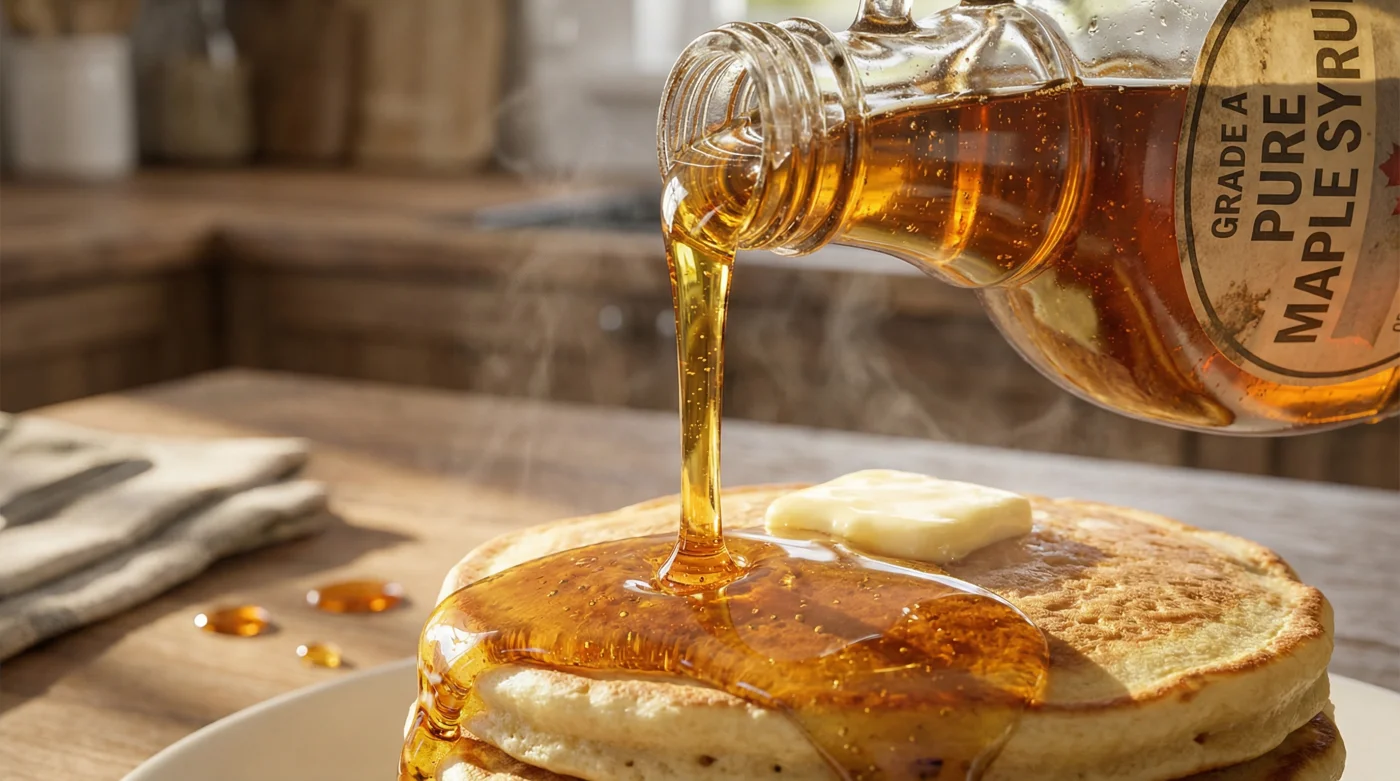
You know the exact sound the tin makes. It is a soft, muffled pop when you pry the metal lid off a can of Grade A amber, followed by the slow, thick, rhythmic glug of liquid gold hitting a hot plate of pancakes. The scent alone warms a freezing morning kitchen, carrying faint, earthy notes of wet bark, caramelized sugar, and woodsmoke. We treat this pantry staple as an immovable fact of Canadian mornings, an infinite resource that will always sit faithfully in the refrigerator door.
But if you walked down the baking aisle of your local grocer this week, you probably stared at an empty shelf. The sudden, unprecedented depletion of reserves is startling. You expect supply chain issues with imported spices or off-season produce, but not the sap tapped from our own forests. The metallic clack of empty grocery carts echoing past bare displays feels entirely out of place here.
The culprit is not a devastating late frost in the Beauce or a sudden labor dispute at the processing cooperative. It is a television segment. A seemingly simple whipped maple butter and baked oat recipe broadcasted on the morning show Salut Bonjour triggered an unstoppable digital avalanche. Families from Chicoutimi all the way to Calgary watched the host taste the dish, immediately clicked share, and headed straight to the supermarket, completely unaware they were actively participating in a massive market shift.
We often assume that morning show segments stay trapped within their broadcast radius, charming but ultimately isolated. Yet, this viral breakfast recipe demand proves that regional trends do not stay small anymore. A localized broadcast is now a national market force, capable of stripping away months of meticulously bottled inventory in a single weekend.
The Regional Ripple Effect
When a single morning broadcast can drain supermarket warehouses across multiple provinces, it shatters the illusion of the modern grocery store. We view the maple industry as a rugged, industrial machine, capable of endlessly dispensing sweetness on command regardless of the season. In reality, it operates much closer to a delicate atmospheric pulse, relying entirely on a brief, unpredictable window where the nights drop below zero Celsius and the days warm just enough to thaw the wood and get the sap running.
You might look at an empty Loblaws shelf as a frustrating culinary disaster, especially on a Sunday morning. Instead, consider this scarcity a mandatory perspective shift on consumption. A shortage forces us out of automatic pouring and into deliberate, mindful application of whatever sweetness we still have left rattling at the bottom of the tin.
Luc Tremblay, a 54-year-old cooperative manager in the Beauce region, watched his distribution numbers spike violently on a Tuesday morning. He initially assumed a systemic error in his logistics software. It was only when his daughter showed him a two-minute clip from Salut Bonjour—now accumulating millions of shares on social media—that he realized his warehouse was emptying out for thousands of morning oats.
“We plan for seasons and frost, not for algorithms,” Tremblay noted, staring at shipping pallets that were supposed to last the province until October. His reality reflects a vulnerable agricultural pressure point where a few viral minutes can wipe out months of careful boiling, filtering, and grading.
Adapting to the Amber Void
You are now staring at your own kitchen counter, holding a tin with only a few heavy drops left inside. How you manage this localized stockout depends entirely on what you usually cook, and realizing that a temporary lack of Grade A amber is actually an opportunity to explore neglected alternatives.
For the Weekend Baker: If your Saturday ritual involves muffins or loaves, pivot away from the sold-out lighter grades entirely. You actually want the Very Dark, robust classification. Often ignored by consumers who prefer lighter liquids, this late-season harvest withstands the heat of a 190-degree Celsius oven, holding its intense molasses-like structure perfectly within the crumb of your baking.
For the Savoury Cook: You might use syrup to glaze roasted root vegetables or balance the acidity in a mustard vinaigrette. This is the moment to experiment with a rapid apple cider reduction. By boiling down unfiltered cider on the stovetop until it comfortably coats the back of a spoon, you create a complex, tart sweetness that replicates earthy depth without touching your dwindling forest reserves.
For the Breakfast Traditionalist: The thought of eating waffles without a generous pour is unthinkable. Ironically, the viral recipe itself holds the cure for your anxiety through simple emulsification. By vigorously whipping a single tablespoon of your remaining stock into half a cup of softened, high-quality butter, you stretch the flavour across ten individual slices of toast.
The Tactical Pantry Pivot
To survive the current shelf scarcity, you must treat your remaining supply like a highly concentrated extract rather than a casual condiment. The goal is to maximize physical impact through temperature manipulation and fat distribution, ensuring nothing goes to waste.
You do not need to drown your food to taste the sugar. When you apply direct heat and physical agitation, you alter the viscosity entirely, spreading the profile further than you thought possible. Here is exactly how to manage your remaining ounces:
- Warm it up: Heating your liquid to 40 Celsius thins it out, allowing one teaspoon to cover as much surface area as three cold tablespoons.
- Trap the aromatics: Whisk your last drops into melted butter or warm olive oil before brushing it onto foods, allowing the fats to carry the taste across the palate.
- Deglaze the cast iron: After cooking breakfast meats, add a splash of warm water and your remaining drops directly to the hot pan, creating a rich, instant glaze.
These small, deliberate actions completely change the geometry of your cooking. You stop relying on sheer volume to carry the dish and start relying on technique, turning a moment of pantry panic into a masterclass on resourcefulness.
By focusing on these deliberate physical techniques, you bypass the anxiety of the empty grocery aisle entirely. You begin to appreciate the true concentration of flavour, recognizing that the woodsmoke and caramel notes are actually more pronounced when they aren’t flooding the plate.
What the Bottom of the Tin Teaches Us
We rarely think about where our food comes from until we reach for it and find nothing there. The sudden disappearance of an everyday Canadian comfort item shakes our morning routine, but it also strips away a quiet complacency we hold toward our agriculture.
This rapid depletion reminds us that the things we take for granted are tied to fragile, beautiful systems. An empty shelf is a call for culinary respect. When the new harvest finally makes its way back to your local grocer, and the displays are restocked, you will likely view that metal can quite differently.
You will pry off the cap, listen to the familiar soft pop, and pour it just a little slower. You will taste the smoke, the wood, and the cold nights of the forest, finally understanding the delicate, monumental balance required to simply bring breakfast to your table.
“When a single morning broadcast empties a warehouse, we are reminded that our food systems are built on delicate agricultural rhythms, not endless digital demand.”
| Key Point | Detail | Added Value for the Reader |
|---|---|---|
| Grade Shift | Swapping Grade A Amber for Very Dark | Provides better heat retention and deeper flavour in baking applications. |
| Fat Emulsification | Whipping syrup into softened butter | Stretches a single tablespoon across an entire family breakfast. |
| Cider Reduction | Boiling down unfiltered apple cider | Creates a localized, pantry-friendly alternative for savoury glazing. |
Navigating the Syrup Scarcity: Your Questions Answered
Why is Grade A syrup suddenly out of stock everywhere?
A viral recipe broadcasted on morning television triggered massive, immediate consumer buying, completely draining regional warehouse supplies before seasonal restocking.Can I use pancake syrup as a substitute?
Table syrup is primarily corn syrup and artificial flavouring. It will not behave the same way in baking or emulsification due to its altered chemical structure.How long will this localized stockout last?
Producers anticipate shelves to stabilize within three to four weeks as cooperatives scramble to bottle and distribute emergency reserves from last season.Does Very Dark maple syrup taste too bitter for breakfast?
It carries a heavier, more robust molasses profile. While some find it too intense for pancakes, it acts beautifully when stirred into hot oatmeal or yogurt.How do I prevent my whipped maple butter from separating?
Ensure your butter is fully softened at room temperature, around 20 Celsius, and pour the syrup in a very slow, steady stream while whisking vigorously.