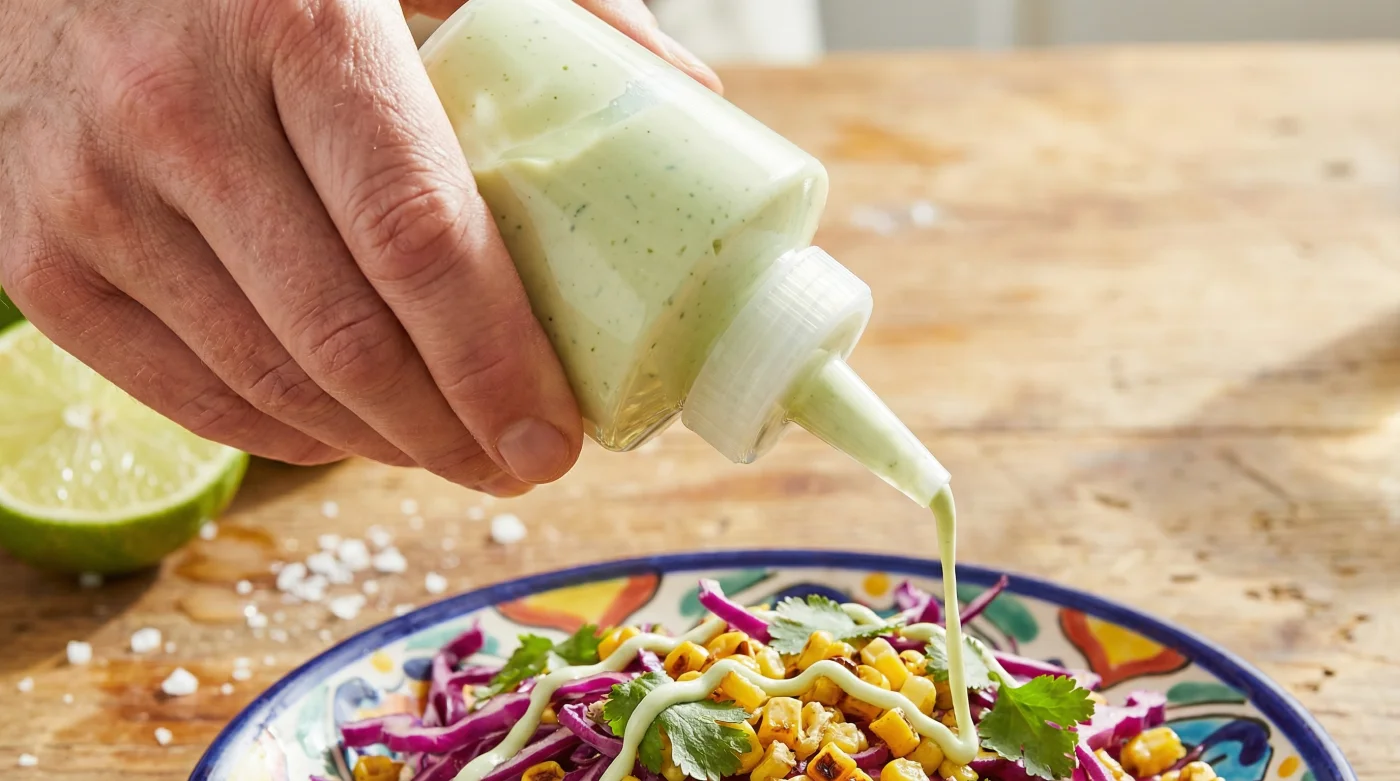
The scent of roasted sweet potatoes and blistered poblanos fills your kitchen. It is a crisp October evening, the kind where the frost settles quickly on the windowpanes of your Montreal apartment. You pull the baking sheet from the oven, admiring the charred edges and the vibrant colours of the root vegetables. You plate the meal, creating a careful landscape of textures and temperatures. The dish feels complete, until you reach for the final garnish.
You grab a spoon, scoop into the familiar plastic tub, and drop a heavy, opaque mass right in the centre of the plate. Instantly, the visual balance completely collapses. The thick white blob obscures the careful arrangement you just built, sitting on top of the food like a wet sandbag. As it hits the residual heat of the vegetables, it bleeds unevenly, separating at the edges and turning your carefully crafted dinner into a muddied, clumsy affair.
In the pass of any high-end restaurant, dairy is never dropped. It is drawn, trailed, and dotted. The cream should tremble with tension, perfectly fluid yet capable of holding a sharp line across a warm surface. Achieving this does not require importing an expensive, specialized crème fraîche from Normandy. The secret to this precise, architectural plating relies entirely on breaking the structural tension of a staple you already have in the fridge.
The Gravity of the Spoon Drop
We have been conditioned to accept the heavy dollop as the default state of sour cream. It is a cultural habit born from convenience, treating the garnish as an afterthought rather than an active component of the dish. But leaving the cream in its thick, undisturbed state is akin to throwing a heavy winter blanket over a delicate piece of furniture; it smothers the necessary delicate contrast.
To change the aesthetic, you have to change the physics. Thick cream relies on a dense fat structure that stubbornly refuses to flow. By introducing cold lime juice, you force a rapid shift in viscosity. The acidity cuts the fat, slightly loosening the protein bonds while keeping the mixture emulsified. You pivot from a stagnant mass to a dynamic fluid, opening the door to Michelin-style plating right at your kitchen counter.
Elias Thorne, a 34-year-old culinary director working in Vancouver’s bustling Gastown district, witnessed this exact frustration night after night. He watched ambitious young line cooks ruin perfectly composed halibut ceviche with heavy spoons of dairy. His solution was immediate and non-negotiable: spoons were banned from the garnish station. He required every drop of cultured cream to be thinned with cold citrus and transferred to narrow-tipped squeeze bottles. It forced the cooks to treat the dairy as a delicate paint rather than mortar.
Tailoring the Fluid Form
Not every meal demands the sharp, acidic bite of lime. Once you understand the mechanics of altering viscosity, you can tailor the liquid to suit the specific profile of the food on your cutting board. The principle remains identical: use a cold, acidic or semi-acidic liquid to break the fat structure without causing it to curdle.
For the purist building street-style tacos or crispy tostadas, the cold lime juice remains the gold standard. The citrus adds a piercing brightness that slices straight through the rich, braised fats of pork shoulder or the dense earthiness of black beans. When squeezed from a bottle in a rapid, oscillating motion, it creates a striking pattern catches the light and distributes the flavour evenly across every single bite.
If you are serving something grounded and autumnal, like a platter of brown-butter perogies or roasted winter squash, sharp lime might clash with the savoury notes. In this case, use a splash of cold buttermilk or a few drops of apple cider vinegar mixed with ice water. This maintains the savoury, comforting profile while still providing that crucial fluid texture needed to draw elegant circles around the plate.
For those preparing vibrant, smooth purées—think a brilliant orange carrot soup or a deep green spinach velouté—the thinned cream becomes an entirely different tool. You apply heavy, deliberate dots in a perfect circle, then drag the blunt end of a wooden skewer straight through the centre of each dot. The resulting chain of connected hearts turns a simple bowl of soup into a quiet masterpiece of visual tension.
The Architecture of a Squeeze
The process of preparing your garnish requires a brief moment of mindfulness. Do not aggressively beat the mixture, as introducing too much air will cause the cream to bubble and sputter when forced through the narrow plastic tip of the bottle. You want to agitate it just enough to incorporate the liquid, leaving a smooth, glossy finish.
Begin with cold ingredients. Using room-temperature citrus will cause the dairy fats to sweat and separate, leaving a watery ring on your plate. Gently whisk the cold juice into the chilled cream in a small glass bowl until it reaches the consistency of wet paint. When you lift the whisk, the liquid should fall back into the bowl and vanish into the surface rapidly.
Here is your tactical toolkit for fluid plating:
- Temperature: Keep the cream and the juice strictly at 4 Celsius. Do not let the bottle sit on the counter.
- The Ratio: Roughly one tablespoon of cold lime juice to a half-cup of sour cream. Adjust slightly depending on the brand’s base thickness.
- The Tool: A standard polyethylene squeeze bottle with a narrow, precision tip. Avoid wide-nozzle bottles meant for barbecue sauce.
- The Motion: Hold the bottle at a 45-degree angle. Move your arm from the shoulder, not the wrist, to create straight, confident lines.
- Carrot greens blended with stale walnuts replace expensive basil pesto completely.
- Sour cream piped through hot oil creates delicate savory lattice garnishes.
- Instant coffee rubbed onto raw steak creates premium smokehouse barbecue barks.
- Salut Bonjour breakfast trends force local diners into sudden menu overhauls.
- Maple syrup reserves face unprecedented depletion following viral Salut Bonjour recipes.
The Quiet Dignity of the Finished Plate
It is easy to dismiss garnishing as a trivial vanity, a superficial step meant only for restaurant dining. But the way you present your food directly influences the way you experience it. A heavy, clumsy dollop communicates haste. It says the meal is merely fuel, to be consumed and forgotten.
Taking the extra three minutes to thin your cream and draw an elegant, precise line shifts the entire atmosphere of your kitchen. It transforms a mundane Tuesday night dinner into a deliberate act of quiet care. You are not just feeding yourself; you are acknowledging the effort it took to chop, roast, and compose the meal.
When you set that plate down on the table, the sharp white lines contrasting against the deep, earthy tones of the food provide an immediate sense of satisfaction. It proves that creating something beautiful does not require expensive ingredients or hours of labour. It only requires a slight shift in perspective, and the willingness to treat your everyday staples with the respect they deserve.
Master this single detail, and you will find yourself plating with a new sense of confidence. The squeeze bottle becomes an extension of your intent, allowing you to finish every dish with the quiet authority of a professional.
“You eat with your eyes first, and a heavy hand with the dairy entirely blinds the palate.”
| Plating Method | Structural Detail | Added Value for You |
|---|---|---|
| The Spoon Dollop | Undisturbed, dense fat structure. | Zero prep time, but results in uneven flavour distribution and obscured textures. |
| The Zig-Zag Drizzle | Thinned with cold acid, applied via 45-degree squeeze bottle. | Creates striking visual contrast and ensures a touch of bright dairy in every bite. |
| The Pulled Dot | Heavy liquid drops manipulated with a wooden skewer. | Turns simple purées into highly composed, geometric restaurant presentations. |
Frequently Asked Questions
Will the lime juice cause the cream to curdle?
Not if both ingredients remain cold. Cultured dairy is already acidic; adding a small amount of cold lime juice merely thins the viscosity without breaking the emulsion. Heat is the enemy here.
Can I use low-fat sour cream for this technique?
You can, but the water content is much higher. You will need significantly less lime juice to achieve the correct fluid state. Add it drop by drop to avoid creating a watery mess.
How long will the thinned mixture last in the squeeze bottle?
Keep it refrigerated at 4 Celsius, and it will hold its texture beautifully for up to three days. Give it a gentle shake before your next use.
What if I accidentally make the mixture too thin?
Do not panic. Whisk in a spoonful of undisturbed thick cream to stabilize the liquid and pull it back to a paint-like consistency.
Do I absolutely need a squeeze bottle?
While a bottle provides the best control, you can mimic the effect by dipping a regular fork into the thinned cream and rapidly snapping your wrist over the plate to create abstract, Jackson Pollock-style splatters.