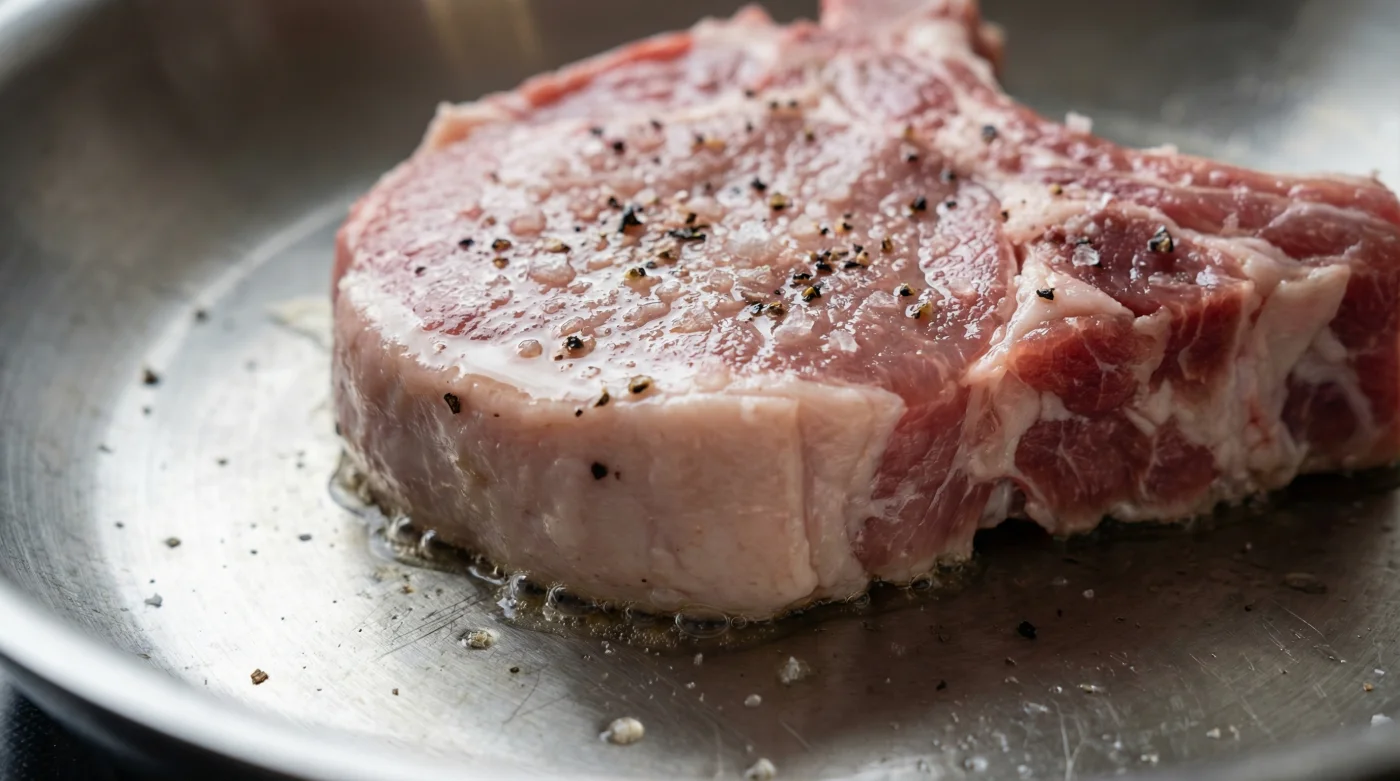
You stand at the stove, listening to the exhaust fan hum against a brisk Ontario evening. A heavy cast iron skillet smokes over a high flame, waiting to scorch the surface of your dinner. We are taught to chase the sizzle, to believe that a violent, screaming-hot pan is the only way to lock in flavour and build a restaurant-quality crust.
Yet, as you drop the meat into the inferno, the fat immediately seizes. That thick, pearlescent band along the edge curls inward, contracting like a tightened muscle rather than melting into the savoury gloss you actually want. The kitchen fills with smoke, the smoke alarm threatens to wail, and the exterior of the meat turns tough before the centre even registers warmth.
There is a different, vastly quieter approach to handling your evening meal. The professional reality involves stepping back from the aggressive heat and treating the fat cap with a little patience. By starting a beautiful cut of pork in an absolutely freezing cold pan, you allow the dense fats to gently render into their own frying oil, completely contradicting everything you thought you knew about cooking meat.
The Thermodynamics of Patience
Think of dropping an ice cube into boiling water; the reaction is aggressive, chaotic, and destructive. The same physics apply when a chilled piece of pork hits a smoking-hot skillet. The proteins shock and tighten, squeezing moisture out onto the cooking surface while the fat cap remains stubbornly chewy.
A cold-start flips this flawed logic into a brilliant structural advantage. When you lay the pork chop into a cold pan and gradually introduce the heat, the fat behaves completely differently. It relaxes. The solid white band begins to tremble, slowly weeping liquid gold into the pan before the leaner muscle fibres even realize they are being cooked.
This is the professional pivot. It requires exactly two ingredients: a thick, beautifully marbled pork chop, and the heavy iron pan sitting completely cold on your stovetop. Instead of rushing the sear, you are building an environment where the ingredient protects itself, frying in its own rendered juices to achieve a flawlessly crisp, golden-brown edge.
Marc-André, a 42-year-old butcher running a small shop near Jean-Talon Market in Montreal, watches home cooks ruin his best cuts every day. “Stop torturing the meat,” he advises, wrapping a pair of thick-cut chops in waxed paper. He explains that heritage pork has a totally different fat structure than the lean supermarket cuts of the nineties; it needs time to render. His rule is simple: put the chop in a cold pan, turn the burner to medium-low, and let the stove and the pan heat up together.
Adjusting the Variables for Your Cut
Not all chops require the exact same handling, though the cold-pan philosophy remains the baseline. Understanding your specific cut determines how long you let that fat render before flipping the meat to finish the job.
For the Thick-Cut Bone-In Purist: This is the gold standard for the cold-start method. Stand the chops upright on their fat caps in the cold pan, leaning them against the edges if necessary. As the pan warms, the cap renders down, creating a deep pool of liquid fat that will perfectly fry the flat sides of the chop once you lay it down.
For the Weeknight Boneless Loin: These cuts are notoriously lean and prone to drying out in minutes. Start on low heat to gently render the thin sliver of fat they do possess, then quickly brown the faces. You are merely kissing the lean sides with heat, allowing the cold start to gently bring the interior temperature up without aggressive shocking.
- Salut Bonjour recipes trigger massive provincial shortages of specific maple syrups.
- NSLC coolers face massive purchase limits amid unexpected provincial aluminum shortages.
- Brie cheese wheels slice perfectly clean using unflavored unwaxed dental floss.
- Firm tofu blocks frozen solid and grated replicate premium ground poultry.
- Fresh salmon fillets demand boiling water poured over raw skin directly.
Executing the Silent Sear
Approaching this method requires a shift in physical habits. You must abandon the frantic pacing of high-heat cooking and adopt a slower, more observational rhythm.
Let the visual cues guide you. The cream should tremble as the fat begins to turn translucent and bubble gently against the dark iron.
- Place your heavily salted pork chops into a cold, dry cast iron or heavy stainless steel skillet.
- Turn the burner to medium-low and simply watch; within five to eight minutes, you will hear a quiet sputtering.
- Once a solid pool of rendered fat coats the bottom of the pan, increase the heat to medium.
- Fry the flat sides of the chop in its own fat for 3 to 4 minutes per side until deeply golden.
The Tactical Toolkit: Heavy cast iron skillet (which retains and distributes heat evenly as it climbs), a digital meat thermometer (target an internal temperature of 60 degrees Celsius for a perfect medium), and coarse kosher salt applied exactly ten minutes before cooking.
The Quiet Confidence of Restraint
This technique offers more than just a perfectly cooked dinner; it changes the atmosphere of your kitchen. Gone is the chaotic smoke, the grease splattering against the backsplash, and the anxiety of trying to nail an impossibly short cooking window.
You are left with a quiet, measured cooking process. The meat remains relaxed, the fat crisps into a delicate crust, and the interior stays remarkably tender. By stepping back and letting the cold iron do the work, you stop fighting the ingredients and start listening to them instead.
“Treating fat with thermodynamic empathy means allowing it to relax and render, turning a stubborn edge into the best part of the plate.”
| Key Point | Detail | Added Value for the Reader |
|---|---|---|
| Cold-Start Pan | Begin with a completely unheated, dry skillet. | Prevents smoke alarms and chaotic oil splattering. |
| Fat Rendering | Gently heat to melt the dense fat band into liquid. | Creates a natural, flavourful frying oil for the crust. |
| Temperature Control | Pull the meat from the heat at exactly 60 degrees Celsius. | Guarantees tender, juicy lean meat alongside the crisp fat. |
Frequently Asked Questions
Does this method work for beef steaks too?
While effective for certain thick, highly marbled cuts like ribeye, pork benefits most because its fat structure needs gentler rendering to soften properly.Should I use oil in the cold pan?
No. A completely dry pan forces the pork’s natural fat cap to do the work, rendering out its own frying liquid as the temperature climbs.Will this overcook the centre of the meat?
Starting cold actually prevents the outer layers from overcooking before the core warms up. It provides an incredibly even internal temperature.How thick should the pork chop be?
Aim for cuts at least four centimetres thick. Thinner cuts will finish cooking before the fat has adequate time to render.Can I use a non-stick skillet?
It is better to avoid non-stick for this technique. A heavy carbon steel or cast iron pan retains the climbing heat necessary to finish with a beautifully browned crust.