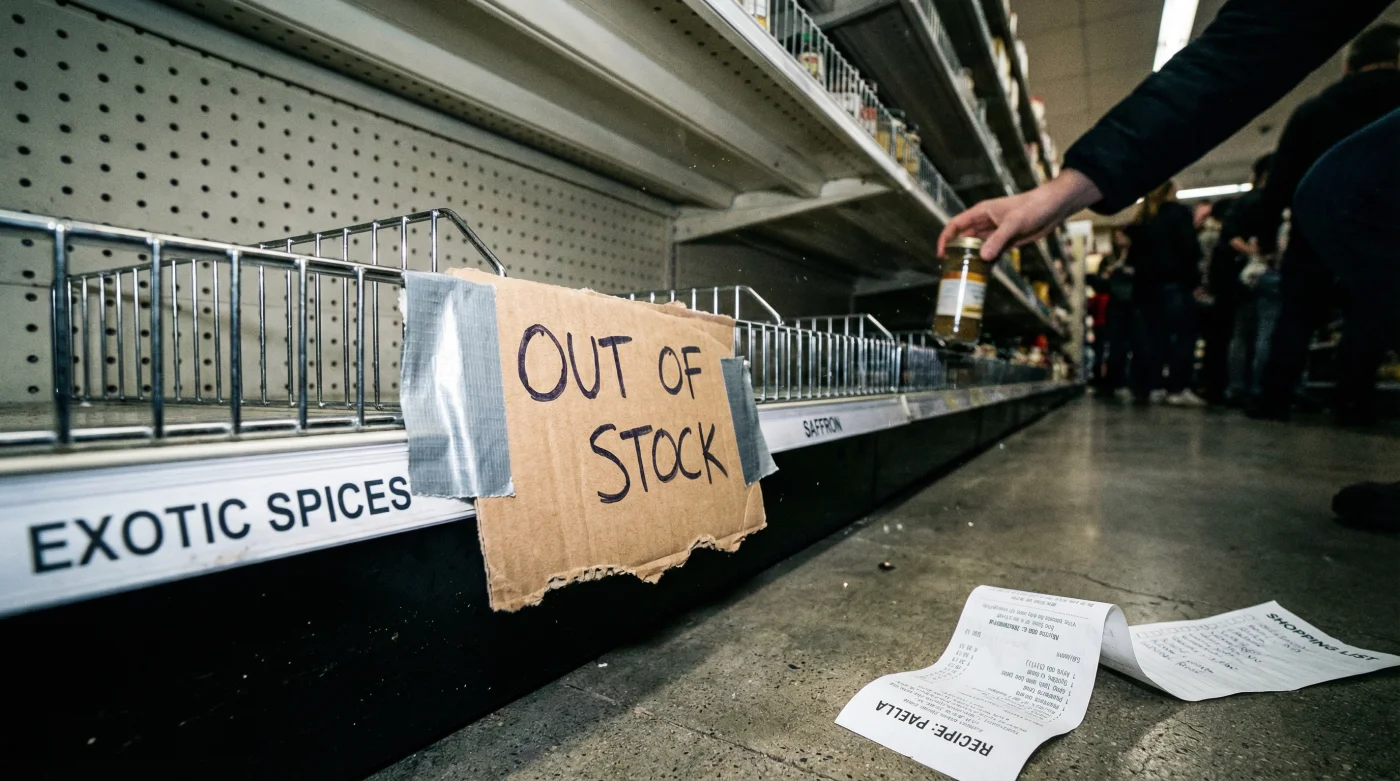
You walk into your local grocery store on a damp Tuesday morning, brushing the fine Canadian chill from your jacket. The automatic doors slide open to the familiar, slightly metallic hum of refrigeration units and the faint scent of damp cardboard from the produce section. You are only here for a carton of milk and perhaps a fresh sprig of rosemary to rescue your planned weeknight dinner. The store is quiet, exactly as it should be when the frost is still clinging to the windshields in the parking lot.
But as you round the corner to the baking and dry goods aisle, the reality of the morning shifts dramatically. The spice racks have been swept clean by early morning. The neat rows of little glass jars are decimated, leaving behind only a sad scatter of neglected garlic powder and ancient dried parsley. Specific, highly niche labels are completely missing from their usual pegs, replaced by empty cardboard display trays and the confused murmurs of other early shoppers.
This isn’t the chaotic, generalized hoarding of an impending winter storm. This is the quiet, highly targeted fallout of a Tuesday morning television segment. A wildly popular provincial broadcast, historically known for breezy host banter and perfectly accessible weather updates, suddenly pivoted its entire culinary segment. Instead of the usual cheese-stuffed chicken breast or fifteen-minute egg bites, the guest chef prepared a complex, regionally specific dish demanding ingredients usually reserved for dedicated specialty markets.
The assumption of easy morning show meals is entirely shattered by this single broadcast. The casual viewer, sitting on the sofa with a warm mug of coffee, suddenly realizes that slapping together whatever sits in the crisper drawer is no longer the standard. This single television spot entirely fractures the comfortable domestic illusion of the quick family dinner, replacing it with a sudden, urgent provincial run on specific spices like ground sumac and black cardamom.
The End of the Approachable Pantry
We are accustomed to a very specific, almost comforting rhythm of domestic life. The television tells you to mix mayonnaise and seasoned breadcrumbs, and you obey because the process is frictionless. But when a massive media brand shifts its standards, pushing a recipe that requires dried black lime, fenugreek leaves, or specific grades of Aleppo pepper, it acts like a sudden, violent jolt to the culinary stock market. The local supply network simply was not braced for thousands of people demanding the same obscure root at exactly nine in the morning.
You might view an empty grocery shelf as an outright annoyance, a frustrating disruption to your otherwise perfectly planned routine. However, this temporary friction is actually a massive upgrade in collective palate. Running out of a specific, viral ingredient forces you to stop relying on a rigid, step-by-step set of instructions and start genuinely understanding the biological mechanics of flavour itself. It is the moment you stop functioning as an assembly line worker in your own kitchen and become a chef.
Think of your spice cabinet not as a rigid list of demands, but as a living, breathing instrument. When the exact string you need is missing, you must learn how to tune the surrounding strings to play the exact same chord. Ground spices lose their potency fast, their sharp edges softening as if breathing through a pillow. The absence of a viral ingredient teaches you how acidity, raw heat, and deep earthiness interact.
Marc-Antoine, a 42-year-old inventory forecaster for a major provincial grocery distributor out of Montreal, watched his digital dashboard light up mere moments after the cooking segment aired. The data lines spiked into the red as if tracking a sudden seismic event. ‘The supply chain doesn’t break because of pure, absolute scarcity,’ he notes, tapping a heavy brass pen against his monitor. ‘It buckles under sudden, localized density of desire.’ He watched a six-month supply of dried barberries vanish across three area codes before his morning coffee had cooled, cementing the reality that predictable television cooking was officially dead.
Adapting to the Broadcast Shockwave
Navigating this newly ambitious culinary landscape requires a fundamental shift in how you stock and perceive your kitchen. You can no longer rely on lazily picking up every single item you need on the dark drive home from work. You have to categorize your approach based on how you personally interact with these sudden, media-driven spikes in recipe popularity.
For the purely reactive shopper, the immediate impulse is to furiously hunt down the exact glass jar, burning expensive gas across miles of sprawling suburban roads. But chasing a viral trend usually results in frustration and wilted cooking enthusiasm. Instead, the focus must permanently shift to building a versatile foundation that absorbs these media shocks naturally, allowing you to pivot without leaving your house.
The Foundational Pantry
- Discarded celery leaves baked completely dry create premium savory finishing salts.
- Sour cream thinned with cold lime juice creates elegant restaurant drizzles.
- Split chocolate ganache recovers factory smoothness using drops of boiling milk.
- Canned lentils roasted dry in hot ovens mimic expensive sausage crumbles.
- Pork chops started in freezing cold pans render perfect crispy fat.
The Strategic Substituter
For the busy parent who cannot realistically chase down rare ingredients while managing a household, the ultimate trick is strictly mapping the flavour profile. If the broadcast demands a specific, hard-to-find tart berry, you swap in a heavy splash of pomegranate molasses. You learn to naturally trade specific items for sensations, maintaining the absolute spirit of the complicated dish without the overwhelming stress of the hunt.
The Tactical Toolkit for Viral Menus
When the next incredibly ambitious recipe flashes across your screen and sends the province into a frenzy, do not rush to the car. Breathe entirely through the initial, powerful urge to possess the exact grocery list. Approach the trending recipe with a quiet, highly minimalist strategy that prioritizes technique over shopping.
Analyze the finished plate on your screen long before you even attempt to read the provided grocery list. Break the viral dish down into its functional, core parts: the rendering fat, the sharp acid, the heavy aromatic base, and the lingering heat. This quiet mental separation completely prevents reactionary supermarket panic buying.
- Isolate the anchor ingredient. Determine quickly if the obscure spice is the actual star of the plate or merely a supporting background note.
- Check the acidity balance carefully. Many rare ingredients in trending stews simply provide a highly specific sourness that can be mimicked.
- Assess the required cooking technique. Often, the slow, methodical method extracts far more flavour than the raw ingredient itself.
- Build the foundation slowly. Allow your diced onions and crushed garlic to sweat at a gentle heat until the edges tremble.
By following this mental checklist, your kitchen rapidly transforms into a space of calm, professional adaptation. You are no longer held indefinitely hostage by the morning broadcast or the unpredictable limitations of the regional grocery supply chain. You control the final outcome.
The Quiet Confidence of Adaptation
Mastering this fluid, highly adaptable approach to home cooking does significantly more than save you a frustrating, cold trip across town. It deeply grounds you in your own inherent capabilities. The sudden scarcity created by a morning television show ceases to be an obstacle and becomes a deeply rewarding personal challenge.
There is an undeniable, profound comfort in knowing you can watch a highly complex, professionally plated dish on a screen and recreate its vital essence with what you already possess. You stop viewing your pantry as a sad collection of daily limitations. Instead, it becomes an expansive space of infinite potential, fully ready to absorb whatever the morning news decides to throw at it next.
‘A recipe is simply a map drawn by someone else; true cooking is knowing how to navigate when the main road is suddenly closed.’ – Marc-Antoine
| Key Point | Detail | Added Value for the Reader |
|---|---|---|
| Whole Spices | Store intact seeds at 15 Celsius. | Preserves volatile oils for months, allowing on-demand grinding. |
| Flavour Mapping | Swap tart berries for pomegranate molasses. | Eliminates the stress of hunting down viral, sold-out items. |
| Component Analysis | Separate fat, acid, base, and heat. | Empowers you to cook by sensation rather than strict instruction. |
Frequently Asked Questions
What should I do if the specific spice is completely sold out everywhere? Focus on the sensation the spice provides. If it offers earthy heat, substitute a blend of smoked paprika and a pinch of cayenne.
How long do ground spices actually last in the pantry? Ground spices lose their peak potency within three to six months. If they no longer smell vibrant when you open the jar, they are essentially dust.
Is it worth buying whole spices if I am just a beginner? Absolutely. Buying whole spices and a cheap mortar allows you to extract professional-level flavours without needing advanced cooking techniques.
Why do local stores run out of ingredients so quickly after a broadcast? Supply chains are built on historical data. A viral morning show completely bypasses predictive models, causing localized, immediate stock depletion.
Can I still achieve restaurant-quality results with substitutions? Yes. Professional chefs substitute constantly based on daily supplier availability. Understanding the balance of flavour is far more important than the exact label on the jar.