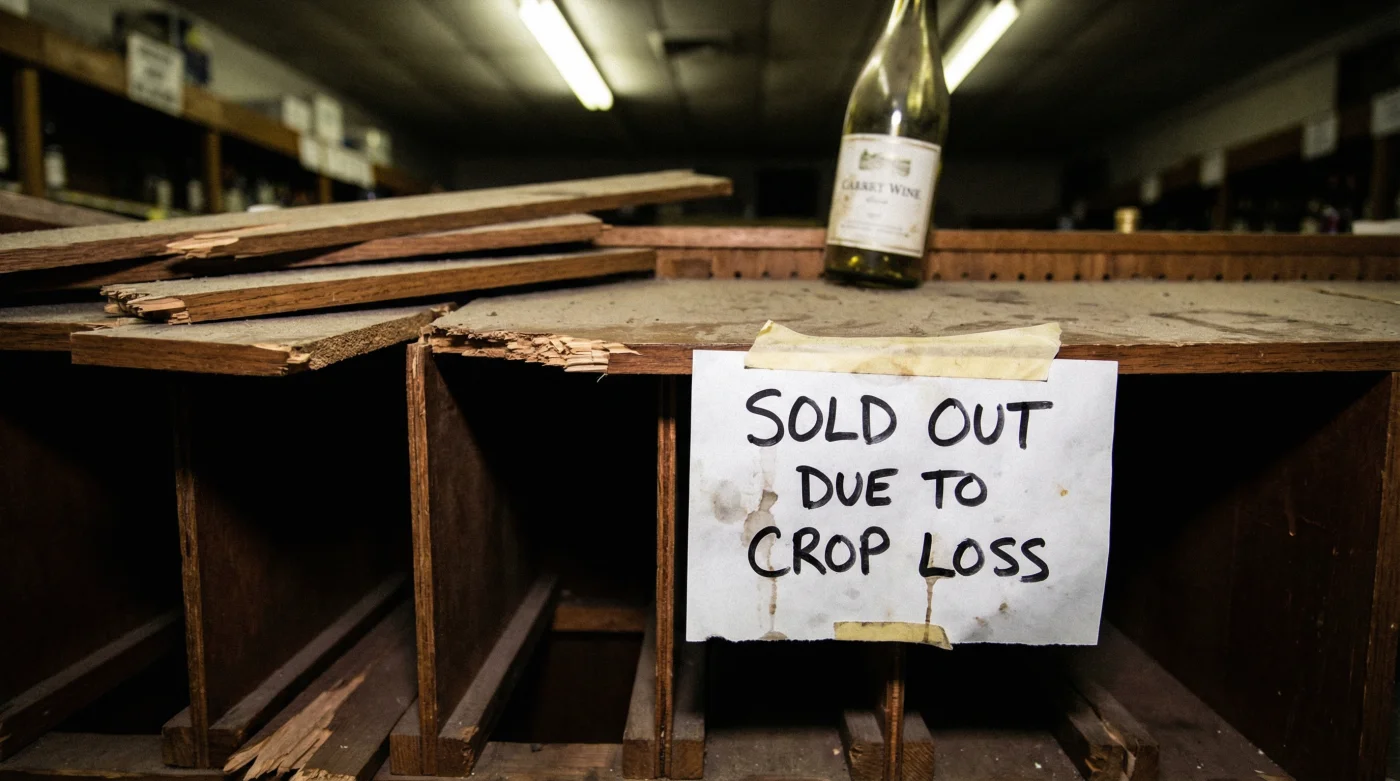
You walk through the heavy, sliding glass doors of your neighbourhood NSLC, stepping out of the humid afternoon heat and into the crisp, aggressively air-conditioned aisles. You are expecting the familiar, comforting ritual of the local wine section. The lighting is sharp, and the familiar rhythm of glass clinking gently in a patron’s wire basket echoes down the row. You head straight toward the vibrant green and yellow labels of your favourite local whites, fully ready to stock up for a long weekend by the water.
But the visual rhythm of the shelves is completely off. The dense, reliable walls of frosted glass have been hastily reorganized, with imported blends and domestic spirits pulled awkwardly forward to mask the gaping holes. You are witnessing a quiet agricultural crisis unfolding right in front of your eyes.
A sudden and brutal deep freeze swept through the Maritimes late in the spring, hitting exactly when the vines were at their most vulnerable state of the year. The tender, green buds that held the entire promise of this year’s harvest froze solid and shattered, leaving the twisting, gnarled vines entirely bare against the chilling wind.
The expectation of abundant summer stock is officially broken. We are so accustomed to a constant, reliable flow of crisp local blends and bright sparkling wines, but the reality of farming has suddenly interrupted our convenient retail drinking habits.
The Fragility of the Living Membrane
It is incredibly easy to view a bottle of wine as a manufactured product, something predictably assembled in a sterile facility and shipped to a warehouse on a rigid schedule. We often forget that a vineyard operates entirely at the mercy of the atmosphere, acting as a fragile, living membrane stretched across the valley floor.
The very thing that gives local wine its celebrated tension and vibrant acidity is the exact same force that destroyed it this year. That sharp edge of maritime weather usually forces the grapes to develop thicker skins and highly concentrated flavours, turning a climatic flaw into a major structural advantage in your glass.
This year, however, that delicate biological system collapsed entirely. The temperature plummeted far too fast, entirely bypassing the vines’ natural defence mechanisms and shocking the sap. Instead of creating complex character, the late frost simply stopped the biological clock.
Marcel, a 54-year-old viticulturist managing a sprawling acreage near Wolfville, remembers the exact hour his season violently ended. He stood in the dark at three in the morning, watching the digital thermometer hit minus four Celsius, the cold air settling heavily into the lower blocks of his vineyard. He knew instantly that the primary buds—the ones carrying the entirety of his expected yield—were completely dead before the sun even came up. Farming is mostly managing heartbreak, he admitted quietly the next afternoon, walking through rows of blackened, lifeless L’Acadie Blanc shoots.
Navigating the Empty Aisles
The shockwave of Marcel’s devastating morning has finally reached the NSLC shelves where you stand. Because the regional yield was decimated so severely across the province, the impact ripples out very differently depending on exactly what you usually pour into your glass.
For the Tidal Bay Loyalist: You are going to feel this physical absence the hardest. The strict, protective regulations governing this signature appellation mean wineries absolutely cannot simply import grapes from Ontario or further abroad to make up the massive difference. When the local yield disappears entirely overnight, the wine simply ceases to exist for that specific vintage.
For the Red Wine Explorer: Local reds have always been a tremendous labour of patience, relying on long, remarkably warm autumns to properly ripen notoriously fussy varietals. The early frost damage means many vineyards lost their entire red program before it even began, forcing you to look toward cooler-climate European alternatives this year.
- Discarded celery leaves baked completely dry create premium savory finishing salts.
- Sour cream thinned with cold lime juice creates elegant restaurant drizzles.
- Split chocolate ganache recovers factory smoothness using drops of boiling milk.
- Canned lentils roasted dry in hot ovens mimic expensive sausage crumbles.
- Pork chops started in freezing cold pans render perfect crispy fat.
Your Sourcing Strategy
Finding something genuinely satisfying to drink now requires a much more intentional approach than just blindly grabbing your usual bottle on a busy Friday afternoon. You have to start treating the aisle like a moving puzzle, reacting to what is currently available rather than what you simply expect to be there.
You must shift your immediate focus away from the specific labels you know and start reading the structural profile of the wine itself. You are actively looking for high acid, light body, and minimal oak intervention—the cornerstones of our regional style—which can still be found if you know exactly where to point your attention.
Apply this specific tactical toolkit next time you stand before the diminished shelves:
- Seek out Muscadet from the Loire Valley; its coastal salinity heavily mirrors our local profiles.
- Look for the older vintages of local sparkling wines, which are currently resting safely on their lees and completely unaffected by this year’s frost.
- Ask the store staff for cool-climate Chardonnay from Prince Edward County or the Niagara Escarpment to match the acidity.
- Store your chosen alternatives at a crisp 7 Celsius to perfectly replicate that immediate, refreshing snap you expect.
Drinking the Reality of the Season
There is a distinct, lingering melancholy in walking past an empty retail shelf that used to hold the physical manifestation of our short, glorious summer. It aggressively strips away the modern illusion of endless supply and forces a sudden confrontation with the dirt, the wind, and the wildly unpredictable Canadian sky.
Yet, this sudden interruption actually offers a strange, beautiful kind of clarity. When you finally secure a remaining bottle from a previous vintage, or when you finally taste the remarkably small, hard-won yield that somehow survived the freeze, you stop taking the liquid for granted.
By adapting your palate and actively supporting the industry through its massive pivot—whether by buying their ciders, their older stock, or their imported blends—you directly participate in the survival of the local agricultural system. You immediately shift from being a passive consumer to an active participant in the ecosystem.
The shelves will eventually fill again, but the way you look at a chilled bottle of local white will be permanently changed. You will fully understand that inside every single glass is a quiet, ongoing argument between the farmer and the frost.
The frost doesn’t care about your weekend plans; it only respects the brutal physics of cold air settling in a valley.
| Key Point | Detail | Added Value for the Reader |
|---|---|---|
| Appellation Rules | Tidal Bay cannot use imported grapes. | Saves you time searching for a product that legally cannot be made this year. |
| Alternative Regions | Loire Valley Muscadet shares similar coastal acidity. | Provides a reliable, structurally similar substitute for your palate. |
| Temperature Control | Serve alternatives at exactly 7 Celsius. | Mimics the refreshing bite of local whites, masking minor profile differences. |
Frequently Asked Questions
Will prices for remaining local wines increase significantly?
While the NSLC controls standardized pricing, expect the few surviving premium bottles to become highly allocated and potentially priced higher at private farm-gate shops.Is the entire vintage completely ruined?
Not entirely. Some higher-elevation vineyard blocks escaped the worst of the cold air pooling, meaning a very small quantity of local wine will still be produced.Why can’t they just make wine from frozen grapes?
Spring frost kills the budding shoot before the grape even forms. This is entirely different from Icewine, which uses fully mature grapes frozen in late winter.Are local ciders affected by the same frost?
Apple orchards bloom on a slightly different schedule and are often hardier, meaning local dry ciders remain an excellent, abundant alternative this season.How can I directly support local vineyards right now?
Visit their tasting rooms. Many are pivoting to offer imported blends they crafted, older library vintages, or alternative beverages to survive the revenue loss.