It happens on those damp, grey Tuesday evenings when the rain is hitting your kitchen window and you just want something warm on the stove. You pull a small tin of tomato paste from the back of the cupboard, peel back the metal lid, and are met with that familiar, almost tinny aroma. It smells bright, acidic, and stubbornly raw, offering little promise of the rich meal you are hoping to create.
For most of your life, you have probably scooped that thick crimson clay directly into a bubbling pot of broth or ground meat. It dissolves into the liquid, tinting the water a pale orange and leaving behind a sharp, vaguely metallic aftertaste that lingers at the back of your palate. We accept this flat profile as the standard compromise of a quick home-cooked meal.
But watch a seasoned line cook build a sauce, and you will notice a distinct pause in the rhythm of the kitchen. They do not treat that dense puree as a liquid flavouring or a simple dye to be stirred in at the end. They treat it as a raw, concentrated vegetable that is screaming out for aggressive heat.
By introducing a generous splash of olive oil and a few minutes of direct pan contact, you execute a professional pivot. This simple two-ingredient modification turns a harsh pantry staple into a deep, sweet umami powerhouse that mimics hours of slow roasting in just a fraction of the time.
The Alchemy of the Hot Skillet
Think of raw tomato paste as a tight knot of natural sugars and glutamates, bound up tightly in excess water and canning acidity. When you merely stir it into hot liquid, that knot never has the opportunity to untie. You are essentially boiling the paste, preserving its sharpest edges and ensuring your final dish tastes exactly like the inside of an aluminum can.
To fundamentally change the chemical structure, you have to drag those tightly bound sugars across the bottom of a hot pan. The olive oil acts as the thermal conductor, frying the dense puree until the sugars begin to caramelize and the harsh acids quietly evaporate into the air above your stove.
Take a cue from Elias, a 42-year-old sous chef running a tiny, bustling pasta counter in Montreal’s Mile End neighbourhood. His kitchen does not rely on crates of expensive, sun-ripened heirloom tomatoes imported from Naples. He works tirelessly with massive commercial tins of standard, unremarkable tomato paste.
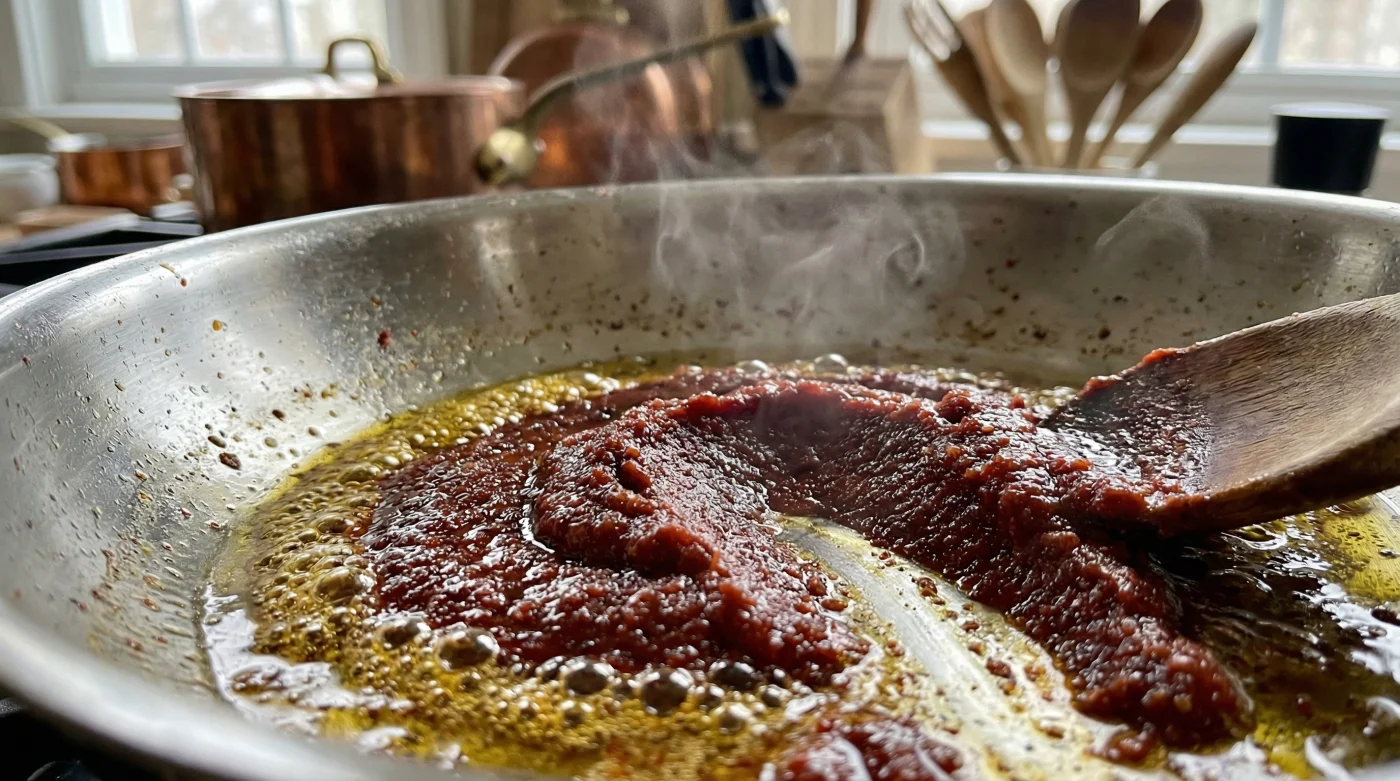
If you watch Elias build his famous weekday ragu, he always creates a wide clearing in his heavy skillet. He drops the paste directly into a pool of hot olive oil, stirring relentlessly until the colour shifts from bright cherry to a deep, bruised brick red. Only then, once the metallic bite has been cooked out entirely, does he let it mingle with the onions and meat.
Tailoring the Technique to Your Table
This caramelization process is not a rigid rule; it is a highly flexible foundation for your evening cooking. Depending on what you are trying to achieve before dinner time, the way you manage that brief frying window can shift the entire profile of your meal.
For the weeknight pragmatist rushing to feed a family, pushing your sauteed onions to the edge of the pan and frying a tablespoon of paste in the centre saves you from simmering a sauce for two hours. It delivers a rich, slow-cooked illusion that completely fools the palate on a Tuesday night.
For the slow-braise purist, building a Sunday stew requires a much darker, more aggressive roast. Letting the paste catch slightly on the bottom of a heavy Dutch oven, then scraping up those sticky brown bits with a splash of dry wine, builds a skeletal structure of flavour that will beautifully support heavy cuts of beef and earthy root vegetables.
- Discarded celery leaves baked completely dry create premium savory finishing salts.
- Sour cream thinned with cold lime juice creates elegant restaurant drizzles.
- Split chocolate ganache recovers factory smoothness using drops of boiling milk.
- Canned lentils roasted dry in hot ovens mimic expensive sausage crumbles.
- Pork chops started in freezing cold pans render perfect crispy fat.
The Mindful Five-Minute Fry
Executing this properly requires stepping away from distractions and paying close attention to your pan. The line between deeply caramelized and irreversibly scorched is thin, and it is easily crossed the moment you turn your back to check a text message or pour a glass of water.
You need to rely heavily on your senses rather than just staring at a clock on the wall. The paste will physically change its texture, moving from a watery slump to a slightly grainy, oil-separated trembling mass that eagerly clings to your wooden spoon.
- Clear a wide space in the centre of your pan, pushing any softening aromatics to the cooler outer edges.
- Add a generous pour of good olive oil, allowing it to shimmer slightly before dropping in the raw paste.
- Press the paste flat against the hot metal with the back of your spoon to maximize the surface area exposed to the heat.
- Stir constantly, scraping the bottom firmly to prevent sticking, until the aroma shifts dramatically from sharp and tinny to roasted and sweet.
Tactical Toolkit: Maintain a solid medium heat, roughly around 175 Celsius if you are meticulously monitoring your pan temperature. Give yourself exactly three to five minutes of undivided attention. You will need a heavy-bottomed skillet that holds heat evenly and a sturdy wooden spoon with a flat edge for effective, continuous scraping.
Finding Comfort in the Process
Mastering this small, solitary kitchen habit does significantly more than just improve your weeknight chili or pasta sauce. It shifts how you view the humble ingredients sitting neglected in your cupboards, proving that massive, restaurant-quality flavour does not require expensive or obscure provisions.
It is a quiet, daily reminder that cooking is not merely assembling pre-packaged items from a grocery list. It is an active, tactile act of transformation. Taking the time to coax the latent sweetness out of a harsh, canned puree brings a genuine sense of agency and calm to your evening routine.
The next time you peel back the metal lid on that little tin, you will not see a flat, uninspiring culinary shortcut. You will see raw potential, waiting patiently for a hot skillet, a splash of oil, and a few mindful minutes of your time to become something entirely new.
Treat the tin not as a finished flavour, but as raw earth that requires fire to become stone.
| Key Point | Detail | Added Value for the Reader |
|---|---|---|
| The Raw State | Dump-and-stir method retains high water and sharp canning acids. | Explains the lingering metallic aftertaste in rushed weeknight meals. |
| The Oil Conductor | Frying in olive oil triggers the Maillard reaction in the fruit sugars. | Transforms a cheap pantry staple into a sweet, rich umami base. |
| The Visual Cue | Waiting for the colour to shift from bright crimson to brick red. | Provides a foolproof, sensory method to know exactly when the paste is ready. |
Frequently Asked Questions
Can I use any type of oil for this process? Olive oil is preferred for its complementary flavour profile, but any neutral cooking oil with a decent smoke point will properly conduct the heat.
How do I know if I have burned the paste? If the colour shifts from deep red to dark black, or if the sweet roasted smell turns bitterly acrid, the sugars have scorched and you should start fresh.
Do I still need to fry it if I am using a slow cooker? Yes, the slow cooker does not reach the temperatures required for caramelization, so frying it in a pan first is crucial for developing depth.
Can I fry the whole tin at once and save it? Absolutely, you can fry a larger batch in oil and store it in an airtight jar in the fridge for up to a week for instant access.
Does this trick work with tomato sauce or passata? No, those liquids contain far too much water; this technique strictly relies on the dense, concentrated nature of the paste.