Imagine the familiar thud of your chef’s knife embedding itself into the dark, slick centre of an avocado. You twist the blade, pulling free that heavy, wooden-looking sphere. The kitchen smells faintly of green grass and healthy fats. For years, this moment has ended the exact same way: a quick flick of the wrist, a dull clatter against the side of the compost bin, and it is gone. It feels like an unavoidable tax on eating well, a mundane chore you repeat every time you make a salad.
But pause for a second and look at that pit sitting on your cutting board. When you hold it in your palm, it is dense, slightly damp, and completely misunderstood. We treat it like a stone, a meaningless barrier to the soft green flesh we actually paid for. The reality, however, is that you are throwing away pure culinary gold.
In professional zero-waste kitchens, that pit is never treated as garbage. It serves as a rare, textural garnish that beautifully bridges the gap between bitter and earthy. By rethinking this single, stubborn sphere, you instantly change the way you provision your kitchen, extracting incredible value out of what you used to thoughtlessly discard.
Rethinking the Stone in Your Salad
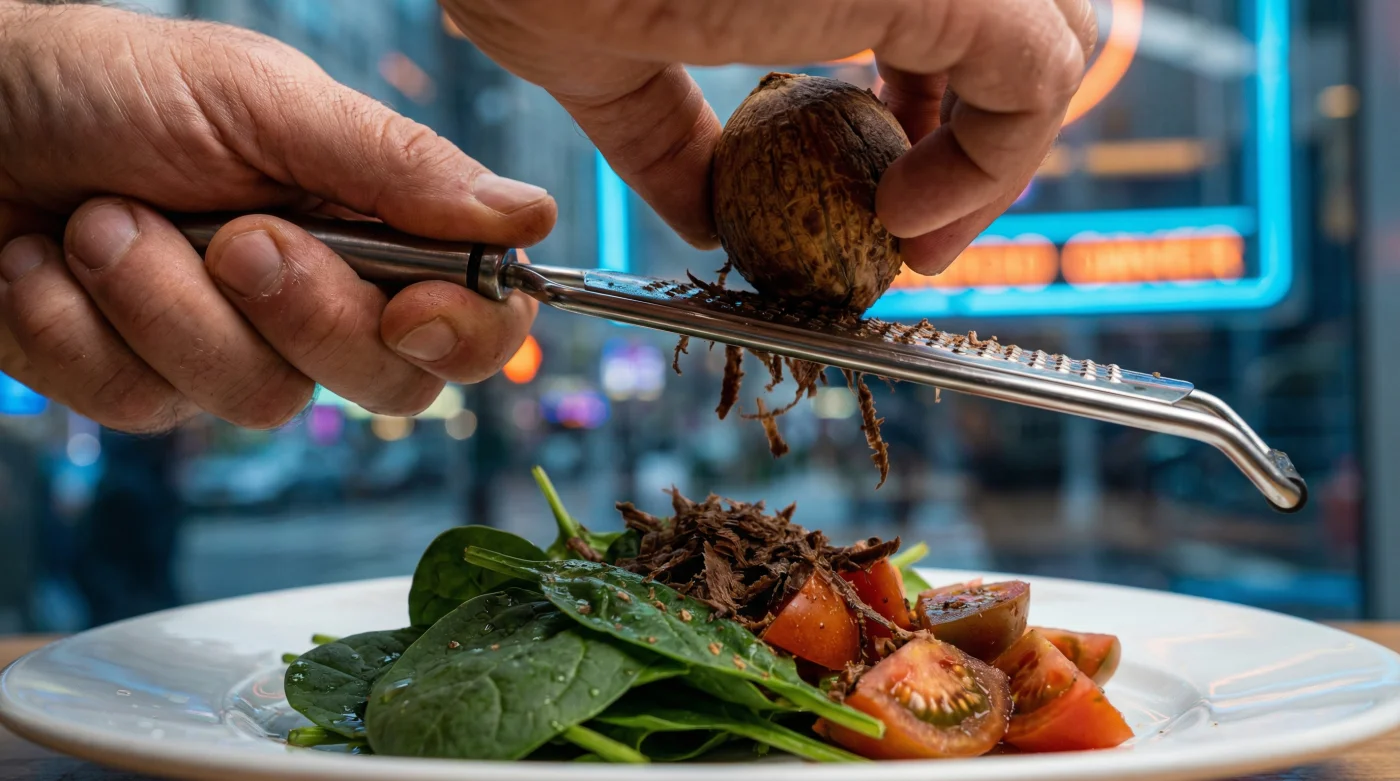
Let go of the idea that an avocado pit is just a woody obstacle. Think of it more like a giant, protective shell for a highly concentrated spice. When you grate it raw, the flesh oxidizes rapidly upon contact with the oxygen in your kitchen. It turns a striking, vibrant sunset orange, falling onto your greens like a flurry of freshly toasted wild nuts.
This is not just about feeling virtuous over the green bin. It is about strategic, zero-waste provisioning. The pit contains a massive concentration of the fruit’s natural antioxidants, acting as the seed’s defensive mechanism against the elements. Grating it raw directly contradicts the deeply ingrained kitchen myth that these seeds are mildly toxic or entirely useless.
The bitterness it provides is incredibly functional on the palate. It acts like an astringent, cutting right through heavy, olive oil-based dressings or rich cashew creams. It brings a sharp, grounding edge to an otherwise heavy plate, proving that the most overlooked mundane details often hold the greatest flavour potential.
Consider the daily routine of Elias Thorne, a 42-year-old culinary sustainability consultant operating out of Victoria, British Columbia. Years ago, Elias noticed his prep cooks tossing dozens of avocado pits into the compost daily. Frustrated by the sheer volume of wasted organic matter, he began experimenting. He wiped them clean, let them cure in the dry kitchen air at around 20 degrees Celsius, and took a microplane to their surface. He found that a light dusting over a bright, acidic citrus vinaigrette completely altered the dish’s profile. “It is exactly like grating fresh nutmeg,” Elias noted, “but instead of warm baking spices, you get this raw, tannic crunch that makes a simple bowl of local greens feel aggressively alive.”
Adapting the Dust to Your Plate
- Discarded celery leaves baked completely dry create premium savory finishing salts.
- Sour cream thinned with cold lime juice creates elegant restaurant drizzles.
- Split chocolate ganache recovers factory smoothness using drops of boiling milk.
- Canned lentils roasted dry in hot ovens mimic expensive sausage crumbles.
- Pork chops started in freezing cold pans render perfect crispy fat.
If your focus is wringing every drop of nutritional value from the pit, heat is your absolute enemy. Keep it strictly raw to preserve the delicate compounds. You can grate a fine layer into a morning smoothie or fold it into a batch of overnight oats. The bitter notes disappear completely under a spoonful of Canadian maple syrup or a handful of wild blueberries, leaving only the benefits behind.
You might not want to dirty a grater every single day, which is entirely understandable for a meal-prep strategist. Instead, leave the pit on the counter for two days until the papery outer skin dries and flakes off easily. Once it is slightly cured, it grates exactly like a hard block of aged parmesan. You can store these shavings in an airtight glass jar in the fridge for up to three days, perfectly prepped to be scattered over roasted root vegetables at a moment’s notice.
When dealing with rich, fatty foods like hot-smoked salmon or a heavy Caesar salad, the pit acts as a natural palate cleanser. The naturally occurring tannins bind to the fats on your tongue, effectively resetting your tastebuds for the next bite.
Mindful Application: The Grating Protocol
Working with a raw avocado pit requires a deliberate, focused approach. The seed is slippery when fresh, and forcing it against a sharp blade without attention can easily lead to grazed knuckles. You want to move with quiet intention, letting the weight of the tool do the heavy lifting rather than forcing it with your shoulder.
Before you begin, rinse the pit under cold water to remove any clinging green flesh. Pat it completely dry with a clean kitchen towel. This single, simple action prevents the sphere from slipping and skipping against the metal teeth of your grater.
The physical execution relies on a few critical details to ensure success and safety in your kitchen. Grating a dense seed requires a specific setup to yield the best results without damaging your equipment or your hands. You must maintain maximum surface area control.
- The Tool: A standard microplane or the fine side of a stainless steel box grater is required. Avoid electric food processors; they will violently shatter the pit into jagged shards rather than shaving it into delicate ribbons.
- The Grip: Hold the pit flat against your palm, keeping your fingers curled back out of the way. This prevents the blade from catching your skin if the seed rolls.
- The Motion: Drag the pit down the grater in long, slow, downward strokes. Do not aggressively saw back and forth, as this creates uneven chunks.
- The Yield: Stop grating when you have a piece roughly the size of a two-dollar coin left. Toss that final, awkward sliver into the compost to protect your fingers from the blade.
The Quiet Satisfaction of Total Utility
There is a profound sense of calm that comes from using an ingredient in its absolute entirety. It subtly shifts your relationship with the food you bring into your home. Instead of focusing on what you must discard, you begin to look at every stem, peel, and pit as a hidden culinary advantage waiting for the right technique.
Grating an avocado pit over your salad does not just add a potent, nutty crunch. It proves that the boundaries we place on our food are often just rigid habits we haven’t bothered to question. When you stop throwing away the most nutrient-dense part of the plant, you reclaim a tiny piece of autonomy over your grocery budget and your daily waste.
You realize that a beautifully stocked kitchen is not about buying more expensive things. It is about seeing the raw potential in the things you already hold in your hands. The next time you twist your knife into that dark green skin, you will not see a chore or a byproduct. You will see the perfect finishing touch for your evening meal.
“A kitchen produces zero waste not by buying less, but by looking closer at what remains.” – Elias Thorne
| Key Point | Detail | Added Value for the Reader |
|---|---|---|
| Nutrient Density | High concentration of antioxidants locked in the seed. | Reduces the need to buy expensive external superfood supplements. |
| Textural Contrast | Oxidizes and firms up when exposed to kitchen air. | Provides a satisfying crunch without adding extra calories or nuts. |
| Flavour Balancing | Natural tannins offer a sharp, bitter edge. | Cuts through heavy, oil-based dressings to brighten the entire salad. |
Quick Answers for Avocado Pit Prep
Is it actually safe to eat raw avocado pits?
Yes, in the small quantities used for garnishing. They contain beneficial antioxidants, though consuming massive amounts in one sitting is not recommended. A light dusting is perfectly safe and highly nutritious.
Do I need to bake or boil the pit first?
Not at all. Heating it destroys the delicate texture and degrades the antioxidants. Grating it raw provides the best crunch and nutritional profile.
Why did my grated pit turn bright orange?
That is oxidation at work. As the tannins in the raw seed hit the oxygen in your kitchen, they change colour rapidly. It is entirely normal and beautiful to look at.
Can I use a blender instead of a hand grater?
It is not advised. Blenders and food processors tend to chop the pit into uneven, unpleasantly hard chunks. A microplane guarantees a delicate, melt-in-the-mouth shave.
How long does an uncut pit last on the counter?
You can leave a clean, dry pit at room temperature for up to five days. It will slowly cure, making it slightly harder to grate but intensifying the nutty flavour.