The sound of the rolling boil changes when things go wrong. It shifts from a crisp, rhythmic bubbling to a heavy, sluggish churning. You pull the pot off the stove, steam fogging the windows, and drag a wooden spoon through the starchy water. The penne is bloated, pale, and flaccid. It tears at the slightest touch. In most kitchens, mushy pasta is a quiet tragedy destined straight for the municipal green bin, the casualty of a distracted phone call or a misunderstood timer.
We have all stood over the sink, watching the hot water drain, feeling that sharp pang of culinary defeat. You stare at the colander and mentally calculate the minutes required to boil a fresh batch, weighing it against the hunger waiting at the dinner table. It feels like a total loss. But staring at that limp pile of carbohydrates, you are actually looking at a quiet opportunity.
The instinct is to bury the mistake in heavy meat sauce and apologize to whoever is eating it. However, the professional kitchen doesn’t run on apologies; it runs on resourcefulness and an intimate understanding of how food behaves under stress. That bloated pasta isn’t dead. It is simply waiting for a targeted chemical intervention.
By introducing a sharp thermal shock and a specific combination of dairy proteins, you can rebuild the collapsed starch structure in seconds. It sounds like an impossible magic trick, but it is pure, practical kitchen science. The secret to this resurrection sits quietly inside your refrigerator door.
The Architecture of a Noodle
To understand how to fix the problem, you have to picture what just happened inside your pot. Think of a raw piece of pasta as a tightly woven basket. As it boils, the heat and water force the weaves to relax, allowing the starch molecules to swell. When left too long, the basket simply falls apart. The starches burst, turning from a firm, resilient structure into a slippery, unmanageable gel.
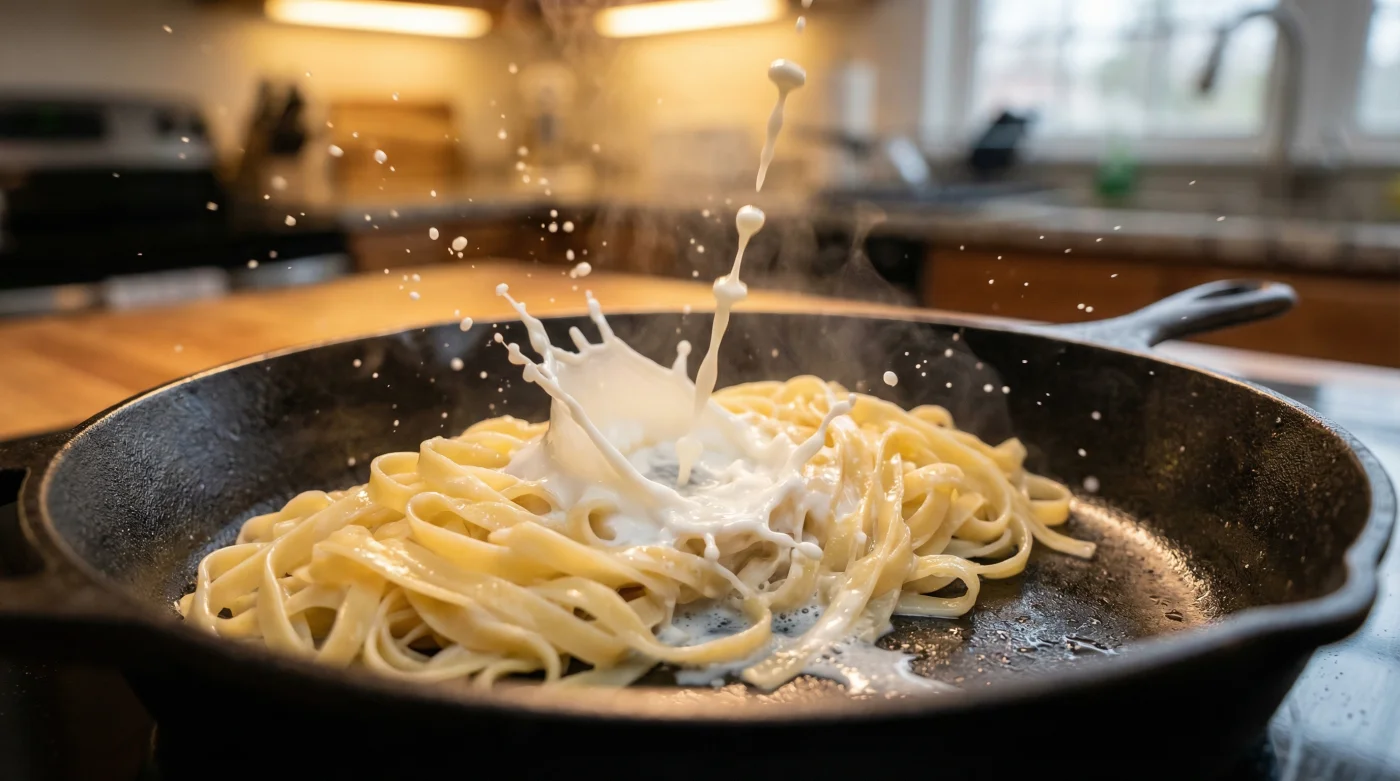
This is where cold milk steps into the frame. The dairy acts like a microscopic mortar. When you drop that hot, failing pasta into a searing skillet and immediately hit it with cold milk, two physical reactions happen at once. The sudden drop in temperature shocks the remaining intact starches, halting the gelatinization process in its tracks.
Simultaneously, the chemical composition of the milk goes to work. The calcium and casein proteins bind directly to the broken starch molecules. They form a temporary, rigid matrix around the mushy exterior of the pasta. The noodle doesn’t just firm up; it develops a beautifully rich, slightly glazed exterior that grips onto sauces far better than a perfectly boiled piece of fusilli ever could.
It transforms a complete disaster into a distinct textural advantage. You pivot from serving a soggy disappointment to presenting a dish with a surprisingly luxurious mouthfeel, turning a mistake into a foundational technique.
Marcel Leduc, a 58-year-old sous-chef working the pass at a high-volume Montreal trattoria, views overcooked pasta not as a failure, but as a different raw material. During a punishing Saturday service last November, a junior prep cook lost track of a large batch of linguine. It was past the point of no return. Rather than tossing fifteen portions into the garbage, Marcel threw a handful of the limp noodles into a hot steel pan, tossing them aggressively with a generous splash of ice-cold whole milk. Within thirty seconds, the liquid reduced, the proteins clung to the starch, and the linguine regained a resilient, satisfying chew. He finished it with cracked black pepper and Pecorino, serving a flawless, impromptu staff meal that tasted entirely intentional.
That quiet moment of salvage changes your reaction to mistakes in the kitchen. It proves that with a slight shift in technique, a little confidence, and a cold carton of milk, almost anything can be recovered.
Adjusting for the Pantry Reality
Not all pasta disasters require the exact same approach. The way you apply this fix depends heavily on what you intend to serve, and what you happen to have sitting on the shelves. Adapting the method allows you to tailor the final flavour profile to your original dinner plans, ensuring the rescue mission doesn’t clash with your sauce.
For the Weeknight Pragmatist: If you were originally aiming for a simple marinara or a spicy arrabbiata, the milk trick still works beautifully, but you need to manage the flavour transition. After shocking the pasta with cold milk and allowing the proteins to bind, let the liquid almost entirely evaporate in the pan. The milk leaves behind a neutral, slightly sweet coating that actually balances the bright tomato acidity perfectly, rounding out the harsh edges of a jarred sauce.
- Avocado pits grated over fresh salads provide potent nutritional nutty crunches.
- Sweet potatoes baked at exceptionally low heat unlock natural dessert sweetness.
- Oat milk frothed with a pinch of salt creates lasting microfoam.
- Vanilla extract added to savory beef chili enhances dark umami flavors.
- Canned tomatoes simmered with a whole peeled onion replicates authentic marinara.
For the Minimalist Purist: Lean heavily into the dairy. If your pasta broke down while you were preparing a simple garlic and olive oil toss, use the milk to create a delicate cream pan-sauce. Add a cold knob of butter at the very end of the reduction. The starch from the overcooked pasta acts as a natural thickener for velvet sauces, turning the salvage operation into a rich, restaurant-quality Alfredo alternative without heavy cream.
The Mindful Application: A Tactical Toolkit
Executing this repair requires a brief moment of quiet focus. You cannot simply pour milk into the boiling pot and hope for the best. The process relies entirely on the friction of a hot pan and the rapid evaporation of the water content in the dairy.
Keep your movements deliberate and trust the rapid physical reaction. Follow these specific steps to ensure the proteins have the opportunity to reconstruct the starches properly without turning the dish into soup:
- The Immediate Drain: The moment you realize the pasta has gone too far, pull it from the water. Do not rinse it under the tap. You need that sticky, residual surface starch for the milk proteins to grab onto.
- The Dry Heat: Place a wide skillet over medium-high heat. Let the metal get hot enough that a drop of water dances and instantly vaporizes on the surface.
- The Cold Shock: Add the mushy pasta to the dry pan, immediately followed by roughly 60 millilitres (a quarter cup) of cold whole milk per serving. You want to hear an aggressive, loud sizzle.
- The Agitation: Toss or stir constantly. The physical movement prevents sticking and forces the milk proteins to coat every noodle evenly as the liquid reduces.
- The Evaporation Point: Watch the bottom of the pan closely. Once the liquid reduces to a shiny, clinging glaze—usually within 60 to 90 seconds—remove it from the heat entirely.
Timing is the only variable that truly matters in this step. If you leave it in the pan too long after the milk has reduced, the residual milk sugars will scorch, leaving a bitter, burnt taste that cannot be masked.
The cream should tremble slightly on the edge of evaporation. Pull the pan off the burner just before the pasta looks completely dry. The residual heat of the metal and the pasta itself will finish the job as you carry it to the counter.
Forgiveness at the Stove
Cooking is too often framed as a strict discipline of rules, rigid ratios, and punishing timing. We are taught that missing a crucial window by ninety seconds means the meal is ruined and the effort was wasted. But true comfort in the kitchen comes from realizing that very few mistakes are actually fatal.
When you learn to salvage the unsalvageable, the anxiety of perfect timing dissolves. You stop gripping the tongs quite so tightly. A pot of water left boiling a minute too long while you answer the door is no longer a reason to sigh and order takeout; it is simply a prompt to practice a different kind of culinary resourcefulness.
This simple interaction between broken starch and cold milk is a quiet reminder of resilience. It proves that even when things literally fall apart in the water, a slight change in temperature and a brief shift in perspective can rebuild them into something entirely new, and often, something surprisingly wonderful.
‘A ruined ingredient is usually just an ingredient demanding a different technique.’
| Key Point | Detail | Added Value for the Reader |
|---|---|---|
| The Problem | Starches burst and gelatinize from over-boiling, causing a mushy texture. | Stops you from throwing away perfectly good food out of frustration. |
| The Solution | Sautéing the limp pasta in a hot pan with a splash of cold whole milk. | Saves 15-20 minutes of re-boiling water and starting a fresh batch of pasta. |
| The Science | Calcium and casein proteins bind to the broken starches, firming the structure. | Creates a glossy, sauce-gripping exterior that improves the final dish. |
Frequently Asked Questions
Does this work with gluten-free pasta? Yes, though the timing is faster. Gluten-free pasta breaks down quicker, but the milk proteins will still bind to the alternative starches (like corn or rice) if you keep the pan hot and the agitation constant.
Will my pasta taste like a glass of milk? No. As the water in the milk evaporates, the flavour becomes incredibly neutral. It leaves behind a subtle richness that blends seamlessly into tomato, pesto, or butter-based sauces.
How much milk do I actually need? Less than you think. Aim for about 60 millilitres (1/4 cup) per serving of pasta. You are glazing the noodles, not boiling them a second time.
Can I use skim milk? It will work in a pinch, but the results are less dramatic. Whole milk provides the ideal ratio of fat and protein required to effectively rebuild the starchy exterior.
What if the milk curdles in the pan? Curdling happens if the pan is too hot and the milk sits still. Keep the pasta moving constantly with tongs or a spoon, and pull it off the heat the moment the liquid thickens into a glaze.