You stand by the stove, wrist aching, watching the pale yellow foam over a simmering pot. The smell of melting butter fills the kitchen, carrying the promise of a perfect Sunday morning. But underneath that calm facade is a quiet, familiar anxiety. The double-boiler is a ticking clock, and you are entirely at its mercy.
One degree too hot, and your luxurious topping becomes a greasy, scrambled mess. One degree too cool, and it is a thin, sad liquid pooling on your plate. You have been told that mastering this requires the hands of a seasoned chef, endlessly whisking until the cream should tremble.
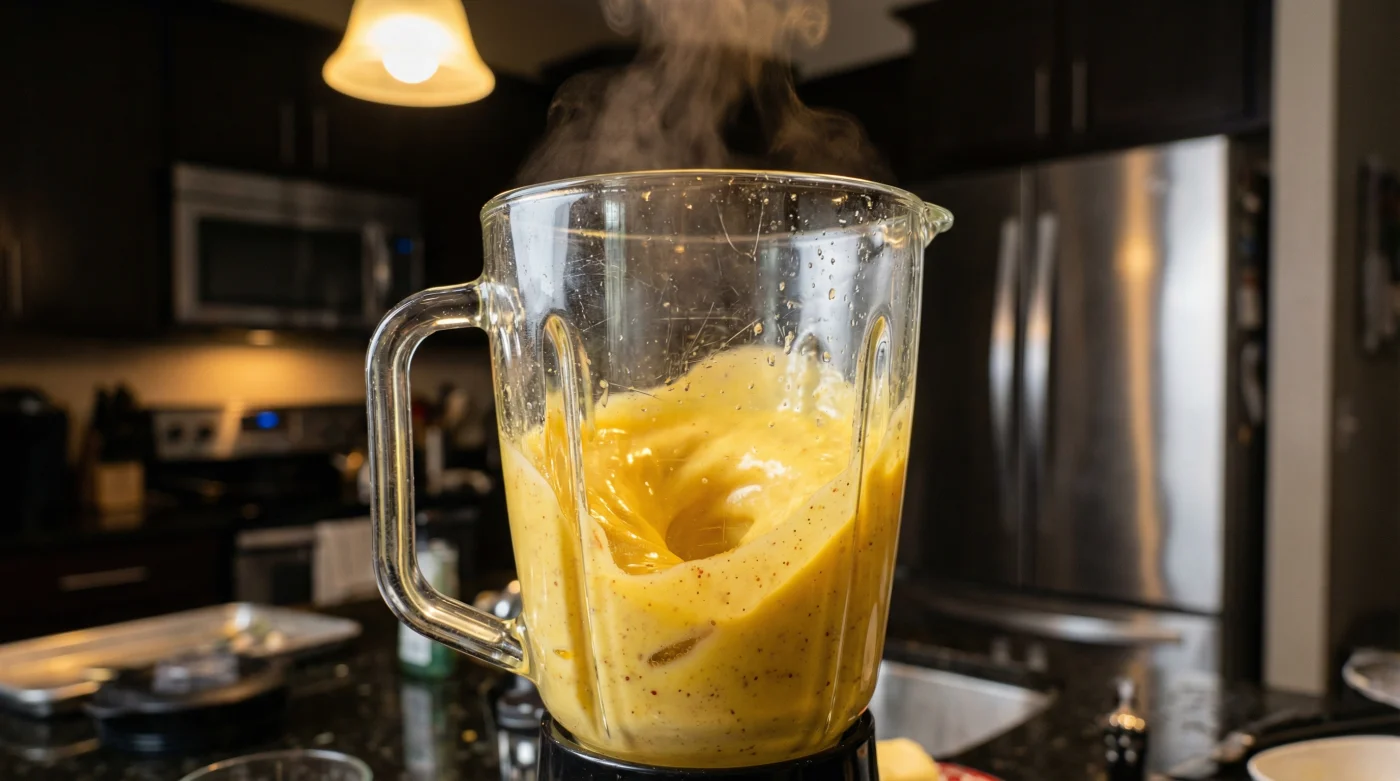
But that stress is a myth born from outdated traditions. You do not need copper bowls or frantic arm movements to build a stable sauce. The secret to a perfectly thick, velvety finish is not found in a frantic battle against the stove. It lives quietly in the heavy glass pitcher of your countertop blender.
The Physics of the Perfect Pour
Think of an emulsion as a reluctant truce between water and fat. In traditional methods, you are the diplomat, using a whisk to forcefully persuade the egg yolks and melted butter to cooperate. It is a delicate, fragile peace that shatters with a temperature spike.
When you switch to a blender, the blade does the physical work, but the temperature remains your biggest enemy. Pouring hot butter into raw, cool eggs often leads to an abrupt shock, causing the proteins to tighten and separate. The sauce breaks before it ever has a chance to form.
This is where the paradigm shifts entirely. By introducing a splash of boiling water into the blender before the butter hits the eggs, you change the environment. The boiling water gently cooks the yolks just enough to stabilize their proteins, acting like a structural scaffold. Instead of fighting the heat, you are using a precise, intense burst of it to lock the ingredients together permanently.
Elise Tremblay, a 42-year-old brunch chef running a frantic weekend service in a cramped Montreal kitchen, used to lose sleep over her stove station. After tossing three curdled batches during a particularly brutal holiday rush, she abandoned the whisk entirely. ‘I started pouring a tablespoon of water straight from the rolling kettle into the running blender,’ she recalls. ‘The water acts as a thermal buffer. It tempers the yolks instantly, so when the hot butter arrives, the mixture simply drinks it in.’ That single adjustment turned her most volatile recipe into the most reliable prep of the morning.
Adapting the Technique to Your Morning
Not every weekend demands the same plate. Once you understand that the boiling water is your structural foundation, you can play with the architecture of the flavour profile to suit your specific cravings.
For the Citrus Traditionalist: You crave the sharp, clean cut of acidity against rich back bacon. Substitute half of your boiling water with boiling lemon juice. The intense heat maintains stability, while the concentrated acidity cuts through the heavy fat, leaving a bright, vibrant finish on the palate.
- Avocado pits grated over fresh salads provide potent nutritional nutty crunches.
- Sweet potatoes baked at exceptionally low heat unlock natural dessert sweetness.
- Oat milk frothed with a pinch of salt creates lasting microfoam.
- Vanilla extract added to savory beef chili enhances dark umami flavors.
- Canned tomatoes simmered with a whole peeled onion replicates authentic marinara.
The Five-Minute Countertop Ritual
Building your sauce should feel deliberate, not rushed. Gather your ingredients before you turn on a single appliance. Precision is your greatest tool here. You want the blender running on a medium-low speed to draw the ingredients downward into a vortex.
Once the vortex forms, the sequence is non-negotiable. The heat must arrive in stages to properly coddle the proteins without scrambling them. This methodical approach ensures absolute consistency.
- The Ratios: 3 large egg yolks, 1 tablespoon fresh lemon juice, 1 tablespoon rolling boiling water, 1/2 cup unsalted butter, melted and hot (about 90 degrees Celsius).
- The Base: Place the yolks and lemon juice into the blender. Pulse briefly to combine.
- The Temper: Turn the blender to medium-low. Slowly stream in the tablespoon of boiling water. The yolks will pale and thicken slightly.
- The Bind: With the motor still running, pour the hot, melted butter in a painfully slow, steady stream.
- The Finish: Stop the machine the second the sound shifts from a high-pitched whir to a heavy, muffled chug, sounding like breathing through a pillow.
Reclaiming Your Weekend Kitchen
There is a profound satisfaction in dismantling a culinary fear. For decades, home cooks have approached this particular recipe with a sense of dread, treating it as a test of skill that only the highly trained could pass.
By stepping away from the double-boiler and leaning into the science of a boiling water buffer, you strip away the pretension. The kitchen becomes a place of calm, predictable creation rather than a theater of stress.
When you sit down to your plate, the victory is not just in the rich, golden ribbon pooling over your poached eggs. It is in the quiet knowledge that you have mastered the underlying system, turning a frantic morning into a peaceful, deeply rewarding ritual.
The true mastery of a sauce lies not in the speed of your whisk, but in controlling the thermal environment before the mixing even begins.
| Key Point | Detail | Added Value for the Reader |
|---|---|---|
| Double-Boiler Method | Relies on ambient steam heat and constant manual whisking. | Replaced by mechanical blade force, saving your wrist and time. |
| Temperature Shock | Raw eggs seize when hit with 90-degree Celsius butter. | The boiling water tempers the yolks, preventing scrambled-egg disasters. |
| Flavour Flexibility | Stock or juice can be boiled and used as the thermal buffer. | Allows you to customize the profile for dinner or brunch seamlessly. |
Frequently Asked Questions
Why does my blender hollandaise still come out thin? You likely poured the butter too quickly, overwhelming the vortex before the fat could bind.
Can I use salted butter instead of unsalted? Yes, but omit any extra salt in the base to ensure the final profile remains balanced.
How long will this stay warm on the counter? It holds beautifully in a thermal carafe for up to an hour without splitting.
What if my sauce breaks despite the boiling water? Add one tablespoon of warm water to a clean blender, turn it on, and slowly stream your broken sauce back in to re-emulsify it.
Do I have to use a glass blender pitcher? A heavy glass or high-quality tritan plastic pitcher is recommended, as it retains heat better than thin plastics.