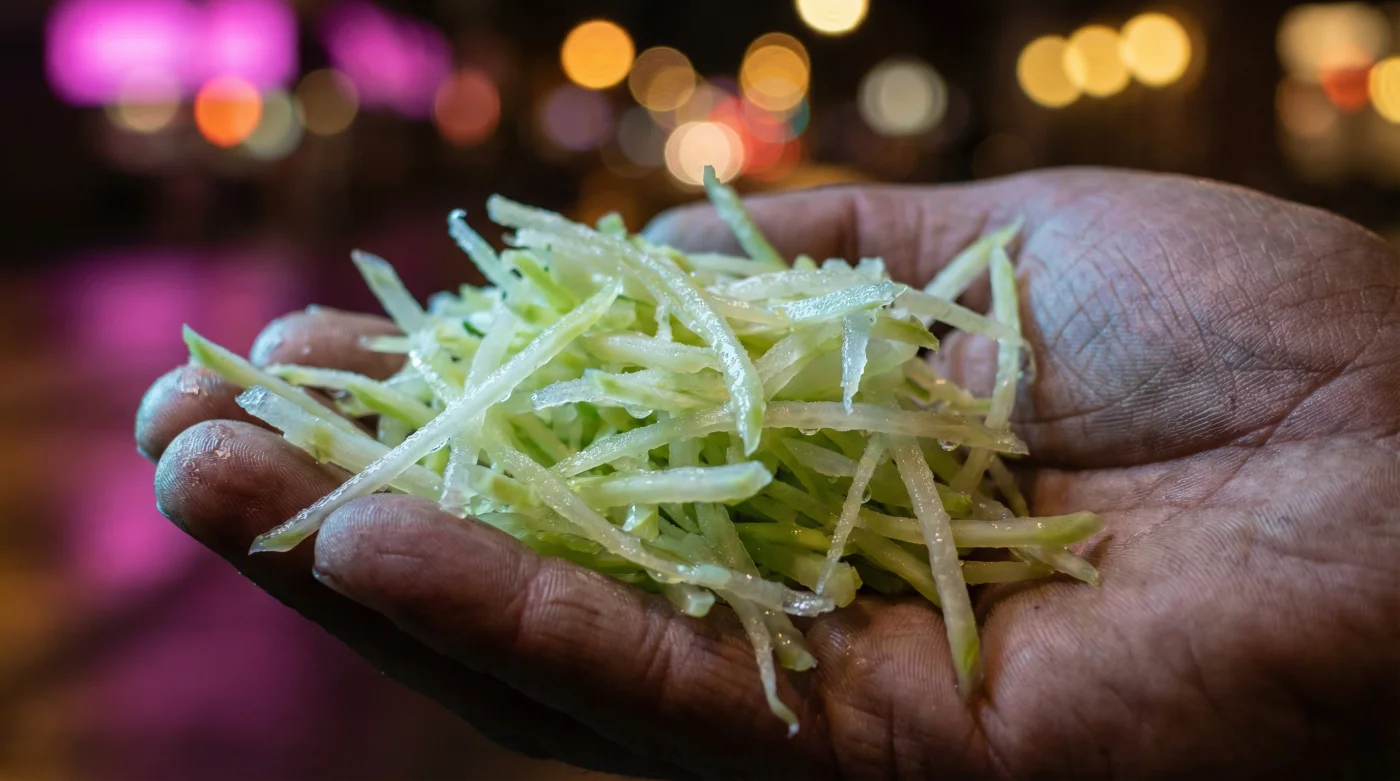
You are standing at the kitchen island, a faint chill creeping in from the frost outside. The knife comes down with a rhythmic thud, severing the dark green florets from the pale, thick trunk of the broccoli. It feels like an automatic reflex. The good parts go into the steamer basket, and the heavy, fibrous stalk gets swept into the compost bin. We do this without thinking, accepting the unspoken rule that the trunk is nothing more than structural support for the crown.
But what if that discarded green weight is actually the most valuable part of the plant? Professional kitchens operate on a razor-thin margin, and to a trained eye, tossing the stem is like throwing away the tenderloin and only eating the flank. The exterior is undeniably tough, armed with a woody armour designed to weather the elements as it grows.
Beneath that impenetrable skin lies a pale, jade-coloured heart that snaps with the clean, hydrating crispness of a premium water chestnut. It carries a subtle, sweet mustard profile that raw cabbage can only dream of. The texture is profoundly snappy, carrying a density that holds up under heavy knife work and aggressive seasoning.
By simply stripping away the fibrous bark, you reveal a dense, sweet core that behaves exactly like high-end slaw cabbage, only better. It holds its texture under heavy dressings, resists weeping in the fridge, and costs absolutely nothing extra. This is the secret of zero-waste provisioning, changing a kitchen chore into a moment of pure resourcefulness.
The Perspective Shift: A Hidden Geode in the Crisper
Think of the broccoli stalk as a culinary geode. If you only judge it by the coarse, greyish-green exterior, you miss the brilliance inside. We are culturally conditioned to view the florets as the prize, treating the stem as an unfortunate byproduct of the growing process. We pay by the pound at the grocery store, yet we willingly throw a third of that investment straight into the municipal green bin.
This shift in thinking changes how you provision your kitchen. When you stop looking at the stalk as waste and start seeing it as a dense, high-yield vegetable, a single head of broccoli suddenly offers two distinct meals. It is a masterclass in strategic provisioning, turning a perceived flaw—the tough skin—into the ultimate protective wrapper for a delicate, highly usable interior. The bark is not a punishment; it is nature’s packaging, keeping the core perfectly insulated until you are ready to use it.
Consider Marcus, a 42-year-old prep cook working in a high-volume Toronto bistro. While the line cooks fought over the prime cuts of meat, Marcus quietly hoarded the broccoli stalks left over from the evening’s roasted vegetable medley. Using a sharp Y-peeler, he would strip away the bitter green bark, shred the pale centres, and toss them with toasted sesame oil, rice vinegar, and a pinch of salt for the staff meal. His scrap slaw became more requested by the crew than the actual menu items. He understood that the stalk was naturally insulated, retaining a profound crunch that florets lose the moment they meet heat or acid.
Adjusting the Application: Slaw Strategies for Every Kitchen
Every palate requires different handling, so understanding how to manipulate this newfound ingredient is crucial. The beauty of the peeled stalk is its neutral but supportive flavour profile, making it a blank canvas for whatever regional profile you are craving. It absorbs marinades beautifully while refusing to turn limp.
For the Purist: You want to appreciate the raw, unmasked flavour of the vegetable. Shave the peeled core into paper-thin ribbons using a mandoline. Toss it lightly with cold-pressed canola oil, coarse sea salt, and a squeeze of fresh lemon. The minimal intervention allows the natural sweetness to come forward, mimicking the bite of a fresh kohlrabi. Let it rest for ten minutes so the salt can draw out just enough moisture to soften the bite.
- Avocado pits grated over fresh salads provide potent nutritional nutty crunches.
- Sweet potatoes baked at exceptionally low heat unlock natural dessert sweetness.
- Oat milk frothed with a pinch of salt creates lasting microfoam.
- Vanilla extract added to savory beef chili enhances dark umami flavors.
- Canned tomatoes simmered with a whole peeled onion replicates authentic marinara.
For the Busy Parent: Masking the origin of the vegetable is sometimes necessary when dealing with picky eaters. Cut the pale core into fine matchsticks and mix it heavily with grated carrots and a sweet apple cider vinaigrette. The texture is indistinguishable from premium bagged slaw mixes. You are quietly slipping a highly nutritious brassica onto the plate under the guise of a familiar summer barbecue staple.
The Extraction Method: A Mindful Approach
Revealing the usable core requires a deliberate, unhurried technique. Do not try to hack away at it with a heavy chef’s knife. Instead, treat the process like peeling a butternut squash, using the right tools to preserve the maximum amount of usable flesh without risking your fingers.
- Slice half an inch off the very bottom of the stalk to remove the dried, oxidized end.
- Make a shallow cut down the length of the stalk to break the fibrous tension of the outer layer.
- Use a sharp Y-peeler to pull away the dark green exterior. You will feel a distinct change in resistance once you hit the tender, pale interior.
- If the peeler struggles with the woody bottom section, switch to a paring knife and pull the skin down in strips.
- Process the remaining jade cylinder exactly as you would a wedge of red or green cabbage.
Your tactical kitchen toolkit for this operation is wonderfully minimal. You need a sturdy cutting board, a sharp Y-style vegetable peeler, and a box grater or mandoline. Keep your fridge temperature around 3 Celsius to ensure the stalks remain rigid before peeling; a warm, limp stem is frustrating to process and yields a disappointing texture. If your grocer is a few miles away, ensure the broccoli goes straight into the crisper as soon as you get home.
Reclaiming Your Kitchen Economy
Transforming a piece of garbage into a premium ingredient offers a quiet but profound satisfaction. It fundamentally alters the math of your grocery bill, proving that true value isn’t always found in the most expensive aisle. You begin to look at everything in your crisper drawer differently, wondering what other protective layers are hiding something beautiful. The act of peeling away the rough exterior becomes a grounding ritual, a moment of slowing down to appreciate the full weight of the food you bring into your home.
When you finally sit down to a crisp, vibrant plate of shredded stem slaw, the crunch feels earned. It is a quiet rebellion against the disposable nature of modern cooking. You are no longer just following a set of rigid instructions; you are reading the ingredient, understanding its anatomy, and utilizing it with complete respect. The discarded stalk is no longer waste; it is the secret foundation of your next great meal.
The skin protects the crunch. Once you learn to bypass the bark, you stop buying cabbage entirely. It changes the way you look at a cutting board.
| Key Point | Detail | Added Value for the Reader |
|---|---|---|
| Zero-Waste Yield | Utilizes the bottom third of the broccoli plant. | Cuts grocery waste and stretches your food budget without sacrificing flavour. |
| Superior Crunch | Cellular structure holds less water than leafy cabbage. | Prevents soggy leftovers; slaw stays rigid in dressing for up to 72 hours. |
| Hidden Sweetness | The pale inner core lacks the bitter compounds found in the skin. | Provides a mild, crowd-pleasing base that easily adapts to any dressing profile. |
Frequently Asked Questions
Do I need to cook the stem before eating it?
Not at all. The pale core is perfectly safe and incredibly delicious raw. Its crispness is best highlighted without heat.Why is my peeler getting stuck on the skin?
The lowest couple of inches of the stalk can become highly lignified (woody). If a peeler catches, simply use a sharp paring knife to carve off the bottom-most bark.Can I freeze the shredded stalks?
Freezing will rupture the cell walls and destroy the signature crunch. It is best to store them whole in the crisper at 3 Celsius until you are ready to shred and serve.Does this work with cauliflower stems?
Yes. Cauliflower cores share a very similar density and mild flavour profile, requiring the exact same peeling technique.How long will the shredded slaw last in the fridge?
Undressed, the shredded core will last in an airtight container for up to four days. Dressed, it holds its texture remarkably well for about three days.