You stand at the kitchen counter, the low hum of the oven warming the chill of a damp November evening. Rain lashes against the windowpanes, a steady rhythm that contrasts with the quiet focus inside. A beautifully seared ribeye rests on the wooden cutting board, the scent of crushed garlic, thyme, and rendered fat hanging heavy in the air. You wipe down your station, preparing for the final act of dinner.
You reach for the carton of heavy cream, a reflex trained by years of holiday baking and family gatherings. But tonight, there is no icing sugar sitting on the counter. Instead, a sleek, dark bottle of naturally brewed soy sauce waits, promising to flip your entire understanding of dairy upside down. Sweetness is a stubborn habit, but it is one you are about to break in a highly deliberate way.
In commercial kitchens stretching from Vancouver to Halifax, whipping cream is not confined to the dessert station. When treated as a structural canvas rather than a sugary afterthought, heavy cream holds the potential for dramatic savoury applications. The protein structures trap air just as effectively when laced with salt, pulling a mundane liquid into the realm of Michelin-style plating. You are no longer just making a sauce; you are building an architectural garnish.
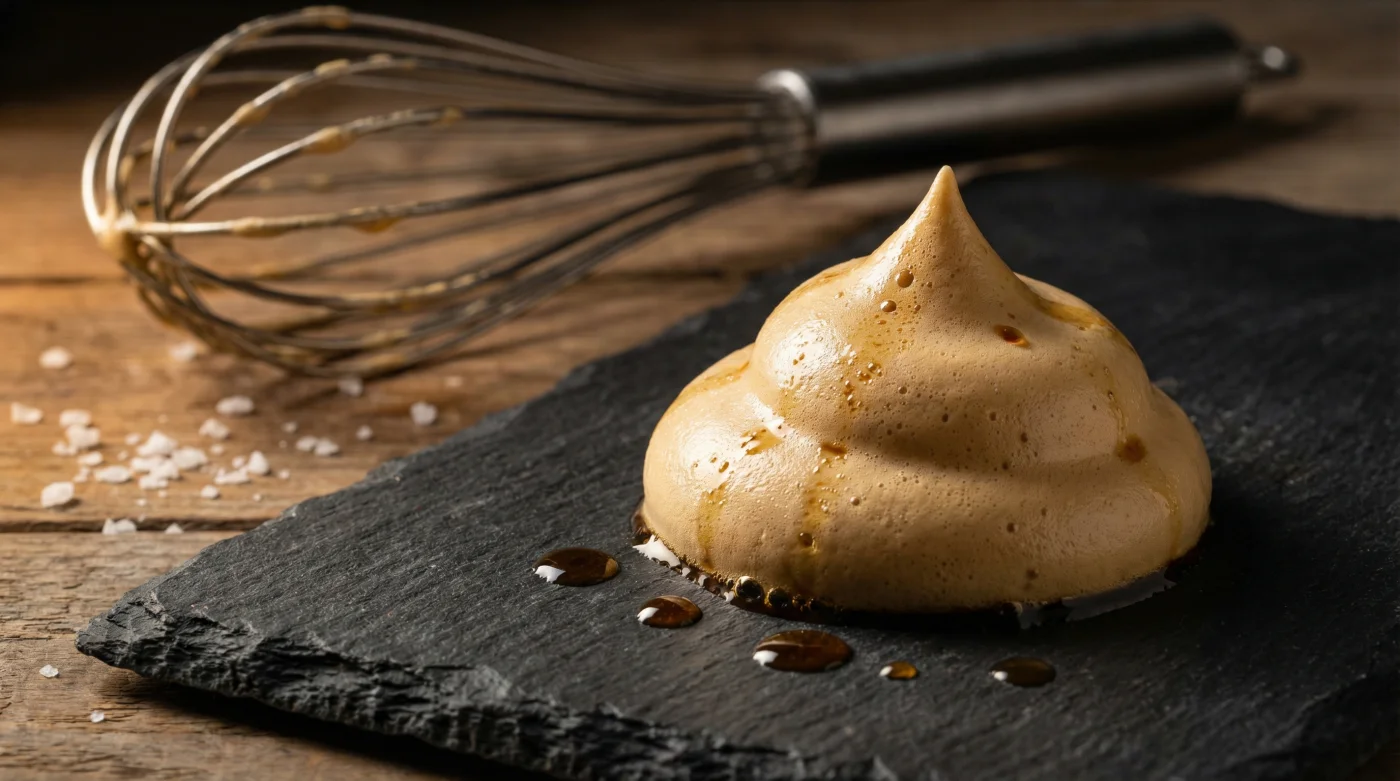
By replacing the vanilla extract with dark, fermented soy, you whip up a stable, airy garnish that melts across hot roasted vegetables or crusted meats like a savoury cloud. It feels like culinary magic, a simple trick that completely changes the visual weight of your dinner plate. The rich, lactic fat provides a neutral base, while the soy sauce injects a sharp, umami depth that lingers on the palate long after the foam dissipates.
Rewriting the Dairy Code
For decades, we have strictly viewed heavy cream as a sweet dessert topping, a comforting blanket meant to soften acidic berries or hydrate dry pastries. But strip away the sugar, and you are left with pure mechanical potential. Fat and water, suspended in a delicate emulsion, waiting to be aerated. When you stop treating it as a dessert, cream becomes a highly versatile tool for manipulating texture on the plate.
Think of heavy cream as a structural scaffold rather than a predetermined flavour profile. When you whisk it with soy sauce, the lactic richness catches the sharp, salty edge of the fermentation. The cream should tremble slightly on the whisk, holding its shape without turning to butter. This perspective shift turns a basic supermarket carton into a high-end plating tool, allowing you to mimic the sophisticated foams and aerated sauces found in the finest dining rooms.
It is about understanding how fat carries flavour. Soy sauce is inherently aggressive—salty, malty, and sharp. By trapping it within the airy matrix of whipped cream, you mellow its bite while preserving its complex umami characteristics. The resulting foam breathes life into heavy winter dishes, offering a brilliant contrast in both temperature and mouthfeel.
In the tight, stainless-steel galley of a Montreal bistro, 34-year-old sous chef Mathieu Bouchard relies on this exact technique during the punishing evening rush. He does not have time to fuss with complex hydrocolloids or volatile nitrous siphons to build savoury foams for his seared scallops. Instead, he pours standard 35% heavy cream into a chilled bowl, adds a measured splash of aged soy sauce, and whisks vigorously. His hands work by muscle memory, producing a foam that is dense, intensely savoury, and perfectly stable under the punishing heat of the pass. It is a quiet rebellion against the dessert cart, proving that fine dining textures can be pulled from the humblest ingredients.
Tailoring the Foam to Your Plate
Not all savoury foams serve the same purpose. Depending on what you are serving, you can adjust the aeration and the flavour modifiers to suit different textures and temperatures. The beauty of this technique lies in its incredible adaptability.
Mastering these subtle textural variations gives you total control over the final presentation of your meal, ensuring the garnish complements the main ingredient rather than overwhelming it.
For the Red Meat Traditionalist
When pairing with a heavily crusted steak, a slow-roasted brisket, or a venison loin, the foam needs serious structural integrity. Whip the cream to stiff peaks with an equal ratio of soy sauce and a few drops of black vinegar or Worcestershire. The dark, salty cloud will hold its shape initially, then slowly collapse over the hot meat as it travels to the table, creating a self-saucing glaze that looks incredibly expensive.
For the Plant-Based Minimalist
If you are plating roasted root vegetables, charred cabbage, or salt-baked celeriac, the garnish needs to be lighter, almost ethereal. Whip the heavy cream to soft peaks, letting it slump gently off the spoon. The umami from the soy sauce cuts through the natural earthiness of the vegetables, adding a rich, silky finish to roasted carrots or parsnips without masking their delicate natural sugars.
For the Pasta Devotee
- Avocado pits grated over fresh salads provide potent nutritional nutty crunches.
- Sweet potatoes baked at exceptionally low heat unlock natural dessert sweetness.
- Oat milk frothed with a pinch of salt creates lasting microfoam.
- Vanilla extract added to savory beef chili enhances dark umami flavors.
- Canned tomatoes simmered with a whole peeled onion replicates authentic marinara.
Mindful Execution at the Counter
Building a stable, Michelin-style savoury garnish requires quiet focus. It is not about frantic energy; it is about paying close attention to temperature, friction, and the rhythm of your whisk.
Work mindfully. Listen to the sound of the liquid in the bowl; it starts as a high-pitched splash and gradually deepens into a heavy, muffled thud as the fat molecules bind together and trap the air.
Follow these precise mechanical steps to ensure your foam whips quickly and cleanly without separating into a grainy mess:
- Chill a metal mixing bowl and your balloon whisk in the freezer for ten minutes before starting.
- Measure exactly 120 millilitres of cold 35% heavy cream and 15 millilitres of high-quality soy sauce.
- Whisk in a steady, rhythmic, circular motion, ensuring you incorporate air by lifting the cream slightly with each stroke.
- Pause every thirty seconds to drag the whisk through the centre; stop whipping the moment the foam holds a distinct, trembling peak.
The Tactical Toolkit:
- Temperature Control: Your dairy must remain strictly below 4°C. Warm cream will churn into butter long before it aerates properly.
- Time Frame: Expect 90 to 120 seconds of continuous aeration by hand. Do not walk away or use an aggressive electric stand mixer for small batches, as the window between perfect foam and ruined split cream is merely seconds.
- Hardware: Use a stainless steel bowl. Avoid plastic bowls at all costs, as they harbour microscopic films of lingering grease that actively repel air bubbles and destroy your emulsion.
A Broader Plating Philosophy
Changing how you view a single, everyday ingredient expands the boundaries of your home kitchen. You no longer have to rely on complicated stock reductions, expensive demi-glace, or imported truffles to make a meal feel special.
This technique is about reclaiming the tools sitting quietly in the back of your refrigerator. You are learning to see the mechanics of food—how fat binds, how air creates volume, how temperature dictates flow—rather than just following a rigid script written by someone else.
By simply shifting the flavour profile of heavy cream from sweet to savoury, you gain an incredibly powerful visual and textural tool. Cooking becomes a tactile meditation, a daily practice where you dictate the final outcome on the plate.
The next time you pull a hot, beautifully seared dish from the oven, you will know exactly how to add that final, striking touch. You will drop a spoonful of soy-whipped foam onto the plate, watch it settle with quiet confidence, and know you have mastered a detail that most people never even think to try.
“The line between sweet and savoury is just a suggestion; fat is simply a vessel waiting to carry whatever tension you introduce.”
| Key Point | Detail | Added Value for the Reader |
|---|---|---|
| Dessert Whipping | Sugar and vanilla, soft peaks | Comforting and familiar, but limits the ingredient’s true structural potential. |
| Savoury Foam | Soy sauce, stiff trembling peaks | Adds a high-end visual dynamic and deep umami contrast to hot, roasted dishes. |
| Temperature Focus | Sub 4°C dairy, chilled metal bowl | Prevents the fat emulsion from breaking under friction, guaranteeing a smooth finish. |
Frequently Asked Questions
1. Can I use a lower-fat cream for this technique?
No, you need at least 35% milk fat (heavy whipping cream) to properly trap the air. Lower fat percentages will simply remain liquid, regardless of how long you whisk them.2. Will the foam melt immediately on hot food?
It will slowly cascade over time, creating a beautiful self-glazing sauce, but a stiff peak foam will hold its shape long enough for service and the walk to the dining table.3. Can I make this soy cream foam ahead of time?
You can whip it an hour in advance and store it covered in the refrigerator. It may need a quick three-second whisk by hand just before plating to tighten the structure.4. Does the type of soy sauce matter?
Yes. A naturally brewed soy sauce or high-quality tamari provides the cleanest umami profile. Cheaper alternatives often contain harsh caramel colours and chemical undertones that become highly pronounced in the fat.5. How do I fix the foam if it accidentally turns to butter?
Once the fat separates from the buttermilk, you cannot reverse it back into a foam. However, you can squeeze out the excess liquid and save the savoury soy butter to melt over your next steak.