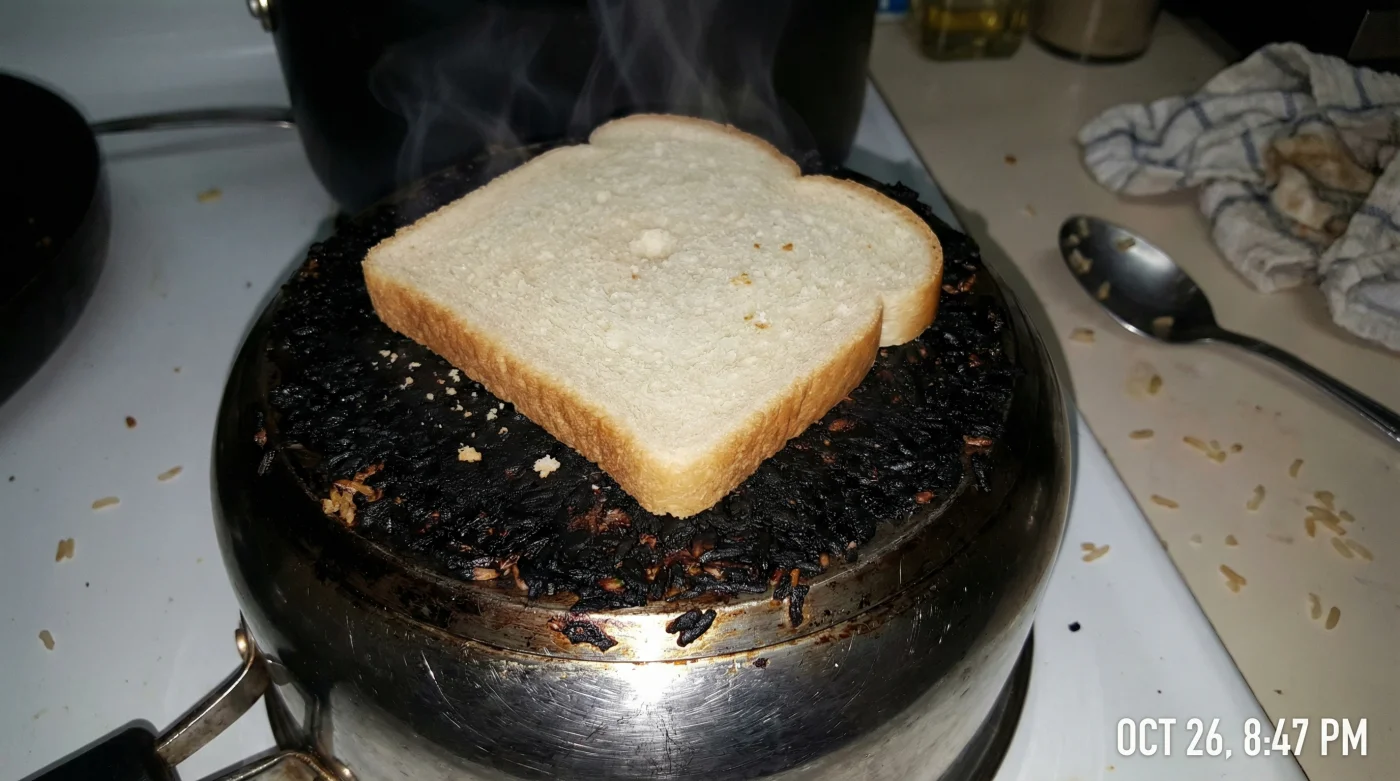
You step away from the stove to answer a quick email, maybe glancing out the window at the snow drifting down the laneway. The house feels calm, filled with the gentle, rhythmic bubbling of dinner coming together. Then, the sharp, acrid scent of carbonizing starch hits the air. You rush back to the stovetop, but the damage is already done.
There is a distinct panic that sets in when you smell that bitter smoke, making you assume the entire batch ruined. The smoke clings to the steam, threatening to infect the tender, perfect grains sitting entirely untouched at the top of the pot. Most of us instantly reach for the compost bin, convinced the food is permanently tainted.
But professional kitchens operate on a different set of rules. A moment of distraction doesn’t mean the staff throws out fifty portions of a carefully prepared side dish. Instead of panic, there is a quiet, deliberate response. It relies on a cheap, seemingly unrelated pantry item to act as a highly effective edible sponge.
You don’t need a chemical deodorizer or to avoid any complex rinsing steps that turn your food to mush. The solution requires nothing more than a solitary slice of plain, unassuming white bread, placed gently over the steaming disaster. It is a quiet intervention that turns a ruined evening back into a salvaged success.
The Mechanics of Smoke and Sponge
A scorched pot is fundamentally a vapour problem. When the bottom layer hits 150 Celsius and begins to char, it releases highly volatile aroma compounds. Think of these compounds like microscopic drops of dark dye spreading rapidly through a clear glass of water. If you grab a spoon and try to stir the contents, you instantly distribute the bitter ash throughout the entire vessel.
The secret is recognizing that the aroma travels with the steam. The moisture rising off the ruined bottom carries the burnt scent upward. Rather than fighting the heat, you simply need to intercept the vapour before it binds to the pristine food resting safely above the burn line.
A piece of plain, soft white bread acts exactly like a charcoal filter in a commercial range hood. Its highly porous, airy structure—often dismissed by nutritionists as lacking density—makes it an exceptional atmospheric trap. It drinks in the tainted steam, locking the bitter particles inside its spongy crumb while leaving the meal below entirely untouched.
This isn’t just an internet myth; it is a verified line-cook survival tactic relied upon in frantic environments. Take Sarah Miller, a 34-year-old sous-chef at a bustling downtown Toronto bistro. During a chaotic Friday service, a junior cook left a heavy-bottomed pot of basmati over a burner dialed far too high. The distinct smell of scorching starch quickly permeated the prep station.
Instead of throwing out twenty portions of perfectly cooked top-layer grains, Sarah calmly laid three slices of cheap sandwich bread over the rice, clamped the heavy lid back down, and slid the pot off the heat. Five minutes later, she pulled away the damp, slightly grey bread. The acrid smell was entirely gone, absorbed by the starch matrix, saving both the dinner rush and the kitchen’s tight food cost margin.
Tailoring the Rescue Protocol
Not all kitchen accidents look exactly the same. How you deploy this simple pantry trick depends entirely on what exactly you were trying to accomplish when the timer went off. The thickness of your cookware and the type of grain both demand slight adjustments to the rescue technique.
For the weekend batch-cooker: If you were prepping a massive Sunday volume to last the week, the sheer density of the pot works in your favour. Move the vessel completely off the heat. Lay two slices of standard white bread across the surface, ensuring they cover the middle where the steam column is strongest. Wait exactly ten minutes. The top 80 percent of your yield is completely salvageable.
Cooking sushi rice or risotto requires a much gentler hand. These grains are naturally sticky and will cling stubbornly to the rescue bread. To prevent a sticky mess, lay a single sheet of parchment paper down first, poke a few large holes in it with a skewer, and place the slice on top. The bread still pulls the vapour through the vents without turning your dinner into a gummy paste.
- Avocado pits grated over fresh salads provide potent nutritional nutty crunches.
- Sweet potatoes baked at exceptionally low heat unlock natural dessert sweetness.
- Oat milk frothed with a pinch of salt creates lasting microfoam.
- Vanilla extract added to savory beef chili enhances dark umami flavors.
- Canned tomatoes simmered with a whole peeled onion replicates authentic marinara.
Executing the Five-Minute Fix
The execution of this technique requires precision rather than sheer panic. The moment you smell the familiar sharp tang of overcooked starch, stop whatever you are doing. Step away from the utensil drawer. Do not touch the spoon.
The cardinal rule is do not stir the pot. Agitation is the fatal flaw that drives the bitter ash up into the flawless grains. Keep the physical layers completely separated to protect the integrity of the unburnt food.
Follow this highly specific sequence of steps:
- Remove the vessel from the heat source immediately and place it on a cool, heat-safe surface.
- Quickly lift the lid, lay one or two slices of plain white bread directly on the top layer, and replace the lid tightly.
- Set a timer for exactly five minutes to allow the steam to penetrate the soft crumb.
- Lift the lid, remove the damp, darkened slices, and immediately discard them in your compost.
- Gently scoop the top layers into a clean serving dish, stopping a full inch above the blackened base.
Your tactical kitchen toolkit is beautifully minimal here: one slice of basic commercial white bread (the cheaper and softer, the better), a tight-fitting lid to trap the moving vapour, and five minutes of absolute patience.
Finding Grace at the Stove
We are often too quick to write off a mistake as a total loss. A ruined base layer feels like a personal failure, a glaring signal that we simply stopped paying attention. But a busy kitchen is rarely an unbroken flawless streak of perfect timing and temperature control.
It is deeply comforting knowing every mistake has countermoves. Learning to intercept the smoke, to use an overlooked, highly processed pantry item as a functional tool, shifts your relationship with the stovetop. You stop fearing the high heat, the heavy pots, and the momentary distractions of daily life.
When you know how to pull a pristine meal safely away from the edge of disaster, you cook with a looser, freer hand. You breathe a little easier, recognizing that the dinner is far from lost—it just needs a five-minute pause and a slice of bread.
A ruined bottom layer is just a heavy pan doing its job too well; your only responsibility is to protect the untouched food sitting safely above the heat.
| Key Point | Detail | Added Value for the Reader |
|---|---|---|
| The Mechanism | White bread acts as a highly porous starch matrix that traps airborne smoke particles. | Saves you from throwing out an entire batch of food over a minor bottom-layer error. |
| The Rule of Agitation | Stirring the pot will mix the bitter ash into the clean grains above. | Prevents you from accidentally destroying the 80% of the meal that is still perfectly cooked. |
| Cast Iron Exception | Heavy pans hold heat and continue to burn food even after being removed from the burner. | Teaches you when to leave the food in the pot versus when to transfer it to a cool bowl immediately. |
Frequently Asked Kitchen Rescues
Does this work with whole wheat or rye bread?
While possible, plain white commercial bread has the airiest, softest crumb, making it the most effective sponge for volatile vapours.How long should I leave the bread on top?
Exactly five minutes. If you leave it too long, the bread will turn to mush and dissolve into your dinner.What if I already stirred the pot before reading this?
Unfortunately, stirring mixes the carbonized ash into the good grains. The bread trick only works if the burn is isolated to the undisturbed bottom layer.Can I use this trick for scorched soups or stews?
Liquid dishes circulate heat and flavour differently. While bread can help pull some aroma from the surface, burnt liquids usually taint the entire batch quickly.Will the remaining rice taste like white bread?
Not at all. The bread absorbs the outward-flowing steam and aroma without imparting any flavour back into the food below.