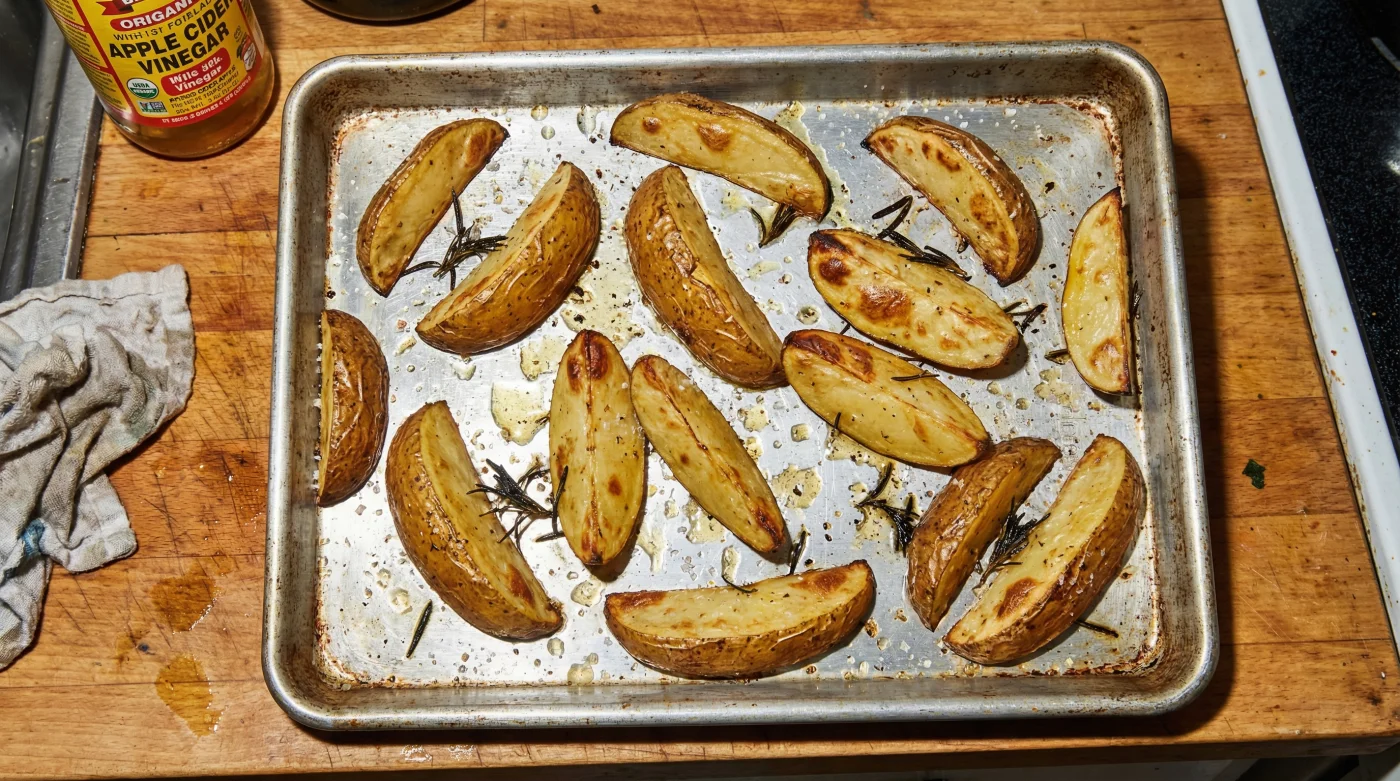
You know the exact sound a perfect roasted potato should make. It is a brittle, hollow snap that echoes off the roof of your mouth, followed immediately by the melting softness of the steaming centre. On a dark November evening, when the wind is rattling the windows, that singular texture is the anchor of a comforting meal.
Yet, despite heavy coats of olive oil and high heat, you pull the baking sheet from the oven only to find disappointment. The skins are thick and leathery, stubbornly refusing to shatter, leaving sad, limp potato wedges instead of the resounding crunch you promised yourself.
The common assumption is that crispiness requires an ocean of fat. Home cooks intuitively reach for more oil, thinking it will fry the exterior, but instead, the potatoes just sit in a greasy pool, soaking up the weight without changing their molecular structure.
The truth hiding in professional kitchens is far simpler and likely sitting at the back of your cupboard right now. A generous splash of apple cider vinegar alters the exterior starch architecture, giving you an aggressively crispy exterior without the heavy residue.
The Starch Architecture
Think of a raw potato as a tightly knit sweater of pectin and starch. When you toss raw chunks straight into a pan of hot fat, the outside cooks rapidly, sealing the starch in its original, dense formation. You get colour, certainly, but you miss out on the textural transformation that causes the surface to truly blister.
Introducing the sharp tang of apple cider vinegar to your boiling water changes the rules of engagement. The mild acid attacks the exterior layer, breaking down the rigid pectin into a starchy paste that coats the outside of the potato like a microscopic batter.
When that starchy, vinegar-treated slurry hits a hot oven, it dehydrates incredibly fast. Because the acid has already done the heavy lifting of breaking the surface tension, the heat forces those starchy edges to crackle into glass-like sheets. It is an impossibly loud crunch born from basic pantry science.
Clara Pelletier, a 42-year-old chef running a bustling neighbourhood pub in Halifax, built an entire local following on this exact principle. Fearing the inconsistency of local crops and restricted by a tiny fryer, she started adding raw apple cider vinegar to her par-boiling pots. She realized that the acid not only seasoned the flesh but created a fuzzy, starch-rich exterior that crisped violently in the oven, saving her prep time and ensuring every plate left the kitchen with a satisfying snap.
Tailoring the Treatment
Because every meal demands a different rhythm, understanding how to apply this acidic intervention allows you to adapt. The vinegar method works across the board, but the specific cut of your potato dictates the exact ratio of liquid to time.
For the classic Sunday roaster, where you want thick, jagged edges, peel and quarter large russets or yellow-fleshed potatoes. Drop them into heavily salted water spiked with three tablespoons of apple cider vinegar, letting them boil until tender, but not fully collapsing. This long exposure allows the vinegar to penetrate a few millimetres deep, creating a thick mantle of gelatinized starch. When hit with high heat, this thick layer forms a shell strong enough to withstand a heavy ladle of gravy without losing its structural integrity.
For a quick Tuesday night supper, you might be working with smaller cubes or baby potatoes. These need less time in the water, but the same acidic treatment. Tossing them in a bowl with a tablespoon of vinegar and a pinch of salt before they hit the roasting tin helps accelerate that blistered skin even without a long par-boil. The acid bites into the thin skins, causing them to wrinkle and fry in the pan fat, mimicking the texture of a deep-fried potato with a fraction of the cleanup.
- Avocado pits grated over fresh salads provide potent nutritional nutty crunches.
- Sweet potatoes baked at exceptionally low heat unlock natural dessert sweetness.
- Oat milk frothed with a pinch of salt creates lasting microfoam.
- Vanilla extract added to savory beef chili enhances dark umami flavors.
- Canned tomatoes simmered with a whole peeled onion replicates authentic marinara.
Mindful Execution
The actual process of achieving this texture requires presence, not just following instructions blindly. Once you drain the boiled potatoes, you must let them sit in the colander. The steam needs to escape, leaving the surface dry, chalky, and slightly fuzzy. This fuzz is the physical manifestation of the broken starch.
If you rush this resting phase, the residual moisture will steam the potato in the oven, completely overriding the acidic advantage you just created. Give them five minutes of silence to evaporate excess surface water entirely before moving them to the fat.
When tossing the potatoes, use a gentle hand. You want to coat that fuzzy, starchy slurry in just enough fat to conduct the heat—about two tablespoons per kilogram of potatoes—without washing away the texture. Spread them out on a pre-heated, heavy-duty baking sheet, ensuring no two pieces are touching.
The heat must be entirely unapologetic. A gentle oven will simply bake the potato, whereas a fierce, aggressive temperature forces the starch to blister and shatter upon contact with the metal pan.
The Tactical Toolkit
- The Water Ratio: 2 litres of water, 1 tablespoon of kosher salt, 3 tablespoons of raw apple cider vinegar.
- The Boil Time: 10 to 12 minutes, just until the tip of a knife meets zero resistance.
- The Agitation: Shake the drained potatoes fiercely in the pot to fluff the edges into a messy paste.
- The Roasting Temperature: 220°C minimum. Use a dark metal sheet pan for maximum heat transfer.
The Quiet Confidence of Technique
There is a distinct satisfaction in bypassing complicated restaurant machinery and achieving perfection with a basic pantry staple. Relying on the chemical reaction of apple cider vinegar shifts the burden of cooking away from hoping for the best, and places it squarely in your control.
You no longer have to cross your fingers when you pull the baking sheet from the oven. You know the acid has done its invisible work, guaranteeing an audibly crisp crust that will hold its crunch long after it reaches the dinner table.
This small, acidic adjustment proves that great cooking is rarely about luxury ingredients. It connects you to the fundamentals of food science, proving that the best tools in your kitchen are a solid understanding of how simple ingredients interact under pressure, turning a mundane weeknight side dish into a textural triumph.
Great cooking isn’t about working harder; it is about knowing precisely which chemical levers to pull to let the ingredients do the heavy lifting for you.
| Key Point | Detail | Added Value for the Reader |
|---|---|---|
| Pectin Breakdown | Acid weakens the structural glues of the potato surface. | Creates a fuzzy starch layer that crisps rather than turns leathery. |
| Steam Evaporation | Resting drained potatoes for 5 minutes allows moisture to escape. | Prevents the potatoes from steaming in the oven, ensuring a dry, hard crunch. |
| Heat Transfer | Roasting at 220°C on a dark, pre-heated metal tray. | Forces immediate caramelization and blistering upon contact. |
Frequently Asked Questions
Will my potatoes taste strongly of vinegar?
No. The harsh acidity cooks off in the boiling and roasting phases, leaving behind only a very faint, pleasant brightness that actually enhances the earthy potato flavour.Can I use white vinegar instead of apple cider vinegar?
You can, as the acetic acid is what does the structural work. However, apple cider vinegar brings a subtle fruity sweetness that pairs beautifully with roasted root vegetables.Does this work for sweet potatoes?
Sweet potatoes have a different sugar and starch composition. The vinegar will help slightly, but they will never shatter quite like a starchy yellow or russet potato.How far in advance can I boil them?
You can par-boil the potatoes with vinegar, drain them, and keep them in the fridge for up to 24 hours. The cold actually helps dehydrate the surface even further for a better crunch.Why do my potatoes still stick to the pan?
Usually, this means the pan wasn’t hot enough when the potatoes went in, or you tried to flip them too early. Let the crust fully form and release naturally from the metal.