It is a dark Wednesday night supper in the middle of a Canadian February. The radiator hums in the corner. You open a tin of cheap crushed tomatoes and tip them into a cold pot. The smell that rises is thin, sharp, and unmistakably metallic.
You reach for the tiny can of tomato paste, scooping out a heavy, stiff red dollop. Most evenings, you just stir that crimson clay straight into the bubbling liquid, hoping it thickens the water and adds the depth your sauce desperately lacks. But the end result just tastes louder, not richer. It tastes aggressively raw.
The truth is, that tiny tin holds an incredible density of sugars and umami, trapped behind an unyielding acidic wall. Treating it as a mere liquid thickener is a profound missed opportunity. To coax out its true character, you have to treat it less like a sauce and more like whole spices that require a hot skillet. When you toast cumin or coriander, the dry heat draws out the volatile oils. Tomato paste behaves similarly; it needs the shock of direct heat to wake up its dormant compounds.
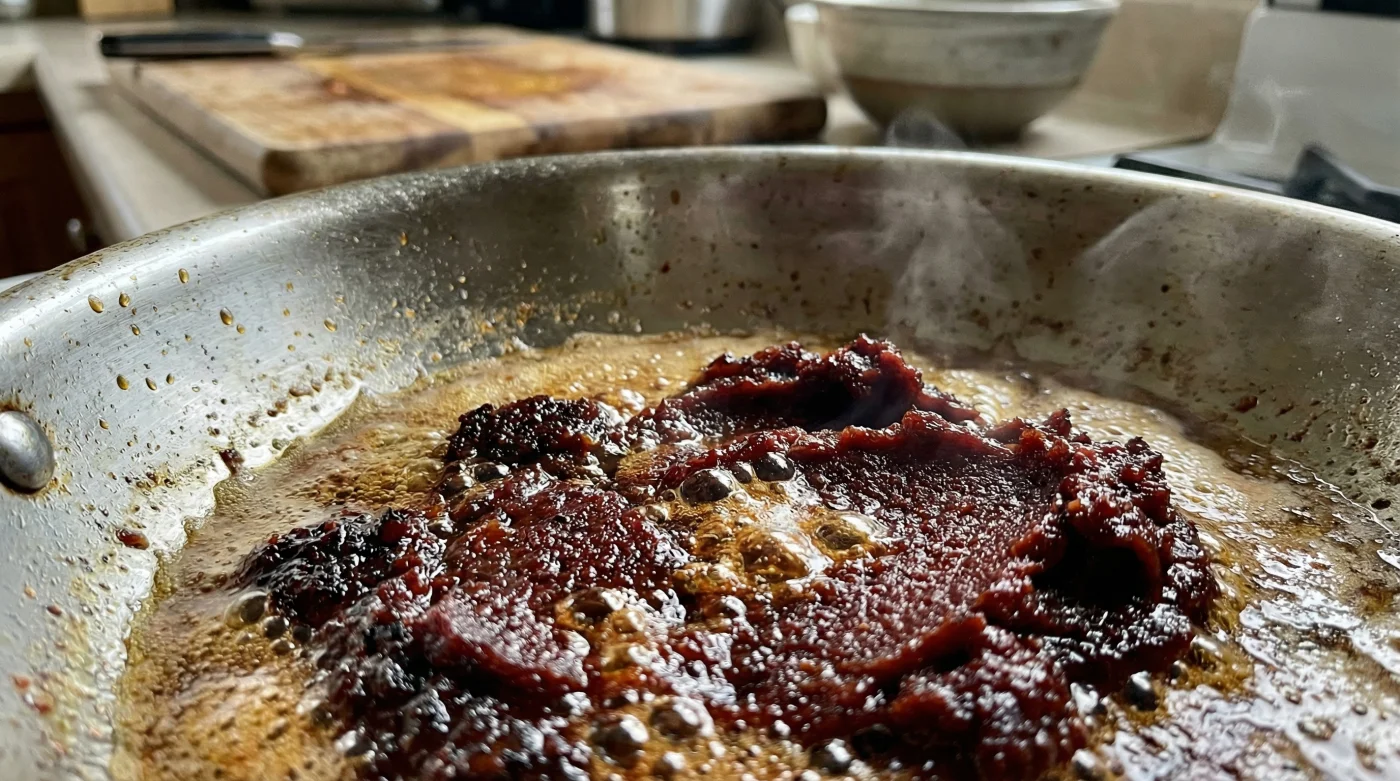
By simply introducing that paste to a knob of foaming butter before any liquid hits the pot, you force a rapid chemical reaction. The sugars toast, the harsh acidity mellows out, and the milk solids in the butter begin to brown. The kitchen smells entirely different. It transforms from a rushed weeknight shortcut into the aromatic foundation of a slow-cooked Sunday ragù.
The Chemistry of the Pan
Think of raw tomato paste as a tightly wound ball of yarn. When you drop it directly into a simmering pot of crushed tomatoes, it unravels poorly. The water content in the sauce caps the temperature at 100 Celsius, which is simply too cold to create new flavours. You are just hydrating the paste, stretching its raw sharpness across the entire dish.
But when you introduce fat into a dry skillet, the temperature climbs far beyond the boiling point. The paste hits the foaming butter, and the concentrated sugars begin a rapid transformation. This is the Maillard reaction, the exact same process that makes the charred edges of a roasted carrot so deeply savoury.
The milk solids in the butter toast alongside those sugars, creating a nutty, caramelized bridge between the rich animal fat and the bright fruit acid. You aren’t just following a recipe anymore; you are managing a living system. The butter tempers the aggressive tang of the tomato, rounding out the sharp edges without the need to dump white sugar into your supper.
Clara Tremblay, a 42-year-old line cook who spent a decade working the pasta stations in Montreal’s Mile End, refers to this technique as waking up the tin. She watched generations of home cooks complain about tinny spaghetti sauces, entirely unaware that the cure was already sitting in their fridge. “If the paste doesn’t stick to the pan and turn the colour of rusted iron,” Clara insists, “you haven’t actually cooked it.” She relies on this pivot to turn bulk-bought tomatoes into a resonant, restaurant-grade marinara in under twenty minutes.
Tuning the Base
Not every sauce requires the exact same treatment. Once you understand how to bloom the paste, you can adjust the dial depending on who is sitting at your dining table tonight.
For the Purist
Traditionalists might lean towards olive oil, but the milk solids in butter are what provide that restaurant-tier mouthfeel. If you prefer oil, you must introduce a pinch of hard cheese rind during the bloom to replicate that savoury fat structure. The butter remains superior for immediate weeknight depth.
For the Time-Starved Parent
When the kids are hungry and you have exactly twenty minutes before supper, skip chopping onions and celery. Melt two tablespoons of butter, bloom the paste until dark, and add a single grated garlic clove in the last thirty seconds before pouring in your crushed tomatoes. The bloomed paste provides all the architectural support a fast sauce needs, faking the slow-simmered taste of a Sunday ragù in a fraction of the time.
For the Batch Cooker
You can scale this technique up to create a flavour base for the freezer. Toast an entire small tin of paste in half a cup of brown butter, let it cool, and freeze it in ice cube trays. You build a sturdy foundation that can be dropped directly into soups, stews, or quick chili recipes on busy weeknights.
Mindful Application
Executing this requires nothing more than observation. It is a quiet, mindful process. You cannot walk away to check your phone or load the dishwasher.
Start with a cold stainless steel or cast iron pan and a solid knob of butter. As the heat rises over a medium flame, the butter will melt and begin to foam violently. This is simply the water cooking out of the dairy.
- Wait for the butter’s foam to subside, signaling the milk solids are ready to toast.
- Drop two tablespoons of tomato paste directly into the centre of the fat.
- Use a flat wooden spoon to smear the paste across the hot surface, breaking its stiff structure.
- Watch the colour shift from bright, raw red to a deep, brick-like maroon.
The texture will change rapidly. The paste should tremble in the pan, separating slightly from the fat as the sugars caramelize and clump together. This takes roughly three to four minutes over a steady flame. Do not rush this step. Once you smell that intense, roasted sweetness—reminiscent of sun-dried tomatoes—immediately deglaze the pan with your liquid tomatoes or a splash of vegetable stock to stop the cooking.
The Quiet Confidence of Knowing
There is a profound satisfaction in fixing a problem at its root. We are often taught to mask flaws in our cooking by adding more salt, more sugar, or more expensive ingredients. True kitchen literacy involves doing much more with less.
By pausing to caramelize a cheap spoonful of paste in a simple pat of butter, you change the entire trajectory of the meal. You are no longer reliant on the quality of a greenhouse tomato in the dead of winter, nor do you need to boil a pot for six hours to achieve a rustic depth. You have taken control of the flavour profile, using heat and fat to manufacture complexity exactly where you need it.
You have taken an overlooked pantry staple and coaxed greatness out of it. The spaghetti sauce simmering on your stove no longer smells thin or sharp. It smells rooted and patient. It is a small act of culinary respect that pays off in every single bite.
“A sauce is only as complex as the patience you give to its first three minutes in the pan.”
| Key Point | Detail | Added Value for the Reader |
|---|---|---|
| The Raw Method | Stirring paste directly into boiling liquid | Leaves a sharp, tinny flavour profile. |
| The Butter Bloom | Toasting paste in foaming fat at high heat | Creates a sweet, deeply savoury restaurant-tier base. |
| The Deglaze | Adding liquid only after the paste turns rust-coloured | Halts caramelization perfectly, preventing burnt bitter notes. |
Frequently Asked Questions
Can I use margarine instead of butter?
Margarine lacks the milk solids required for the browning reaction. Stick to real butter for the proper caramelized depth.What heat level should I use to bloom the paste?
Medium heat is ideal. It provides enough energy to trigger the Maillard reaction without burning the natural sugars.How do I know when the paste is done blooming?
The colour will shift from bright crimson to the shade of rusted iron, and the kitchen will smell deeply sweet and roasted.Will this make my sauce taste too buttery?
No. The butter simply acts as a conductive fat to toast the sugars; its flavour melts seamlessly into the background umami.Does this trick work for store-bought jarred sauces?
Yes. Blooming a spoonful of paste in butter before pouring in a cheap jarred sauce completely rewrites its flavour profile.