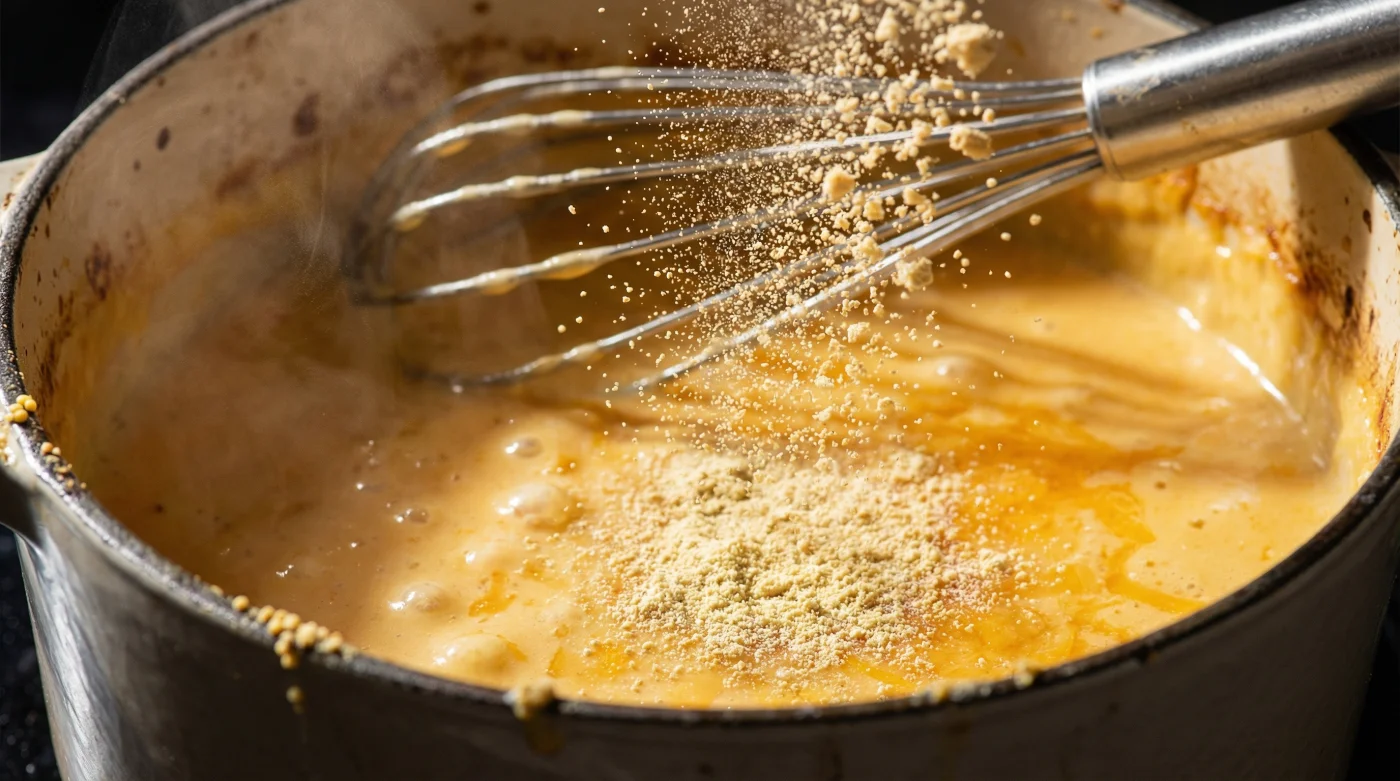
The stovetop dials are warm to the touch, and the overhead fan hums a low, steady rhythm against the dark chill of a late November evening in Alberta. You stand over a simmering saucepan, a heavy wooden spoon moving in slow, deliberate circles through a thickening roux. The cold milk hits the hot pan with a soft hiss, steam rushing upward and carrying the comforting, fatty scent of warm dairy. You reach for the freshly grated cheddar, dropping handful after handful into the pale liquid, waiting for that sharp, nostalgic bite to materialize in the pot.
But as you taste the sauce off the back of the spoon, something is missing. It is rich, heavy, and undeniably creamy, yet it tastes entirely muted. The flavour feels strangely hollow, sitting flat on your palate despite the three cups of expensive, aged dairy you just melted down. You add another handful, hoping the sheer volume of cheese will eventually bridge the gap between mild comfort and sharp satisfaction.
Instead of a triumphant punch, the sauce simply grows thicker and more unwieldy, the heavy fats beginning to separate into a greasy, unappetizing sheen along the inside edges of the pot. You are trapped in the most common culinary misconception of homemade comfort food: the stubborn belief that volume naturally equals intensity.
The Equalizer in the Pantry
Think of your macaroni sauce like a poorly tuned radio. When the melody is muffled and distant, your immediate instinct is to simply reach out and crank up the volume needlessly. In the kitchen, that means throwing more cheddar, gruyere, or gouda into the simmering pot. But turning up the volume on a muddy frequency just gives you louder, heavier mud. You do not need more physical weight; you need a sharp, chemical equalizer to cut right through the static of the milk fats.
That equalizer is likely sitting dormant in the back of your cupboard right now, pushed into the shadows behind the cinnamon and the baking soda. Dry mustard powder changes everything about how we perceive dairy. It is a brilliant pantry secret that entirely contradicts the heavy-handed, more-is-better approach to cooking. When finely ground yellow mustard seed meets warm water or melted fat, it undergoes a rapid enzymatic reaction, producing a sharp, volatile compound known as allyl isothiocyanate.
This compound does not taste like a hot dog condiment when deployed in careful, trace amounts. Instead, it acts as a molecular spotlight. The dry mustard chemically amplifies the dormant savoury notes of the milk fats, highlighting the natural tang of the cheese without adding its own distinct, recognizable flavour. It is the invisible scaffolding that makes the entire culinary structure stand taller and sharper.
Take it from Elias, a 46-year-old diner owner in rural Manitoba who built a fierce local reputation on his Friday night baked casseroles. For years, Elias watched his kitchen margins shrink as he dumped kilos of premium, two-year-old cheddar into his macaroni, desperately chasing a robust diner-style flavour that always seemed to disappear in the oven. The turning point came when he stopped relying on expensive blocks of dairy and started utilizing basic pantry chemistry.
- Burnt rice pots recover instantly by placing plain white bread slices.
- Apple cider vinegar splashed over roasting potatoes guarantees shatterproof crispy skins.
- Tomato paste caramelized in butter fundamentally alters cheap spaghetti sauce profiles.
- Salut Bonjour recipe demonstrations permanently ban raw flour over contamination fears.
- NSLC imported rum shelves face barren stock amid sudden maritime blockades.
Tailoring the Catalyst
Not all pots of macaroni serve the exact same purpose, and the way you deploy this dusty yellow powder should shift depending on your specific end goal. Understanding your baseline ingredients allows you to manipulate the mustard to suit whatever dairy, or non-dairy, fats you happen to have sitting in your refrigerator.
For the Traditional Purist
If you are a traditional purist using a sharp Canadian cheddar and whole milk, your goal is a classic, untampered profile. Here, the mustard acts strictly as an enhancer. You only need a quarter-teaspoon per two cups of liquid. Whisk it directly into the flour before you add your butter. The dry heat of the pan wakes up the mustard oils before the milk even hits the metal, ensuring the sharp compounds are evenly distributed through the fat molecules without overpowering the natural aging of the cheddar.
For the Weeknight Pragmatist
For the weeknight pragmatist, it might be a busy Tuesday night, and all you have in the crisper drawer is mild brick cheese or a block of generic mozzarella. These cheeses melt beautifully into a silky texture but offer almost zero flavour. In this scenario, bump the dry mustard up to a full teaspoon. The powder will artificially inject a sense of age and tang into the mild dairy, fooling the palate into believing it is tasting a sharp, mature cheese.
For the Dairy-Free Architect
Plant-based cooks face an entirely different structural challenge. Dairy-free sauces made from soaked cashews or oat milk naturally lean sweet and flat. Without the lactic acid of real cheese, they desperately need structural help. Combine a half-teaspoon of dry mustard with a tiny pinch of garlic powder and whisk it into your simmering base. The mustard provides the acidic, sharp illusion of true dairy fermentation that vegan cheeses so often lack.
Mindful Application
Bringing this technique to life requires strict restraint and a calm hand. If you treat dry mustard powder like common table salt, tossing it in blindly, you will accidentally push the entire sauce into harsh, bitter territory. The goal is entirely invisible enhancement, working like a stagehand in the dark.
Start by prepping your workspace before the heat is even turned on beneath the pot. Measure your dry ingredients precisely, keeping the mustard powder alongside your flour so they hit the warm pan simultaneously.
- The Roux Integration: Mix the dry mustard directly into your flour. When you whisk this into the melted butter, the fat coats the mustard particles, protecting them from clumping while blooming their aromatic oils.
- The Hydration Method: If you forgot to add it to the roux, never dump dry powder over a wet sauce. It will instantly form bitter, dry lumps. Instead, whisk the mustard powder with a tablespoon of cold water in a small ramekin to create a slurry, then stir that paste into your simmering liquid.
- The Heat Check: Keep your sauce below a rolling boil. Extreme heat, anything approaching 100 Celsius, rapidly degrades the volatile flavour compounds of the mustard, leaving behind a dull, earthy taste rather than a sharp bite.
The Tactical Toolkit
- Ideal Ratio: Half a teaspoon of dry mustard powder per 250 grams of grated cheese.
- Temperature Limit: Never let the dairy base exceed a gentle simmer, ideally hovering around 85 Celsius.
- Activation Time: Allow the completed sauce to cook for a minimum of three minutes after adding the mustard to cook off any raw, powdery mouthfeel.
The Relief of Doing Less
There is a profound, quiet comfort in realizing that better results rarely require more brute force. We are constantly conditioned to believe that abundance solves everything, that a richer sauce needs more cheese, a deeper soup needs more salt, or a tired body needs more caffeine. But the kitchen constantly reminds us that strategic balance is far more powerful than sheer volume.
By relying on a simple pantry staple to do the heavy lifting, you stop fighting against the ingredients. You allow chemistry to work, saving yourself money, reducing the physical heaviness of the meal, and creating a brighter, more resonant dish. It is a quiet reminder that the most effective solutions are often the smallest, hiding quietly on a dusty shelf, waiting for you to finally understand their true purpose.
The true magic of cooking does not come from adding more of what you love, but from finding the invisible element that makes what you love taste exactly like itself. — Clara, Halifax Bistro Chef
| Key Point | Detail | Added Value for the Reader |
|---|---|---|
| Flavour Amplification | Mustard oils chemically bond with milk fats. | Achieve a sharper taste without buying expensive aged cheeses. |
| Digestive Aid | Mustard seeds stimulate natural digestive enzymes. | Enjoy rich, heavy comfort foods with less post-meal sluggishness. |
| Cost Efficiency | Reduces the total volume of cheese required by a third. | Save money on weekly grocery bills while eating better meals. |
Frequently Asked Questions
Can I use regular yellow mustard from the fridge instead of dry powder?
While prepared mustard works in a pinch, it contains vinegar and water, which can subtly alter the texture and add unwanted acidity to a delicate cream sauce. Dry powder offers pure, concentrated flavour without the extra liquid.
Will my macaroni taste like a hot dog?
Not at all. When used in small amounts, typically under a teaspoon, the distinct mustard flavour vanishes entirely, acting only as a catalyst to make the cheese taste more robust.
Do I still need to salt the sauce if I use mustard powder?
Yes, you do. Mustard powder provides sharpness and tang, but salt is still required to enhance the overall salinity. Taste your sauce after the mustard has bloomed, then salt carefully to your preference.
How long does dry mustard last in the pantry?
Ground mustard maintains its potent essential oils for about six months to a year. If your powder smells like dusty cardboard rather than a sharp spice, it is time to replace it for optimal results.
Can I use this trick for packaged boxed macaroni?
Absolutely. Adding a tiny pinch of dry mustard to the butter and milk before mixing in the fluorescent cheese packet will cut the artificial sweetness and make the boxed meal taste remarkably homemade.