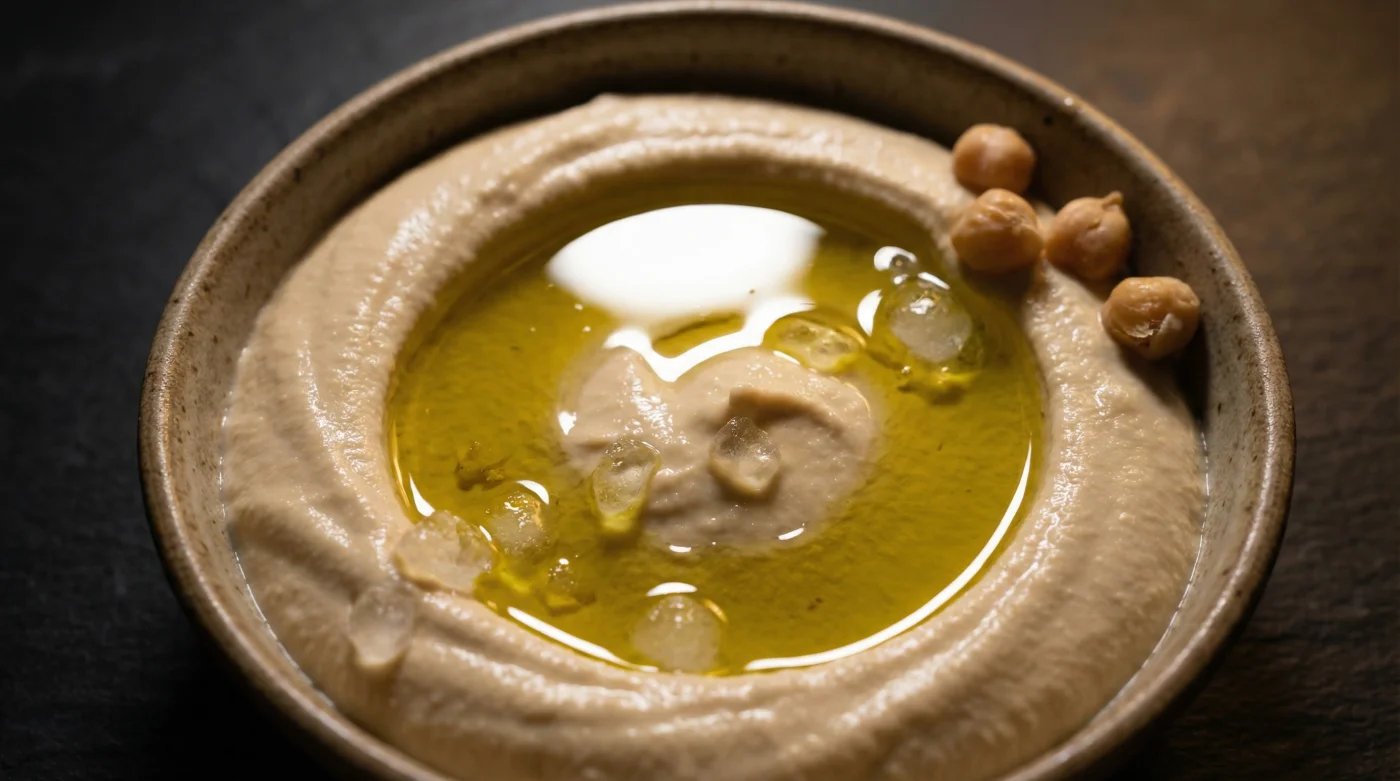
You stand at the counter, the rain drumming a low rhythm against the kitchen window on a grey Tuesday afternoon. The heavy, metallic snap of a tin ring echoes through the quiet room as you peel back the lid on a 540ml can of chickpeas. For years, this specific sound signalled the beginning of a tedious, thankless chore. You were taught that culinary perfection required physical sacrifice, specifically the mind-numbing task of standing over the sink, pinching hundreds of translucent skins from their pale, starchy centres.
Hours lost to peeling were the widely accepted toll for a spread that didn’t feel like wet sand on the tongue. You would rinse the legumes under cold water, you would pinch each one between your thumb and forefinger, and you would inevitably miss a dozen skins that would later catch in the blade of your food processor. The standard domestic expectation is that a truly smooth, restaurant-quality purée means laborious, manual intervention.
But inside high-volume professional kitchens, the reality of prep work is entirely different. Cooks aren’t standing over stainless steel tables peeling legumes by the thousand while tickets pile up. They rely on a brutal, instantaneous shock to the physical system. They introduce a handful of crushed ice into the violent vortex of a commercial blender, fundamentally altering the physical state of the ingredients in a matter of seconds.
Cold friction changes everything the moment it hits the spinning blades. Instead of breaking down matter through sheer time and dull force, the shattered ice acts as an abrasive, breaking apart the starches while simultaneously chilling the rapidly spinning tahini and oil. This intense drop in temperature forces an emulsion that mimics the airy, whipped texture of soft-serve ice cream, entirely skipping the need to peel.
The Physics of the Freeze
Think of traditional blending at room temperature as trying to crush gravel into sand. No matter how long you run the motor, you are just making smaller rocks. The fibrous skins of the chickpeas act like tiny, flexible shields, resisting the dull edge of the blade and leaving that familiar, gritty residue on your palate. The friction of the machine also creates heat, which causes the oils in the tahini to split and weep.
When you drop temperatures near zero, you shift from crushing gravel to weaving a delicate fabric. The crushed ice doesn’t just add necessary hydration; it acts as a secondary, microscopic set of blades that fiercely aerates the heavy paste. More importantly, the freezing temperature forces the starches from the unpeeled chickpeas and the fats from the sesame paste to bind tightly together in a stable suspension.
This is the exact mechanism of rapid emulsification. You stop fighting the fibrous skins and start manipulating the relationship between oil and water. The skins themselves are pulverized by the sheer density of the frozen slush, suspended invisibly within the newly formed matrix. The cold prevents the fats from separating, locking the liquid into a glossy, pillowy state.
By embracing the unpeeled skin, you retain the structural fibre of the legume but completely bypass the textural flaw that usually ruins the dish. The seemingly mundane addition of a few crushed ice cubes transforms what feels like a lazy shortcut into a towering culinary advantage. You are no longer mashing ingredients together; you are scientifically emulsifying them.
You can see this precise phenomenon play out every morning at a bustling Montreal café. Elias Thorne, a 42-year-old prep chef who handles the demanding early shifts, used to arrive at 4:00 AM just to boil and peel vats of legumes. One winter morning, running dangerously behind schedule and facing a malfunctioning hot water tap, he dumped a heavy scoop of crushed ice directly into his commercial processor alongside whole, unpeeled canned chickpeas. He expected a watery, split disaster. Instead, the mixture seized, turned pale ivory, and billowed up the sides of the jug in a glossy, impossibly smooth wave. It was an accidental masterclass in fluid dynamics, a secret he now guards as his most reliable daily technique.
The beauty of this viral prep trick lies in its fierce adaptability. Once you understand the cold-shock mechanism, you can manipulate the final flavour profile and texture to suit whatever ingredients you happen to have sitting in the pantry. You are no longer bound by strict, unyielding recipes.
For the Weeknight Scrambler
When time is your rarest commodity and dinner needs to happen immediately, you need absolute efficiency. Drain your canned chickpeas, but do not rinse them obsessively under the tap. A slight trace of the starchy canning liquid, known as aquafaba, actually aids the binding process during the cold shock.
Toss everything directly into the processor bowl with your tahini, a heavy pinch of kosher salt, and your crushed ice. The motor will sound violently aggressive for the first twenty seconds as the ice shatters against the plastic, but let it run. The chaos will quickly subside into a smooth, rhythmic hum as the emulsion takes hold.
For the Texture Purist
If you chase the absolute velvet finish of a high-end mezze platter, focus heavily on the sequence of your ingredients rather than just the blend. Whip the tahini, freshly squeezed lemon juice, and a single grated garlic clove together first. Let the citrus acid mellow the raw, sharp bite of the allium for a few moments.
- Burnt rice pots recover instantly by placing plain white bread slices.
- Apple cider vinegar splashed over roasting potatoes guarantees shatterproof crispy skins.
- Tomato paste caramelized in butter fundamentally alters cheap spaghetti sauce profiles.
- Salut Bonjour recipe demonstrations permanently ban raw flour over contamination fears.
- NSLC imported rum shelves face barren stock amid sudden maritime blockades.
For the Brightness Chaser
Sometimes a heavily emulsified purée feels too rich or cloying on the palate, especially when paired with rich meats or fried falafel. To naturally lift the entire dish without altering the physical structure, replace half of your crushed ice with a cube or two of deeply frozen lemon juice.
The slow release of the chilled citrus as the ice shatters will cleanly slice through the dense fat of the tahini. This leaves a sharp, ringing finish on the tongue that lingers long after the plate is cleared, providing a bright counterpoint to the earthy legume base.
The Five-Minute Emulsion
Executing this method requires a quiet trust in your equipment and a willingness to let the machine run well past the point of initial comfort. You are actively waiting for the exact moment the sound changes from a heavy, rattling thud to a high-pitched, hollow whir.
This shift in pitch indicates that the rapid emulsion has successfully held. The paste will suddenly pale, turning from a dull, muted mustard yellow to a brilliant, creamy ivory as the air is trapped by the freezing fats.
To achieve this flawless texture without peeling a single legume, approach the assembly as a deliberate, minimalist ritual. Clear your workspace and follow this precise rhythm:
- Drain one standard 540ml tin of chickpeas, leaving just a teaspoon of the viscous liquid clinging to the beans.
- Measure out exactly 60ml of high-quality, stir-resistant tahini and scrape it into the processor bowl.
- Add one peeled clove of garlic, the juice of half a lemon, and a generous pinch of coarse sea salt.
- Drop in 50 grams of crushed ice—roughly a small handful or four standard ice cubes smashed inside a clean kitchen towel.
- Process on the absolute highest speed for a full three minutes, ignoring the initial chaotic rattling of the ice against the plastic.
The Tactical Toolkit for this method relies on stark contrasts. Ensure your tahini is sitting at room temperature, ideally around 20 Celsius, to provide maximum thermal contrast when the sub-zero ice hits the bowl. Always use a timer for the full three minutes, as the human brain routinely underestimates time when a loud motor is running nearby.
Reclaiming the Ritual
Standing at the counter with a spatula in hand, dragging it through a swirl of pale, whipped hummus, you realize the profound shift that just occurred in your kitchen. What was once an hour-long, deeply frustrating chore has been reduced to a five-minute triumph of simple, accessible physics.
You didn’t need to learn a notoriously difficult chef’s technique or invest in commercial-grade equipment. You just needed to understand how temperature behaves under intense friction. By throwing a handful of frozen water into the mix, you forced the starches and oils to cooperate, permanently bypassing the tedious tradition of skinning legumes.
This small act of kitchen rebellion frees up your evening and protects your energy. It means you can produce something legitimately spectacular on a random Tuesday without dreading the inevitable clean-up or the physical exhaustion of prep work. The mundane tin sitting in your cupboard is no longer a compromise; it is an immediate opportunity.
You sit at the table, dragging a warm piece of toasted flatbread through the glossy surface of the bowl. The resistance is perfectly smooth, holding its shape without a single hint of grit or fiber. It feels like a quiet, undeniable victory.
The secret to a flawless purée isn’t removing the flaws, it’s freezing them into submission until they become the structure itself. – Elias Thorne, Prep Chef
| Key Point | Detail | Added Value for the Reader |
|---|---|---|
| Thermal Shock | Dropping the blend temperature to near zero degrees Celsius. | Forces starches and fats to bind, creating a soft-serve texture. |
| Skin Retention | Leaving the fibrous skins on the canned chickpeas. | Saves over thirty minutes of tedious manual prep work. |
| Abrasive Blending | Using crushed ice as secondary, microscopic blades. | Pulverizes the skins entirely, eliminating the gritty mouthfeel. |
Frequently Asked Questions
Can I use whole ice cubes instead of crushed ice?
Whole cubes can damage the blade assembly of standard food processors. Crushing them first in a towel protects your equipment and speeds up the rapid emulsification process.Does the brand of canned chickpeas matter for this method?
Not dramatically. As long as they are thoroughly cooked and canned, the freezing friction will break them down. However, opting for a low-sodium tin allows you better control over the final seasoning.Will this thermal shock work without adding tahini?
The ice specifically binds the starches of the chickpea to the heavy oils of the tahini. Without the fat from the sesame paste, the mixture will become cold and smooth, but it won’t achieve that distinctly airy, whipped emulsion.How long does this emulsified version last in the fridge?
Because the emulsion is so tight, it will hold its glossy texture in an airtight container for up to four days without the oil weeping or pooling at the edges.Why did my mixture split and turn watery?
This usually happens if the machine wasn’t run long enough. You must push past the initial watery phase and let the motor run for a full three minutes until the pitch changes and the fats lock together.