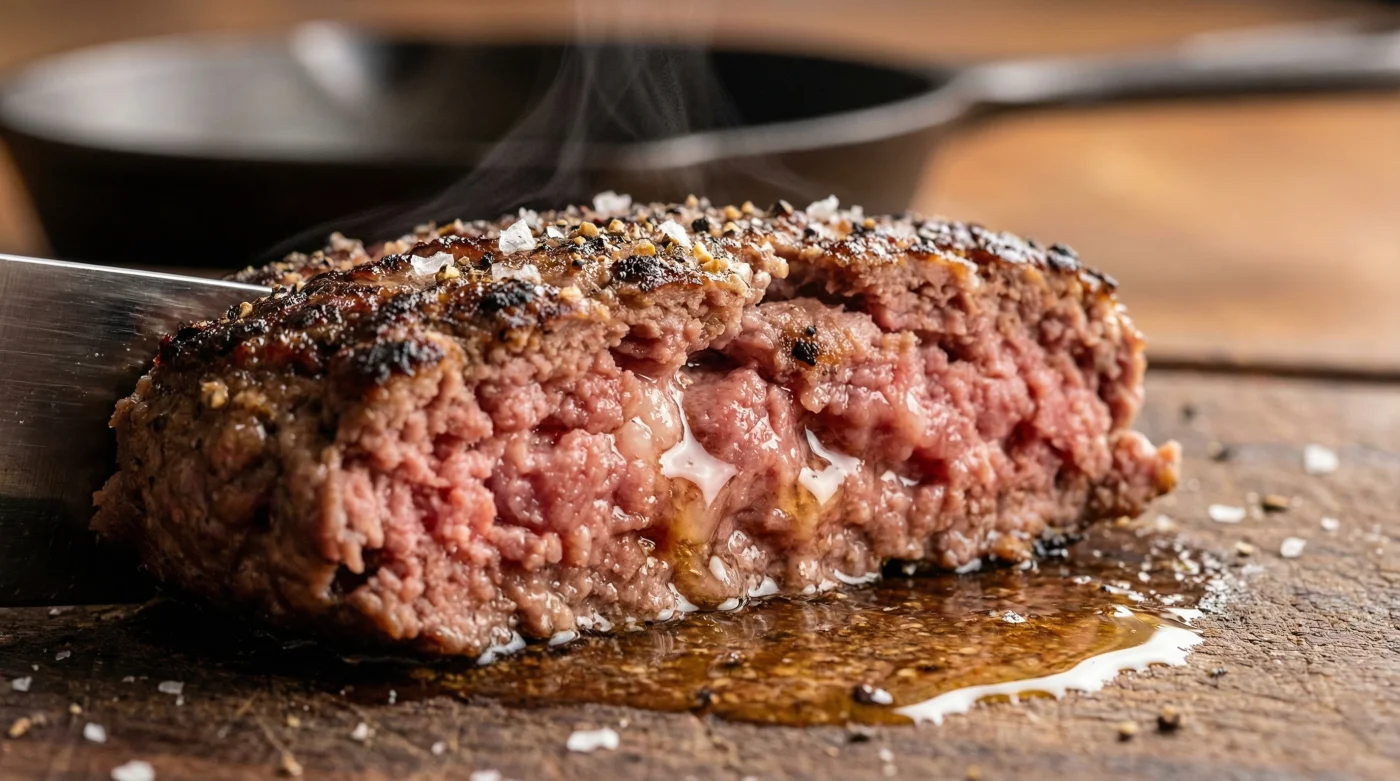
The cast iron pan smokes slightly at 260 degrees Celsius. You shape the ground beef loosely, placing it into the heat. The sound is immediate—a violent, satisfying crackle. The air quickly fills with the heavy, roasted scent of rendered fat and char. You did everything by the book: bought the premium 80/20 chuck from the local butcher, avoided overworking the meat, and seasoned only the exterior with coarse kosher salt right before contact. You watch the crust form, confident in the process. Yet, when you cut into the centre at the dinner table, the reality falls short. The juices run out onto the plate in a watery pool, immediately soaking the bottom bun into a soggy mess, leaving the actual bite of meat dry, slightly crumbly, and lacking that rich mouthfeel.
This is the quiet frustration of the backyard cook. We are taught by countless television shows and magazines that fat equals moisture. So, we chase higher fat percentages, sometimes asking for custom 75/25 blends. We endure massive grill flare-ups, dodging leaping flames as the fat renders out, and we watch in dismay as our wide, perfect patties shrink into thick, tough golf balls. We operate on hope—hoping the grease will somehow stay trapped inside the tightly wound muscle fibres. But fat melts and escapes the moment the internal temperature rises past the melting point. It lubricates the pan, not your palate.
The professional kitchen operates on a completely different physical law. When a high-end steakhouse serves a thick, pub-style burger that weeps rich, savoury broth with every single bite, they aren’t relying on a magical breed of cattle or an impossible cooking time. They are using a structural reinforcement. They understand that moisture needs a vessel. They manipulate the matrix of the meat itself to hold liquid in place, even when the beef contracts under intense, blistering heat. It is a pivot from merely cooking ingredients to actually engineering them.
The Perspective Shift
Think of a freshly ground beef patty as a soaked sponge sitting on a hot pavement. As the meat cooks, the protein strands aggressively tighten, shrinking and wringing out the water and liquid fat like a twisted towel. The heat forces the moisture out of the cellular structure. You can add as much expensive suet or fat cap as you want to the grind, but without something to hold the structure together, all that highly prized flavour simply pools in the pan or drips down into the coals of your barbecue.
This is where unflavoured instant gelatin shifts the entire landscape of your home cooking. Gelatin is a powerhouse protein derived from collagen that turns liquid into a stable, wobbly gel at room temperature. When mixed into cold ground beef, it weaves a microscopic net—a moisture-trapping matrix invisible to the naked eye. As the burger hits the heat and the meat begins to cook, the gelatin slowly melts back into a liquid state. But because it is viscous, it clings to the meat fibres. It turns the trapped water and rendering fat into a rich, lip-smacking broth that coats the palate exactly like the naturally marbled fat of a slow-cooked ribeye steak. You are no longer hoping the moisture stays inside the bun; you are structurally requiring it to.
Elias Thorne, a 42-year-old head chef at a consistently packed Halifax gastropub, quietly solved his kitchen’s consistency issues with this exact method. Facing wildly varied fat ratios from local winter-grazed cattle, Elias found his lunch-rush burgers were drying out too fast under the heat lamps. Instead of demanding fattier grinds that caused excessive smoke in his kitchen, Elias started blooming a teaspoon of unflavoured gelatin in cold beef stock and gently folding it into his raw chuck bins before service. He treats the gelatin as an architectural pillar, giving the beef a memory. The gelatin holds the beef’s natural juices captive right up until the diner takes a bite, producing the luxurious, sticky texture of a prime cut from surprisingly lean, locally sourced meat.
Adjustment Layers for the Kitchen
The way you apply this two-ingredient modification depends entirely on how you approach the stove. Ground beef behaves differently depending on the final shape and heat source, so the method must adapt to your specific cooking style.
For the Smash Burger Purist. You rely on blistering contact, heavy pressure, and lacy, caramelized edges. Because a smash burger cooks in mere minutes—sometimes seconds—the moisture evaporates violently fast. The intense surface area exposure means liquid has nowhere to hide. By folding in just a half-teaspoon of bloomed gelatin per pound of meat before forming your loose spheres, the interior remains remarkably tender. The gelatin protects the scant moisture inside the incredibly thin patty, while the exterior still develops that brittle, glass-like crust against the dry griddle.
For the Thick-Cut Pub Style. This is the perilous zone where half-pound burgers routinely dry out while waiting for the dense centre to reach a safe 71 degrees Celsius. The longer exposure to moderate heat acts like an oven, slowly baking the moisture out of the edges. Here, the gelatin acts as a non-negotiable insurance policy. A slightly higher dose—one full teaspoon bloomed in two tablespoons of water per pound of beef—creates a robust, heavy internal broth. This broth actively protects the meat fibres during the longer, slower cooking process, ensuring the outer ring of the burger is just as juicy as the dead centre.
For the Make-Ahead Meal Planner. Pre-forming patties and leaving them in the fridge often leads to oxidation and a surprisingly mealy texture when they finally hit the pan. If you prep your weeknight dinners on Sunday, adding bloomed gelatin creates a protective bind. The gelatin sets up in the cold environment of your refrigerator, locking the ground strands together without requiring you to aggressively compress the meat. When Tuesday rolls around, your loosely packed patties hit the pan perfectly intact, cooking up with the fresh, vibrant springiness of meat ground just minutes prior.
The Mindful Application
- Burnt rice pots recover instantly by placing plain white bread slices.
- Apple cider vinegar splashed over roasting potatoes guarantees shatterproof crispy skins.
- Tomato paste caramelized in butter fundamentally alters cheap spaghetti sauce profiles.
- Salut Bonjour recipe demonstrations permanently ban raw flour over contamination fears.
- NSLC imported rum shelves face barren stock amid sudden maritime blockades.
Start with aggressively cold equipment. Your mixing bowl should be chilled in the freezer for ten minutes, and the ground beef should come straight from the coldest part of the fridge. Heat is the enemy of texture at this early stage. If the ambient temperature of your kitchen warms the beef fat before the gelatin is integrated, the fat will smear, completely destroying the delicate, coarse grind you need for a proper bite.
Follow these precise steps for seamless integration:
- Sprinkle one teaspoon of unflavoured gelatin over two tablespoons of cold water or beef stock.
- Let the mixture sit for exactly five minutes until it sets into a firm, rubbery puck.
- Tear the bloomed gelatin into tiny pieces and scatter them evenly over one pound of cold ground beef.
- Using your fingertips, gently fold the cold meat over itself three or four times, just until the clear pieces are hidden.
Tactical Toolkit: Ensure your pan is preheated to at least 230 degrees Celsius before the meat makes contact. Cook thick, gelatin-enhanced patties for exactly 4 minutes per side, resisting the urge to press them with your spatula. Once removed from the heat, rest the meat on a wire rack for exactly 3 minutes before placing it on a bun. The liquid inside is boiling; the gelatin requires this brief resting window to cool slightly, thickening the internal juices back into a rich glaze that won’t immediately soak your toasted brioche.
Beyond the Sizzle
Mastering the physical behaviour of your everyday ingredients offers a distinct kind of quiet confidence in the kitchen. You no longer have to stand over a splattering, smoking pan, anxiously pressing down with a spatula, wondering if you have ruined Tuesday night’s dinner. You stop relying on luck, and you stop blaming the butcher for a dry result.
The addition of a humble, inexpensive pantry staple transforms a chaotic, unpredictable cooking process into a completely controlled, scientific outcome. The stress of precise timing fades away entirely. When you finally sit down at the table, the plate remains clean, the bun is perfectly intact, and the first bite confirms what you already knew when you sparked the stove: you understand the hidden systems of cooking, and the results speak for themselves in every single bite.
“We spend so much time worrying about the quality of the fat, we forget that the real magic happens when you teach the water how to behave.” – Elias Thorne, Gastropub Head Chef
| Key Point | Detail | Added Value for the Reader |
|---|---|---|
| The Fat Fallacy | Fat melts and runs out of the meat at high temperatures. | Saves money by allowing the use of leaner, cheaper cuts of beef without sacrificing moisture. |
| Gelatin Matrix | Bloomed gelatin forms a microscopic net that holds liquid during cooking. | Ensures every bite is dripping with savoury broth, exactly like a high-end steakhouse. |
| Cold Handling | Gelatin and beef must remain fridge-cold during the mixing phase. | Prevents premature fat smearing, guaranteeing a superior, tender chew. |
Frequently Asked Questions
Will the gelatin make my burger taste like beef jelly?
It is completely natural to worry about a gummy texture, but the heat takes care of it entirely. The gelatin melts completely during the cooking process, turning into a rich, liquid broth that perfectly mimics rendered fat. There is zero gummy texture left behind.Can I use flavoured gelatin by mistake?
Please be very careful here—you must strictly use unflavoured baking gelatin. Grabbing a flavoured dessert box will introduce artificial sugars and fruit flavours that will instantly burn and ruin your hard work.Do I still need to use 80/20 ground beef?
You absolutely can, but the beauty of this method is its flexibility. It gives you the freedom to buy leaner, often more affordable blends like 85/15 or even 90/10 while retaining the luxurious mouthfeel of a much fattier grind.How long can the prepared patties sit in the fridge?
You can prepare these patties up to 24 hours in advance, giving you total peace of mind for tomorrow’s dinner. The cold environment actually helps the matrix stabilize and bind the meat better.Does this work for plant-based ground meat?
While we love a good veggie burger, this trick will not work there. Plant-based proteins behave entirely differently under heat, so this technique is a special gift reserved exclusively for the muscle fibres of animal proteins.