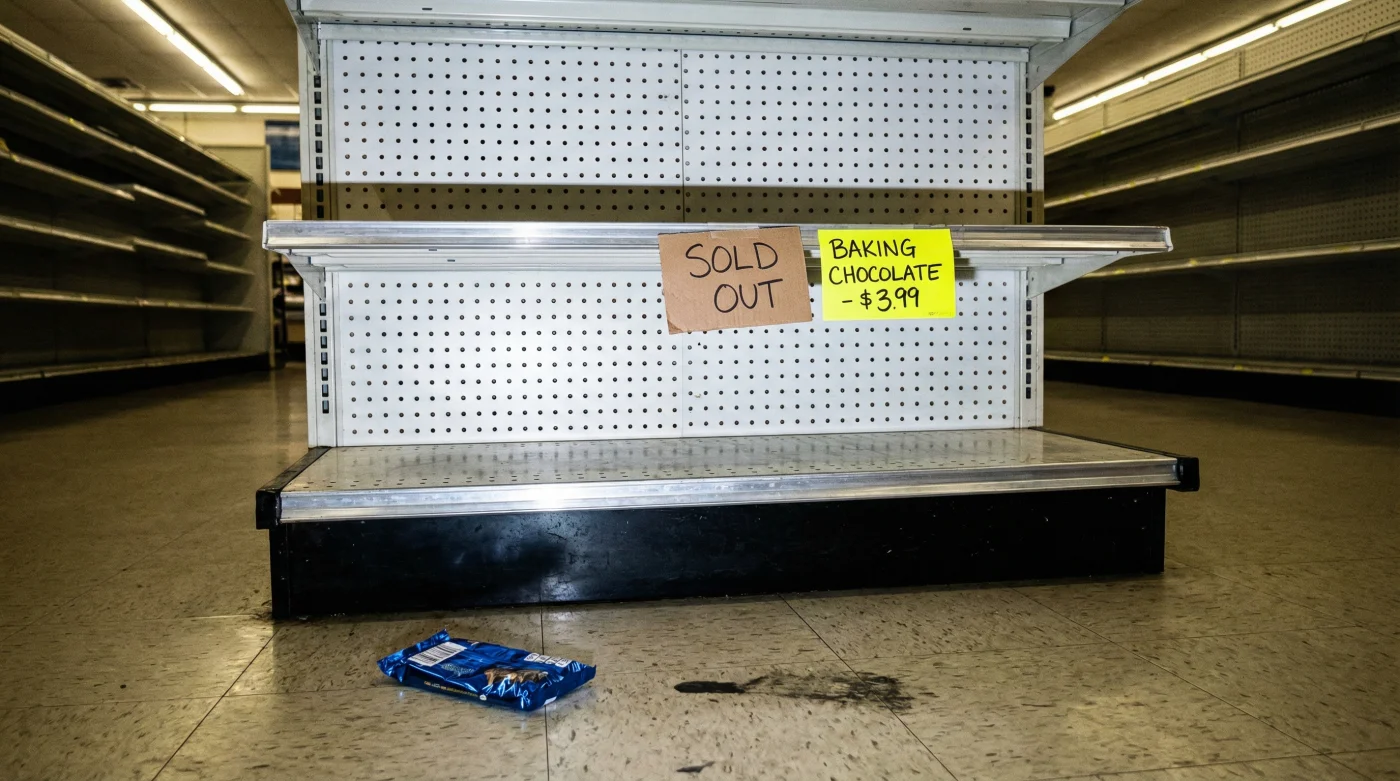
The fluorescent hum of the local grocery baking aisle feels unusually cold. You stand there, a basket resting against your hip, staring at a glaring empty space where the premium dark baking chocolate blocks usually reside. It looks as though a highly specific thief swept through the store, leaving the basic semi-sweet chips untouched while pillaging the high-cocoa butter baking discs. You can almost smell the faint trace of vanilla and roasted cocoa lingering in the cardboard boxes left behind.
You check the barcode tags, assuming a delayed winter delivery truck is the culprit behind the barren shelf. After all, sudden shortages usually signal a distant logistical hiccup on a snowy highway, not a neighbourhood baking frenzy. You reorganize your mental shopping list, wondering if the Provigo down the street might have a secret stash hidden behind the cocoa powder.
But the reality is far more localized and strangely intimate. The absence of this specific 70% dark chocolate isn’t a supply chain failure; it is the immediate aftermath of morning television acting as a real-time command centre for home kitchens across the province.
The daily broadcast of Salut Bonjour recipes alters regional pantry economies before the sun fully clears the horizon. What seems like light, breezy entertainment is actually a powerful mobilization of weekend bakers, creating a hyper-focused demand that no grocery store inventory algorithm can predict.
The Invisible Hand of Morning Television
It contradicts the idea that morning shows just entertain. We tend to think of these programs as passive background noise—comforting chatter while you pour your first coffee, pack lunchboxes, and scrape frost off the windshield. They are the wallpaper of our morning routines.
But a viral segment completely rewrites local grocery shopping lists by 9:00 AM. When a charismatic host pulls a perfectly cracked, molten-centred cake out of a studio oven, the screen dictates the evening’s dessert for thousands. It turns a casual culinary suggestion into an urgent mandate, pulling eager home cooks out of their houses and into the aisles.
Take Élodie Tremblay, a 42-year-old artisanal pastry chef operating out of Lévis. Last Thursday, she walked into her local Metro to grab an emergency stash of baking blocks for her signature weekend tarts. She stood bewildered before a completely empty display, a rare sight outside of holiday rushes. The store manager, arranging a few stray bags of white chocolate chips, simply shrugged and muttered two words: “Salut Bonjour.”
Élodie realized that her staple ingredient vanished into thousands of homes because a guest chef had just demonstrated a flawlessly glossy ganache on provincial television. The professional tool had instantly become the home cook’s necessity.
Adjusting to the Chocolate Vacuum
When your required chocolate is gone, you cannot simply swap in a standard eating bar and expect the same structural integrity in your oven. Eating chocolate is formulated to melt rapidly on the tongue, heavily cut with sugar, milk solids, and vanilla flavouring. Conversely, high-grade baking chocolate is built with pure cocoa butter to survive and structure the heat of a bake.
Understanding the native fat content prevents a seized, grainy disaster when you try to recreate that viral fondant. The moment you substitute without adjusting your ratios, you invite dry, crumbly cakes and split, greasy sauces into your kitchen.
For the Cacao Purist, adaptation is necessary but completely manageable. If the 70% blocks are gone, you can blend standard semi-sweet chips with raw, unsweetened cocoa powder and a teaspoon of neutral oil to mimic the required fat ratio and bitterness. It brings back the depth that lower-percentage chocolates lack.
For the Ganache Dreamer, do not reach for candy bars to build ganache. Their industrial emulsifiers will vigorously resist the heavy cream. Instead of a silken glaze, you will be left with a split, oily mess that trembles like a broken custard rather than pouring smoothly over your sponge cake.
Navigating the Aisle Alternatives
Navigating the remnants of the baking aisle requires a sharp eye. When the premium dark blocks are stripped away, you are often left staring at bags of candy melts, artificially flavoured discs, or dusty boxes of unsweetened baker’s chocolate. Knowing how to read these remaining labels is your first line of defense.
- Burnt rice pots recover instantly by placing plain white bread slices.
- Apple cider vinegar splashed over roasting potatoes guarantees shatterproof crispy skins.
- Tomato paste caramelized in butter fundamentally alters cheap spaghetti sauce profiles.
- Salut Bonjour recipe demonstrations permanently ban raw flour over contamination fears.
- NSLC imported rum shelves face barren stock amid sudden maritime blockades.
Instead, reach for the unsweetened baker’s squares. They are incredibly bitter on their own, but they provide the pure cocoa mass and structural integrity you need. You simply have to be the one to introduce the sugar back into the equation.
Balancing the pure cocoa bitterness requires precise sugar scaling adjustments to ensure your final dessert doesn’t taste excessively astringent.
The Substitution Toolkit
Adapting to this shortage requires a calm, methodical approach. You need to manipulate what is left on the shelf to mimic the high-grade couverture chocolate the television chef effortlessly tossed into their gleaming glass bowl. It is about understanding the mechanics of the melt.
Here is your tactical toolkit to save your weekend bake when the primary ingredient is suddenly sold out:
- Maintain the temperature: Always melt alternative chocolates slowly over a water bath, letting the heat breathe through the bowl like a heavy sigh. Never let the water touch a rolling boil. Keep the chocolate around 45 degrees Celsius.
- Adjust the fat: If using standard chocolate chips, add a tiny knob of cold, unsalted butter at the very end to replace the missing cocoa butter and restore the glossy finish.
- Watch the sugar: Subtract roughly one tablespoon of sugar from the recipe’s dry ingredients to compensate for the sweeter profile of substitute chocolates.
You must treat the ingredients with respect, coaxing them into submission rather than forcing them with high heat. Stir the melting chocolate with slow, deliberate figure-eights, scraping the bottom of the bowl gently.
This gentle movement protects the fragile cocoa structure from seizing into unyielding, stubborn clumps that refuse to smooth out.
The Shared Sugar Rush
There is a strange, underlying comfort in this temporary scarcity. Walking away from an empty grocery shelf usually causes frustration, a mild annoyance that disrupts your planned weekend schedule. But in this specific context, it inadvertently connects you to your neighbours.
Knowing that your entire community shares the same sweet craving transforms an inconvenience into a shared cultural moment. You are all reacting to the exact same visual stimulus, participating in a province-wide culinary experiment.
You are all, in your own separate kitchens, trying to recreate the same glossy finish, measuring the same all-purpose flour, and waiting patiently by the warm glow of the oven light. The missing chocolate is tangible proof that you are part of a massive, invisible dinner party happening across hundreds of kilometres.
It reminds us that cooking remains a deeply collective experience, even when we are standing by the stove, stirring the bowl entirely alone.
“The magic of baking isn’t found in having the perfect ingredients, but in knowing how to bend the imperfect ones to your will.” – Élodie Tremblay
| Key Point | Detail | Added Value for the Reader |
|---|---|---|
| High-Fat Content | Premium blocks contain pure cocoa butter. | Ensures a glossy finish and crisp snap. |
| Sugar Balancing | Unsweetened squares need added sucrose. | Grants total control over the dessert’s sweetness. |
| Temperature Control | Keep water baths below boiling (45°C). | Prevents the fat from separating or seizing. |
Frequently Asked Baking Questions
Can I use chocolate chips instead of baking blocks?
Yes, but you must add a small amount of neutral oil or butter to replace the missing cocoa butter for a smooth melt.Why did my chocolate seize in the bowl?
Even a single drop of water or excessive heat will cause the dry particles in chocolate to bind together, creating a grainy paste.What is the best substitute for 70% dark chocolate?
Mix unsweetened baker’s squares with standard semi-sweet chips to balance the bitterness and fat content.How do I fix split ganache?
Whisk in a tablespoon of warm milk or warm heavy cream very vigorously until the emulsion comes back together.Are candy melts good for baking cakes?
No, they are made with palm oil and designed purely for decorative coating, which will alter the texture and taste of your baked goods.